EN — English
 TR — Türkçe
 DE — Deutsch
 RU — Русский
 FR — Français
 ES — Español
 AR — العربية
 SR — Српски

The Lowest-Wear Mobile Crusher Configuration for Basalt
In a basalt quarry the wear bill is usually blamed on the wrong thing. People argue about parts, alloys and suppliers, yet most of the wear cost per tonne is fixed before the machine reaches site, by the configuration decision. Which material never enters a crusher, at which stage and by which principle size reduction happens, how full the crushing chamber runs, and where in the flow a separate shaping stage sits: these decide how many tonnes of product one set of metal delivers. This article takes those four decisions one by one. We do not turn the "least wear" in the title into a guaranteed figure: the silica content of basalt varies from seam to seam, and the same plant gives different liner life in two quarries. What we explain is which mechanisms drive wear up and which choices in a mobile crushing and screening plant bring it down.
Four leaks that inflate wear cost per tonne in basalt
General Makina's cone crusher page gives a Bond abrasion index (Ai) of about 0.20 for basalt, and the jaw crusher page classes material above Ai 0.15 as abrasive. Basalt sits above that threshold but is not as extreme as granite. That middle position is exactly where configuration mistakes show up quickly in cost: wear that stays reasonable in a well-built line grows fast in a badly built one.
On site, four leaks drive metal consumption. First, fines that do not need crushing are passed through the crusher; they rub the liners but add nothing to sales. Second, reduction is piled onto a single stage; the overloaded stage wears fast and leaves an uneven profile. Third, the chamber runs half empty; stone slides over the metal instead of breaking in layers. Fourth, shaping that only one fraction needs is applied to the whole flow.
A plain formula makes these leaks visible: Wear cost per tonne sold = Σ (cost of part set ÷ tonnes through that crusher during the set's life) × (tonnes through that crusher ÷ total tonnes sold). The second factor is usually forgotten. The smaller the tonnage through a crusher compared with tonnage sold, the less its metal weighs on each tonne sold. Every decision below improves either the first factor (set life) or the second (share of material sent to the crusher).
The first decision at the inlet: grizzly feeding and by-pass
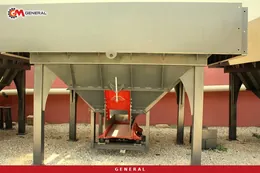
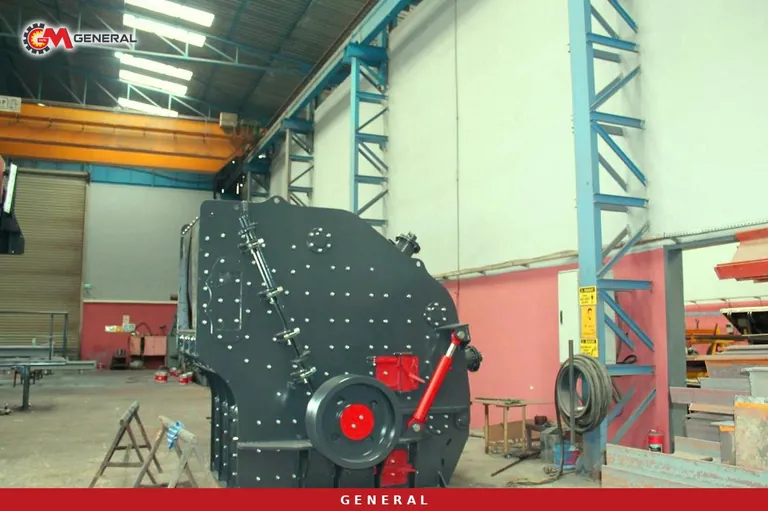
Blasted basalt run-of-mine carries soil, broken fines and weathered surface material alongside large blocks. When this enters the primary jaw it does double damage: it abrades the jaw plates and takes up chamber space, so large rock breaks less efficiently. A vibrating grizzly rock feeder separates it ahead of the crusher. The product page states that the by-pass section keeps fine and earthy material away from the primary, reduces jaw and impact liner wear and cuts unnecessary crushing energy. GNR series feeders are listed at 75-600 t/h with feed sizes up to 1500 mm.
The effect lands on the second factor of the formula: every tonne passing the grizzly goes to the stockpile or screen line without touching a jaw plate. Where that by-passed material goes must still be planned. If it is clean and close to a target fraction it is routed to the screen; if it is dirty it is stockpiled separately, otherwise product quality suffers. With wet, clayey feed the grizzly can blind; the feeder page then recommends a wobbler feeder. If the overburden in your basalt quarry is clayey, raise this at quotation stage.
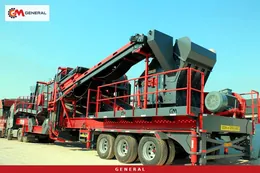
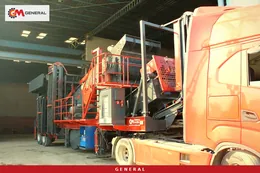
The wheeled General 944 mobile crushing and screening plant comes with a hopper and vibrating feeder, plus by-pass, return and stockpile conveyors at the screen outlet. Have the grizzly spacing and the routing of pre-screened material written into the quotation for your quarry rather than assuming a standard and being surprised on site.
Splitting reduction across stages: the balance between jaw and cone
Compression crushers break stone in layers between two metal surfaces; friction stays limited compared with stone hitting the blow bars of a fast-spinning rotor. That is why the established layout for abrasive rock is a primary jaw with a secondary cone. In the General 944 this layout sits on a single chassis with a GPJ 90 jaw primary and a GM430 cone secondary; the plant accepts 800 mm feed and runs at 120-180 t/h.
Choosing the right crusher type is not enough; the reduction ratio has to be shared sensibly between stages. The jaw crusher page gives typical reduction of 4:1–9:1 (about 8:1 in the primary). The cone crusher page gives 6:1–8:1 in the secondary, about 10:1 in the tertiary, and a secondary feed range of 50–250(300) mm. Closing the primary jaw too far and loading the cone's job onto it wears out the lower part of the jaw plates fast, and the flaky pieces leaving the jaw feed the cone unevenly. Conversely, leaving the jaw too open and sending stone above the cone's acceptance range causes local wear in the upper zone of the cone and loss of setting.
The practical rule: set the primary closed side to the widest value at which the largest particle still stays within the cone's acceptance range, and leave the real fine work to the cone. When you change the setting, watch crusher current and screen oversize return in the same shift. Those two observations tell you whether the stages are balanced; looking at output size alone is not enough.
Keeping the chamber full: feed control and automation
The cone crusher page names choke feeding as the preferred operating mode. In a full chamber stones also break each other, and the metal takes load through a bed of rock. In a half-empty chamber single stones slide between mantle and concave, the liner wears in waves and product becomes flaky. A wavy profile lowers crushing efficiency on every following tonne, so the damage accumulates over the whole life of the part.
In mobile lines the obstacle to choke feeding is a fluctuating primary discharge. As blasting quality, loader rhythm and block size change, the flow to the cone rises and falls. Rather than leaving this to the operator's reflexes, tie it to automation. The automation and control system page describes feeder speed being lowered automatically when crusher current approaches its limit, raised again when current returns to normal, and flow monitored by level sensors. Drive-controlled feeder speed is the tool for holding the narrow band between a full chamber and overload.
Automation's second contribution to wear is the record. When shift reports log tonnage produced, downtime and alarm history, "tonnes crushed during the set's life" stops being a guess. Only with that record can you see which setting, which blast series or which operator habit increases wear per tonne.
When particle shape matters: putting the cubitizer in the right place
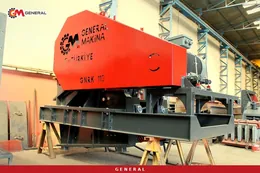
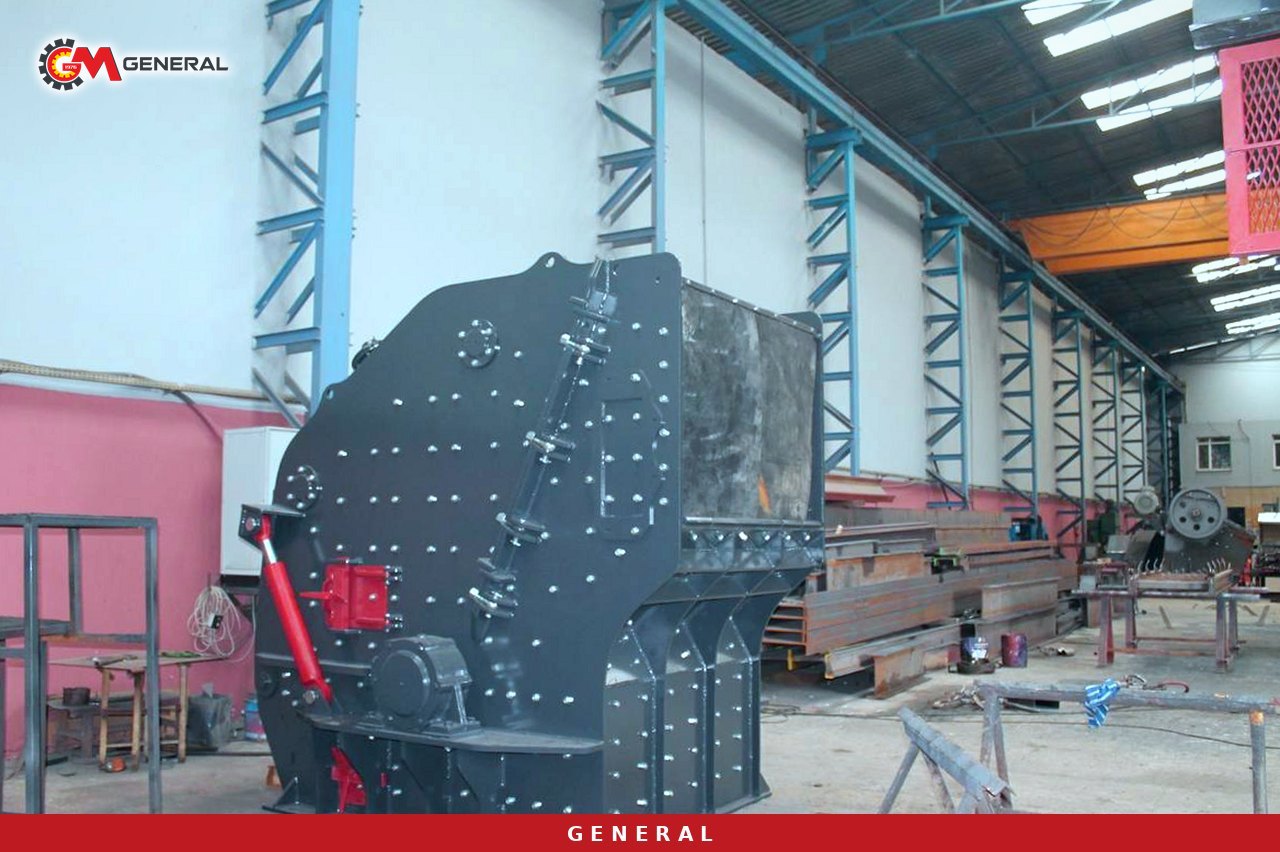
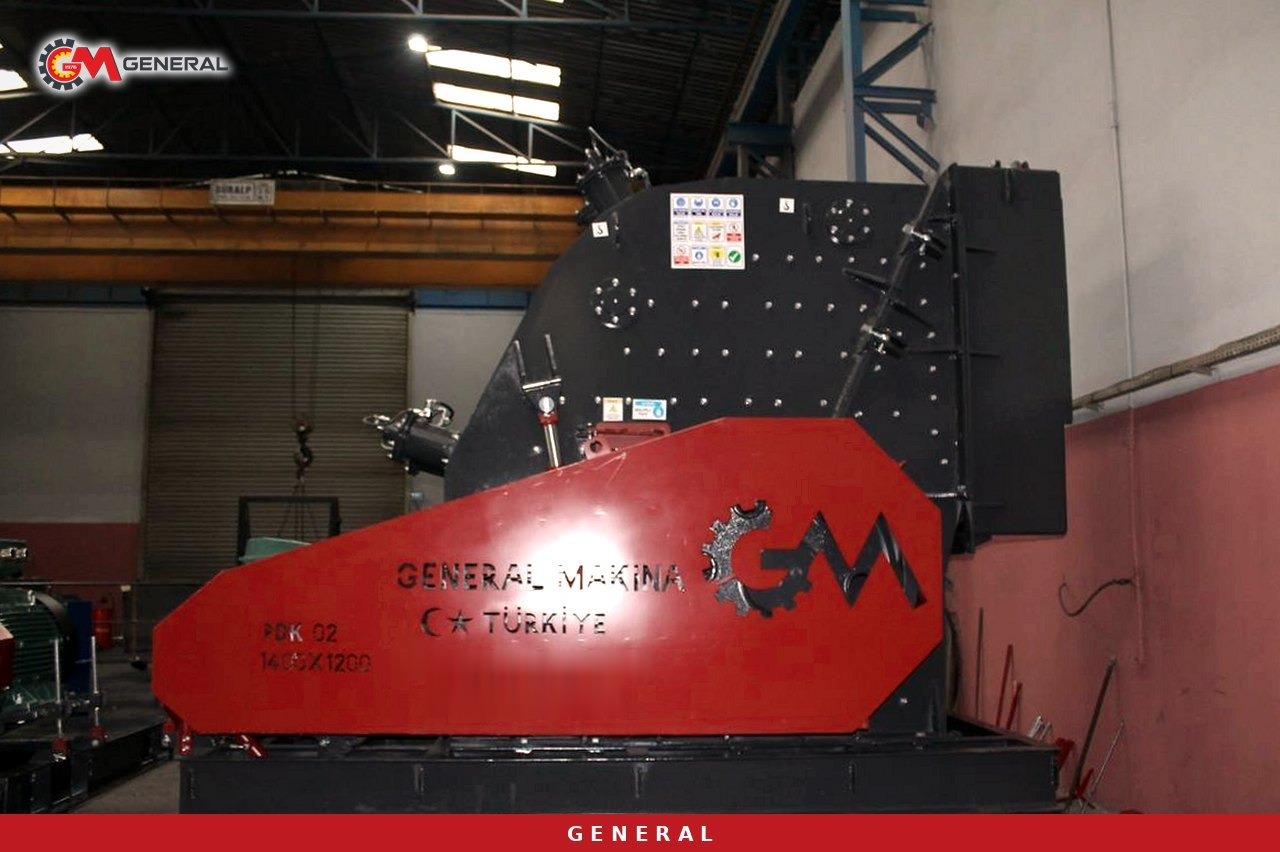
Basalt aggregate is mostly sold for concrete and asphalt, and those specifications control particle shape. The most expensive way to raise cubicity is to send the entire flow through an impact stage. The cheaper way is to apply shaping only to the fraction with a tight specification. General Makina's GNR MK series mobile cubitizer is built for this: its job is shaping rather than reduction, its inner liners are Hardox 500 steel and its final product is 0-25 mm. The product page notes that it stands out in moderately abrasive basalt, and that liner life should be monitored on jobs with high free quartz.
In formula terms, when the cubitizer only receives the selected fraction, its rotor wear is spread over total tonnes sold. The main secondary duty stays with the cone; the cubitizer trims the corners of the cone product instead of crushing it again. Because the unit is independent, it can be taken out of the line or connected to another fraction when the specification changes. Other units are listed under portable rock crushers.
| Configuration | Capacity | Max. feed | Mechanism that reduces wear | Point to watch |
|---|---|---|---|---|
| General 944 (GPJ 90 jaw + GM430 cone) | 120-180 t/h | 800 mm | Compression crushing in both stages | Without choke feed the cone makes flaky product |
| General 944 + GNR MK100 (selected fraction) | 944: 120-180 t/h; MK100: 90-130 t/h | MK100: 250 mm | Shaping applied only to the fraction that needs it | Cubitizer liners to be monitored against free quartz |
| General 944 + GNR MK110 (selected fraction) | 944: 120-180 t/h; MK110: 160-250 t/h | MK110: 350 mm | Same separation at a larger scale for a high cubical share | Extra power: MK110 motor 200 kW |
| General 950 (GPJ 90 jaw + DMK01 impact) | 120-180 t/h | 800 mm | Impact secondary gives high reduction and cubical product | Entire flow passes the impact stage; blow bar consumption must be costed |
The table is a matching tool, not a ranking. If your specification demands cubicity only in certain fractions, rows two and three are the most defensible layouts in wear terms. If all of your product faces a strict shape requirement and your basalt is low in silica, row four can also be considered. The full wheeled range is in the mobile stone crushers category.
Liner alloy and profile: the last link of the configuration
Even a well-designed line is weakened by the wrong alloy. The jaw crusher page lists austenitic manganese steel (Mn13/Mn18) as standard for jaw plates; this steel work-hardens at the surface under impact and pressure while the body stays tough. As silica rises, Mn18/Mn22 comes forward. In the cone the wear parts are mantle and concave; the product page points to manganese steel in general and high-chrome liners for high-silica rock. The liner profile is chosen by stage too: standard liners for secondary, short-head liners for tertiary and quaternary duty.
Make this choice from samples, not guesses. Silica can differ between basalt seams; a sample from the hardest, most abrasive seam of the quarry should underpin the alloy decision. Confirm any alloy change with records too: compare the life of two sets in tonnes under the same setting and similar feed.
Configuration checklist before requesting a quote
- Sample several seams and have silica content and, if possible, Bond Ai measured.
- Determine the share of fines and soil in the run-of-mine by sieve analysis, not by eye; specify grizzly by-pass accordingly.
- Fix in the quotation where pre-screened material goes (screen or separate stockpile).
- Work out with the supplier the primary setting that keeps discharge within the cone's acceptance range.
- Ask for automatic feeder speed control tied to crusher current, plus tonnage logging, in the scope.
- List the fractions with a cubical-shape requirement; consider connecting the cubitizer only to those.
- Ask about alloy options for jaw and cone liners, together with your sample results.
- Build into the budget that the warranty is 1 year and excludes wear parts.
Frequently asked questions
Can you give a cost-per-tonne figure for the lowest-wear basalt plant?
No. Wear cost per tonne depends on basalt silica content, blasting quality, by-pass share, settings and feed regime. The mechanisms described here pull cost down, but there is no single value valid on every site. You calculate your own from the record of your first liner set using the formula above.
Does grizzly by-pass spoil product quality?
If pre-screened material is clean, it goes to the screen or stockpile without harming quality. If it is dirty, it should be stockpiled separately. The decision follows the run-of-mine sieve analysis and the product specification.
Does adding a cubitizer not increase wear?
A rotor stage adds another unit that consumes metal. But when it receives only the fraction with a shape requirement, its rotor wear applies to a smaller tonnage than sending the whole flow through an impact secondary. The calculation must be made on total tonnes sold.
What determines the price?
Secondary crusher type, feeder and grizzly design, automation scope, extra units such as a cubitizer, liner alloy, generator rating (550 kVA for the General 944) and transport scope. A project-specific quotation based on your quarry data is needed.
Conclusion
What lowers wear in basalt is not one part or one model but four decisions made together: by-pass material that does not need crushing, split reduction sensibly between jaw and cone, keep the cone choke-fed through automation, and apply shaping only to the fraction that needs it. The jaw + cone layout of the General 944 is the core of this approach; feeding, automation and cubitizer options are added to suit your quarry. Contact us with your sample results, run-of-mine sieve analysis and product specification, and we will settle the configuration for your quarry together and prepare a quotation.
Definitions of technical terms: Glossary