EN — English
 TR — Türkçe
 DE — Deutsch
 RU — Русский
 FR — Français
 ES — Español
 AR — العربية
 SR — Српски

Comoros Basalt Compact Mobile Stone Crusher Plant 60-100 TPH
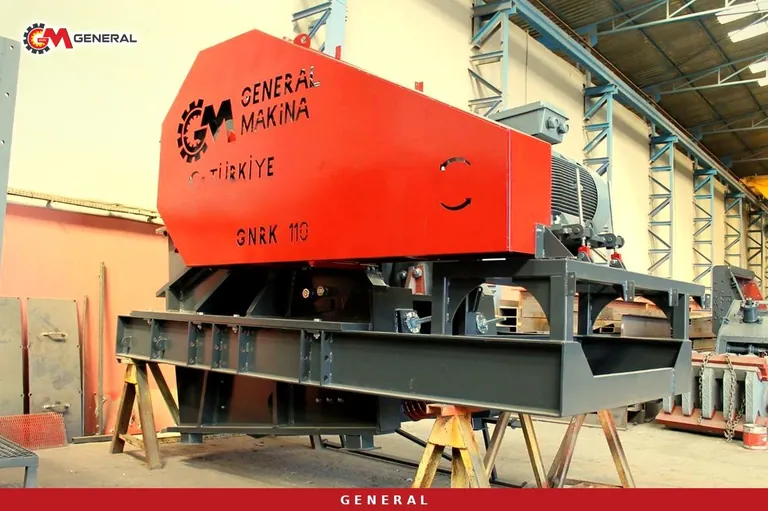
The Union of the Comoros is a volcanic archipelago made up of Ngazidja (Grande Comore), Ndzuwani (Anjouan) and Mwali (Mohéli), sitting at the northern mouth of the Mozambique Channel. A contractor who needs crushed stone here for concrete, roads or harbour work does not have to search for raw material: most of the ground is basalt lava. The real question is how the crusher reaches the island by ship, travels from the port to the quarry on a narrow island road, and then works on site with a small footprint. This article covers compact mobile crusher options for 60-100 TPH of basalt, the load each one brings to the site and the preparations that are specific to the islands. Every figure quoted comes from the catalogue values on our product pages. We give no information about any quarry, tender or infrastructure programme in the Comoros; specifications should be confirmed with the relevant authority and the rock's breaking behaviour with a sample test.
The rock of Karthala: three conditions that challenge a crusher in Comorian basalt
Karthala, rising in the south of Ngazidja, is still an active shield volcano, and a large part of the island's surface is covered by relatively young lava flows. Ndzuwani and Mwali are older; erosion has gone further, so weathered basalt, thick soil cover and clayey overburden are more common there. In practice this means three materials that behave differently from one quarry to the next, even within the same country:
- Massive lava: a dense, fine-grained, tough block. This is the material that loads the jaw hardest and whose particle shape is most easily spoiled.
- Vesicular basalt and scoria: light and easy to break, but it produces plenty of fines and dust. It is often cheaper to keep this fraction out of the crusher altogether.
- Weathered, clayey cover: mixed into stripping material, especially on the older islands; it sticks in the crusher mouth and blinds the screen.
So in the Comoros the first decision is not the crusher type but feed preparation. A grizzly feeder separates the clayey and fine fraction ahead of the crusher, protecting both the jaw plates and the energy budget. In massive basalt the first stage is always a jaw crusher that breaks by compression; the second stage must produce cubical particles so that the chippings are accepted for concrete and asphalt. Because taking building sand from beaches has long been debated on the islands on account of coastal erosion, the ability to turn the fine fraction into manufactured sand also belongs in the calculation.
Reading compactness in numbers: three real configurations
To keep "compact" from being just a sales word, we tie it to three criteria: how many separate units go on the ship, how many machines stand side by side on site, and how many sources supply the line with power. Below we compare three configurations with catalogue data that cover the 60-100 TPH band in the title.
A, One chassis, two stages: General 640
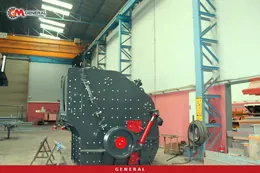
The General 640 carries a GPJ 60 jaw crusher and a GNR 50 impact crusher on the same wheeled chassis. Its capacity is 60-100 t/h and its maximum feed size is 500 mm; a 1200×4000 mm three-deck screen splits the product into 0-5, 5-12 and 12-19 mm fractions, and oversize returns to the crusher by conveyor. It weighs 38,000 kg, its transport dimensions are 3500×17000×4500 mm and it is designed to fit on a single truck. A 300 kVA generator is optional. For an island the meaning is clear: one shipment, one set-up point, one power source.
B, Tracked primary: GM 90JP
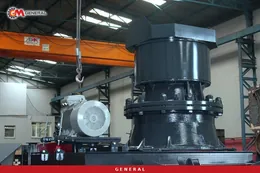
The GM 90JP carries a 95 kW GNR 90 jaw crusher on Strickland tracks; it accepts 700 mm feed and works in the 70-180 t/h band. A 10 m³ hopper, an 820×3000 mm grizzly vibrating feeder, a 1000×2000 mm two-deck screen and a 250 kVA power unit are on board; the machine weighs 35,000 kg. Because it needs no ground preparation or concrete foundation and moves across a lava field on its own tracks, it suits an operation that must reach different faces in the same quarry. On its own it is a primary crusher; cubical chippings call for a second stage behind it.
C, Separate portable units: GNR 90 primary + MK100 cubitzer
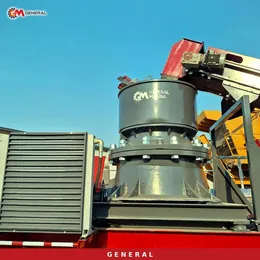
The GNR 90 model of the portable primary jaw crusher series combines a 1000×3800 mm armoured feeder with a GNRK 90 jaw on one chassis; it is rated at 70-180 t/h and weighs 25,000 kg. Its product is 0-250 mm, which matches the 250 mm maximum feed of the GNR MK100 portable cubitzer. The MK100 shapes 90-130 t/h with a 1550×1200 mm rotor and a 132 kW motor, and its inner lining is Hardox 500. A separate screening unit completes the line. This configuration means one more chassis; in return you gain the freedom to place the primary at the quarry face and the cubitzer near the stockpile area.
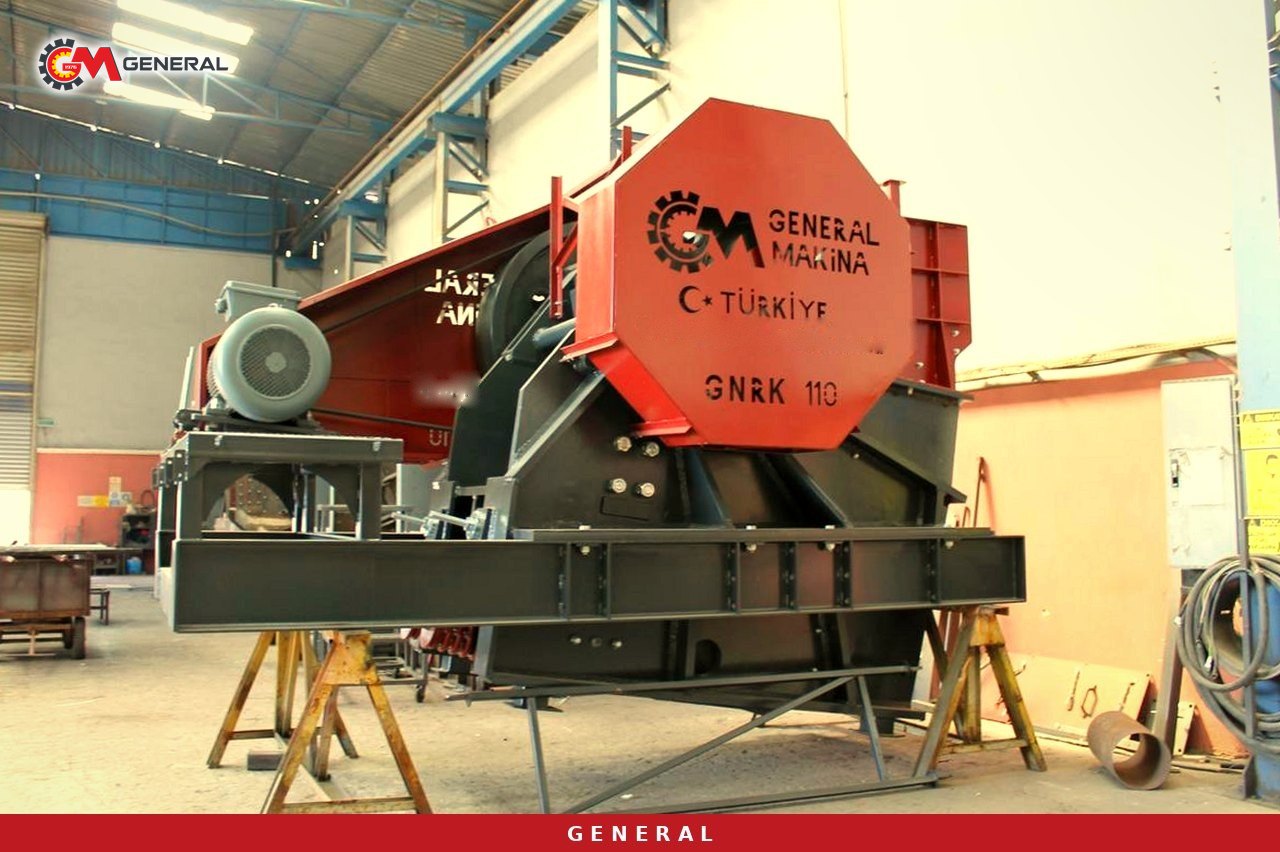
| Criterion | A: General 640 | B: GM 90JP | C: GNR 90 + MK100 |
|---|---|---|---|
| Capacity (t/h) | 60-100 | 70-180 | 70-180 / 90-130 |
| Maximum feed (mm) | 500 | 700 | 0-1100 (series) / 250 |
| Crushing stages | GPJ 60 jaw + GNR 50 impact | GNR 90 jaw (95 kW) | GNRK 90 jaw + MK100 rotor (132 kW) |
| Screen | 1200×4000 mm, 3 decks | 1000×2000 mm, 2 decks | Separate unit |
| Power | 300 kVA (optional) | 250 kVA | — |
| Weight (kg) | 38,000 | 35,000 | 25,000 / |
| Mobility | Wheeled, towed | Tracks | Wheeled, towed |
When reading the table, keep one point in mind: A is the only configuration that covers the title band on its own and delivers screened chippings. The upper capacity values of B and C are higher; this can be seen as a safety margin so that output does not fall below the 60-100 TPH target when tough basalt blocks slow down the feed rate. A wider range of options is shown on the wheeled mobile crushing and screening plants and portable crushers pages.
Via Moroni and Mutsamudu to the quarry: how island logistics shape the machine choice
On the mainland a crusher travels to the quarry by truck; in the Comoros it first needs a port and often a second inter-island sea leg. The ports of Moroni (Ngazidja) and Mutsamudu (Ndzuwani) are the main gateways. At this point compactness becomes a question of shipping safety before it is one of quarry efficiency. Points to settle before ordering:
- The heaviest piece the quay crane or ship's gear can lift, and the unloading method; get this in writing from the port operator.
- Bridge, bend and gradient limits on the road from port to quarry; whether a 17 m chassis can pass narrow village roads should be checked by walking the route.
- Whether the unit ships in one piece or whether parts such as conveyors and screens are removed and loaded separately.
- If the target quarry is on Ndzuwani or Mwali, planning a second sea leg after Moroni.
Of the three, configuration A carries the least uncertainty because it is a single chassis. Configuration C means two units, two shipments and two set-ups; in exchange each piece is lighter. The tracked B needs no foundation work once it reaches the quarry, but it must be carried from port to site on a lowbed.
Salt wind, humidity and scarce water: protecting the machine on site
The archipelago's humid tropical climate, combined with salty ocean air, constantly attacks painted surfaces, electrical panels and bearing housings. On Ngazidja the porous lava soaks up rainwater quickly, so permanent surface water is almost absent; that rules out any assumption of abundant water for dust suppression. Measures that can be selected per project:
- Targeted dust suppression with low-flow spraying at the crusher discharge and conveyor transfer points, with enclosed belt covers where needed.
- A short inspection interval for generator and engine air filters, set by the salt and dust load; keep spare filters on the island.
- Protecting electrical panels from moisture and cleaning the machine with dry methods at the end of the shift.
- Protecting exposed metal surfaces and cylinder rods during long idle periods.
On the power side, avoid depending on the grid: the optional 300 kVA generator of the General 640 and the 250 kVA power unit of the GM 90JP let the line be self-sufficient on a remote lava site. How fuel resupply is organised on the island is part of the operator's own logistics plan.
Wear budget in basalt: which parts to keep on the island?
In the Comoros a worn-out part means a longer stoppage than at a mainland quarry, because the replacement follows the same sea route. Spare stock therefore deserves as much attention in the operator's planning as the part choice itself. The general principle on our wear parts page is that wear is governed by the rock's free silica content, not its Mohs hardness. Jaw plates use Mn13/Mn18 manganese steel whose surface work-hardens under impact; Mn18/Mn22 is preferred in high-silica layers. The cubitzer lining is Hardox 500. On impact crushers, high-chrome castings suit clean, abrasive feed; but because they behave brittly with large, impact-heavy feed, manganese or martensitic steel is the safer choice for massive basalt blocks.
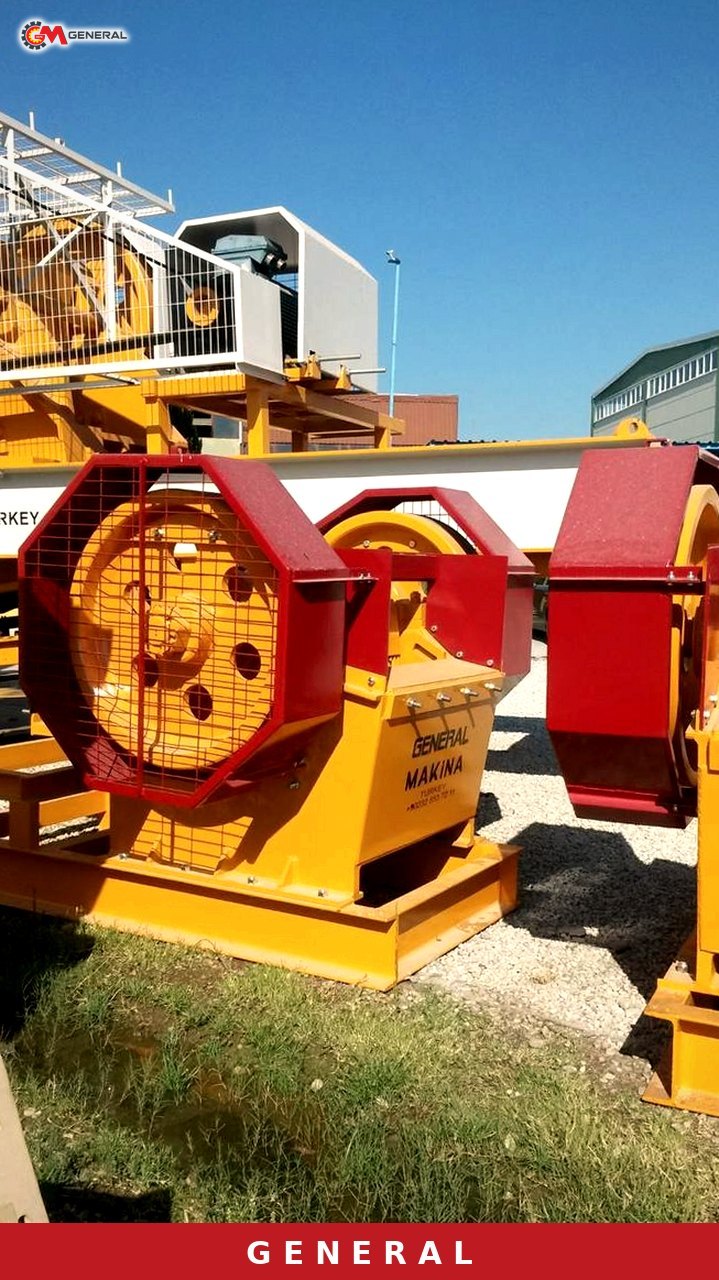
The payoff of keeping vesicular basalt out of the crusher
Scoria and vesicular layers do not strain the crusher, but they turn a large share of the volume into fines. By-passing this material at the grizzly feeder reserves the crusher mouth for massive blocks and lightens the screen load. If its grading suits, the separated fine fraction can be used as fill. In addition, the unsaleable oversize left on the screen can be turned into 0-10 mm manufactured sand with the mobile VSI tertiary unit which accepts 0-200 mm feed and works at 60-250 t/h. On an island looking for an alternative to beach sand, this add-on changes the economics of the line.
A simple formula for replacement planning
Wear cost should be tracked per tonne crushed: wear cost per tonne = (part cost + cost of the stoppage during replacement + cost of shipping to the island) ÷ tonnes crushed over the life of the part. As a hypothetical example, even if the same jaw set lasts as long at an island quarry as on the mainland, once the shipping share is added the cost per tonne comes out higher than at the mainland quarry. That is why sending at least one spare set to the island with the first shipment is usually the most sensible plan.
Information for the quotation file
- The island where the quarry is located and the approximate route from port to quarry.
- Laboratory results for a basalt sample: compressive strength, abrasiveness and preferably the Los Angeles value.
- Site observations on the shares of massive lava, vesicular basalt and clayey cover.
- Target products: concrete chippings, asphalt aggregate, base material, manufactured sand.
- Daily operating hours and target hourly tonnage.
- Power source, generator or grid, and the water available.
- Port and road limits: heaviest piece, longest chassis, unloading method.
Frequently asked questions
Can screened chippings be produced with a single machine in the Comoros?
Yes. Because the General 640 carries the jaw and impact stages and a three-deck screen on the same chassis, it delivers screened 0-5, 5-12 and 12-19 mm product in the 60-100 TPH band from one unit. Remember that its maximum feed is 500 mm, so blasting or pre-sizing ahead of the crusher must be planned accordingly.
How do you choose between the tracked GM 90JP and the wheeled 640?
If the machine will move often within the same quarry and the ground is an uneven lava field, the tracked GM 90JP has the advantage. If screened product from a single shipment is the goal, the 640 comes first. The GM 90JP is a primary; cubical chippings need a second stage behind it.
Doesn't an impact crusher wear quickly in basalt?
The impact stage does wear faster than the jaw in basalt; that is why the first stage is always the jaw and only pre-reduced material reaches the impact or rotor stage. The right alloy and removing fines ahead of the crusher keep wear manageable. Exact part life can only be discussed with sample and operating data.
What determines price and delivery time?
The chosen configuration, options such as generator and screen, the spare parts package and the form of sea transport are decisive. A quotation prepared with this information is shared specifically for the project.
Conclusion
For 60-100 TPH of basalt in the Comoros, the simplest route is the General 640, carrying jaw, impact and screen on one chassis. The GM 90JP makes sense for an operation that moves often within the quarry, and the GNR 90 + MK100 pair for one that wants to place the primary and the shaping stage separately. In all three, the decision rests on port and road dimensions, generator operation and the wear part stock kept on the island. General Makina, manufacturing in Izmir since 1976, supplies ISO 9001 and CE certified machines with a 1-year warranty (wear parts excluded). Send your sample results and site details through our contact page and we will prepare a quotation matched to the configuration and the island logistics.
Definitions of technical terms: Glossary