EN — English
 TR — Türkçe
 DE — Deutsch
 RU — Русский
 FR — Français
 ES — Español
 AR — العربية
 SR — Српски
Manganese Steel Alloy Selection for Crusher Liners
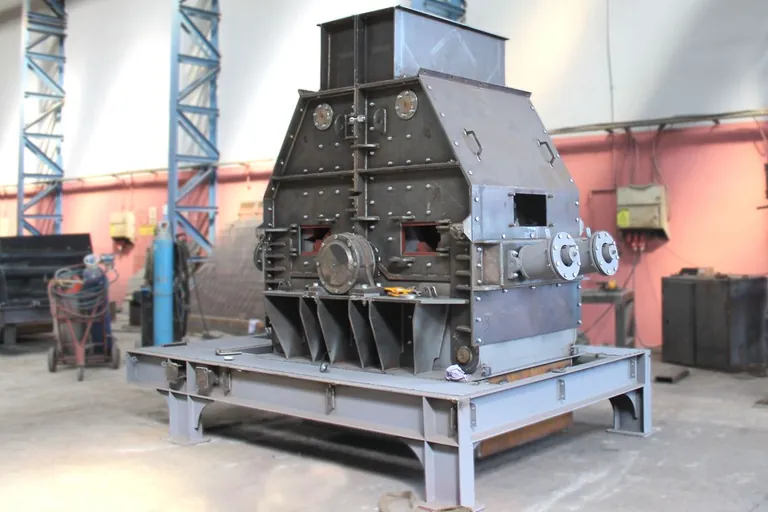
Why manganese steel alloy selection for crusher liners starts with feed hardness
When a wear part order lists nothing but dimensions, the foundry ships its own house alloy and the site never learns which conditions that alloy actually suits. Manganese steel alloy selection for crusher liners begins not with the geometry of the casting but with the impact energy the part receives and the hardness of the feed. Two different alloys bolted into the same jaw frame can differ in service life by a factor approaching two in the same quarry.
Austenitic manganese steels are delivered soft and tough, after solution heat treatment and a water quench. Service is what hardens them: the surface work-hardens as it takes impact while the core stays ductile. That reverses the logic of selection, because what matters is not the hardness on the delivery note but the hardness the surface can reach in the pit.
How work hardening actually works
Under repeated impact and compression the austenite at the surface transforms and hardness climbs quickly. A surface sitting around 200 to 240 HB in the heat-treated condition can rise into the 500 HB band and beyond given enough impact. As the hardened skin wears away, the material underneath renews itself the same way, so the part regenerates its own armour throughout its life.
The condition attached to all of this is "enough impact". Where impact energy is low the surface never hardens, and manganese steel then behaves no better than ordinary structural steel and wears away surprisingly fast. That is why chutes, launders and liner areas exposed only to sliding abrasion are the wrong home for manganese steel.
Alloy families and the feed that suits them
Commercial naming follows nominal manganese content. Standardised base grades of austenitic manganese steel carry roughly 11 to 14 percent manganese, with carbon between about 0.90 and 1.35 percent depending on grade. Higher-manganese variants are foundry classifications, and as manganese rises both the depth of the hardened layer and the surface hardness reached increase.
| Alloy | Nominal Mn | As-delivered hardness (HB) | Work-hardened surface (HB) | Suitable feed |
|---|---|---|---|---|
| Mn13Cr2 | about 13% | 200-240 | 450-500 | Soft to medium limestone, chalky stone |
| Mn18Cr2 | about 18% | 200-240 | 500-550 | Granite, basalt, quartzitic hard rock |
| Mn22Cr2 (Mo bearing) | about 22% | 200-250 | 550-600 | Very hard abrasive ore, high tonnage primary |
| Chrome white cast iron | 15-25% Cr | 600-700 | Does not work-harden | Low impact, heavy sliding abrasion liners and chutes |
Where chrome white iron takes the lead
High chromium white cast iron forms hard chromium carbides inside its matrix. Those carbides act as armour against abrasive grains, and the material already exceeds 600 HB as cast, so it needs no work hardening at all. The price is loss of ductility. Under single heavy blows, such as large blocks falling from height or a piece of tramp metal, the risk of cracking and fracture is markedly higher than with manganese steel.
The practical division is simple. Where the dominant mechanism is grain-on-surface abrasion, chrome white iron wins; where the dominant mechanism is impact crushing, manganese steel wins. Sliding wear from fine material in a tertiary stage and block impact in a primary stage therefore should not be answered with the same alloy.
Alloy cannot be compared without measuring life
An alloy decision can only be tested against measured life, and the unit of measurement is not the calendar but the tonnage that passed under the part. Compare how many tonnes were crushed before the set came off with how many the next set achieved. If shift reports record only days in service, changing feed will hide which alloy was genuinely better. Note the wear profile too: whether the middle or the lower corner of the part ran out can show that feed distribution needs correcting before the alloy does.
Thickness, section and the brittleness trade
Raising manganese content is not free. Higher grades harden more deeply but lose toughness, and thin sections with sharp corners start cracks more easily. High manganese makes sense in thick, heavily impacted primary parts; a mid grade is safer in thin, complex castings. Running empty pushes the same way: a crusher fed intermittently never develops the hardened layer, so the premium paid for a high-manganese part never returns.
Five steps before ordering
First write down the hardness and abrasiveness of the feed. Second, define the type of impact the part sees, single block blows or continuous grain sliding. Third, note section thickness and corner geometry. Fourth, require documentation that solution treatment and water quenching were carried out, along with the chemical analysis; a manganese casting that skipped heat treatment will not behave as expected. Fifth, photograph and file the worn face of the part that came off, because the next alloy decision follows from that record. For the whole procurement side, the crusher spare parts listing shows the line items, while the maintenance routine that stretches part life is covered under maintenance and wear.
Questions
Where does the difference between a copy casting and an original show up?
Even with a similar chemical analysis, the heat treatment regime, casting porosity and section transitions may differ. The difference shows not at the end of life but in where the first crack starts.
Can two different alloys run in the same crusher?
Yes. A fixed jaw and a swing jaw see different impact profiles, and in a cone crusher the mantle and the concave wear in different zones. Giving each position its own alloy is ordinary practice.
Can a work-hardened surface be machined?
The hardened skin resists machining strongly and consumes cutting tools quickly. Holes and machined faces must be finished after casting, before the part ever reaches the pit.
Definitions of technical terms: Glossary