EN — English
 TR — Türkçe
 DE — Deutsch
 RU — Русский
 FR — Français
 ES — Español
 AR — العربية
 SR — Српски

Rotor Balance & Vibration in an Impact Crusher and Screener Plant 120-180 TPH
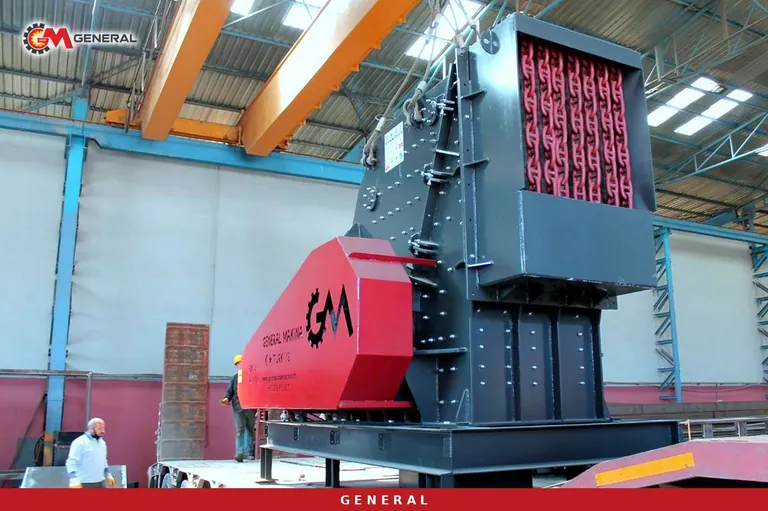
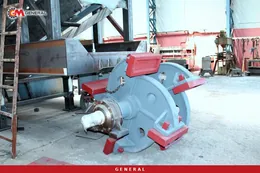
In an impact crusher the rotor is the heaviest part of the plant and the one turning fastest. While the blow bar set on it is evenly weighted and evenly worn, the machine runs quietly. Once one bar breaks, a mismatched bar goes in, or clay builds up on the rotor face, the centre of gravity of the rotating mass moves off the shaft axis. That offset comes back to the housing as a blow on every revolution. On a single-chassis crushing and screening plant producing 120-180 tonnes per hour, the blow does not stay inside the crusher: it travels into the chassis, the screen, the conveyors and finally the bearings. This article is written for maintenance crews who need to spot imbalance early, isolate its source and finish a blow bar change without upsetting the balance.
Technical values are taken from our product pages. Figures such as rotor speed, bolt torque and vibration limits are specific to each machine and bearing type; always read them from the manual of your own machine and never copy them from another unit.
What imbalance leaves behind on site
When rotor balance goes, the first thing the operator usually notices is a change in sound. A crusher that hums steadily when idling starts to knock in a rhythm. If the knock continues after the feed is cut, the cause is the rotating mass, not the material. If it disappears with the feed, look first at the feeding pattern and the crushing chamber.
First signs on the crusher housing
Typical signs are bearing housing temperature creeping up over the shift, loosening bearing bolts, belts flapping on the pulley side and dust escaping through the seals of the housing covers. If the vibration you feel by hand is clearly stronger on one side, that is the first clue as to whether the imbalance sits on the pulley side or the opposite side. This check must be backed up by an inspection of the housing and bolts carried out only with the machine stopped, isolated and the rotor locked; nobody goes near the moving parts of a running crusher.
Vibration spreading into chassis, screen and conveyors
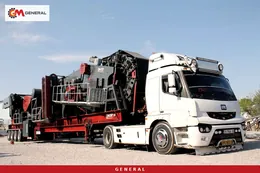
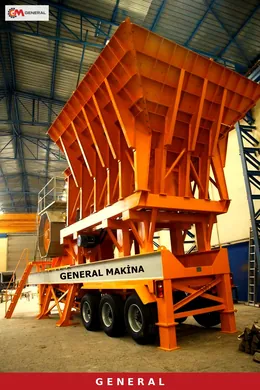
On a mobile plant the crusher and the screen share one chassis. On the General 01, a GPS 1210 impact crusher and a 1600×5000 mm four-deck vibrating screen ride on a single wheeled chassis with a total weight of 55,000 kg. Uneven force from the rotor can start fatigue cracks in the welded joints of that chassis, push the screen springs out of their working plane and make belts slip on the conveyor drums. If you see unusual tearing on screen meshes or conveyor idlers failing earlier than expected, add the crusher rotor to the checklist before blaming the screen.
Rotor dimensions of impact crushers in the 120-180 TPH range
Rotor diameter and width directly affect how much force an imbalance produces. Centrifugal force is F = m × r × ω², where m is the unbalanced mass, r its distance from the shaft and ω the angular speed. Because force grows with the square of speed, the same mass error is felt much harder on a larger rotor turning faster. The table below brings together the published values of the units considered for this capacity range.
| Unit | Rotor (mm) | Max. feed (mm) | Motor / power | Capacity (t/h) |
|---|---|---|---|---|
| General 01 mobile plant (GPS 1210) | — | 700 | 550 kVA generator | 120-180 |
| GPS-1210 impact crusher | 1200×1000 | 600 | 160 kW | 100-250 |
| GNR DMK01 secondary impact crusher | 1100×1000 | 800 | 160 kW | 120-180 |
| M-DMK 01 mobile secondary unit | — | — | 160 kW | 120-180 |
| General 800 mobile plant (PDK 1280) | — | 600 | 450 kVA generator | 80-150 |
The General 01 plant page lists a 700 mm feed size, while the GPS-1210 crusher table gives 600 mm; we recommend confirming your quarry block size at the quotation stage. The General 800 sits at the lower end of the range and cannot reach 180 tonnes on its own. The difference between rotor sizes looks small, yet a blow bar weight difference matters more on a 1200 mm rotor than on a 1100 mm one.
Six sources that upset the balance
Most rotor vibration seen on site comes from operating and maintenance habits, not manufacturing faults. Separating the sources stops you replacing the wrong part and wasting money.
Imbalance coming from the blow bar set
The most common cause is bars of different weight on the same rotor. It happens when one broken bar is replaced on its own, when old and new bars are mixed, or when only part of a set of reversible bars is turned. A broken bar is often the result of something uncrushable in the feed, such as a bucket tooth or a piece of steel. On sites processing demolition concrete, rebar carries the same risk.
Sources outside the rotor
With wet, clayey material the layer that sticks to the rotor face and the bar holders does not spread evenly; it thickens in one area and behaves like an unbalanced mass. Increased bearing clearance, play between shaft and housing and a pulley not seated fully on the shaft also show up as imbalance. Uneven belt tension across the pulleys concentrates vibration on the drive side. Finally, a mobile plant that is not sitting firmly on the ground can push the chassis into resonance even when the rotor itself is sound.
A blow bar change sequence that keeps the rotor balanced
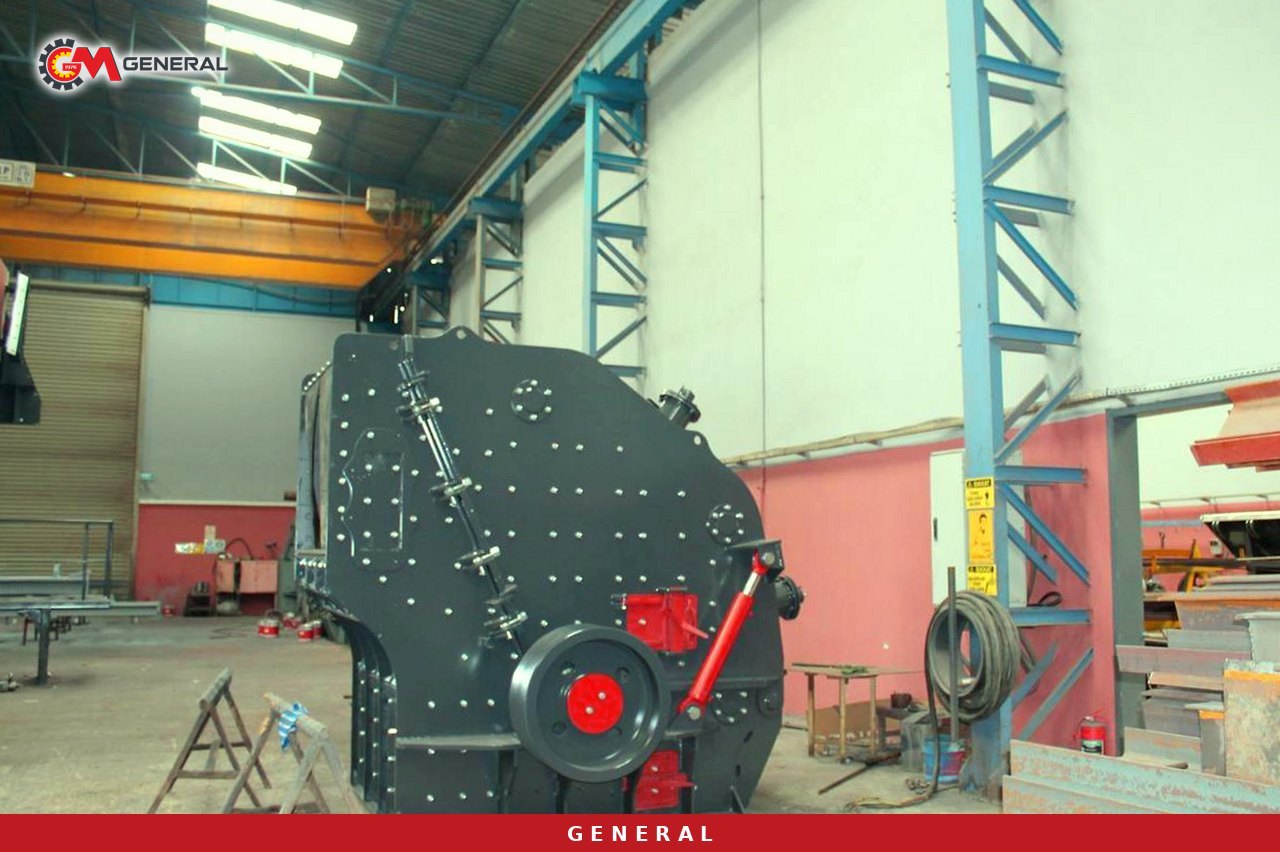
A blow bar change is the moment rotor balance is most often lost. The sequence below is written so that the result stays the same even when crews change:
- Stop the crusher, lock out and tag the main isolator, and secure the rotor with its mechanical lock.
- Weigh each new bar before fitting it and record the weights.
- Place bars from the same weight group in opposite positions; replace an opposite pair or the full set, never a single bar.
- With reversible bars, turn the whole set at the same time.
- Tighten the holder wedges and bolts in the order and to the torque given in the manual.
- Clean built-up material off the rotor face and check the holder seats for cracks.
- Make the first start without load, log bearing temperature and vibration, then begin feeding.
For manganese, martensitic and high-chrome blow bar options and cross-brand parts supply, see our crusher spare and wear parts page. Alloy choice affects balance too: on a site with tramp steel in the feed, a brittle high-chrome bar can snap and leave the rotor unbalanced in an instant.
Measurement, records and remote monitoring
Feeling the housing by hand tells you something is wrong; measurement tells you what to do about it. Take regular vibration readings on the bearing housings in the horizontal, vertical and axial directions and store them with the date. A single reading says little. The trend of readings from the same point over weeks shows how blow bar wear is progressing and what condition the bearing is in. Take limit values from the bearing manufacturer and the machine manual.
The General 01 has a touch panel, soft starter and frequency control, with remote monitoring over the internet offered as an option. Panel data does not replace a vibration sensor, but seeing motor current swings and feeder frequency on the same screen makes it easier to tell whether a problem comes from the material or the rotor. For the full set of daily and periodic checks, our mobile crushing plant maintenance instruction gives a detailed list.
Feed pattern and installation ground
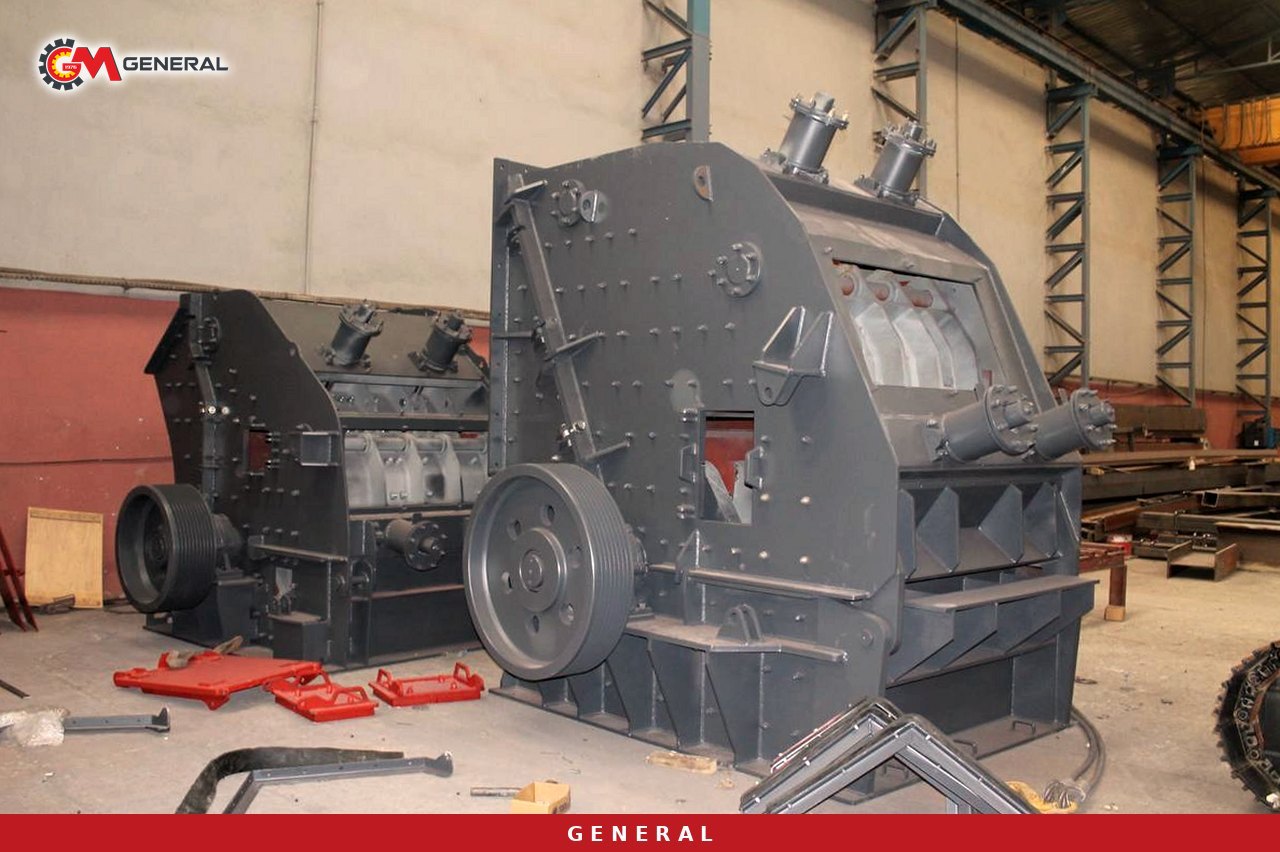
Even a balanced rotor gets hit with surging loads if the feed is uneven. Too much material entering the chamber one moment and too little the next sets up swings in motor current and bearing load. The vibrating feeder with by-pass grizzly on the General 01 removes fines ahead of the crusher, and adjusting feeder frequency from the panel smooths the flow. Picking oversized blocks out at the feed opening stops the rotor taking hard single-point impacts. The GPS series HSI crusher is designed for limestone, dolomite and concrete recycling; high-silica granite and basalt wear blow bars quickly and unevenly, which upsets the balance more often.
At installation the plant must stand level on firm ground. A chassis set up on loose fill settles to one side over time; the screen and crusher then run at an angle and vibration gathers in one corner. Measures such as support legs, packing blocks and concrete pads can be chosen to suit the project. Checking the level of a wheeled plant before its first shift on every new site rules out non-rotor vibration from the start. For other options in this range, browse our wheeled mobile crushing and screening plants, and for standalone machines the stone crushers category.
Frequently asked questions
Can rotor balance be restored on site?
Matching blow bar weights, cleaning off build-up and tightening loose connections are all done on site and remove most imbalance. If the rotor body is damaged, the shaft is bent or a holder seat is cracked, the rotor needs to be checked on a dynamic balancing machine in a workshop.
Is it enough to replace just the one broken blow bar?
No. A new bar is heavier than its worn neighbours and leaves the rotor unbalanced. Replace the opposite pair or the full set together, and keep the bars that come out in good condition as a spare set, labelled with their weights.
Does capacity drop when vibration rises?
When vibration rises, operators usually cut the feed, which lowers hourly output. Bearing life and chassis joints suffer as well. The measurable loss varies with machine and material, so track it against your own tonnage and downtime records.
Does the warranty cover rotor and blow bar failures?
Our machines carry ISO 9001 and CE certification and a 1-year warranty. Wear parts such as blow bars are outside the warranty. Price and delivery are project-specific; you can request a quotation with your capacity and material details.
Closing note for the maintenance crew
Rotor balance is kept by weighing and matching bars at every change, by logging vibration regularly in operation and by setting the plant on proper ground. We have been building impact crushers and mobile plants in Izmir since 1976; let us work out together which General 01, GPS or DMK layout suits your site in the 120-180 TPH range. Contact us with your material type, block size and target product list, and we will prepare a quotation for your project.
Definitions of technical terms: Glossary