EN — English
 TR — Türkçe
 DE — Deutsch
 RU — Русский
 FR — Français
 ES — Español
 AR — العربية
 SR — Српски

Grizzly Feeder Selection for a 150-300 TPH Stone Crushing Plant
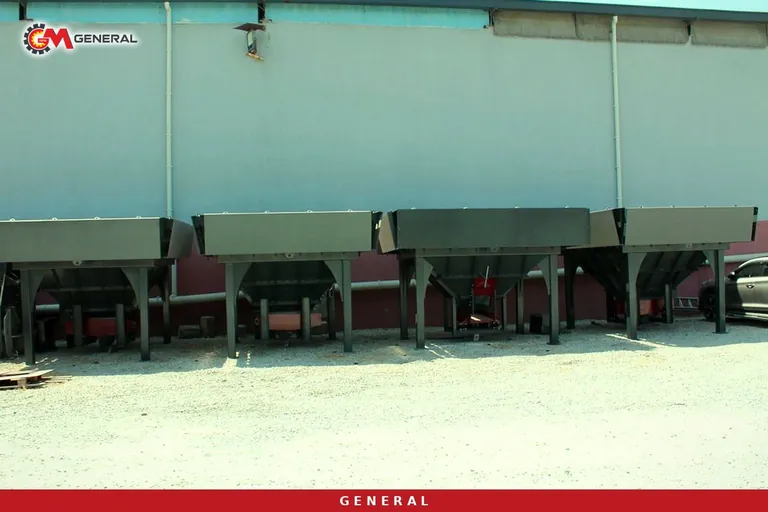
On a line crushing 150-300 tonnes of stone per hour, the output of the primary crusher is very often set by the feeder in front of it rather than by the crusher itself. A truck empties into the hopper in two minutes; the crusher wants the same rock at an even rate for hours. The machine that bridges that gap is the vibrating grizzly feeder. This article explains what happens inside the feeder, which General models match each other in the 150-300 TPH range, how to think about hopper volume and bar spacing, and in which material a grizzly feeder stops being the right choice. Every technical value below comes from the tables on our product pages.
Inside the trough: vibration, springs and bars
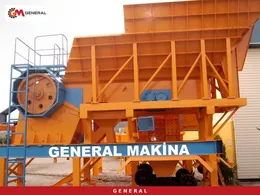
A feeder has three parts: the hopper that receives the run-of-mine rock, the vibrating trough underneath it and the grizzly section at the end of the trough. A loader, truck or excavator drops the material into the hopper. The trough sits on heavy-duty helical springs and walks the rock towards the crusher by vibration. Depending on the model and the project, the drive is a vibromotor or a belt-and-pulley eccentric mechanism.
Why inclined vibration moves rock forward
With every stroke the trough throws the material slightly up and forward. The stone stays airborne for a fraction of a second and lands a few millimetres further on. The sum of those small steps is the hourly feed rate. Change the amplitude or frequency and the flow speed changes with it, so one body can cover different tonnages, but its width and length set the upper limit.
The grizzly section and the by-pass line
The last part of the trough carries abrasion-resistant bars with gaps between them. Oversize rock slides over the bars into the crusher mouth. Small stone and soil fall through the gaps and go to a conveyor or screen without ever entering the crusher. That split pays twice: the crusher stops carrying material it does not need to break, and the jaw plates are spared the abrasive fines that arrive with the soil. Whether the undersize goes to its own stockpile or onto the main product belt depends on how clean or clayey it is, and that route should be drawn on the site layout from day one.
The feeder's second job is to keep the crusher mouth full all the time. With a choke-fed mouth, stones also break against each other, particle shape comes out more cubical and output is steadier. In a half-empty mouth the swing jaw moves without load, plates wear unevenly and the product turns flaky. This is why every model in our crusher feeder range is specified together with its crusher.
Feeder and crusher pairings for 150-300 TPH
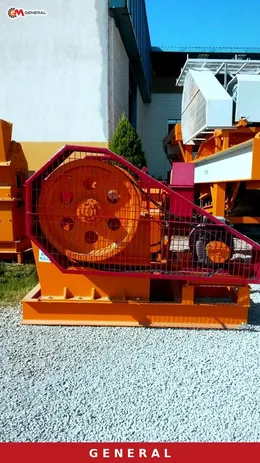
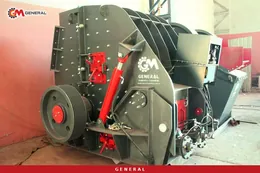
No single model pair covers the whole range. In the lower half, the GNR 90 feeder with the GNRK 90 jaw crusher is the natural match; in the upper half, the GNR 110 feeder with the GNRK 110 jaw crusher. The table puts the values from the vibrating grizzly feeder and GNRK jaw crusher pages side by side.
| Configuration | Feeder size (mm) | Feeder capacity (t/h) | Feeder motor (kW) | Jaw opening (mm) | Crusher capacity (t/h) | Crusher motor (kW) |
|---|---|---|---|---|---|---|
| GNR 90 + GNRK 90 | 1000×3750 | 140~210 | 2x4 | 900×650 | 60–225 | 75/90 |
| GNR 110 + GNRK 110 | 1100×4750 | 200~300 | 2x7.5 | 1100×850 | 200–350 | 110/132 |
| GNR 140 feeder (reserve margin) | 1400×5000 | 350~600 | 2x9.2 | — | — | — |
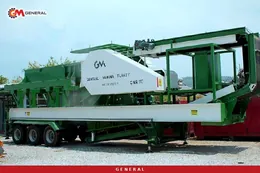
| Mobile GNR 110 (single chassis, GNRK 110) | 1100×4750 | 180-300 | — | GNRK 110 | 180-300 | — |
Two points matter when reading the table. First, the GNR 90 feeder tops out at 210 t/h; if the target is a steady 250 TPH, the feeder becomes the bottleneck even though the GNRK 90 crusher is rated up to 225 t/h on paper. Second, the GNR 110 feeder runs at its upper limit at 300 t/h. When the run-of-mine carries a lot of fines, a larger share drops through the bars and the tonnage reaching the crusher falls, so the 300 TPH target is held comfortably. With blocky, clean rock, the GNR 140 feeder leaves margin. Its 1400 mm body, however, is wider than the 1100 mm GNRK 110 mouth and needs a narrowing chute in between. That chute raises the risk of stones bridging, so we evaluate this option project by project.
For buyers who want a single-chassis unit, the mobile GNR 110 carries the feeder hopper and the GNRK 110 crusher on one chassis, accepts 0-1100 mm feed and works at 180-300 t/h. Operations that move site every few years and want no foundations should put this option on the table next to a fixed line. For long-life quarries, the layouts on our stationary crushing plants page are a better starting point. As a published example in this capacity band, see the 110 fixed crushing plant rated at 300 t/h in Turkey.
Hopper volume, largest rock and jaw opening
Our grizzly feeders are offered with 15-100 m³ hoppers and a maximum feed size of 1500 mm. A feeder that accepts 1500 mm does not mean that rock will pass the crusher. On a jaw crusher, maximum feed is about 0.8-0.9 of the opening width. With the 1100 mm opening of the GNRK 110 that is roughly 880-990 mm; with the 900 mm opening of the GNRK 90, about 720-810 mm. If the blast pattern produces larger blocks, either secondary breaking with a hydraulic hammer is done in the pit, or the next crusher size up is chosen. A block stuck on the grizzly bars means minutes of an idling crusher.
A simple formula for hopper volume
The hopper should hold enough buffer to cover one cycle of the loading equipment. The formula we use: buffer time (minutes) = hopper volume (m³) × loose bulk density (t/m³) × 60 ÷ feed rate (t/h). Hypothetical example: a 40 m³ hopper, 1.6 t/m³ loose density and 250 t/h feed give a buffer of about 15 minutes. If your truck cycle is longer, enlarge the hopper or plan a second loading machine. Loose density varies with rock type and blasting, so have it measured on your own sample. The height of the hopper side walls must also suit the dump height of the loader bucket; otherwise operators hit the walls and the body fatigues early.
How it differs from a bin feeder and a grizzly screen
We regularly see three machines mixed up in purchase files. The vibrating sand feeder (bin feeder) is built for processed sand, chippings and aggregate. It comes with 25, 50, 75 and 100 m³ bins and a maximum feed size of 200 mm. Its job is to stockpile and give a dosed flow to a belt; it is not designed to carry run-of-mine rock to a crusher.
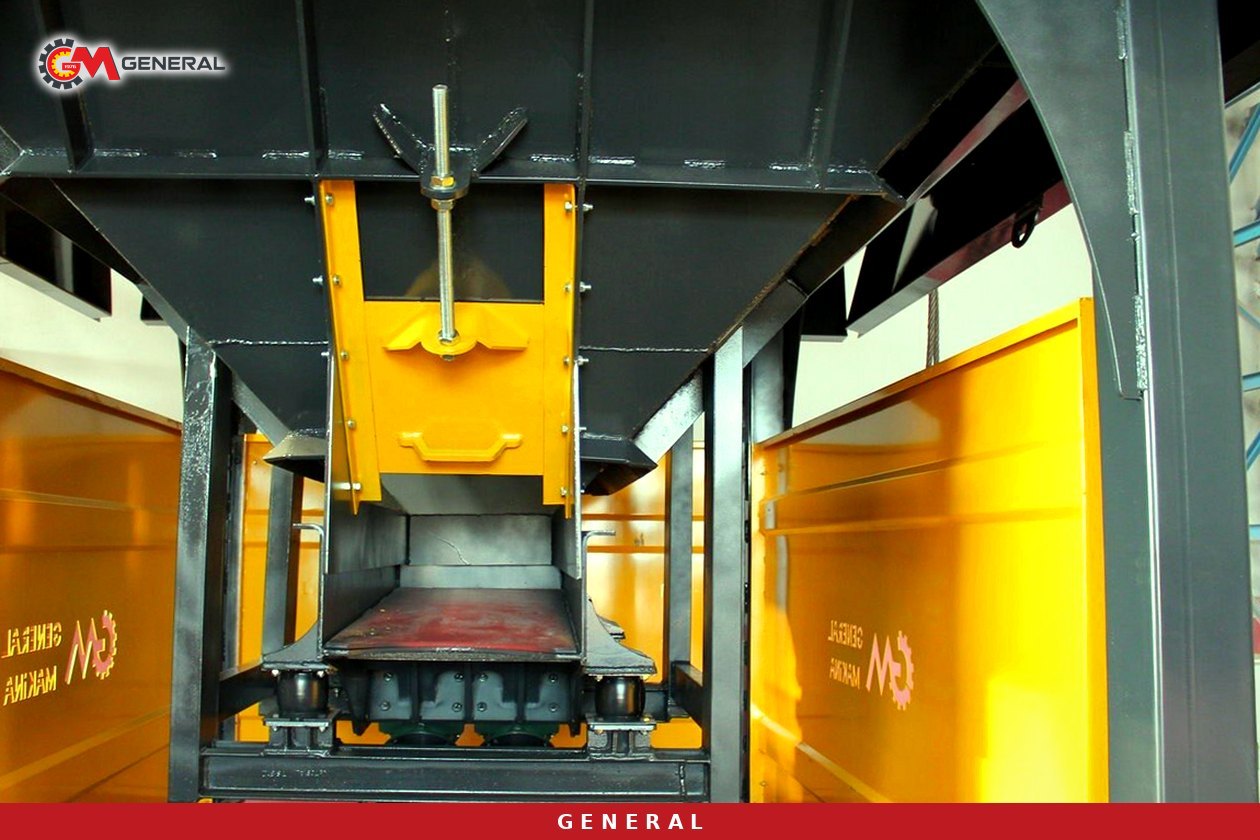
The grizzly screen is a separate machine. The G type sits between the feeder and the primary crusher and uses two vibromotors for linear motion; the M type removes fines ahead of the secondary crusher. On most 150-300 TPH lines, the feeder's own by-pass section is enough. If the run-of-mine carries a very high soil share, or you want to sell the undersize as a separate product, adding a G-type grizzly screen after the feeder gives a cleaner split. An overview of which crusher works at which stage is on our crushers category page.
Switching to a wobbler feeder for clayey, wet feed
The weak point of a grizzly feeder is moist, sticky material. Clay smears into the bar gaps, the openings close (blinding and pegging) and fines go into the crusher instead of the by-pass. Clay builds up in the crusher mouth, capacity drops and the line stops. If you see these symptoms in the first rainy week, the problem is the machine type, not the setting.
On such sites the wobbler feeder is the correct choice. The GWB1136 model is 1100 mm wide and 3600 mm long with an 18.5 kW motor; it has a motor-gearbox-chain drive, takes a 15-100 m³ hopper and 1500 mm feed, and its feed capacity is 75-600 t/h. As the elliptical disc shafts rotate, sticky material cannot hold on between them and the grate cleans itself. Because it rotates instead of vibrating, noise and vibration transmitted to the structure are also low. For buyers who want a wobbler feeder and jaw crusher on one chassis, a mobile jaw unit rated at 250-450 t/h is also available.
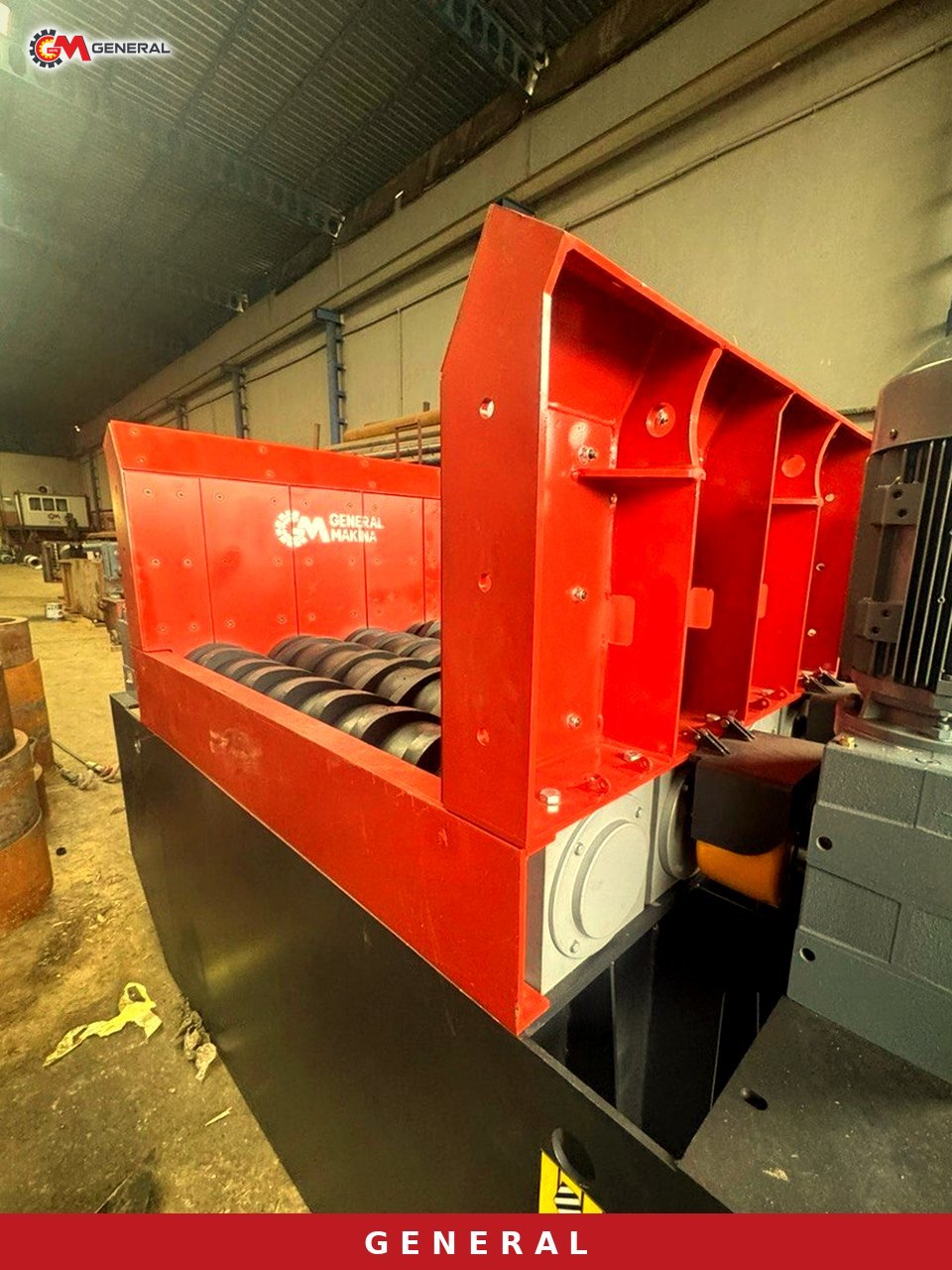
We use a simple rule for the decision: dry and medium-moisture granite, basalt or limestone run-of-mine goes to a grizzly feeder; clayey river material that turns to mud in the wet season, or quarries with heavy overburden, go to a wobbler. For sites in between, have a sieve analysis and clay content test run on a wet sample taken from the pit, and decide on the basis of that report.
Commissioning and daily operating checks
Check the feeder against the following items at first start-up and on every shift after that:
- Look for broken, crushed or displaced helical springs; a single weak spring makes the trough tilt to one side.
- Check the bolts of the body wear plates for tightness and replace a thinning plate before it reaches the body plate.
- Measure bar wear on the grizzly; as the gap opens, stone that should be crushed escapes to the by-pass line.
- Watch the fill level of the crusher mouth at the start and end of each shift; if the mouth keeps emptying, correct the vibration setting or the hopper fill level.
- Log belt tension and bearing temperature on vibromotor or eccentric drives.
- Inspect the undersize stockpile visually: if it contains large stones that should have been crushed, the bar gap is too wide for your product.
Bar spacing is fixed at order stage according to the material and the target by-pass size. The main reference is the crusher's discharge setting: if a particle passing the bars is coarser than the crusher's current output size, uncrushed stone ends up in the product. The output range is 70–180 mm on the GNRK 90 and 150–225 mm on the GNRK 110, so bar spacing has to be discussed together with these values.
Frequently asked questions
Does a grizzly feeder do the screening on its own?
It does a coarse pre-screen: it separates soil and fines before the crusher. Product classification needs a vibrating screen further down the line; the feeder's grizzly is not designed to split final products.
For a 200 TPH target, GNR 90 or GNR 110?
The GNR 90 feeder is rated at 140~210 t/h, so continuous running at 200 t/h stays close to its limit. If a capacity increase is planned or the blast produces large blocks, the GNR 110 + GNRK 110 pairing leaves a wider margin.
Can I buy only a feeder for my existing line?
Yes. Send us your crusher's opening size, hourly target, how the hopper is loaded and the moisture condition of the run-of-mine; we will propose the body size and hopper volume accordingly.
What do price and delivery time depend on?
Model, hopper volume, drive type (vibromotor or eccentric), grizzly layout and any chassis or steel structure requirement set the price. Delivery time depends on the production schedule at the time of order and is stated in writing in the quotation.
What to send for a quotation
Four pieces of data are enough to choose the right feeder: rock type and moisture condition, the largest block coming from the blast, the hourly target tonnage and the primary crusher you use or plan to buy. Send them through our contact page and we will propose a feeder and crusher configuration built in İzmir since 1976, carrying ISO 9001 and CE, with a 1-year warranty excluding wear parts.
Definitions of technical terms: Glossary