EN — English
 TR — Türkçe
 DE — Deutsch
 RU — Русский
 FR — Français
 ES — Español
 AR — العربية
 SR — Српски

10 Energy Savers for a 200-375 TPH Crushing and Screening Plant
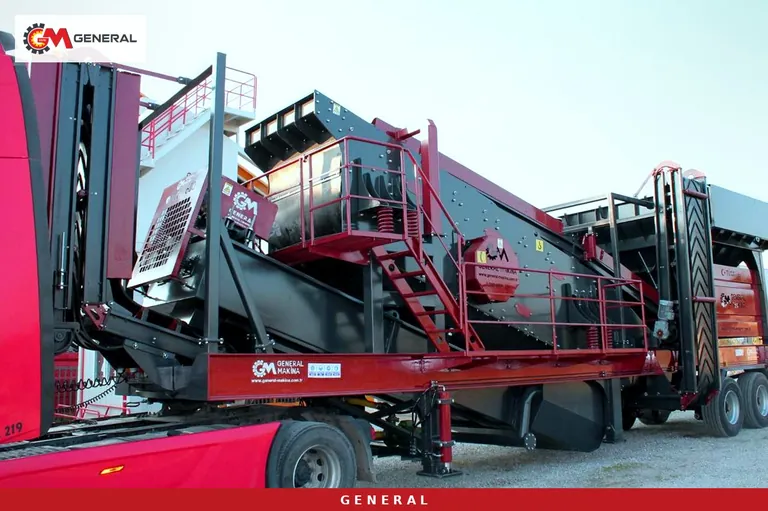
On a line that crushes between 200 and 375 tonnes per hour, the energy bill depends far more on how the line is run than on the kilowatt rating printed on the crusher motor. The same machine can use noticeably different energy per tonne in two different quarries. In one, the feed is steady, the screen is clean and the belts run loaded. In the other, the crusher runs half empty, fines get crushed for no reason and the generator burns fuel at low load. This article walks through where a 200-375 TPH crushing and screening plant actually spends its energy and gives 10 savings measures you can apply on site, using the real catalogue values of our wheeled mobile models and stationary line components. We do not quote savings percentages, because every quarry has its own rock, moisture and product list. Instead we give you indicators you can measure on your own plant and the adjustments that move them.
Where the energy goes at this tonnage
A crushing and screening line has four groups of electrical consumers: crusher motors, the vibrating feeder and screens, conveyor belts, and auxiliary equipment (hydraulic unit, pumps, lighting, controls). The crusher takes the largest share, but the power it draws changes with the amount and size distribution of the material reaching it. If fine stone that needs no crushing enters the chamber, or part of the crushed product comes back from the screen to be crushed again, the motor has worked twice for the same saleable product.
That is why energy efficiency has to be looked for across the whole flow, and not machine by machine. The unit of measurement follows from this: not installed power, but kilowatt hours spent per saleable tonne. The calculation is simple. Take the average draw (kW) measured over a given period and divide it by the saleable tonnage (t/h) that crossed the weighbridge or belt scale in the same period. The result is kWh/t, and the effect of every measure below shows up in that single number. On a generator-powered site the same logic applies to fuel: litres burned in a shift divided by saleable tonnes produced in that shift.
Configurations and power ratings in the 200-375 TPH band
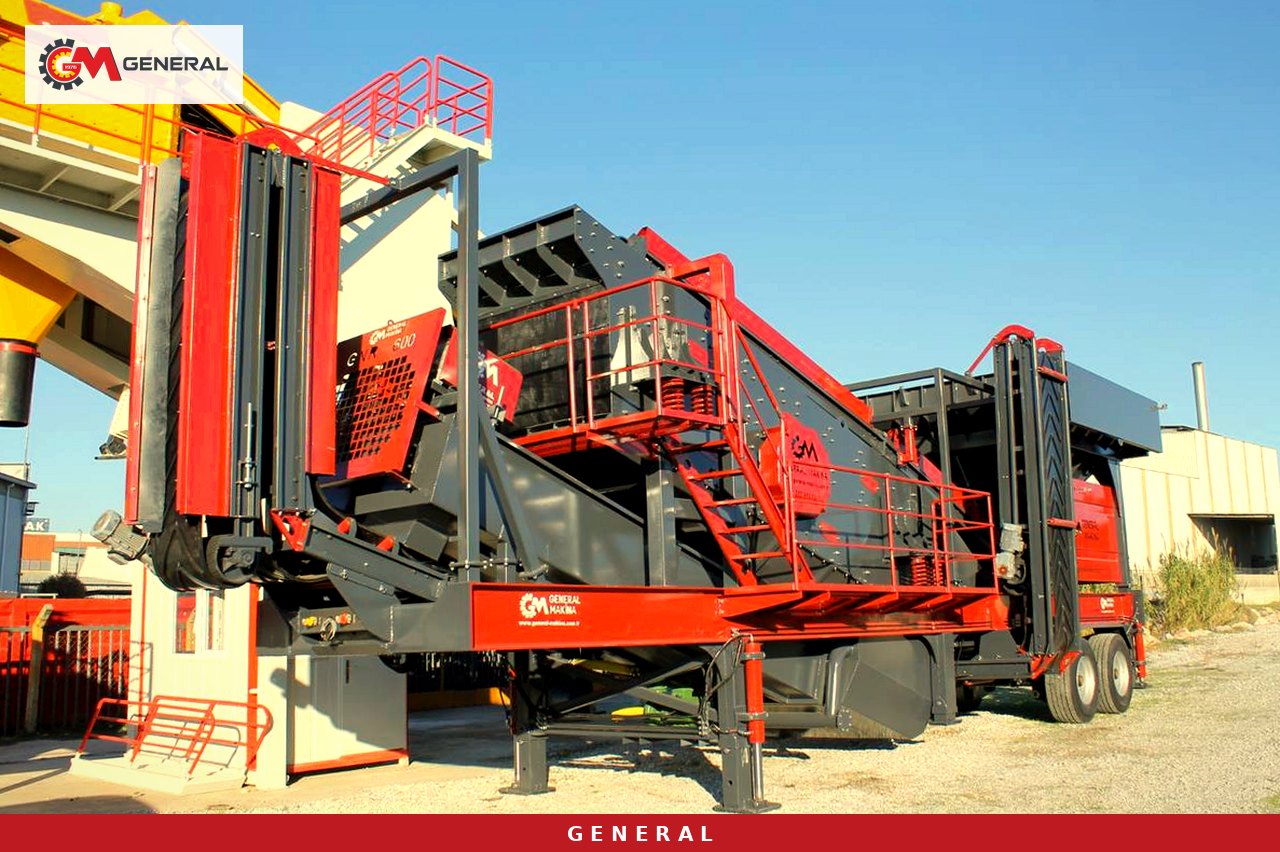
No single mobile model covers the whole range in the title. Two of our wheeled models sit inside the band, and for quarries with a longer working life a stationary line is built. The values below are catalogue data from the product pages, and each one belongs only to the model or machine named.
| Configuration | Capacity (t/h) | Main crusher | Max. feed (mm) | Screen | Power source | Weight (kg) |
|---|---|---|---|---|---|---|
| General 02 (wheeled, 2 axles) | 250-300 | GPS 1413 primary impact | 1000 | 2000×5000 mm, 4 decks | 660 kVA generator | 76,000 |
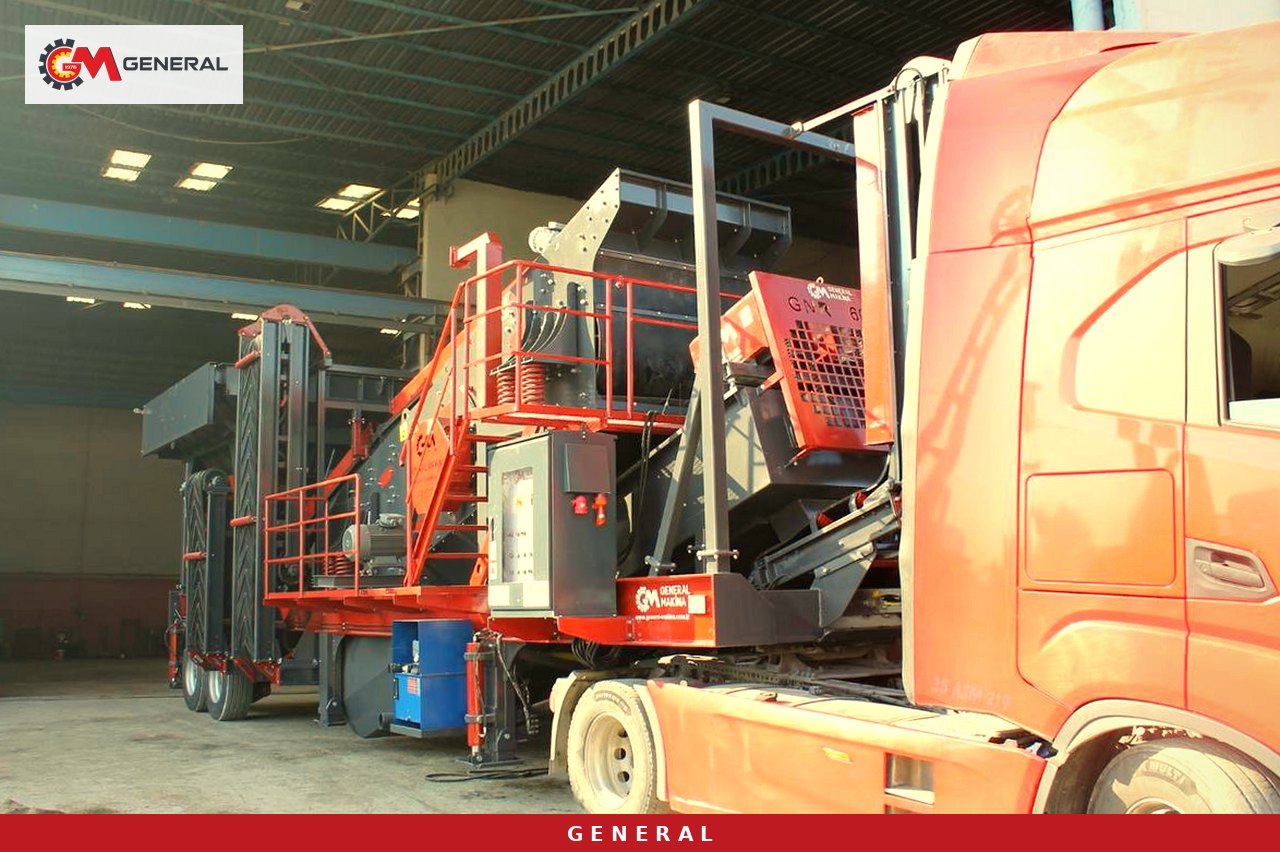
| General 03 (wheeled, 4 axles) | 250-375 | GPS 1415 primary impact | 900 | 2400×5000 mm, 4 decks | 750 kVA generator | — |
| Stationary line, primary stage | 200-350 (GNRK 110) | GNRK 110 jaw, 110/132 kW | — | Per project (e.g. GNR 2460, 2400×6000 mm, 22 kW) | Grid or generator, per project | 33,000 (crusher only) |
Crusher motor ratings are listed separately on the GPS series product page: 250 kW for the GPS 1413 and 315 kW for the GPS 1415. On the feed side of the line, the GNR 110 vibrating feeder runs at 200-300 t/h with 2×7.5 kW motors, and the GNR 140 at 350-600 t/h with 2×9.2 kW. These figures look small next to the crusher, yet the work the feeder does decides how efficiently the crusher will run. To compare options, see our wheeled mobile crushing and screening plants and our stationary stone crushing and screening lines.
Two measures on the feed side
1. Keep fines out of the crusher entirely
Part of the run-of-quarry material arriving from the face is already below target size. If that fraction passes through the crusher, the motor is loaded for nothing, the liners wear for nothing and the dust content of the crushed product rises. The bypass section of a vibrating grizzly feeder separates these fines and sends them straight to a belt or the screen. Choosing the grizzly bar spacing to suit your product list can lighten the crusher's hourly load with only a few bars changed. With clayey, wet feed the grizzly blinds; a blinded grizzly loses its bypass function and the whole stream lands on the crusher. Cleaning the grizzly between shifts is therefore an energy task.
2. Keep the crusher choke fed
Impact and jaw crushers alike spend most of their energy spinning the rotor or moving the jaw when they run half empty, rather than breaking rock. If truck arrivals are irregular, the hopper fills and empties in turn, and the crusher swings between overload and idling. The fix has two parts: hold a buffer level in the hopper, and tie feeder speed to the current drawn by the crusher. In the automation and control system a frequency drive sets this balance on its own. As crusher current approaches the threshold the feeder slows down, and when current returns to normal the feed rate goes back up.
Three settings at the crushing stage
3. Match the crushing principle to the rock
In low-silica rock such as limestone and dolomite, an impact crusher gives a high reduction ratio. The GPS crushers in the General 02 and General 03 handle primary and secondary work in one body, so no second crusher motor is needed. In abrasive rock such as basalt, granite and quartzite, the parts of an impact rotor wear out fast. There, a stationary line with a jaw primary and a cone secondary gives less wear per tonne and a steadier power draw. If the rock type is uncertain, have a representative sample tested for abrasiveness and compressive strength before choosing a machine. On a line built around the wrong principle, no adjustment closes that gap.
4. Do not run on worn parts
A blow bar with a rounded edge, or a jaw plate whose profile has gone flat, rubs the rock instead of breaking it. The crusher has to run longer and at higher speed to give the same product, the flaky particle share at the discharge rises and more oversize comes back from the screen. Tie wear part replacement to measurement, not to the calendar: measure the profile at set tonnage intervals and compare it with the rise in kWh/t. The point where both curves climb together is the economic moment to change parts.
5. Watch the recirculating load in closed circuit
The General 02 and General 03 work in closed circuit; anything that has not reached target size is sent back to the rotor. If tonnage on the return belt has gone up, the crusher is breaking the same stone several times. The usual cause is a wrong crusher setting or a screen aperture chosen smaller than necessary. Fitting a belt scale on the return conveyor, or at least taking a regular belt cut sample, makes this loss visible. Throttling the line to produce a fine fraction that does not actually sell also costs energy, so review the product list together with your market.
Two measures on screens and conveyors
6. Set screen apertures and slope for the material
On circular motion vibrating screens, each extra deck cuts capacity by roughly ten percent, and near-size particles (75-125 percent of the aperture) lower screening efficiency. A screen that loses efficiency carries product to the upper deck, and from there it goes back to the crusher on the return belt. On a four-deck screen, leaving an unneeded deck empty or rearranging the meshes to match the product list reduces recirculation. A blinded or torn screen wire gives the same result; a daily visual check is a five-minute job at the start of the shift.
7. Run belts loaded and correctly tensioned
A line has tens of metres of belting, and every belt draws power even when it runs empty. A mistracked belt rubs on the structure, a seized idler stops turning and brakes the belt, and low tension causes slip on the drive pulley. Idler noise and temperature checks, scraper adjustment and belt tracking belong on the weekly maintenance list. Using four-ply EP 125 rubber on the belt under the impact crusher limits how much the impact load wears out the belt and the drive. When production stops, running the line until the belts are empty before switching off also means the next start does not happen on a loaded belt.
Three measures on electrics and power supply
8. Use sequential starting and soft starters
A large motor started direct on line draws several times its rated current for a short time. If all motors start together, a generator sees voltage dips, and a grid connection needs a bigger transformer and larger fuses than necessary. The correct order is the reverse of the material flow: start with the stockpile belts, move through the screen and crusher, and bring the feeder in last. A soft starter or frequency drive on the crusher motor spreads the starting peak and helps size the power source for a lower peak value.
9. Run the generator according to its load factor
The 660 or 750 kVA on the rating plate is the maximum apparent power the power unit can deliver; the real working power is the kVA figure multiplied by the power factor. A diesel generator that runs at low load for long periods burns more fuel per kilowatt hour produced, and soot builds up in the engine. Cutting feed interruptions short is therefore a fuel item as well as a production item. On grid-connected lines, a power factor correction panel should be considered for the reactive power drawn by the motors. When deciding between generator and grid on a remote site, weigh how long the plant will stay there together with the reliability of the grid supply.
10. Do not adjust without measuring
Only measurement shows which of the nine steps above makes the biggest difference in your quarry. Once the automation panel is networked, shift tonnage, downtime, motor currents and alarm history are logged. With these records you can work out kWh/t or litres per tonne for each shift and see the effect of a setting change within a few days. If you have no measurements yet, a good starting point is to enter your own values into the energy and wear cost calculator and see which item your cost per tonne is concentrated in.
Shift and weekly checklist
- Keep the hopper level in the buffer band throughout the shift and log the time the crusher runs idle.
- Clean the feeder grizzly between shifts and check that the bar spacing still fits the product list.
- Watch crusher current and feeder speed on the panel; a crusher sitting at the threshold all the time is overloaded.
- Measure blow bar and jaw plate profiles at set tonnage intervals and compare them with the kWh/t curve.
- Weigh the return belt tonnage at least once a week.
- Check screen wires for blinding and tears, and review any deck left empty.
- Put idler noise and temperature, belt tracking, scraper and tension settings on the weekly list.
- Start motors in reverse flow order, and empty the belts before shutting down.
- Record litres per tonne per shift on generator sites, and kWh/t on grid power.
Frequently asked questions
How much can these measures save?
The figure depends on rock hardness, moisture, the product list and the present condition of the line, so we do not give a general percentage. First measure kWh/t or litres per tonne over a few shifts, then apply the steps one at a time and keep watching the same indicator. The difference you see is the real number for your site.
Is one mobile machine enough for 375 TPH?
The General 03 is catalogued at 250-375 t/h and is our only wheeled model that reaches the top of the band. Actual tonnage depends on rock hardness and the product list, and running constantly at the upper limit raises both wear and power draw. If a long-life quarry is targeting this tonnage, a stationary line or a two-unit setup should also be considered.
Can a frequency drive be retrofitted on an existing line?
Adding drives to feeder and belt motors is possible on most lines; panel layout, cable cross-sections and motor suitability need to be checked on site. If you share the motor list and the existing panel diagram at the quotation stage, we will confirm whether it can be done.
Does the choice of power source change the quotation?
Yes. A generator-powered mobile plant and a grid-connected stationary line need different panels, power factor correction and starting equipment. Tell us which source you will use, along with your rock type and product list, and the quotation is prepared on that basis; the price is set by those items too.
Energy savings in the 200-375 TPH band start with feeding the crusher the right material at a steady rate, and they continue through measurement. For the General 02, the General 03 or a stationary line, send us your rock type, target products and power source, and we will prepare a suitable configuration and our quotation. You can reach us through our contact page.
Definitions of technical terms: Glossary