EN — English
 TR — Türkçe
 DE — Deutsch
 RU — Русский
 FR — Français
 ES — Español
 AR — العربية
 SR — Српски

Exporting a 100-300 TPH Crusher and Screener Plant to Africa: Shipping & Setup
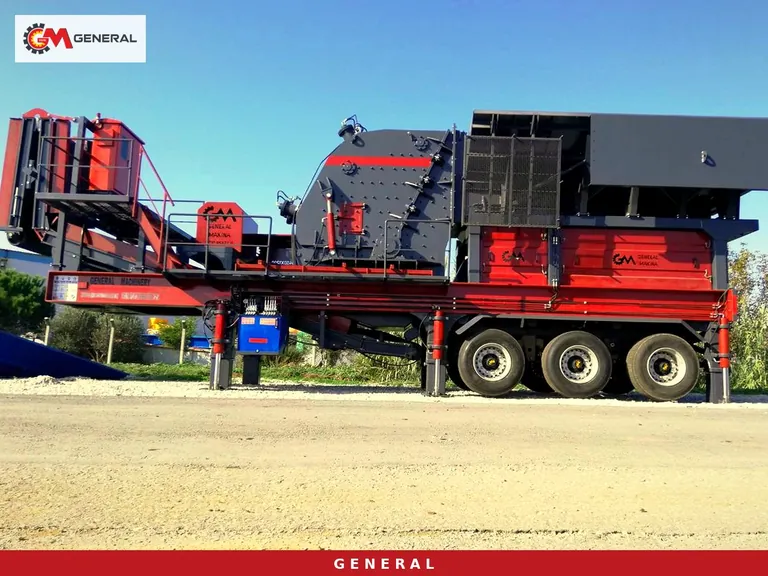
What decides the first production day of a crushing and screening plant in Africa is rarely the machine itself; it is the journey from our factory yard in Izmir to the stockpile area of the quarry. A chassis held at the port because of a missing document, a lowbed stopped by a low bridge, or a hopper that arrives on site with no loading ramp built for it: each one is a separate delay and an unplanned cost. Using our wheeled plants in the 100-300 TPH band as the example, this article covers the delivery term, vessel type, customs file, road route and on-site commissioning in the order they actually happen.
The capacity, weight and dimension figures in the table come from our product pages. Duty rates, import permits, road permits and port rules in the destination country vary from country to country; your customs broker and the relevant authority must confirm them.
Three logistics decisions to make before the order is signed
The first decision is the delivery term. Under FOB Izmir or Mersin, risk passes to the buyer once the plant is loaded on board; ocean freight, insurance and everything after the port of discharge are yours. Under CIF or CFR the seller arranges the freight, but port charges, customs clearance and inland haulage still sit with the buyer. Delivered terms such as DAP suit an investor who wants one counterpart all the way to an inland quarry, but they cannot be priced properly without route and local carrier information. Which Incoterm to choose should depend on whether you already have a logistics partner you trust in your own country.
The second decision is the port of discharge. For a coastal quarry the nearest port is the obvious choice; for a site in the Sahel belt or deep inland in East Africa, the real question is which port has an onward road fit for heavy cargo. Sometimes a more distant port gives a shorter journey overall because of a better road connection and a more regular RoRo service.
The third decision is who manages the installation on site. The scope of commissioning support, the length of operator training and who pays travel and accommodation for the technical staff coming to site should all be written clearly into the contract.
Transport profile of the 100-300 TPH models
The table below shows our wheeled plants in this capacity range the way a freight forwarder looks at them: single-piece weight, transport dimensions and whether a separate power source is needed on site. Unknown values are marked with a dash; they are confirmed in the quotation according to the ordered configuration.
| Model | Capacity | Max. feed | Weight | Transport size (W×L×H) | Generator |
|---|---|---|---|---|---|
| General 800 | 80-150 t/h | 600 mm | 35,000 kg | 3600×15500×4500 mm | 450 kVA |
| General 01 | 120-180 t/h | 700 mm | 55,000 kg | 4300×18500×4500 mm | 550 kVA |
| General 944 | 120-180 t/h | 800 mm | 70,000 kg | 4130×20350×4500 mm | 550 kVA |
| General 950 | 120-180 t/h | 800 mm | 70,000 kg | 4130×20350×4500 mm | 600 kVA |
| General 02 | 250-300 t/h | 1000 mm | 76,000 kg | 4340×20600×4500 mm | 660 kVA |
| General 03 | 250-375 t/h | 900 mm | — | — | 750 kVA |
| GNR-MC110 (twin chassis) | 200-300 t/h | 900 mm | 2 × 55,000 kg | 3000×13500 mm and 4200×18300 mm | 750 kVA |
The first logistics conclusion from the table: every plant with stated dimensions folds to a height of 4500 mm. That gives one reference value to check against power lines, overpasses and tunnel portals along the route. The second conclusion concerns weight. A single 70-76 tonne chassis can be a problem on weak inland bridges and soft-ground feeder roads. On such routes the GNR-MC110 stands out: because the primary and secondary groups sit on two separate chassis, each stays at 55,000 kg and can be hauled on its own.
Primary impact options for limestone and low-abrasive rock
In limestone and dolomite, common along the North African coast and in some West African basins, the General 800, 01, 02 and 03 deliver cubical aggregate through their primary impactors. A buyer who wants to stay with a single unit for a target near 300 TPH should look at the General 03 which runs at 250-375 t/h with a GPS 1415 impactor, a 2400×5000 mm four-deck screen and a standard 750 kVA generator in one package.
Jaw-primary options for granite, basalt and quartzite
Basalt is frequent in the volcanic zones of East Africa, and granite in the crystalline basement of West and Central Africa. In such hard, abrasive rock the 944 (GPJ 90 jaw + GM430 cone) and 950 (GPJ 90 jaw + DMK01 impactor) produce 120-180 t/h; where 200-300 t/h is needed, the GNR-MC110 with its GPJ 110 jaw and DMK03 secondary comes in. You can compare every wheeled option on the wheeled mobile crushing plants page.
RoRo, flat rack or break bulk: preparation by vessel type
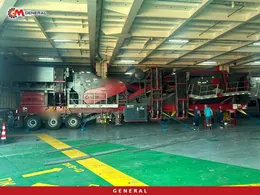
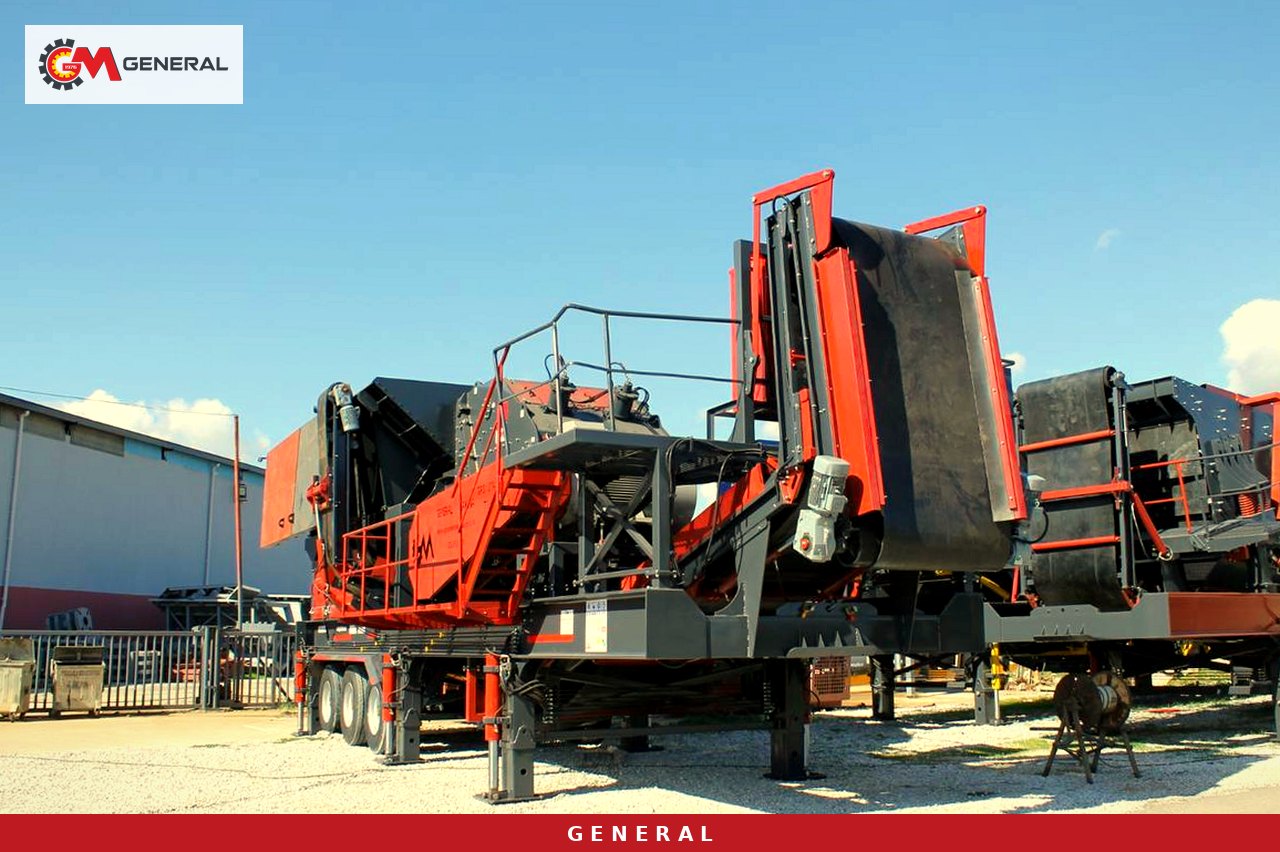
The easiest sea passage for a wheeled chassis is a RoRo vessel. The plant is hitched to a tractor on its own axles, towed up the ramp and unloaded the same way at destination; no crane is involved, so lifting damage risk is low. Not every African port, however, has a regular RoRo service. In that case the plant is lifted by heavy-lift crane onto a conventional vessel or a flat rack. With this method, lifting points, centre of gravity and lashing plan must be prepared before loading, and the capacity of the port cranes checked against the plant weight.
Parts that are not fixed to the chassis are planned separately. Spare screen meshes, first-change wear parts, a generator or control panel shipped as a separate unit usually travel by container. Container contents and the main cargo packing list must match; otherwise parts are released at the port on different dates and the assembly crew waits with incomplete material. Photographing every unit at loading and checking whether the insurance policy also covers the inland leg will make any damage claim easier.
The customs file: paperwork sets the port waiting time
Free storage time for containers and heavy cargo at African ports is limited; once it runs out, storage and demurrage charges begin. Documents should therefore reach the buyer's customs broker before the vessel sails and be approved by them. A typical file includes:
- Commercial invoice: model, serial and chassis numbers, quantity and delivery term clearly stated.
- Packing list: gross weight and dimensions of every piece on its own line, container contents included.
- Bill of lading, or the equivalent document issued for RoRo.
- Certificate of origin: some countries need a specific form for duty benefits under trade agreements.
- Copy of the CE declaration of conformity and the ISO 9001 certificate.
- HS code: the same code used on the invoice, the declaration and the import licence.
- Where required, a pre-shipment inspection report and a project-based duty exemption letter.
Some countries grant import duty exemptions or reductions for mining or infrastructure projects, but the conditions, application order and required letters differ by country. Only the relevant authority and your local broker can give definitive information on this.
From port to quarry: surveying the lowbed route on the ground
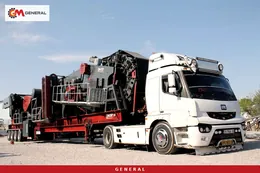
The road between port and quarry should be judged by a physical survey, not from a map. Total height on the lowbed is the plant's 4500 mm folded height plus the trailer deck height; power lines and bridge clearances are measured against that total. On winding mountain roads a length beyond 20 metres strains the turning radius, while on the sandy feeder roads of the Sahel a heavy axle load can bog the vehicle down. In regions where dirt roads may become unusable in the rainy season, the shipping calendar should be planned around it.
Most countries require a special road permit for out-of-gauge cargo and, on some routes, an escort vehicle. The duration and cost of these permits must be confirmed with the local carrier and the relevant authority. For reference from plants of ours already working in the region, the General 950 shipped to Niger and the 150 t/h basalt project in Jijiga, Ethiopia are pages on road deliveries reaching inland sites.
On-site installation and first start-up sequence
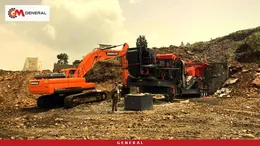
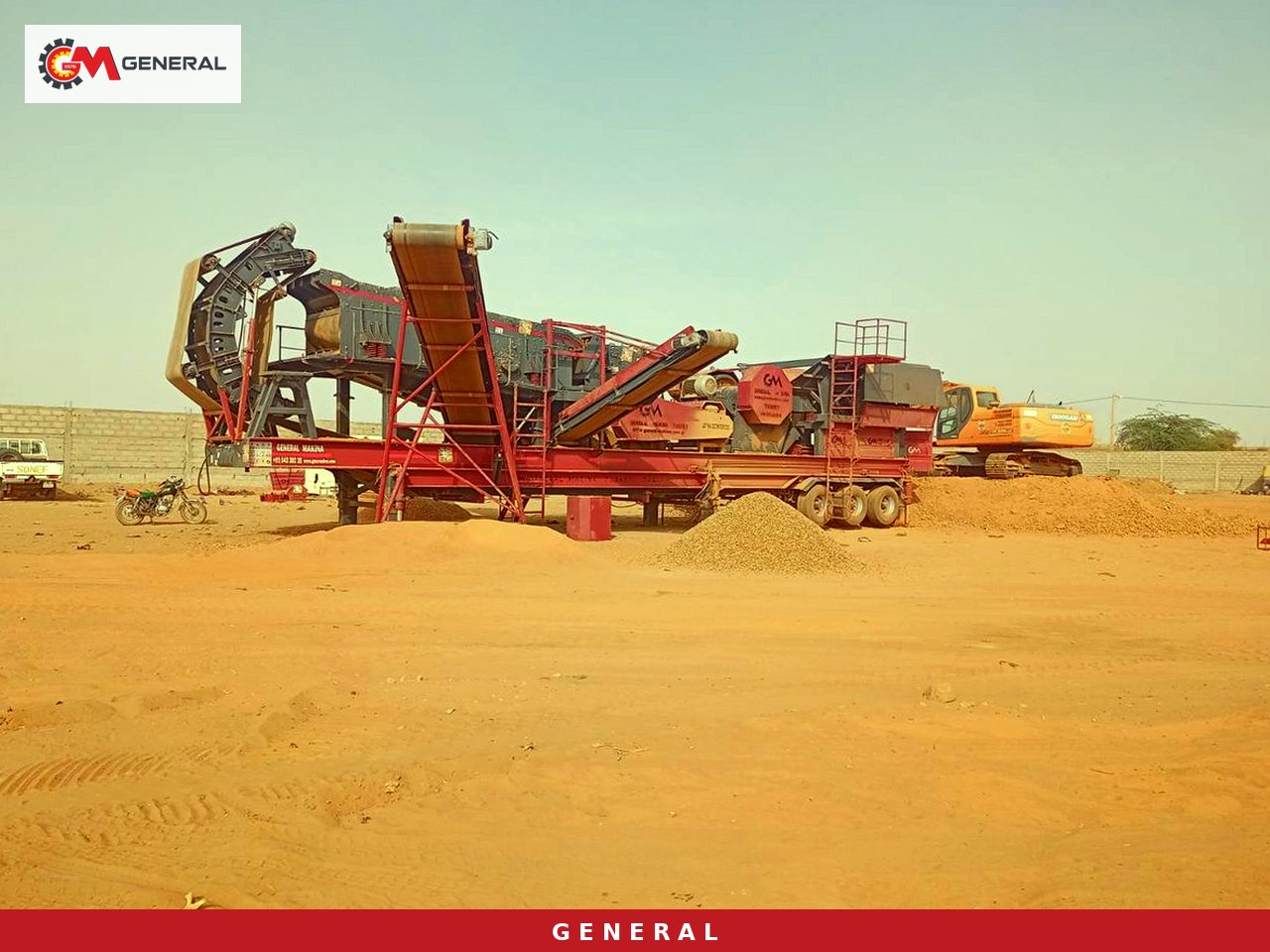
The great advantage of wheeled plants is that they need no concrete foundation; the General 03 sets up on hydraulic legs and folding hydraulic conveyors, and the General 950 can be working within half an hour of arriving on site. That speed holds only if the site has been prepared in advance.
What must be ready on site before the plant arrives
- The area where the plant will stand levelled and compacted, with ground bearing capacity checked under the hydraulic legs.
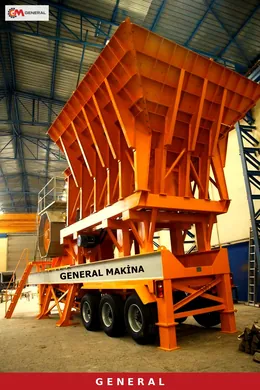
- A ramp for the loader or truck feeding the hopper, built to suit the hopper height.
- A separate stockpile area for each fraction and a truck turning road.
- In dry, dusty regions, a water source for dust suppression and a fuel tank location for the generator.
- The largest block size from blasting or ripping compared with the crusher's feed opening.
What to check at first start-up
Once the plant is in position and the legs are lowered, the conveyors are unfolded and the electrical and hydraulic connections checked. The first hours are spent running empty: belt tracking, screen vibration and warnings on the control panel are monitored. Feed is then increased step by step and the screen meshes are verified against the quarry rock and target fractions. A sieve analysis of the first product shows whether the plant delivers the gradation that was ordered.
Our warranty is 1 year and excludes wear parts. For a remote quarry in Africa it therefore makes sense to add one set of wear parts such as blow bars, plates or jaws to the first shipment; manganese and high-chrome casting options are on the wear and replacement parts page.
Frequently asked questions
Is the plant loaded on the vessel in one piece?
On single-chassis models the main unit travels in one piece on its own axles; a separately shipped generator, spare parts and screen meshes go by container. The GNR-MC110 is shipped as two separate chassis, primary and secondary.
Which delivery term carries less risk for the buyer?
If you have a logistics company you trust in the destination country, FOB keeps the freight under your control. Without such a partner, a CIF or delivered contract reduces the coordination burden. The choice depends on inland haulage and clearance capability in your country.
Is one wheeled plant enough for 300 TPH?
In limestone, the General 02 (250-300 t/h) or the General 03 (250-375 t/h) reaches this target as a single unit. In hard rock, the GNR-MC110 delivers 200-300 t/h. For a long-life, high-tonnage quarry, fixed crushing plants should also be considered.
What information should I share to get a quotation?
Rock type and, if possible, a sample test; the largest feed size; target fractions and hourly tonnage; the port of discharge and quarry location; and your preferred delivery term. This information determines both model selection and the freight and shipping plan.
Conclusion: the shipping plan matters as much as the machine choice
The success of a crushing and screening plant bound for Africa starts with a logistics plan prepared together with the order: the right delivery term, preparation suited to the vessel type, a complete customs file, a surveyed road route and a site made ready before the plant arrives. Send us your rock, target tonnage and destination, and we will work out the right model and shipping options with you. Contact us for a quotation and shipping plan.
Definitions of technical terms: Glossary