EN — English
 TR — Türkçe
 DE — Deutsch
 RU — Русский
 FR — Français
 ES — Español
 AR — العربية
 SR — Српски

Morocco Marble Waste Aggregate Crusher Plant 80-150 TPH
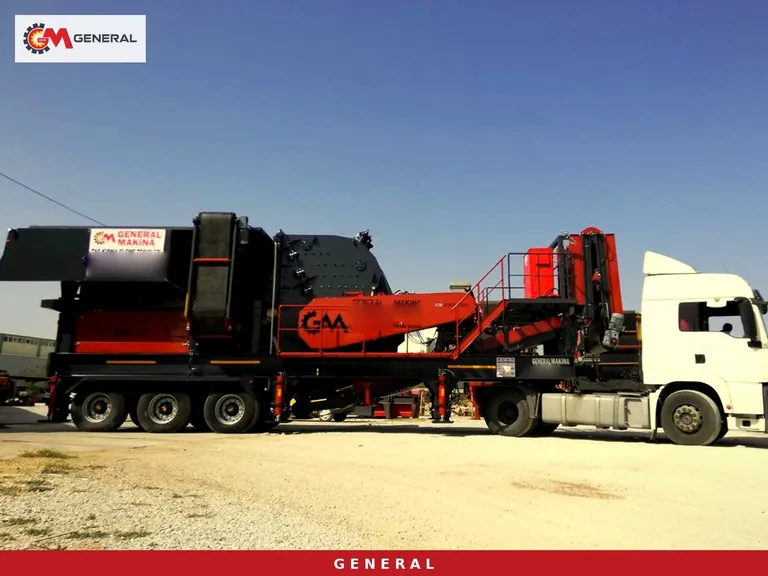
Anyone running a marble quarry or block-cutting yard in Morocco knows the heap that grows while saleable blocks are being won. Off-cuts, cracked slabs and irregular block fragments take up yard space, yet once they are crushed correctly they can enter the market as aggregate for concrete, road sub-base and fill. This article explains how to select a mobile impact crushing plant rated at 80-150 TPH for Moroccan conditions, which real models fit that band, and how the waste should be prepared before it ever reaches the crusher.
Every technical figure below is taken from our own product pages. A final decision for a specific quarry should rest on laboratory results from samples taken across the heap and on the specification of the authority the site answers to.
Why marble quarry waste counts as a mixed feed
Marble waste is not one uniform material. A typical quarry heap holds four components at once: corner pieces broken off blocks cut by wire or disc saws, slabs that cracked during handling or cutting, soil and clayey overburden, and fine marble sludge formed by saw water. The first two are ideal crusher feed. The last two cut capacity once they enter the crusher, blind the screen mesh and contaminate the end product.
In the quarries around the Atlas ranges and in the south-east of Morocco, marble, limestone and dolomite often occur side by side. That means one heap can contain pieces of different hardness. If a silica-rich vein or a quartz-bearing interlayer is present, the wear picture of an impact crusher changes completely. Sampling the heap at several points and testing abrasiveness (Ai) and compressive strength before the investment decision is therefore the first, and cheapest, engineering step of the project.
Size distribution matters as much as rock type. Fragments left from block cutting can exceed one metre. If the inlet of the chosen plant cannot take them directly, they are pre-broken with a hydraulic hammer on an excavator. Without planning this from the start, the plant will never reach its rated capacity on site.
Calcite structure and impact crushing: marble's advantage in the wear budget
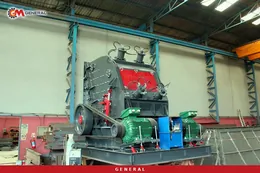
Marble consists largely of calcite; it is brittle and has low abrasiveness. In a horizontal-shaft impactor the blow bars on the rotor hurl the material against breaker plates, and the stone breaks by free impact rather than compression. On marble this gives two results: a high reduction ratio in one stage and a cubical grain shape. Cubical grains improve workability in concrete and interlock better in a road layer.
On the wear side, marble does not consume blow bars as quickly as granite or basalt, which keeps the impactor's wear cost per tonne at a reasonable level. Still, steel mixed into the heap (wedges, broken saw wire, old formwork iron) can damage the blow bars. High-chrome blow bars suit clean, dry marble; manganese or martensitic bars suit mixed waste carrying a metal risk. We settle the alloy together at quotation stage after looking at a heap sample.
Crushed marble produces a very fine white dust. It has to be managed for worker health and for the farmland and villages near the quarry. The possible measures are covered in the shipping and power section.
Real model options for the 80-150 TPH band
The range in the title corresponds directly to one machine in our line-up. Depending on the size distribution of the heap and the target product mix, two alternatives can also make sense. The table shows only values published on our product pages; cells not defined for a unit are marked with a dash.
| Unit | Crusher | Capacity (t/h) | Max. feed (mm) | Screen | Generator | Weight (kg) |
|---|---|---|---|---|---|---|
| General 800 | PDK 1280 primary impact | 80-150 | 600 | 1300×4000 mm, triple-deck | 450 kVA | 35,000 |
| General 01 | GPS 1210 impact (primary + secondary) | 120-180 | 700 | 1600×5000 mm, four-deck | 550 kVA | 55,000 |
| M-DMK 01 | Secondary impact, 160 kW | 120-180 | 350 | — | — | 32,000 |
General 800: the exact match for the range
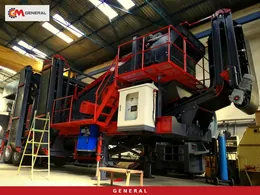
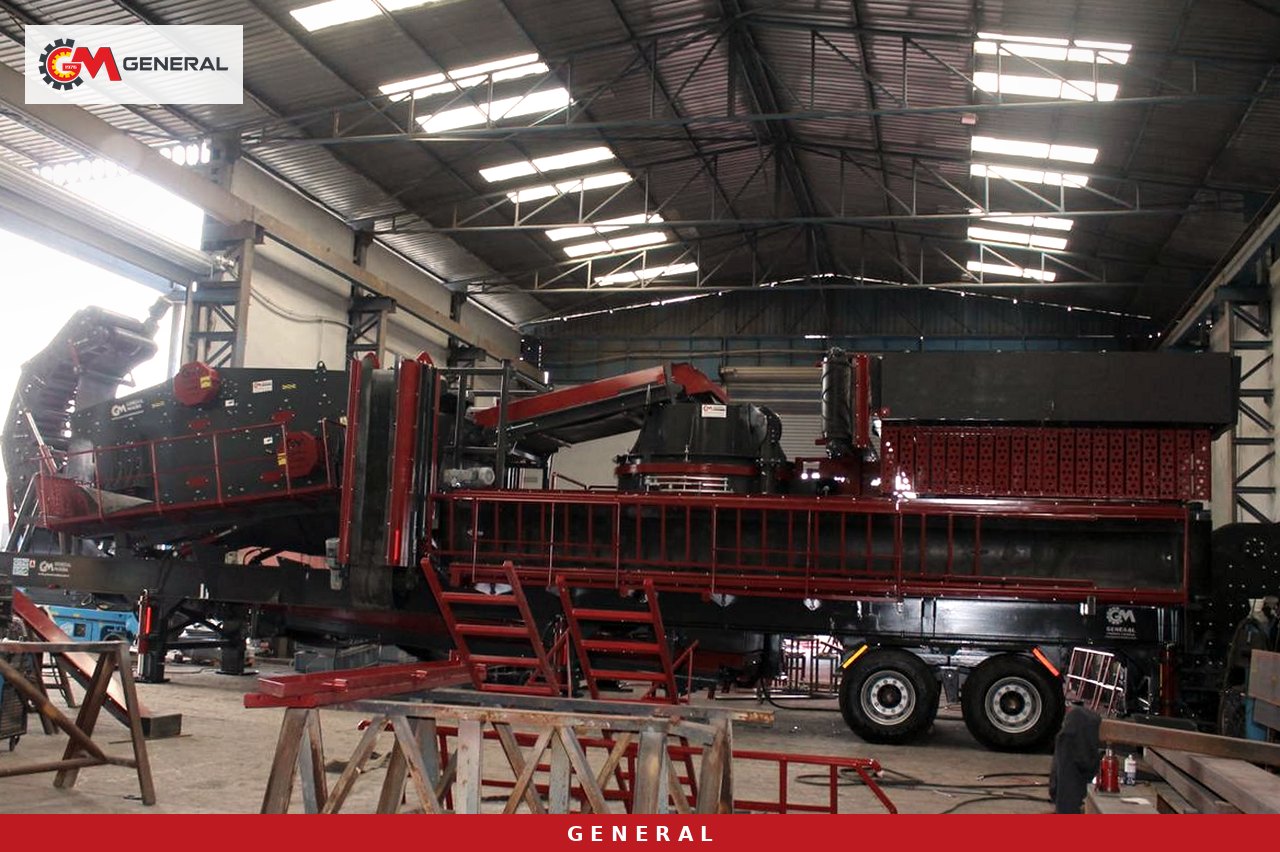
The General 800 mobile crusher is a closed-circuit plant carrying a feeder hopper, a PDK 1280 primary impactor, a 1300×4000 mm triple-deck screen and folding hydraulic conveyors on one chassis. It accepts material up to 600 mm, has an output setting of 0-100 mm and produces 0-5, 5-12, 12-19 and 19-40 mm fractions as standard. Closed circuit means oversize retained on the screen returns to the crusher. For an operator who wants four saleable products from marble waste with a single machine, this is the simplest route. At 35,000 kg and with transport dimensions of 3600×15500×4500 mm, the unit can be hitched to a tractor and moved by road in one piece.
General 01: headroom at the top of the band
If the share of pieces above 600 mm is high, or the operator aims for steady output close to 150 TPH, the General 01 is worth considering. Its GPS 1210 impactor performs primary and secondary crushing in one body, the inlet is 700 mm and it runs at 120-180 t/h. The four-deck screen allows one more fraction to be separated. On the other hand, 55,000 kg and a 550 kVA generator enlarge the transport and fuel budget, and with a production plan near the lower limit the machine runs below its capacity. The General 01 project set up with a 150 t/h target in neighbouring Algeria is an example of this model in a North African site layout.
Second stage: General 800 + M-DMK 01
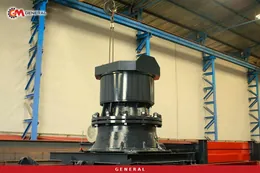
If your buyers mostly want manufactured sand and fine chippings, the coarse fraction of the first machine has to go to a second crusher. The M-DMK 01 mobile secondary impact crusher works at 120-180 t/h with a 1000×3000 mm feeder and a 160 kW motor, reducing 0-350 mm material to a 0-50 mm product. The screen and by-pass conveyor in its feeder pan separate soil-laden fines before the crusher. This two-unit layout keeps the line within the 80-150 TPH band while raising the share of fine product; the exact flow sheet is drawn from the sieve analysis of the sample.
From heap to crusher: a pre-feed preparation list
In plants processing marble waste, most capacity loss comes not from the crusher but from the way the heap is prepared. We recommend giving the site crew a work instruction in this order:
- Split the heap into at least two stockpiles: quarry overburden and clean marble off-cuts. The portion with high soil and clay content must stay out of the crushing line.
- Pre-break block fragments that exceed the inlet (600 mm for the General 800, 700 mm for the General 01).
- Pick out metal such as saw wire, wedges and iron; a single wedge entering the crusher can damage a blow bar and a breaker plate.
- Send the sludgy fines from saw water to a separate settling or drying area, not into the crushing line.
- Check the grizzly pre-screening capacity for periods when soil content rises; if needed, let us discuss adding a vibrating feeder at the head of the line.
- Train the loader operator to keep the hopper evenly and continuously full; stop-start feeding spoils both capacity and grain shape.
Four fractions, four different buyers
The standard 0-5, 5-12, 12-19 and 19-40 mm fractions of the General 800 correspond directly to typical aggregate demand in Morocco. 0-5 mm manufactured sand interests ready-mix and mortar producers, 5-12 and 12-19 mm chippings serve batching plants and asphalt work, and 19-40 mm goes to road sub-base, drainage and fill. Because the screen mesh is chosen at order stage according to the feed and target grading, the mesh layout is set up differently if buyers in your region ask for other ranges.
Using marble aggregate in concrete requires laboratory approval under the relevant Moroccan standards and the project specification. Fines content, methylene blue value and grain shape of the manufactured sand are documented through these tests. Taking a sample from the first production run before signing a sales contract lowers the risk for both producer and buyer.
The marble dust separated during crushing may also become a product line; whether it can be used as filler or in other industrial applications is clarified by chemical analysis and the permission of the competent body.
Shipping to Morocco, power and dust control
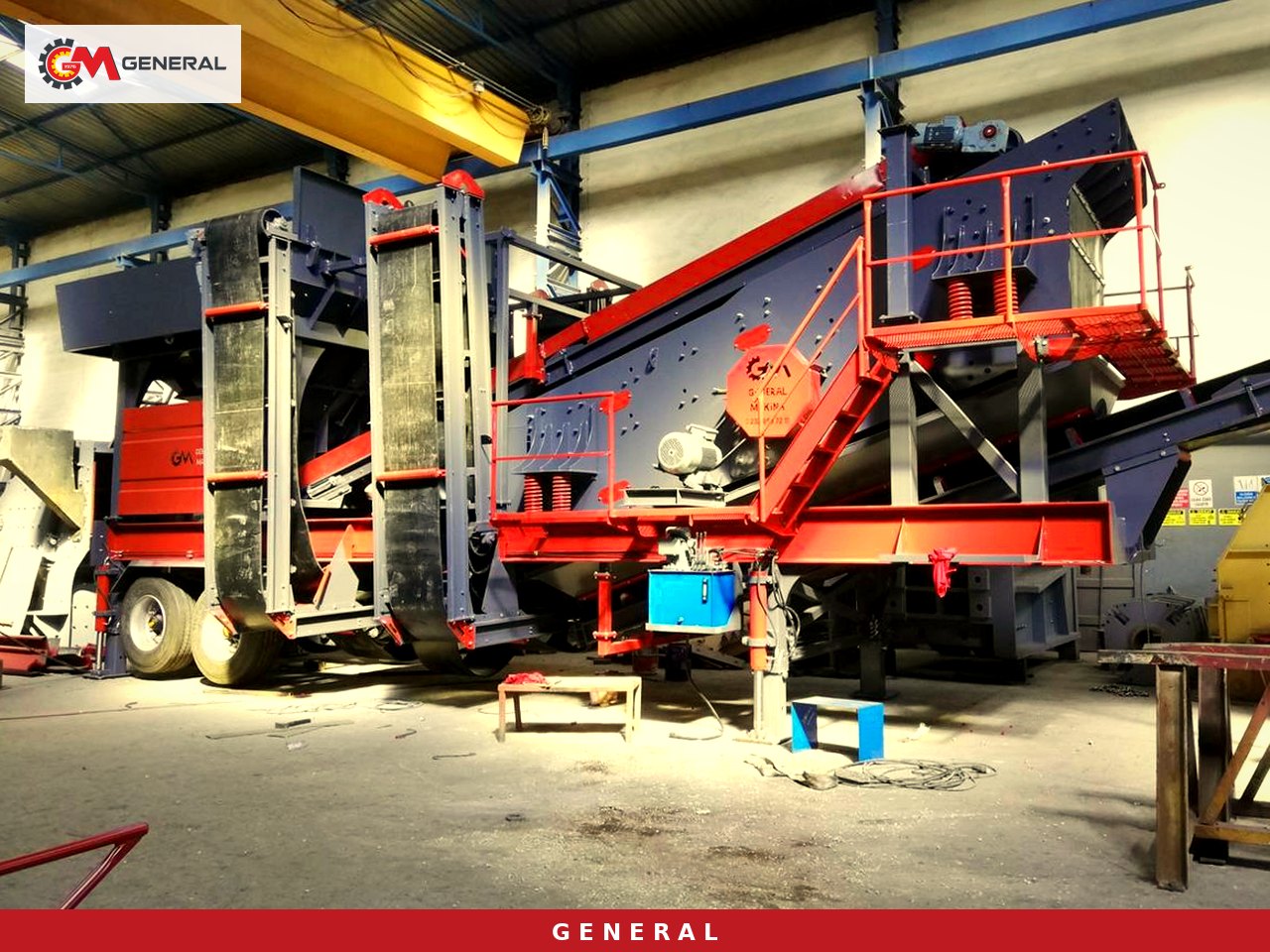
A mobile plant usually travels from Türkiye to Morocco by sea, through ports such as Casablanca or Tanger Med, and the leg from port to quarry is completed by road. This is where a single-chassis unit shows its advantage: the General 800 is loaded without being split into crusher, screen and conveyor parts, and on site it is set up by lowering the hydraulic support legs and unfolding the conveyors. Before shipment, bridge, bend and mountain-road restrictions along the route must be checked with the haulage company; on quarry roads in the Atlas foothills this step should not be skipped.
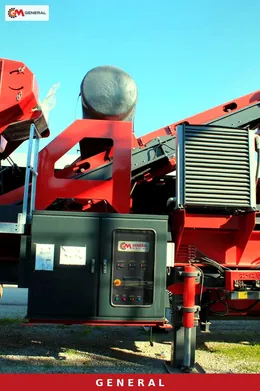
Most marble quarries are far from the grid. The General 800 is configured to run on a 450 kVA generator; fuel supply and storage are clarified at quotation stage to suit the site. For hot, dusty summer air in the interior, cooling of the generator and hydraulic system, air filter change intervals and a stock of spare filters should be planned in advance.
White marble dust carries far on the wind. Measures that can be selected per project include water-spray dust suppression at the crusher discharge and conveyor transfer points, covers over the belts, positioning stockpiles according to the prevailing wind, and dust masks for operators. These are not standard equipment but additions decided by the site's environmental permit and its distance from settlements; we advise confirming permit conditions with the local authority.
The machine is CE and ISO 9001 certified; the warranty is 1 year, excluding wear parts. Ordering the first spare set of wear parts such as blow bars, breaker plates and screen mesh together with the machine prevents downtime while waiting for parts.
Frequently asked questions
Why do you recommend an impact crusher rather than a jaw crusher for marble waste?
Because marble is brittle and low in abrasiveness, an impactor gives a high reduction ratio and cubical grains in one stage. A jaw crusher produces coarser, flakier grains and needs a second crusher for cubical product. If the heap holds a large share of granite or quartz-bearing layers, the choice changes; the decision follows the sample test.
Can the General 800 crush large block fragments directly?
No. Its maximum feed size is 600 mm. Larger pieces must first be reduced with a hydraulic hammer on an excavator. If the share of large blocks is high, the General 01 with its 700 mm inlet or a separate primary stage is considered.
What happens to sludgy and soil-laden waste?
Saw sludge should not enter the crushing line. Soil-laden material can be separated by grizzly pre-screening; if the soil share is very high, sample analysis shows whether a separate washing stage is needed.
What determines the price?
The model, screen decks and mesh choice, the generator, optional equipment such as a second-stage crusher or dust suppression, and the shipping method to Morocco set the price. The exact figure is given in a quotation prepared from your heap data and target product list.
Short decision summary
For an operator who wants to produce 80-150 TPH of aggregate from marble waste in Morocco, the first candidate is the General 800: a PDK 1280 primary impactor, a triple-deck screen and four standard fractions arrive on one chassis. If the share of large blocks is high, the General 01 comes into play; if demand for fine product dominates, the General 800 + M-DMK 01 layout does. Heap samples, the target product list and haulage conditions on the quarry road decide which option is right. You can review the other wheeled models on the mobile crushing plants page and request a project-specific quotation by writing to us with your sample data and target capacity. Our team, building crushing and screening plants in Izmir since 1976, draws the flow sheet together with you.
Definitions of technical terms: Glossary