EN — English
 TR — Türkçe
 DE — Deutsch
 RU — Русский
 FR — Français
 ES — Español
 AR — العربية
 SR — Српски

Belt & Pulley Troubleshooting in a 100-200 TPH Aggregate Crushing Plant
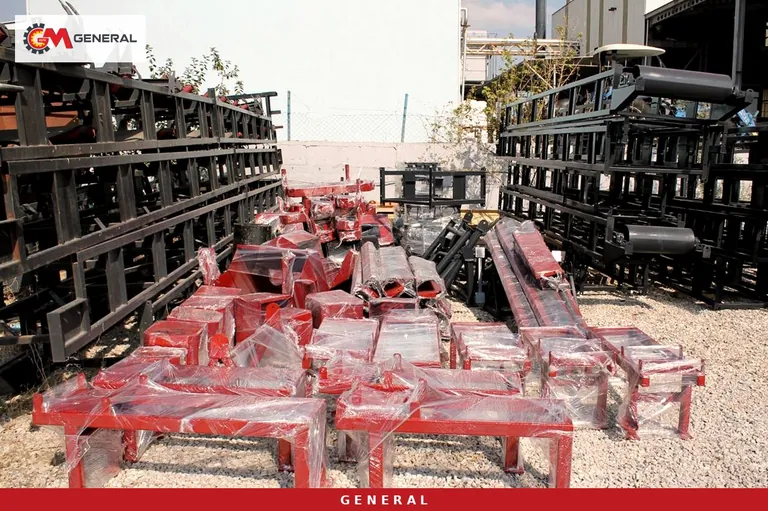
On a line producing 100-200 tonnes of aggregate per hour, a large share of stoppages comes not from inside the crusher but from the drive between motor and machine. A belt starts to squeal, a pulley runs hot, a conveyor belt slips on its drive drum under load, and the operator usually swaps the belt and moves on. A few weeks later the same noise is back. This article describes the field method we use to read V-belt and pulley faults on crusher, screen, feeder and conveyor drives from the symptom down to the root cause. Model data comes from our product pages; for measurement limits, the belt and pulley manufacturer's table always takes precedence.
Belt-driven points in a 100-200 TPH line
Before diagnosing anything, list every drive in the line with its location and type. One plant contains four drive arrangements with different characters, and each fails in its own way. A fault at one point often triggers the next: if the feeder delivers unevenly, the crusher belts take shock loads; if the crusher surges, the conveyor beneath it is overloaded.
Crusher flywheel and motor pulley
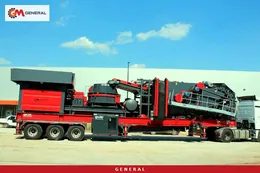
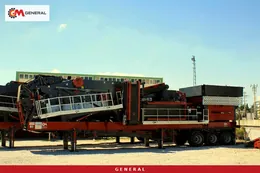
On jaw and impact crushers, motor power reaches the eccentric shaft or rotor through a multi-groove V-belt set. The load here is anything but steady; every large block puts a sudden pull on the belts. On the General 950 line, for example, the secondary stage is a DMK01 impact crusher, listed on its product page at 160 kW. That power is carried by a set of belts that must share the same length and tension, not by a single belt. If one belt in the set slackens, the rest pick up its load and the whole set wears out quickly.
Feeder and screen eccentric drives
Our vibrating rock feeders run on either a vibromotor or an eccentric belt-and-pulley drive. The GNR 90 model on the rock feeder page is rated at 140-210 t/h with 2x4 kW motors, which fits the inlet of a 100-200 TPH line. On the M-type grizzly screen, circular vibration is also produced by an eccentric shaft, belt-and-pulley and special bearings. The belt between the vibrating body and the fixed motor flexes constantly. Here the trouble usually shows up as a loosened motor base and drifting pulley alignment rather than as a pure tension problem.
Shaft-mounted conveyor drive
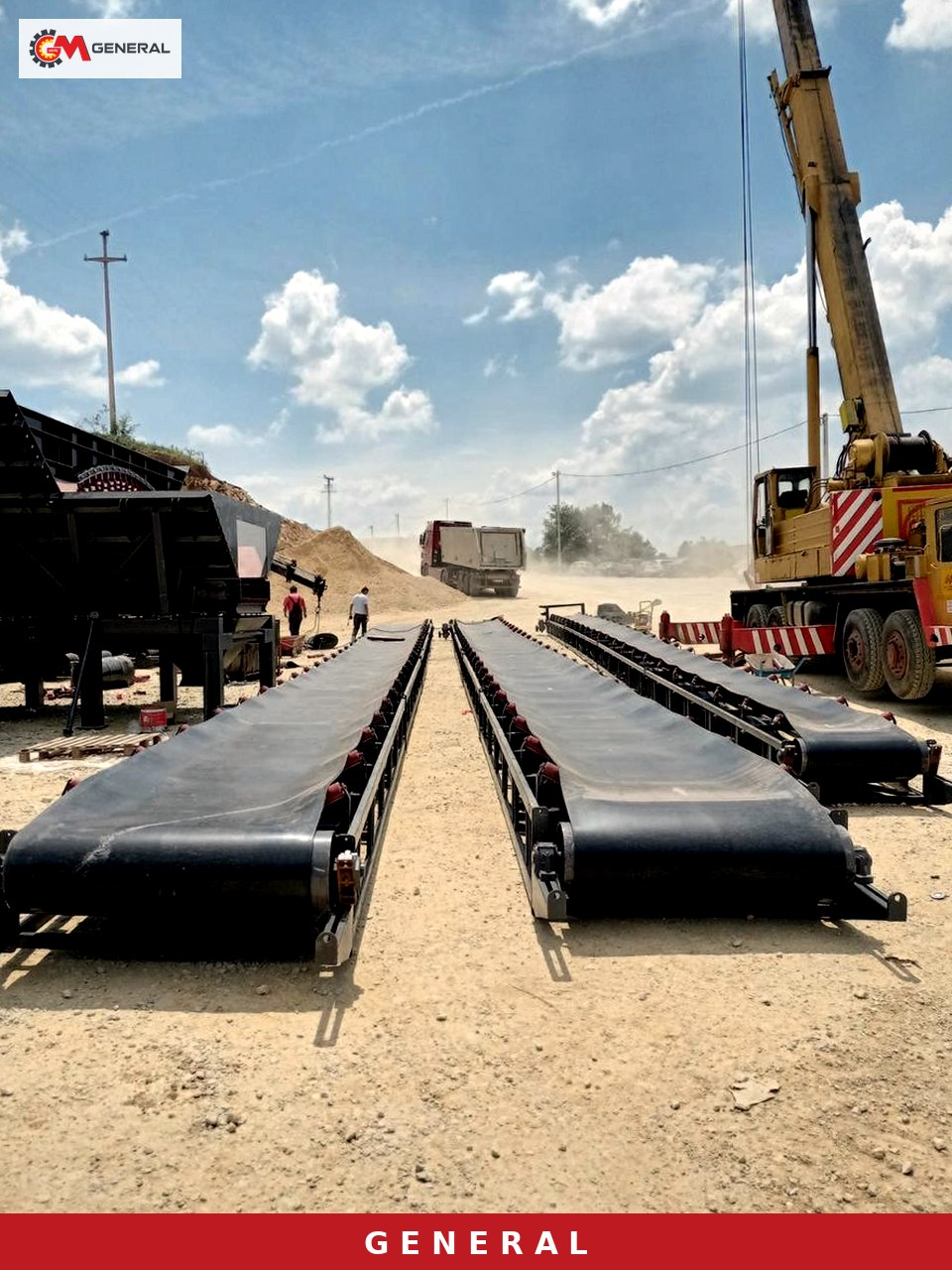
Our belt conveyors are driven by a geared motor or by a shaft-mounted reducer with belt and pulley. Pulleys use taper bushes, the drive drum is rubber-lagged by vulcanising and the drums sit in SNH bearing housings. Two kinds of slip exist here: the V-belt slipping on its pulley, and the conveyor belt slipping on the drive drum. Both give the same symptom (the belt slows, the transfer chute fills), but they call for different fixes.
| Model | Capacity | Primary | Secondary | Screen | Generator |
|---|---|---|---|---|---|
| General 800 | 80-150 t/h | PDK 1280 impact | — | 1300×4000 mm, 3 decks | 450 kVA |
| General 01 | 120-180 t/h | GPS 1210 impact (primary+secondary) | — | 1600×5000 mm, 4 decks | 550 kVA |
| General 944 | 120-180 t/h | GPJ 90 jaw | GM430 cone | 1600×5000 mm, 3 decks | 550 kVA |
| General 950 | 120-180 t/h | GPJ 90 jaw | DMK01 impact | 1600×5000 mm, 3 decks | 600 kVA |
All lines in the table can run on a generator, so part of the belt trouble is electrical rather than mechanical. When the generator drops speed under load, the motor pulley slows while the crusher flywheel keeps turning on inertia, and the belt is briefly loaded in reverse. If start-up squeal only happens on generator power, check the starter settings and the generator's regulation first.
Reading the fault from symptom to cause
The first observation on site is usually a sound, a smell or dust. The table below lists which check to make as soon as you see a symptom. It is a starting point; when one symptom has several possible causes, begin with the cheapest and quickest check.
| Symptom | Likely cause | First check |
|---|---|---|
| Squeal at start-up or when a large block enters | Low tension, oily belt, excessive shock load | Deflection test, glazing on belt flanks, feed pattern |
| Wear on one flank of the belt | Pulleys not parallel or offset axially | Straightedge or laser alignment |
| Cracks on the belt underside | Pulley diameter too small, overheating, ageing | Pulley diameter and running temperature |
| One belt in the set hangs slack | Belts from different batches or fitted at different times | Replace the whole set from one batch |
| Pulley hub runs hot and vibrates | Taper bush loose, bearing failing | Bush screw torque, bearing noise |
| Conveyor slows under load while the drum turns | Worn lagging, insufficient take-up, wet material | Lagging surface, take-up slide position |
Measuring tension and alignment
Tension set by eye is the most frequent reason for V-belt failure. An over-tight belt loads the motor and crusher bearings; a slack one slips, heats up and glazes. Both mistakes end the same way: the belt is replaced early.
Tension by the deflection method
Press on the belt at right angles in the middle of the free span between pulleys and measure how far it deflects. A common rule is about 16 mm of deflection per metre of span; the correct force and deflection, however, come from the manufacturer's table for the belt profile and pulley diameter. A new belt seats and stretches during its first running hours. Re-measure a new set at the end of the first shift and readjust with the motor base if needed.
Pulley alignment with a straightedge or laser
Lay a straightedge or a taut string across both pulley faces; it should touch at four points. Angular misalignment eats one flank of the belt, while axial offset makes the belt ride sideways in the groove. A laser tool is faster, but a straightedge gives a correct result too. Recheck alignment every time the motor base is moved. On vibrating feeders and screens, alignment drifts as motor foot bolts loosen, so checking the bolts before the tension saves time.
Pulley groove, taper bush and bearing
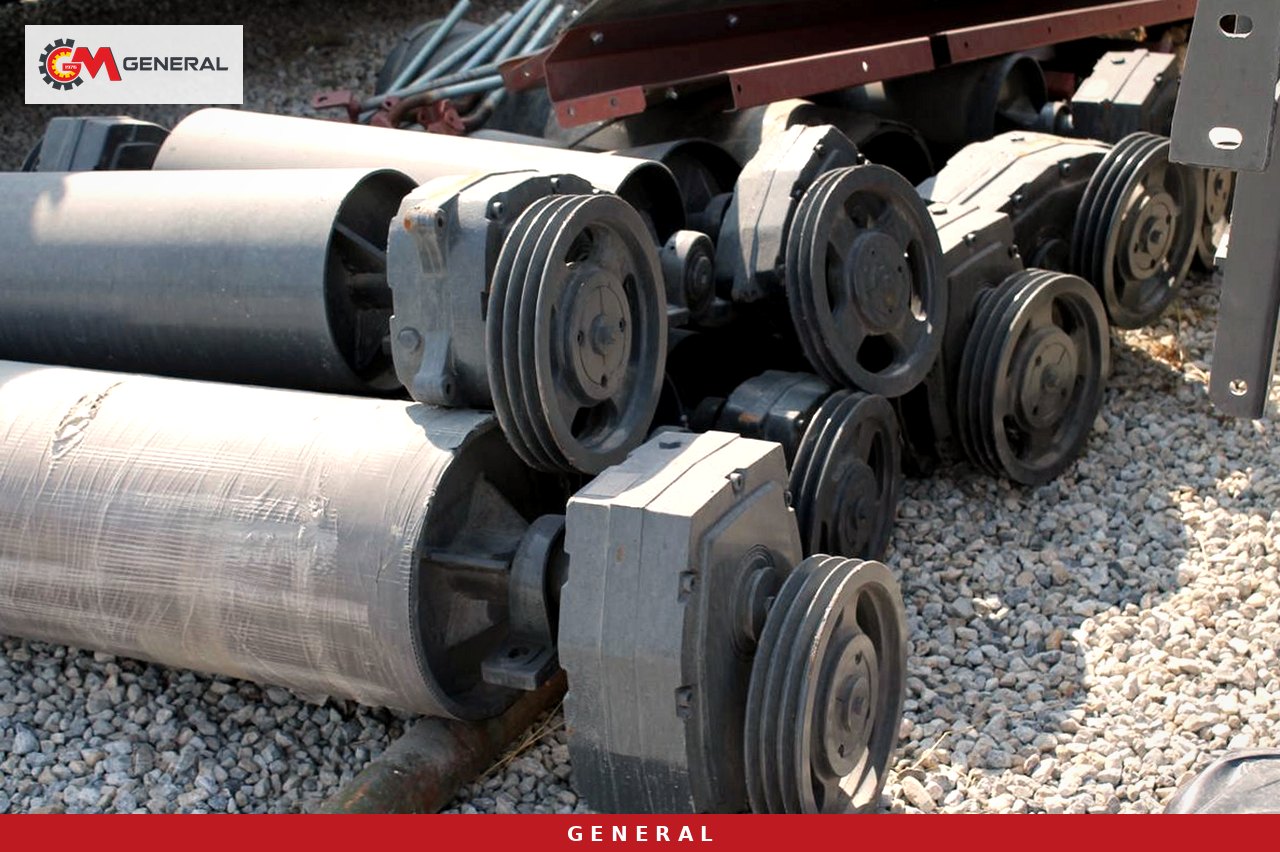
A new belt fitted to an old pulley runs well for a few days and then squeals again. The usual reason is groove wear. Over time the groove walls become concave and the belt bottoms out in the groove. It then grips on its base instead of its flanks, friction drops and slip begins. Check the groove with a sheave gauge; if light shows between gauge and wall, replace the pulley.
On a taper-bush pulley, the bush screws must stay at the torque given at installation. A loose bush micro-moves on the shaft, the keyway opens up and the pulley runs out of true. That runout appears as flapping on the belt. Rust marks on the shaft surface when the pulley comes off are a sign that the bush has been slipping.
Bearing faults are often mistaken for belt faults. When a bearing fails, the pulley hub warms up and the belt takes that heat too. Running the motor briefly without belts and listening to the bearing before replacing anything avoids needless parts changes. Belt sets, pulleys and bearings are listed on our spare parts page.
Drive drum slip and lagging wear on the conveyor
If the conveyor belt slips on its drive drum, working on the V-belts will not help. The simple way to tell is to watch the drum and the belt together: if the drum turns while the belt hesitates under load, the problem sits between drum and belt. According to our conveyor belt page, the drive drum is vulcanised rubber-lagged and the standard belt is EP 100, 4-ply; under an impact crusher EP 125, 4-ply is used. As lagging wears, grip falls. Wet or clayey material smeared on the drum has the same effect faster, which is why clean front and rear scrapers belong to slip control.
On the take-up side there are felt-sealed slide take-up bearings. As the belt stretches, the slide approaches its end and tension runs short. If the slide has reached its stop, shorten and re-splice the belt. Pulling the take-up harder on one side only makes the belt track off and wears its edge. Drums are fixed with hub-type taper connections; if you suspect the drum shell is creeping on its shaft, check that hub connection as well.
A speed monitor and a pull-wire emergency stop are offered as options. The speed monitor catches a slowing tail drum early and reports slip to the control panel before the operator notices it. In a 100-200 TPH line, if the belt under the primary or the screen feed belt slips, the transfer chute fills within minutes, so these two belts should get the first sensor investment. For belt widths and drive options see the aggregate belt conveyors page.
Start-of-shift and weekly checklist
The list below is a routine that operators and the maintenance crew can share on a line running at 100-200 TPH. Shift checks are done with the machine stopped; weekly checks only after lockout and tagout.
- At the start of each shift, confirm the belt guards are in place and intact, and look for belt dust collecting beneath them.
- Listen for squeal on crusher and conveyor drives at start-up; note it if it only happens on generator power.
- Look for material build-up on the drive and tail drums, and confirm the scraper rubbers touch the belt.
- Once a week, measure the deflection of the crusher V-belt set and write the value in the maintenance log.
- Once a week, check the feeder and screen motor base bolts, then verify pulley alignment with a straightedge.
- Compare taper bush and pulley hub temperatures with a non-contact thermometer, not by hand.
- Mark the take-up slide position; if the mark creeps forward week after week, track belt stretch.
- Record the date and batch of every belt set replaced, and never mix belts within a set.
Feed pattern belongs on this list too. A feeder that surges gives the crusher belts constant shock. Feeder options are in the crusher feeders category.
Frequently asked questions
Is it enough to replace the one broken belt in a set?
Not advisable. The new belt is shorter than the worn ones and carries most of the load alone. On crusher drives, replace the whole set with belts of the same batch and length.
Does belt dressing spray cure the squeal?
It silences the noise for a while but hides the cause. Squeal comes from low tension, a worn pulley groove or misalignment; the spray makes dust stick to the belt and speeds up wear.
Should the conveyor use a belt-and-pulley drive or a geared motor?
Both appear as options on our product page. A shaft-mounted reducer with belt and pulley lets you adjust belt speed by changing a pulley. A direct geared motor reduces the number of maintenance points. The choice depends on the conveyor's position and on the maintenance habits on site.
What drive information should I give when requesting a quote?
Material type, target capacity, conveyor length and incline, power source (grid or generator) and the current belt profile are a good start. Price and delivery plan are prepared per project from this information.
Next step to cut downtime
A belt and pulley failure is rarely about one part; it usually signals that feed pattern, alignment, tension and power quality have drifted together. Reading the symptom from the table and confirming it with a measurement costs less than changing the same belt a third time. If you want to review models in the 100-200 TPH range, such as the General 944 or General 950, together with a drive and spare parts plan, send your material and capacity data through our contact page and our engineers will prepare a project-specific quotation.
Definitions of technical terms: Glossary