EN — English
 TR — Türkçe
 DE — Deutsch
 RU — Русский
 FR — Français
 ES — Español
 AR — العربية
 SR — Српски

Nigeria Granite Aggregate Crushing Plant 250-300 Ton Per Hour Capacity
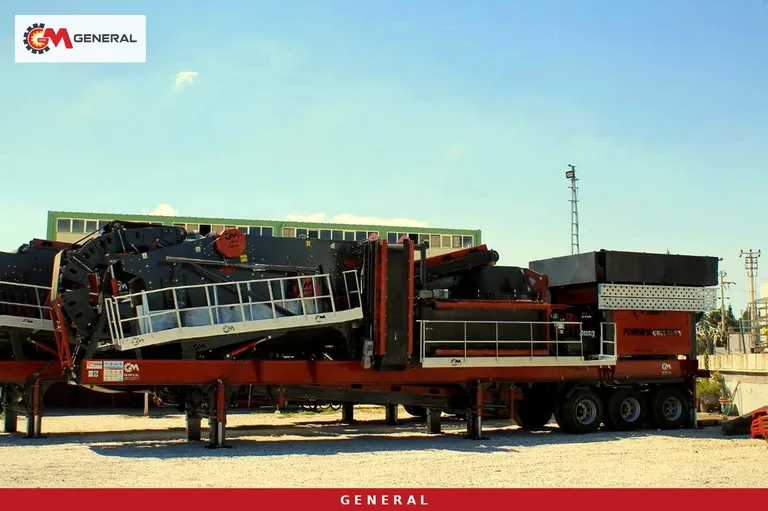
For an investor opening a granite quarry in Nigeria, or expanding an existing one, a 250-300 TPH target is a line-design question rather than a single machine choice. Granite is hard and rich in silica; pick the wrong crusher type and the wear-part invoices make the mistake obvious within the first months. This article compares three real configurations, with model figures, that follow the same logic whether the quarry sits around Lagos, Ogun, Abuja or in the northern rock belts.
We are not trying to sell you an “ideal machine”. The aim is to show which layout you arrive at once you answer a handful of questions. The rock properties of your face, the fractions demanded by concrete and road customers, and the power situation on site decide the selection.
Turning 250-300 TPH into working numbers
A capacity figure on its own misleads. Settle this first: is 300 t/h the gross feed entering the crusher, or the saleable aggregate reaching the stockpile? If the blasted muck pile carries soil and fines, the share removed by pre-scalping does not load the crusher, but it does not count as saleable product either. That gap can be worth a whole model size.
The second question is the daily target. Start from a simple formula: required hourly capacity = daily tonnage target ÷ hours of actual crushing. A hypothetical example: a quarry that wants 2,400 tonnes of saleable product a day and can crush for a net 8 hours per shift needs a 300 t/h line. Spread the same target over two shifts and the requirement halves, which changes the configuration completely. Maintenance stops and liner changes must be added to this calculation as a margin.
The third question is the product list. Ready-mix and precast producers in Nigeria usually ask for sand-size material and the 12-19 mm range, while road sub-base expects a coarser, graded mix. If you need a 19-40 mm fraction, the number of screen decks is affected directly.
How granite drives crusher selection
Granite is abrasive, and that property dictates the crushing principle. An impact crusher breaks stone by throwing it against a rotor and gives a high reduction ratio and cubical product, but in siliceous rock its blow bars and plates wear quickly. A cone crusher breaks material by compressing it between the mantle and the concave; metal life is longer and part cost per tonne falls. That is why the first choice for a granite line is a jaw primary followed by a cone secondary.
Crystalline rocks such as granite and gneiss are widespread in many Nigerian states, yet two quarries in the same area can show different abrasiveness. No final model choice should be made before a sample from your face has been tested for abrasion and compressive strength. For a detailed hard-rock comparison, see our article on the best mobile crushing plant for basalt and granite.
Three configurations that reach the target
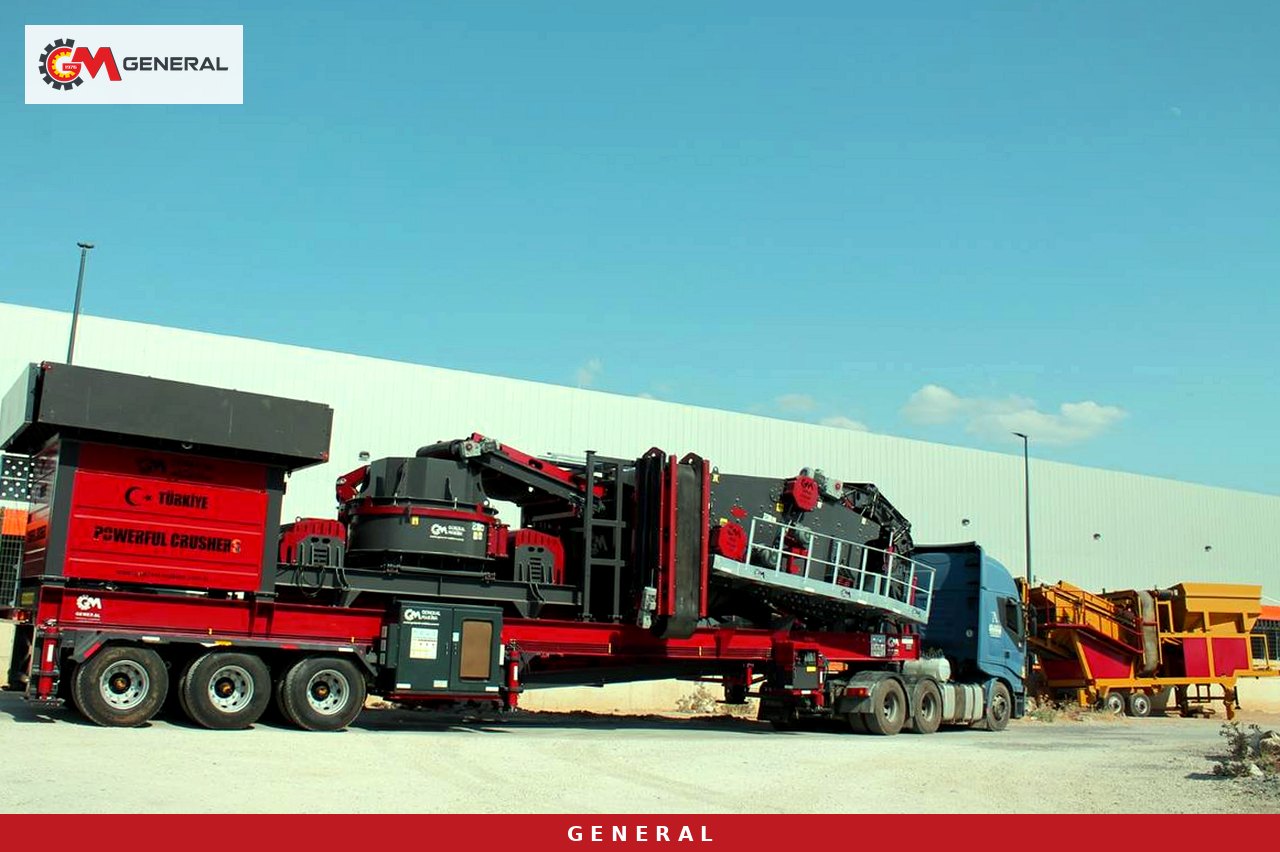
Our wheeled range has no single jaw-and-cone model that covers 250-300 t/h in granite on its own. The target is therefore reached in one of three ways: two mobile units, a single twin-chassis line, or a stationary line.
A. Two General 944 units in parallel
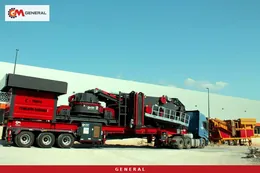
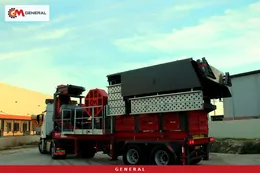
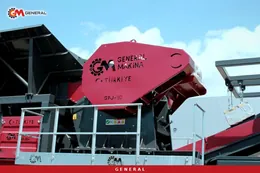
The General 944 combines a GPJ 90 jaw primary and a GM430 cone secondary on one wheeled chassis. A single unit produces 120-180 t/h, accepts 800 mm feed and splits 0-5 / 5-12 / 12-19 mm fractions on a 1600×5000 mm three-deck horizontal screen. Run two units side by side and the combined range is 240-360 t/h, so the 250-300 t/h target falls in the middle of it. The real advantage is spread risk: when one unit goes down for maintenance, the quarry does not drop to zero, half the output continues. The second unit can also be moved to another face or to a nearby road job.
B. GNR-MC110 twin-chassis line
The GNR-MC110 places the GPJ 110 jaw on one chassis and the GS1215/DMK03 impact secondary plus a 2000×6000 mm four-deck screen on the other. It is rated at 200-300 t/h with a 900 mm feed opening and delivers four fractions including 19-40 mm. Because the upper end of the target coincides with this model's ceiling, there is little headroom for a quarry planning a steady 300 t/h. With an impact secondary, wear cost in granite will be higher than on a cone line; on the other hand, it makes sense for concrete suppliers who want cubical product and a wide spread of fractions.
C. Stationary line layout
If the quarry life is long and the reserve is proven, consider fixed crushing plants. A sample arrangement: a GNR 110 vibrating feeder rated at 200-300 t/h, a GNRK 110 jaw crusher with a 1100×850 mm opening and 200-350 t/h capacity, followed by a cone crusher and a 2400×6000 mm GNR 2460 vibrating screen. The cone's model table is issued per project; a 6:1–8:1 reduction ratio is typical in the secondary stage. A stationary line offers more fractions and longer equipment life, but needs concrete foundations, construction time and a fixed location.
| Item | 2 × General 944 | GNR-MC110 | Stationary line (GNR 110 + GNRK 110 + cone + GNR 2460) |
|---|---|---|---|
| Total capacity | 240-360 t/h | 200-300 t/h | Jaw 200-350 t/h; feeder 200-300 t/h |
| Primary crusher | GPJ 90 jaw (each unit) | GPJ 110 jaw | GNRK 110 jaw, 1100×850 mm |
| Secondary crusher | GM430 cone | GS1215 / DMK03 impact | Cone (model per project) |
| Max. feed | 800 mm | 900 mm | — |
| Screen | 1600×5000 mm, three-deck (each unit) | 2000×6000 mm, four-deck | 2400×6000 mm (GNR 2460) |
| Fractions | 0-5 / 5-12 / 12-19 mm | 0-5 / 5-12 / 12-19 / 19-40 mm | Screen media per project |
| Power | 550 kVA generator (each unit) | 750 kVA generator | Grid, or generator per project |
| Weight | 70,000 kg (each unit) | 2 × 55,000 kg chassis | — |
Power, dust and shipping on a Nigerian site
Many quarries either have no grid connection or one that is not reliable enough to feed crusher motors without interruption. Generator-equipped mobile units are a practical answer here: the General 944 carries a 550 kVA power unit, the GNR-MC110 a 750 kVA one. Working with two 944s means planning fuel logistics and generator servicing for two separate machines; the upside of that layout is that a single fault does not stop the whole line.
In the dry season the harmattan wind, combined with the quarry's own dust, puts strain on engine air filters and electrical panels. Measures that can be selected per project include water-spray dust suppression at transfer points, belt covers, an extra filter stage for the generator and panel, and a sun canopy. Discussing these at order stage costs less than retrofitting them on site.
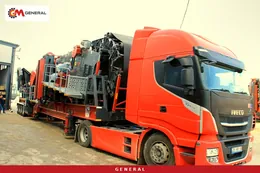
On the shipping side, the General 944 travels at 4130×20350×4500 mm and is towed on its own chassis behind a tractor unit. The GNR-MC110 consists of two separate chassis, so its weight is split across two platforms of 3000×13500 mm and 4200×18300 mm at 55,000 kg each. Confirm bridge, bend and axle-load limits on the route between port and quarry with a local haulier in advance.
Wear-part plan for granite
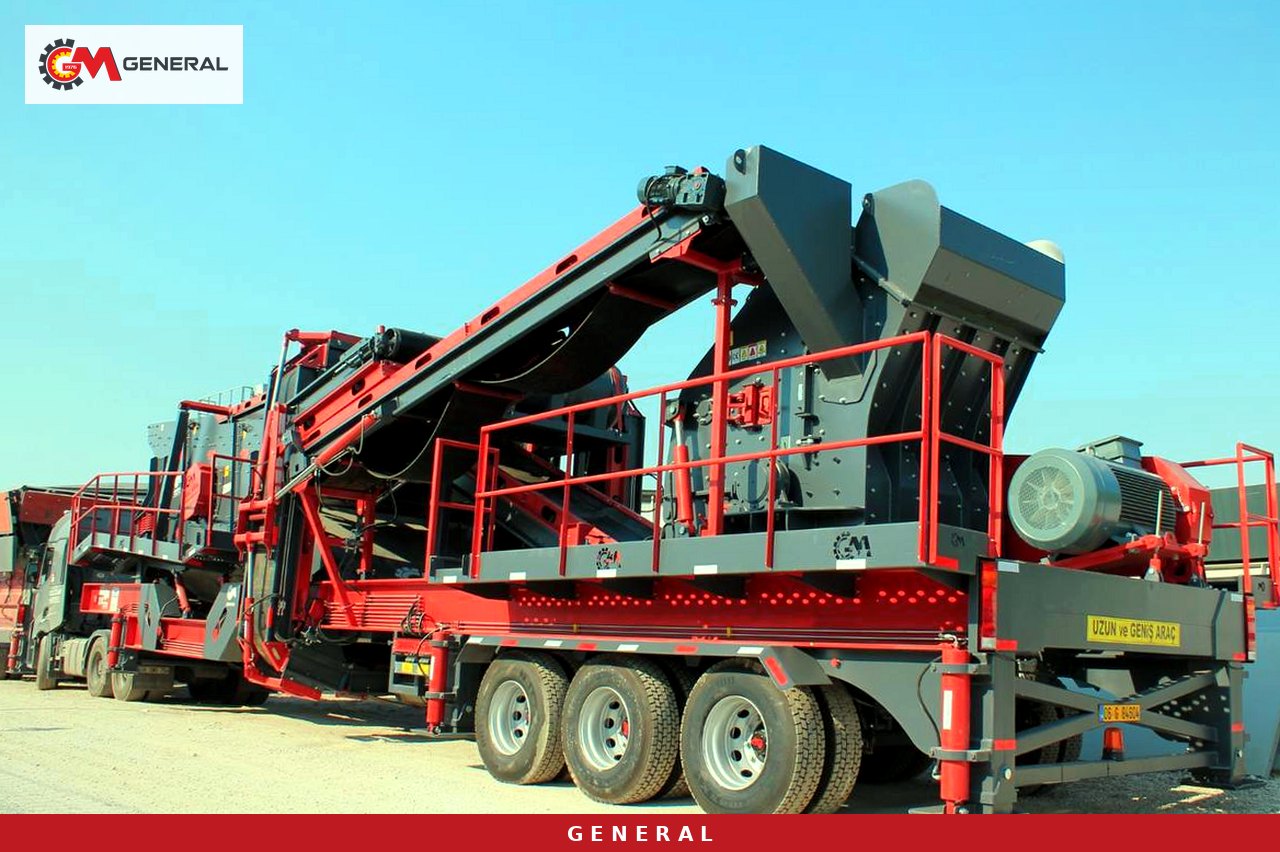
Wear parts weigh heaviest in the operating cost of a granite line. Jaw plates are usually cast in austenitic manganese steel (Mn13/Mn18); in high-silica rock Mn18/Mn22 is preferred. The mantle and concave of the cone are also manganese steel, with a high-chrome alternative considered for very siliceous feed. In an impact secondary, the blow bars are high-chrome castings and become the fastest-consumed part in hard stone.
At a remote quarry, waiting for parts means lost production. Plan to keep at least one set of jaw plates and cone liners on site with the first order. Change intervals depend on the rock, the feed distribution and the crusher setting; log tonnes per liner over the first few months to derive an interval specific to your own quarry. General Makina machines carry a 1-year warranty; wear parts are outside this cover.
Checklist before you request a quote
- Abrasion, compressive strength and silica test results for a sample from the face
- Largest block size after blasting (compare with the 800 mm and 900 mm feed limits)
- Gross and net hourly target; daily shift pattern and maintenance hours
- Required fractions and their percentages (0-5, 5-12, 12-19, 19-40 mm, etc.)
- Whether there is a grid connection or a generator will be used
- Quarry life and reserve estimate, to decide between mobile and stationary
- Haulage constraints on the port–quarry route and the site access road
- The aggregate standard and limit values required in the project specification (confirm with the relevant authority)
As a real example close to the region, the General 950 mobile crusher project for Niger works at 240 t/h under West African conditions. You can compare all wheeled models on the mobile crushing and screening plants page.
Frequently asked questions
Why are the General 02 and General 03 not recommended for granite?
Both models work with an impact primary and are strong in low-abrasion stone such as limestone. In granite and basalt, a jaw + cone arrangement is the better choice for metal life.
Is one large machine more efficient than two General 944 units?
A single machine means fewer operators and fewer connection points. Two units split the downtime risk, allow work on two different faces and offer a wider 240-360 t/h range. The decision should follow the quarry layout and your tolerance for stoppages.
How are shipping and installation to Nigeria planned?
Mobile units are towed on their own chassis behind a tractor unit and set down on support legs on site. The shipping and installation schedule depends on the order and the route, and is shared per project in the quote.
What determines the price?
The model and number of units, extra equipment such as generators and dust measures, the choice of screen media, the spare-parts package and the scope of haulage set the price. The firm figure is given in a quote prepared with your quarry data.
Conclusion
The safest route to 250-300 TPH of granite aggregate in Nigeria is to keep the jaw + cone arrangement: two General 944 units for those who want flexibility, the GNR-MC110 for four fractions and cubical product, and a stationary line for a long-life reserve. If you have the sample tests, fraction list and power situation at hand, reach us through our contact page and we will prepare the configuration and quote for your quarry together.
Definitions of technical terms: Glossary