EN — English
 TR — Türkçe
 DE — Deutsch
 RU — Русский
 FR — Français
 ES — Español
 AR — العربية
 SR — Српски

Burkina Faso Road Laterite & Granite Aggregate Crushing Plant 120-180 TPH
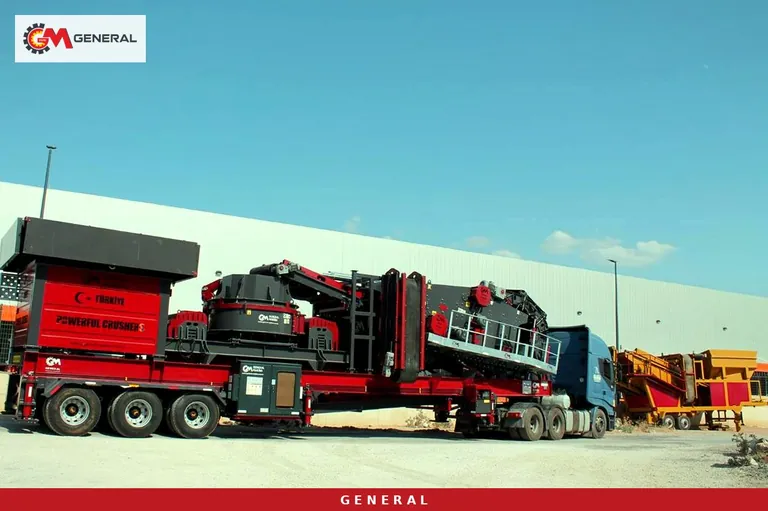
When a road contract is awarded in Burkina Faso, two very different materials arrive on site: lateritic gravel from borrow pits opened along the alignment, and hard rock that has to come from a granite quarry, often some distance away. Trying to run both through the same machine is one of the most common planning mistakes on West African road jobs. Laterite is usually not crushed at all; it is screened, sorted and, where needed, stabilised with a binder. Granite, on the other hand, needs a genuine two-stage crushing line for base course, surface dressing chippings and bridge or culvert concrete. Below we split the 120-180 TPH target into these two material streams, show which equipment takes on which job, explain how logistics in a country far from the coast shape the model choice, and list the data to collect before asking for a quote.
Laterite goes to the screen, not the crusher: its place in the pavement
Across much of Burkina Faso, lateritic crusts and gravelly laterite layers lie close to the surface, and road builders have long used this material for sub-base and, on some sections, for base course. What makes it usable is its grading and the plasticity of its fine fraction. So the first question for laterite is not "which crusher?" but "which screening and sorting will bring it within the specified grading?" The exact limits are set in the road authority's technical specification; no equipment list should be fixed before samples from every borrow pit have been classified in a laboratory.
Hardened blocks of the lateritic crust (known locally as cuirasse) sometimes arrive as large lumps. If their share is high, the feed needs pre-screening and possibly primary crushing; if it is low, separating them on the grizzly and sending them to fill is cheaper.
Preparing laterite with grizzly feeding and dry screening
The core of the laterite line is a grizzly feeder plus a mobile dry screening plant. The vibrating GNR grizzly feeders in the crusher feeders range work at 75-600 tph and accept lumps up to 1500 mm; the bar spacing is chosen so that large crust blocks are rejected while fine laterite passes straight to the screen. Next, the GNR ME1650 mobile dry screening plant takes 0-100 mm feed at 120-180 tph and splits it into fractions with its sand hopper, vibrating screen and stockpile belts. Its 18,000 kg weight and 3800 × 10800 × 4500 mm transport dimensions make frequent moves between borrow pits easy as the road advances, and because it runs on a generator or mains, it suits sections without grid power.
When laterite falls short: stabilisation
If the laterite in a borrow pit fails the base course requirement on plasticity or bearing strength, there are two routes: blend it with crushed granite to strengthen the grain skeleton, or stabilise it with cement. The second route calls for pugmill plants for road base. The mobile pugmill works at 200-600 tph with 3-5 cold bins and a 2×22 kW twin-shaft mixer, discharging the mix through a 25 m³ loading bin into trucks. It does not produce ready-mix concrete, only stabilised base material ready for laying. Because the pugmill's capacity exceeds that of the crushing line, the bottleneck in granite-blended mixes is the crusher side, and stockpiling should be planned accordingly.
Granite aggregate: how the General 944 covers 120-180 TPH
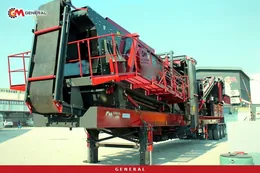
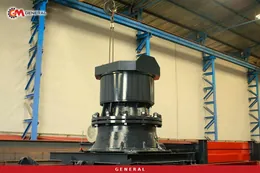
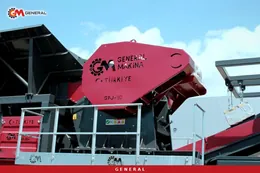
Granite and gneiss cover large areas of Burkina Faso's crystalline basement, and hard aggregate for road projects normally comes from these rocks. The high quartz content of granite speeds up metal consumption when rock is broken by impact. That is why the main recommendation is the General 944 which combines a primary jaw and a secondary cone on one wheeled chassis. The line accepts feed up to 800 mm in its GPJ 90 jaw, crushes the second stage by compression in the GM430 cone, and separates 0-5 / 5-12 / 12-19 mm fractions on a 1600×5000 mm three-deck horizontal screen. The output setting ranges over 0-100 mm, so the same plant can produce both a coarser blend for base course and surface dressing chippings.
Where output lands within the 120-180 TPH band depends on how fractured the quarry granite is, the share of oversize after blasting and the fineness of the required product. If only fine chippings are wanted, more material recirculates to the cone and tonnage drops toward the lower end. Pulling a coarser blend for base course moves it toward the upper end. This is why no capacity should be promised before the layer volumes in the contract are known.
When does the General 950 make more sense?
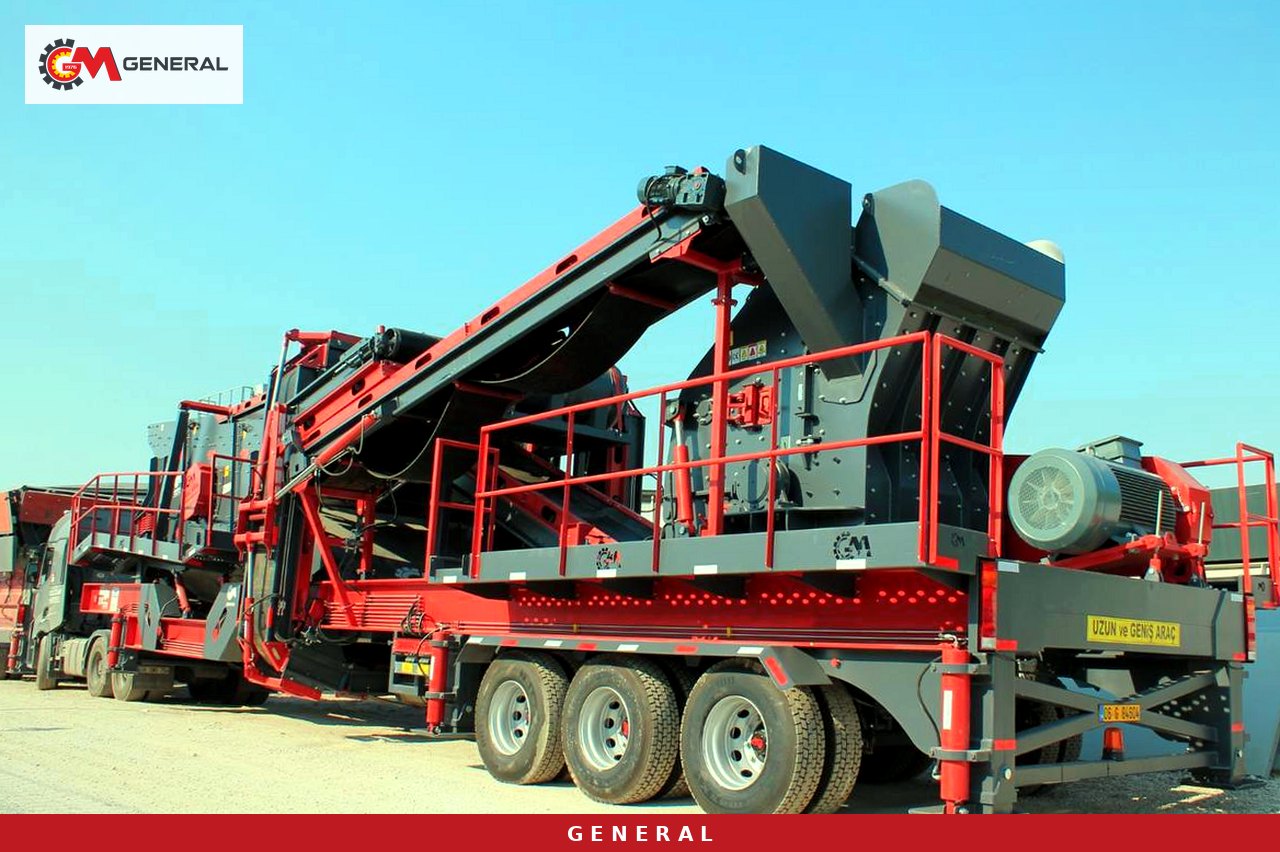
The General 950 carries the same GPJ 90 primary but uses a DMK01 impact crusher as secondary, again in the 120-180 TPH band. The impact secondary gives high reduction and cubical grains, but wear parts are changed more often in quartz-rich granite. If the quarry offers a less abrasive rock than granite, or the surface dressing specification demands a very strict particle shape, the 950 is worth considering. Abrasion and crushability tests on a sample should make that decision, not the catalogue.
| Unit | Role on the road | Capacity | Feed | Power | Weight |
|---|---|---|---|---|---|
| General 944 (GPJ 90 + GM430 cone) | Base course and chippings from granite | 120-180 tph | 800 mm | 550 kVA generator | 70,000 kg |
| General 950 (GPJ 90 + DMK01 impact) | Cubical chippings from less abrasive rock | 120-180 tph | 800 mm | 600 kVA generator | 70,000 kg |
| GNR ME1650 dry screen | Splitting lateritic gravel into fractions | 120-180 tph | 0-100 mm | Generator or mains | 18,000 kg |
| Mobile pugmill plant | Cement stabilisation of laterite or blends | 200-600 tph | — | 79-155 kW total | — |
A landlocked country: port, road haulage and the wheeled chassis
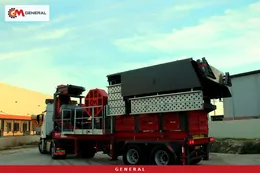
Burkina Faso has no coastline; machines are unloaded at ports in neighbouring countries (such as Abidjan, Tema or Lomé) and hauled inland by road. This directly affects the model choice. The General 944's 4130×20350×4500 mm dimensions and 70,000 kg weight sit on a single wheeled chassis, which leaves fewer work items at border posts and on site than a stationary plant assembled piece by piece with cranes. Even so, heavy and oversize load permits for bridges and border crossings along the route must be confirmed in advance with the relevant authorities; your haulier and local customs agent will settle the transit procedures.
The long road link also shapes the spare parts strategy. Wear parts such as jaw plates, cone liners and screen meshes should travel with the first shipment, and the next package should already be on its way from the port before the current set runs out. Knowing the abrasiveness of the quarry granite allows the first package to be sized more accurately.
The location of the production base also drives cost. If the granite quarry is far from the alignment, the choice is between keeping the crushing line fixed at the quarry and trucking chippings, or moving the plant along the route. The laterite screening unit, being close to the borrow pits, moves with the road in almost every case. These two different rhythms of movement are another reason to plan granite and laterite equipment as separate units.
Harmattan dust and the rainy season: operating routine
In the dry season the harmattan wind from the Sahara carries fine dust everywhere. During this period generator and engine air filters need checking more often, and radiator cores must be cleaned regularly. Water-spray dust suppression at screens and transfer points and covered belt conveyors are measures that can be selected per project; they should not be assumed to be factory standard and must be discussed separately at the quotation stage.
In the rainy season the problem is laterite. Wet fine lateritic material sticks between grizzly bars and to screen meshes, and throughput falls. Producing laterite stockpiles ahead of the wet period, leaving drainage on the stockpile area and adjusting the bar spacing for the season are practical answers. For clayey borrow pits a wobbler feeder can be considered instead of a grizzly. The granite line is less affected by rain, but a heavy chassis can settle if the quarry road and plant pad have not been compacted.
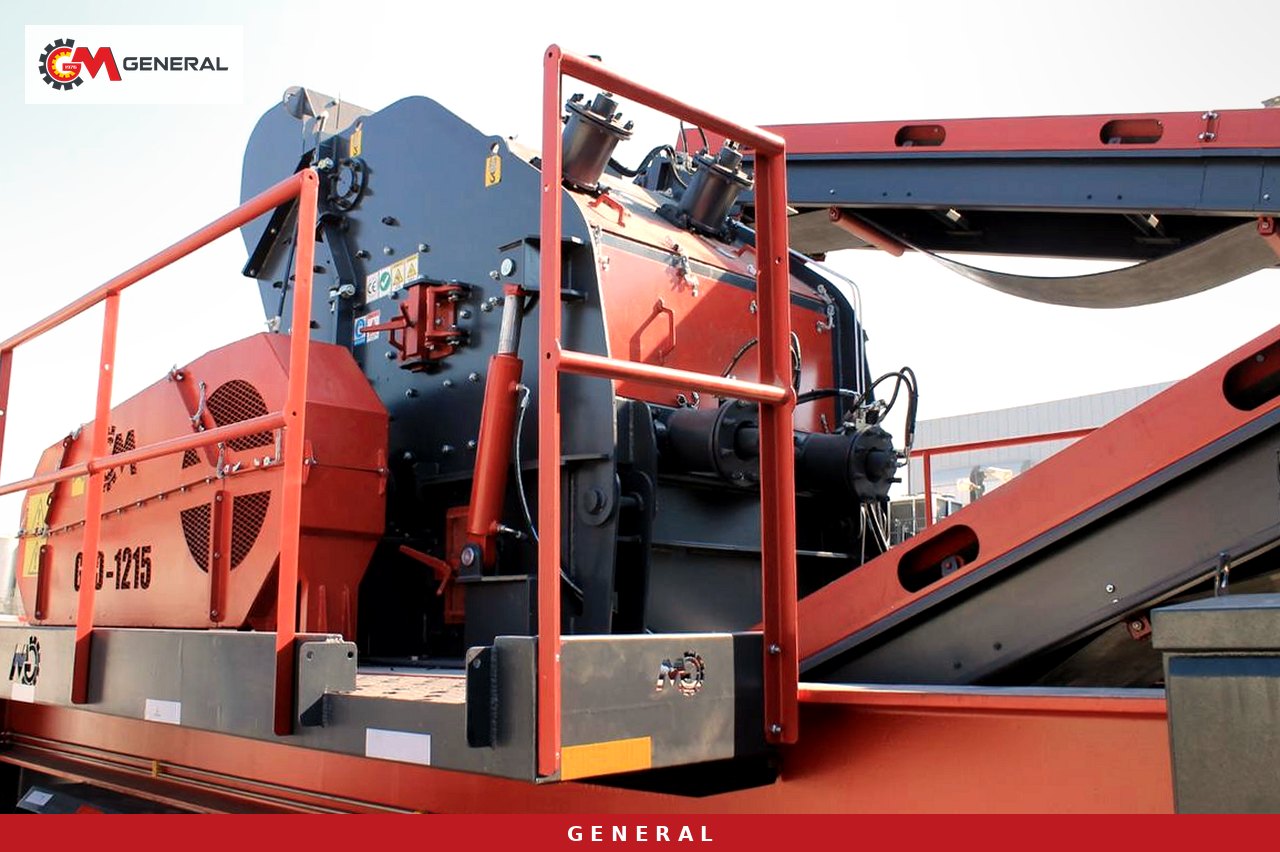
Power on site usually comes from the plant's own generator set. The 550 kVA generator listed for the General 944 is sized to drive the crushing and screening drives together; if the laterite screen operates at a separate location, its own power source has to be planned.
The quotation file: what to gather from site and specification
To work out the right configuration for a road job in Burkina Faso, sending the following information speeds things up:
- Pavement design: material type and approximate volumes of the sub-base, base and surfacing layers
- Laboratory classification of laterite samples from each borrow pit and the approximate share of hard crust blocks
- Location of the granite quarry, largest lump size after blasting and abrasion/crushability test results
- Specified gradings for base course and surface dressing chippings
- Daily working hours, number of shifts and target rate of layer progress
- Power situation: is grid power available, or will the entire line run on generators?
- Port of entry and inland haulage route
- If stabilisation is needed, the binder type and the truck cycle at the pugmill outlet
If this information is not ready yet, you can make a preliminary choice from the wheeled mobile crushing plants page and then refine the configuration with us once the sample data is in.
Frequently asked questions
Is a separate crusher needed for laterite?
On most road jobs, no. Laterite is generally brought within specification by grizzly feeding and screening. If hardened crust blocks make up a large part of the feed, they can be passed through the jaw primary of the granite line or a separate primary can be planned; the decision follows the sample analysis.
Can the General 944 process both granite and laterite on its own?
It can handle dry, clean crust blocks, but passing fine, moist laterite through the crushing line cuts capacity and causes needless wear. Splitting the work, with the General 944 for granite and a grizzly feeder plus GNR ME1650 for laterite, gives a more efficient layout.
What determines price and delivery time?
Price depends on the main unit chosen, the number of auxiliary machines, options such as dust suppression or extra belts, the first wear parts package and the shipping method. Delivery time depends on the production schedule at the time of order; both are given in writing in the quotation.
What do the warranty and certificates cover?
Our machines, built in Izmir since 1976, carry ISO 9001 and CE certification. The warranty period is 1 year; wear parts are excluded.
Conclusion
A 120-180 TPH road aggregate plan in Burkina Faso works when granite and laterite flows are kept apart: the jaw-and-cone General 944 for granite, a grizzly feeder with the GNR ME1650 for laterite, and a mobile pugmill for stabilisation where required. Send your layer volumes, sample results and port route through our contact page and we will prepare a project-specific configuration and quotation.
Definitions of technical terms: Glossary