EN — English
 TR — Türkçe
 DE — Deutsch
 RU — Русский
 FR — Français
 ES — Español
 AR — العربية
 SR — Српски

Africa Quarry Investment Guide: Mobile Stone Crushing Plant 100-200 TPH
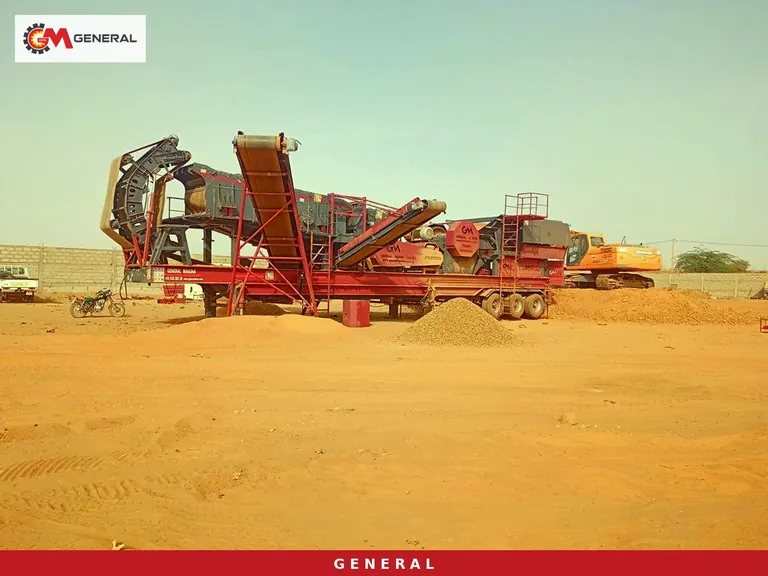
An investor planning a quarry in Africa usually has three documents on the desk: a mining licence or land-use permit, a list of nearby road or housing projects, and a handful of equipment quotations. Orders placed without the calculation that links these three end up as plants that are either undersized on site or running at half load. This guide explains, from the viewpoint of an export sales engineer, in which order to decide when investing in a 100-200 TPH mobile crushing and screening plant, which crusher arrangement makes sense in Africa's different rock belts, and what must be written into the quotation file.
The only figures we use are model data from our product pages. We give no information on tenders, fees, permit durations or aggregate selling prices in any specific country; these must be confirmed with the local authority and through your own market research.
The investment case starts with the buyer, not the machine
A quarry earns money from tonnes sold, not tonnes crushed. So before picking a crusher, work out who will buy the aggregate, in which fraction and from what distance. Most African quarries supply three types of customer: road contractors (well-graded material for sub-base and wet-mix), ready-mix and precast producers (clean, cubical 5-12 and 12-19 mm chippings) and small builders working on housing (0-5 mm crushed sand and mixed stone).
The weight of each customer group directly sets the number of screen decks and the type of secondary crusher. If you sell to concrete producers, particle shape and cleanliness decide the deal; if you only sell road fill, a leaner single-crusher line may be enough. Delivered cost of aggregate rises quickly with haul distance, so the quarry's distance to job sites and city outskirts must be clear before the capacity target is fixed.
When does the step from 100 to 200 TPH make sense?
One hundred tonnes per hour is enough to feed a single mid-sized road project or several batching plants around a city. Moving to 200 TPH means serving more than one large buyer at the same time, or building stockpiles quickly during a short project window. Choosing more capacity than the market can absorb leaves the machine idle, burning wear parts and fuel without earning. The sound approach is to estimate first-year saleable tonnage conservatively, select the plant for that band and leave room for a second unit as the business grows.
Africa's rock belts from north to south and crusher choice
Africa is not one geological region, and the same model does not give the same result everywhere. A general picture can still be drawn:
- North Africa (Libya, Algeria, Tunisia, Egypt): limestone and dolomite quarries are common. In this low-abrasive material a primary impact crusher gives high reduction and a cubical product.
- West and Central Africa: siliceous basement rocks such as granite, gneiss and quartzite dominate. They need a jaw crusher in the first stage and a cone or impact crusher in the second.
- East Africa (Ethiopia, Kenya, Tanzania): volcanic basalt covers large areas; it is hard and abrasive, so the line has to start with a jaw primary.
- Southern Africa: dolerite, granite and quartzite stand out, and wear cost drives the decision.
This picture is only a starting point. Two quarries close to each other in the same country can yield very different rock. Before deciding, take samples from several points of the deposit and have an independent laboratory test compressive strength and Los Angeles abrasion; that costs far less than an investment tied to the wrong crusher arrangement.
Real models that cover the 100-200 TPH band
The values below come from our wheeled mobile crushing and screening plants pages. Where a value is not published, we have not estimated it.
| Model | Suitable rock | Capacity | Crusher arrangement | Screen | Max. feed | Weight | Generator |
|---|---|---|---|---|---|---|---|
| General 800 | Limestone, low-abrasive stone | 80-150 t/h | PDK 1280 primary impact | 1300×4000 mm, 3 decks | 600 mm | 35,000 kg | 450 kVA |
| General 01 | Limestone, mixed feed | 120-180 t/h | GPS 1210 impact (primary + secondary) | 1600×5000 mm, 4 decks | 700 mm | 55,000 kg | 550 kVA |
| General 944 | Granite, basalt, quartzite | 120-180 t/h | GPJ 90 jaw + GM430 cone | 1600×5000 mm, 3 decks horizontal | 800 mm | 70,000 kg | 550 kVA |
| General 950 | Granite, basalt, hard stone | 120-180 t/h | GPJ 90 jaw + DMK01 impact | 1600×5000 mm, 3 decks horizontal | 800 mm | 70,000 kg | 600 kVA |
| GNR-MC110 | High-tonnage hard rock | 200-300 t/h | GPJ 110 jaw + DMK03 impact (twin chassis) | 2000×6000 mm, 4 decks | 900 mm | 2 × 55,000 kg | 750 kVA |
For a limestone quarry: 800 or 01?
On a North African limestone site the General 800 covers a target around 100 TPH with 80-150 t/h and is one of the lightest units in the range. If the target goes above 150 tonnes, or a concrete buyer wants four separate fractions, the General 01 moves ahead: its GPS 1210 rotor does primary and secondary work in one housing, and the 4-deck screen separates 0-5 / 5-12 / 12-19 / 19-40 mm products in a single pass. Our 150 t/h General 01 project in Algeria is a real example of this model working under North African conditions.
For a granite or basalt quarry: 944 or 950
In siliceous hard rock a primary impactor wears out blow bars and liners fast. On these sites the General 944, with a GM430 cone behind the GPJ 90 jaw primary, extends metal part life through compression crushing. If the concrete buyer asks for cubical shape, the General 950 uses a DMK01 impact secondary behind the same jaw and delivers higher reduction. Both models share the same dimensions and weight; the choice is a trade-off between wear cost and product shape. The 150 t/h basalt crushing and screening project in Jijiga, Ethiopia and the General 950 plant we shipped to Niger are among our real deliveries to hard-rock sites in Africa.
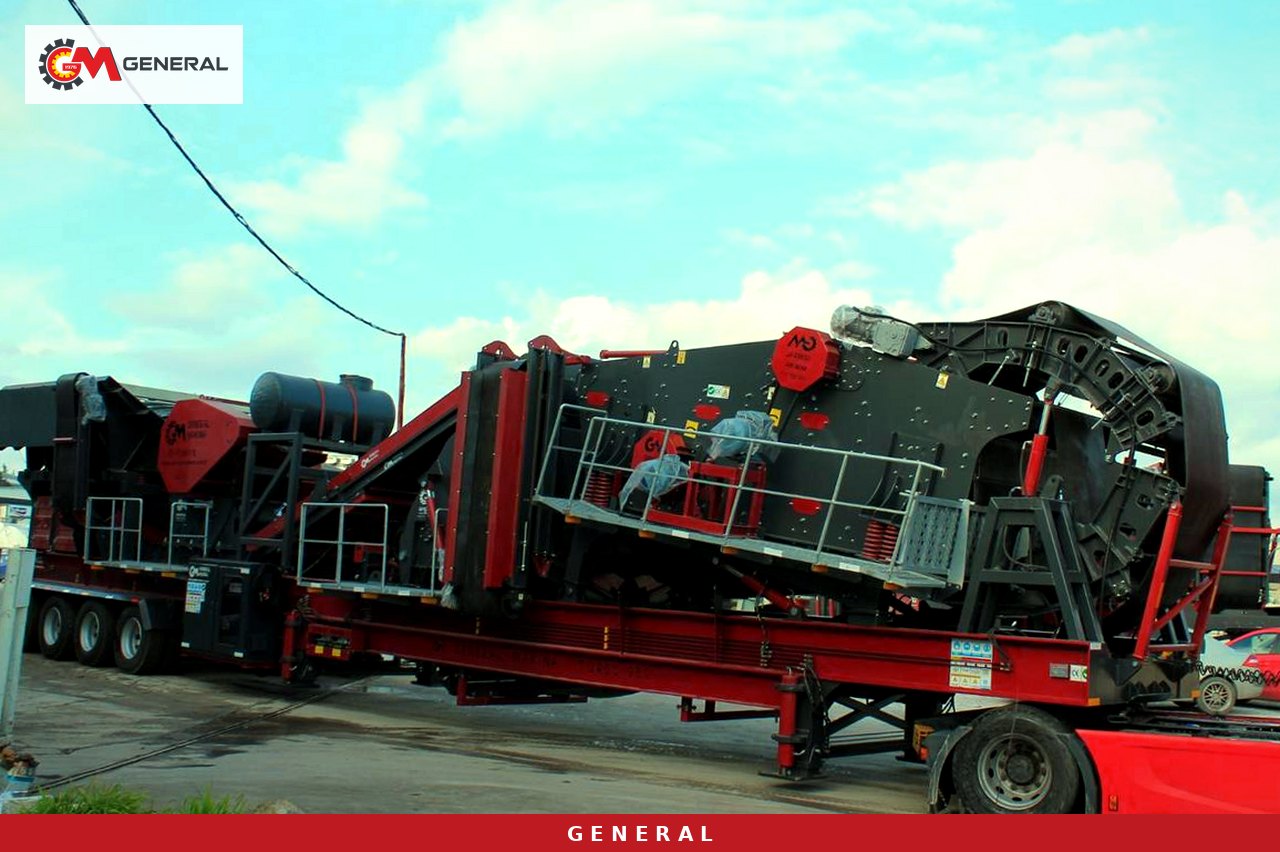
If the 200 TPH target is permanent, there are two routes: support a 120-180 t/h unit with a second plant, or choose the GNR-MC110 in the 200-300 t/h band from the start. Because the MC110 primary chassis can run on its own, the investment can be split into two stages: primary group first, secondary group when the market grows.
Capital items beyond the quoted machine price
In an African quarry investment the machine is only part of the total budget. When comparing quotations, clarify in writing who carries each of these items:
- Power: on sites far from the grid the generator is part of the plant. 450 kVA for the General 800, 550 kVA for the 944 and 600 kVA for the 950 are product data; the quotation must state clearly whether the generator is included.
- Transport: road haul from factory to port, sea freight, heavy haulage from the arrival port to the quarry and customs clearance are separate items.
- Site preparation: feed ramp, levelled and compacted ground, stockpile areas and truck road. A mobile plant needs no concrete foundation, but it does need a firm platform.
- Loading equipment: an excavator or wheel loader to feed the hopper and a machine to load trucks from the stockpiles.
- Spare and wear part stock: jaw plates, blow bars, screen meshes and belts on site for the first period.
- Working capital: fuel, wages and maintenance until the first sales are collected.
Price is set by the model, crusher arrangement, number of screen decks, generator, automation options and delivery terms. For a concrete figure, send a request describing your material and target fractions. For cost per tonne, a hypothetical formula helps: (annual fixed costs + annual variable costs) ÷ annual tonnes sold = unit cost per tonne. To measure variable costs on your own site, log the consumption of wear and spare parts from the first months.
From port to pit: logistics and installation plan
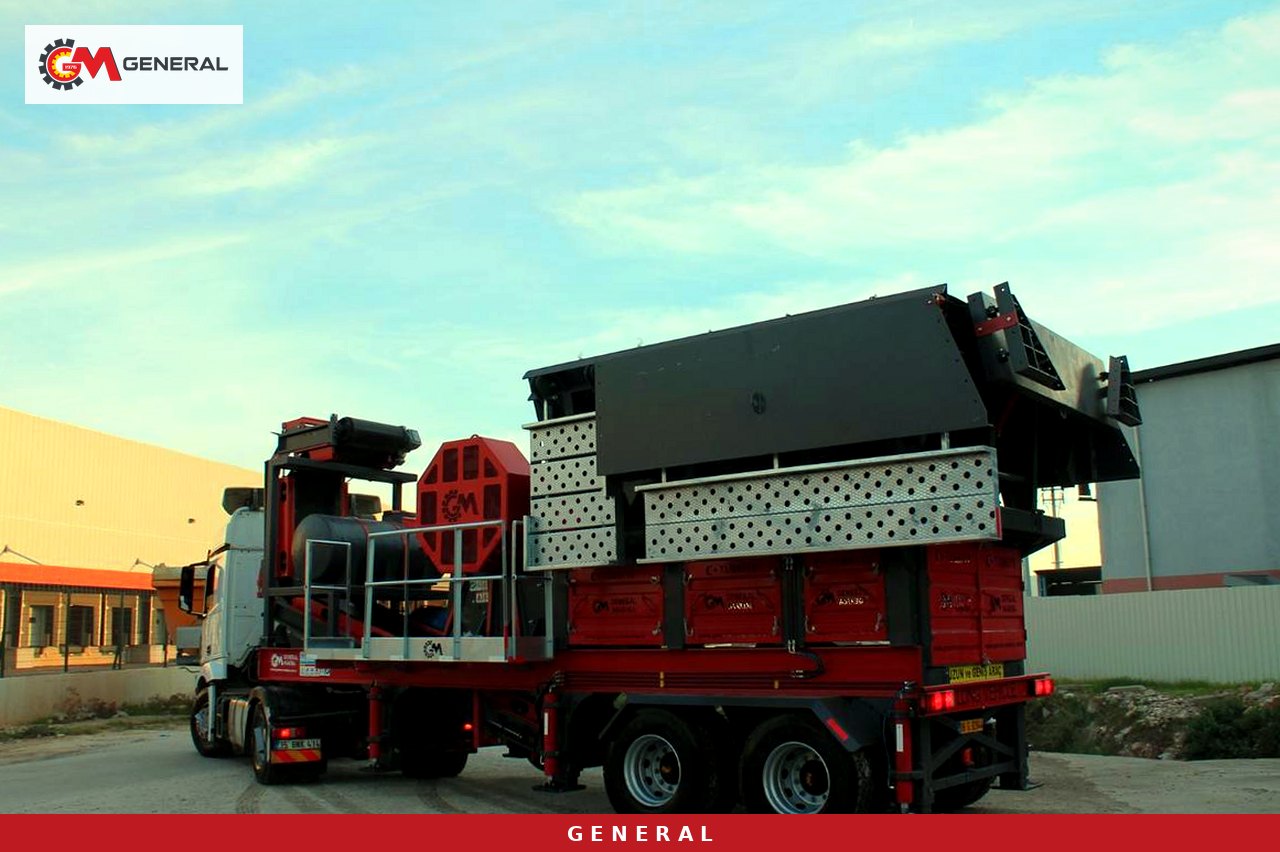
Most African quarries lie hundreds of kilometres from a port, and inland roads may have bridge, bend and load limits. The advantage of a wheeled mobile plant is that it travels on one chassis behind a tractor unit; the loading dimensions are 3600×15500×4500 mm for the General 800 and 4130×20350×4500 mm for the 950. The route survey should use these dimensions, and points requiring special permits should be identified before shipment.
For landlocked countries such as Niger, Mali, Ethiopia or Zambia, transit customs must also be planned. Complete documents, dimension drawings and weight lists shorten waiting time at the port.
The first week on site
When the plant reaches the quarry, the hydraulic legs are set on level, load-bearing ground, the conveyors are unfolded and the generator is connected. Operators who learn the feeding rhythm, crusher setting and daily lubrication checks from the first days determine the plant's service life. On hot, dusty sites, frequent checks of engine and generator air filters and a water line for dust suppression at belts and transfer points are measures that can be selected per project.
Investment risks in Africa and how to reduce them
On a remote site the most expensive thing is a plant stopped by a small part. To reduce that risk, order the first set of fastest-wearing parts with the plant, ask for a spare parts list with part numbers and train a team that can carry out basic maintenance on site. General Makina plants carry ISO 9001 and CE certification and a 1-year warranty excluding wear parts. Manufacturing in Izmir since 1976, the company exports to regions including North Africa and the Middle East; we recommend agreeing warranty terms and the spare parts supply route in writing at quotation stage.
The second risk is rock that turns out different from what was expected. As the pit deepens, the weathered overburden ends and harder rock begins, or the clay content rises. A feeder with pre-screening and an adjustable crusher setting can adapt to that change; even so, take the first sample set from the depth you plan to work as well as from the surface.
Frequently asked questions
Is a mobile or a stationary plant more sensible for a new quarry in Africa?
If market size and licence term are not yet certain, a mobile plant lets you start production without foundation work and move to another site if needed. For a long-life, high-tonnage quarry with a secure market, a stationary line can be evaluated separately.
Can the General 01 be used in a granite quarry?
With its impact design the General 01 is economical in limestone and mixed feed. In siliceous hard rock such as granite and basalt, wear part consumption rises; for that material the jaw-primary 944 or 950 is recommended.
Does the generator come with the plant?
Generator rating is listed in each model's product data; whether it is part of the delivery scope is stated separately in the quotation. On sites near the grid, a mains connection option can also be discussed.
What information is needed for a quotation?
Rock type and, if possible, laboratory results, maximum block size, target capacity, required fractions, power situation on site and arrival port. With this information a model recommendation and quotation are prepared.
Conclusion: buyer first, rock second, model last
In a 100-200 TPH quarry investment in Africa the right order is to define the product you will sell, have the rock tested, and only then choose the crusher arrangement. In limestone the General 800 or 01, in granite and basalt the 944 or 950, and for a permanent 200 TPH and above the GNR-MC110 are the natural candidates. Send your sample results and target fractions via our contact page and we will prepare the configuration and quotation for your site together.
Definitions of technical terms: Glossary