EN — English
 TR — Türkçe
 DE — Deutsch
 RU — Русский
 FR — Français
 ES — Español
 AR — العربية
 SR — Српски

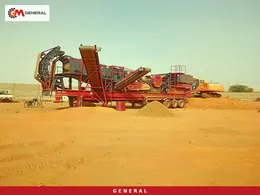
Chad Hot-Climate Mobile Stone Crushing Plant 100-200 TPH
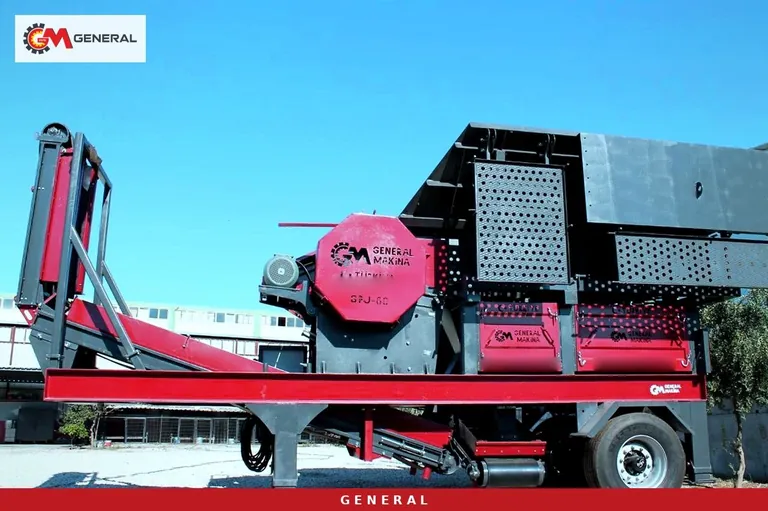
For a contractor investing in crushing and screening in Chad, the real question is not how many tonnes per hour a machine is rated for, but how many months it can hold that tonnage on a site where even the shade feels heavy at midday. The north of the country opens onto the Sahara and the middle belt onto the Sahel; rainfall rises further south, yet during the dry season dust, high heat and strong sunlight arrive together almost everywhere. This article looks at a mobile crushing and screening plant aimed at 100-200 TPH and asks three practical questions: which part gives up first in Chadian conditions, which model carries the load with which crusher arrangement, and which precautions belong in the contract before the order is signed.
Five points where a plant gives up first in the heat
Heat does not collect in one spot on a crushing plant; each subsystem fails at its own weak point. On plants commissioned in Chad the trouble usually appears in roughly this order, and the countermeasure list should follow the same order.
- Generator and cooling pack: At high ambient temperature a diesel generator delivers less power, and dust packed into the radiator fins makes the loss worse. A generator rated just at full load on paper will stop the crusher in the afternoon.
- Electrical panel: Inside a sun-facing cabinet it is clearly hotter than outside. Drives, starters and relays age early.
- Bearings and grease: Screen eccentric shafts and main crusher bearings dry out quickly on a grease not rated for heat, and dust enters wherever a seal is worn.
- Hydraulics: The oil that moves folding conveyors and jacking legs thins as it heats; leaks and hose ageing speed up.
- Belt rubber: Conveyor belts left in permanent sunlight harden and crack on the surface, and splices loosen.
None of these five shows up in the catalogue capacity, yet together they decide the annual tonnage. When requesting a quotation for Chad, discuss a separate "hot-climate package" alongside the machine list.
Matching the crusher layout to Chad's rock map
Chad is a large country with no single quarry type. In the centre the Guéra massif, and in the east the area around Ouaddaï, expose crystalline basement rock such as granite and gneiss; the Tibesti mountains in the north carry volcanic rock. The Lake Chad basin and the area around the capital are largely covered by sand and clay, so aggregate often has to come from distant quarries. Whatever the quarry, compressive strength and abrasion tests on a sample from that face are the basis of crusher selection; the pairing below is only a starting frame.
Guéra and Ouaddaï granite: a jaw primary is a must
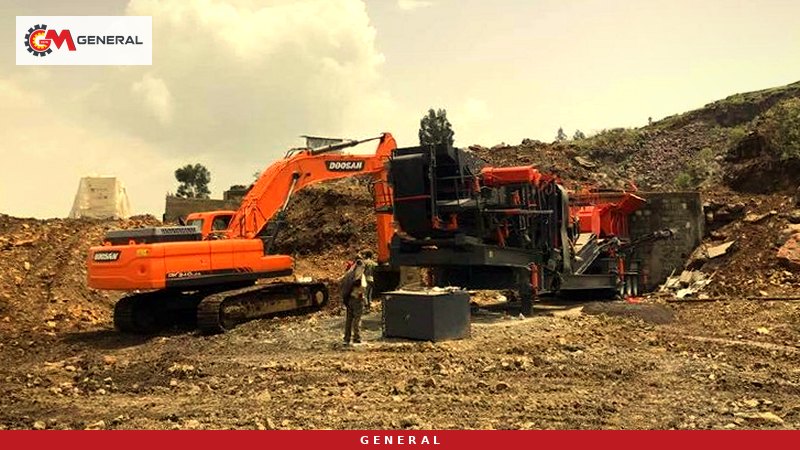
In high-silica granite and gneiss the primary stage uses a jaw crusher, because compression consumes metal far more slowly than an impact rotor. The General 944 pairs a GPJ 90 jaw with a GM430 cone secondary, takes 800 mm feed and produces 120-180 TPH. The General 950, on the same chassis and at the same weight, uses a DMK01 impact secondary; it fits when you want a more cubical product and can accept the wear. We compare the two in detail in our guide to mobile plants for basalt and granite.
Limestone, sandstone and laterite mix: impact economics
On low-abrasion limestone and soft sandstone the high reduction ratio of an impact crusher becomes an advantage. The General 800 brings 600 mm feed down at 80-150 TPH with its PDK 1280 primary impactor. When more tonnage is needed in the same band, the General 01 does primary and secondary work in one GPS 1210 impactor, accepts 700 mm feed and delivers 120-180 TPH. In quarries where laterite and clay mix into the face, a grizzly pre-screen that pulls soil and fines out before the crusher cuts both wear and blockages.
Model comparison for the 100-200 TPH target
Every figure in the table comes from the technical data on our product pages. Generator rating is listed separately because it matters most on a hot site.
| Model | Crusher layout | Capacity (t/h) | Max. feed (mm) | Generator (kVA) | Weight (kg) |
|---|---|---|---|---|---|
| General 800 | PDK 1280 primary impactor | 80-150 | 600 | 450 | 35,000 |
| General 01 | GPS 1210 impactor (primary + secondary) | 120-180 | 700 | 550 | 55,000 |
| General 944 | GPJ 90 jaw + GM430 cone | 120-180 | 800 | 550 | 70,000 |
| General 950 | GPJ 90 jaw + DMK01 impactor | 120-180 | 800 | 600 | 70,000 |
| GNR 110 + M-DMK 02 (two units) | Jaw primary + secondary impactor | 180-300 / 150-250 | 1100 / 350 | — | 55,000 / 38,000 |
The upper limit of the single-chassis models is 180 TPH. If the target is a firm 200 TPH there are two routes: split the two stages across separate chassis (for example a GNR 110 jaw primary and an M-DMK 02 secondary impactor from our single-chassis mobile crusher units plus a separate screen), or share production between two smaller lines. On a hot site the second route has a bonus: one line keeps running while the other is under maintenance, and the whole quarry does not stop when load has to be reduced in the afternoon.
Equipment and contract clauses that cut the heat load
"Desert-proof" is not a certificate; it means nothing until it is written down which part is protected and how. Some of the measures below already come with the models, others are selected per project. The quotation should show line by line which ones are included.
- Generator sizing: Ask for a generator with a margin for high ambient temperature and an enlarged radiator, and have the quotation state the ambient temperature the selection was based on.
- Panel protection: A sun canopy, dust-sealed doors and, where needed, cabinet air conditioning keep electrical components in range. Soft-starter and frequency-controlled panels, as on the General 01, lower inrush current and ease the load on the generator.
- Oil and grease grades: Hydraulic oil, gear oil and bearing grease should be high-temperature grades, and the delivery documents should record what the first fill was.
- Belts and rubber parts: Heat- and UV-resistant belt rubber, conveyor covers and spare splice material.
- Closed circuit and pre-screening: A by-pass grizzly feeder and a return conveyor stop the crusher from heating up and wasting energy on material that does not need crushing.
Each item affects the price, but adding them on site later costs more and leaves the plant running at half capacity for months.
Filters, seals and a water plan for dust and sandstorms
In the Chadian dry season, fine dust carried by the wind meets the dust the crusher makes itself. The first comes from outside the machine, the second from inside, so no single measure solves both. Two-stage pre-cleaners on air filters, labyrinth seals on bearing housings and a dust cover over the screen work against external dust. Water sprays at the crusher discharge and conveyor transfer points suppress the dust generated inside.
Water is scarce and expensive at most Chadian sites. Instead of continuous spraying, fine nozzles aimed only at transfer points, and just enough water to keep product stockpiles damp, limit the volume that has to be trucked in. Do not size the dust suppression system before the nearest water source and the tanker logistics for the quarry are settled.
From the port of Douala into Chad: why a single chassis pays
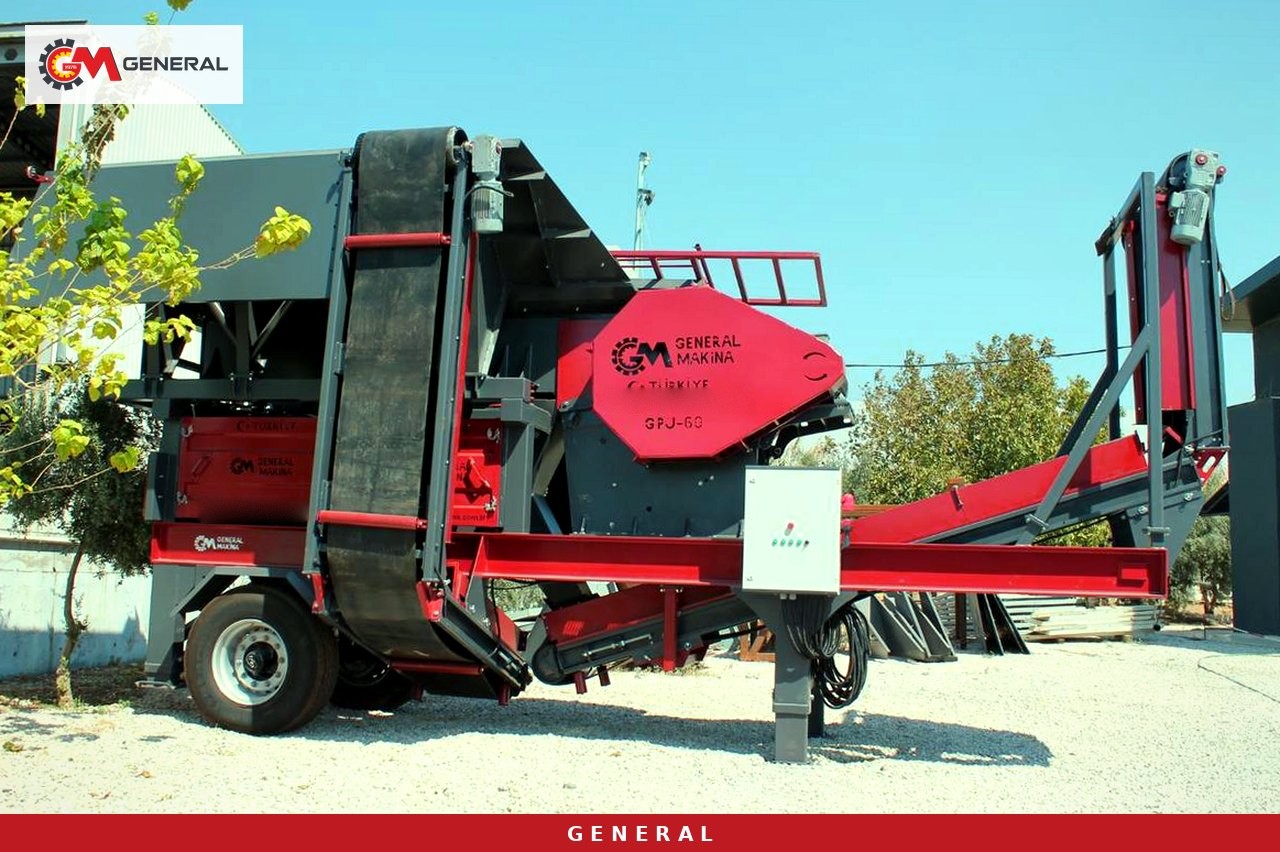
Chad is landlocked; equipment usually arrives by sea at Douala in Cameroon and is then towed by road into the interior. On a long road route every extra truck and every extra crane lift adds cost and risk, which is why models that put the plant on one chassis stand out here. The General 800 travels at 3600×15500×4500 mm and weighs 35,000 kg; the General 944 and 950 measure 4130×20350×4500 mm and weigh 70,000 kg. Whether the heavier models fit the bridge and road limits along the route must be confirmed in advance with the haulage company and the relevant authorities.
On arrival, folding hydraulic conveyors and hydraulic legs make setup easier without a concrete foundation. In a hot climate a short setup has one more benefit: the crew can fit the assembly into the cooler morning hours.
Setting the maintenance rhythm to the climate
A maintenance schedule in Chad should not copy that of a European quarry. Air filters and radiator fins are cleaned more often, grease intervals are shortened, and belt tension and splices are checked by eye at the start of every shift. The shift pattern should follow the climate too: moving full-load production to early morning and evening reduces strain on both machine and crew in the hottest hours.
At a remote site the real loss is a plant standing idle for days for want of a small part. An initial stock of jaw plates, blow bars, screen meshes, filter elements and belt splice material should be listed at the ordering stage. Our spare and wear parts page explains when manganese castings and when high-chrome parts suit a given rock. After-sales spare parts support is provided to the extent described on our product pages; the warranty is 1 year and excludes wear parts.
Frequently asked questions
Can the plant run at full capacity in Chad's heat?
The crusher itself is not much affected by temperature; the real limits are the generator, the panel and the cooling system. If these three are selected for high ambient temperature and maintenance follows the climate, the plant can run within its catalogue band. The quotation should clearly state the ambient temperature the selection was based on.
General 944 or General 950 for a granite quarry?
In highly abrasive granite and gneiss, the cone-secondary General 944 is safer for metal life. If cubical product is your priority and you accept the wear cost, the impact-secondary General 950 is worth considering. The decision should rest on tests of a sample from the quarry.
Is one machine enough for 200 TPH?
Our single-chassis wheeled models top out at 180 TPH. If 200 TPH is a firm target, we recommend a combination that splits primary and secondary into separate units, or two parallel lines.
What determines the price?
Model and crusher layout, generator size, the scope of the hot-climate package, dust suppression equipment, the initial spare parts stock and the haulage route via Douala all set the price. A quotation built on this information is prepared per project.
Conclusion
For a 100-200 TPH mobile crushing and screening plant in Chad, success depends less on crusher power than on how heat, dust and remote logistics are managed. For granite quarries the jaw-primary General 944 or 950, and for soft limestone and sandstone the General 800 or General 01, are the right starting points; all options are on our wheeled mobile crushing plants page. Contact us with your quarry sample, target product fractions and site details, and we will work out together which configuration from the plants we have built in Izmir since 1976 fits your site.
Definitions of technical terms: Glossary