EN — English
 TR — Türkçe
 DE — Deutsch
 RU — Русский
 FR — Français
 ES — Español
 AR — العربية
 SR — Српски

South Africa Railway Ballast Cone Stone Crushing Plant 200-300 TPH
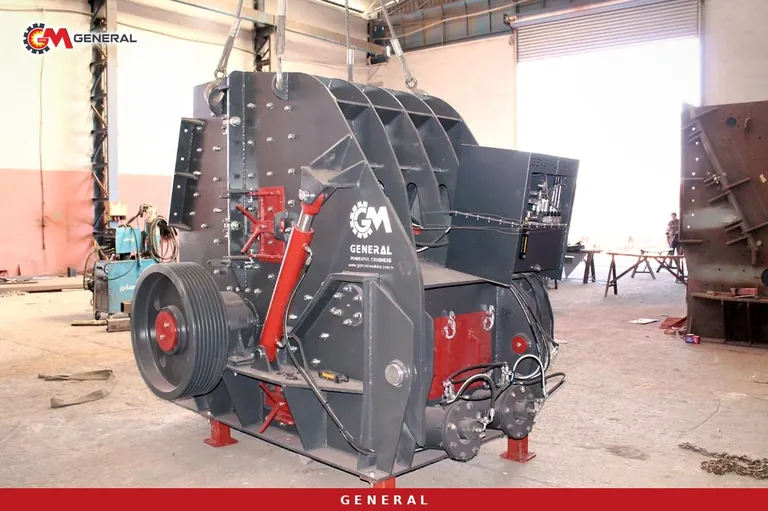
A quarry owner in South Africa who wants to supply ballast for a track renewal or a new line has to do one calculation before looking at any machine list: of every 100 tonnes crushed, how many will land inside the coarse, angular ballast band defined in the rail operator's specification? In a plant processing 200-300 tonnes per hour, the machine that decides this ratio is usually the cone crusher in the secondary stage. This article covers how a cone crusher is set for ballast, how it behaves in South African rock types, and which real model combinations reach the 200-300 TPH target. Every capacity, motor and dimension figure is taken from the technical tables on our product pages.
Why ballast is finished by compression crushing
Ballast stones distribute load by locking against each other under the sleeper. To do that they need fractured faces, sharp edges, a shape as cubical as possible and no fines. An impact crusher throws rock with a rotor against breaker plates; particle shape is good, but the reduction ratio is high and so is the fines content. In a ballast quarry that means shrinking the most valuable fraction.
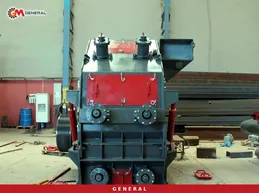
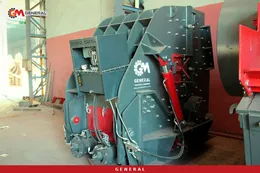
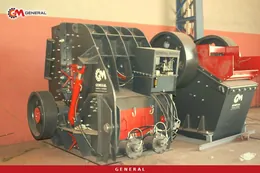
A cone crusher squeezes the material repeatedly between an eccentrically gyrating head and a conical bowl liner. For the General cone crusherour product page gives a secondary reduction ratio of 6:1 to 8:1. That moderate reduction keeps more particles inside the ballast band. Compression also limits wear, which is what keeps metal cost manageable in hard, high-silica rock.
The primary stage also works by compression: the GNRK series jaw crusher. Its discharge already contains stone in ballast size. A well-designed plant screens that stone out without sending it through the cone at all; the cone only processes the oversize above the ballast band.
What South African rock types demand from the cone
South African geology changes sharply from region to region. Dolerite intrusions are widespread in the Karoo basin; norite and granite occur around the Bushveld, quartzite quarries are known in Gauteng and North West, and granite and sandstone dominate parts of the Western Cape. What these rocks usually share is enough strength for ballast and a high level of abrasiveness.
Wear is governed by free silica in the rock, not by Mohs hardness. Using the reference values on our product pages, basalt has a Bond abrasion index of roughly 0.20 and granite roughly 0.55. In quartzite and high-silica granite, impact crusher blow bars wear out fast; in a cone crusher, manganese steel liners are used, or high-chrome liners where silica is very high. Dolerite is dense and tough and takes energy to break, so when sizing the primary crusher it is more realistic to work from the lower end of the capacity table.
The sample that goes to the laboratory
No equipment manufacturer can say from a distance whether a particular quarry is suitable for ballast. Abrasion, impact, flakiness and water absorption tests should be run by an accredited laboratory, and the acceptance limits confirmed from the specification of the rail operator or the authority tendering the work. If you send us the test report and the ballast band from the specification at quotation stage, screen apertures and cone settings are calculated from that data.
Setting the cone crusher for a ballast line
The product page for the General cone crusher lists a feed range of 50-250 mm (300 mm in some configurations), a product range of 0-60 mm (75 mm in some configurations) and a power range of 90-500 kW. Model-specific capacity and weight are given per project. Put that range next to the ballast band in your specification. If the upper limit of the band sits above the cone product range, a large share of that fraction is screened out of the primary discharge, and the cone works mostly on the lower fractions.
CSS and closed circuit
The closed side setting (CSS) is adjusted hydraulically. For ballast, the cone usually runs with standard liners at a relatively wide setting; a very tight setting raises fines and lowers the saleable ballast share. Oversize returning from the screen is fed back to the cone, and this closed circuit controls the upper limit of the band without closing the setting. Short-head liners, meant for tertiary and quaternary stages, are left for side circuits where finer product is the goal.
Choke feeding and liner monitoring
When the crushing chamber is full (choke feed), stones also break each other and the share of cubical particles rises. A cone that keeps emptying and refilling produces flaky stone and wears its liners unevenly. For that reason a level-controlled surge bin or buffer stockpile ahead of the cone is recommended. Liner profile should be measured regularly; a worn liner effectively opens the setting and lets more oversize slip past the ballast band.
Model matching for 200-300 TPH
The table below shows two real configurations that reach the target range, plus a single wheeled plant for comparison. In a stationary line, capacity is set by the primary crusher and the feeder; with two wheeled units, the total is the sum of both plants' ranges.
| Configuration | Feeding | Primary | Secondary | Screen | Capacity (t/h) | Power supply |
|---|---|---|---|---|---|---|
| Stationary line | GNR 110 grizzly feeder, 200-300 t/h, 2x7.5 kW | GNRK 110, opening 1100×850 mm, 110/132 kW, 200-350 t/h | General cone, 90-500 kW range | GNR 2060 (2000×6000 mm, 18.5 kW) or GNR 2460 (2400×6000 mm, 22 kW) | 200-300 (feeder limit) | — |
| Two General 944 units | Hopper with vibrating feeder on each unit | GPJ 90 jaw, 800 mm feed | GM430 cone | 1600×5000 mm, 3-deck horizontal | 2 × 120-180 | 2 × 550 kVA generator |
| Single General 944 (comparison) | Hopper with vibrating feeder | GPJ 90 jaw | GM430 cone | 1600×5000 mm, 3-deck horizontal | 120-180 (below target) | 550 kVA generator |
If the quarry will operate at the same location for ten years or more, stationary crushing and screening plants make more sense. A line built on concrete foundations has no chassis transport limit, so wider screens and more stockpile conveyors can be used. The GNRK 110 alone weighs 33,000 kg, which shows the line is designed for a permanent site. If you want to stay close to a rail construction front that keeps moving, two General 944 units are more flexible. Each weighs 70,000 kg and measures 4130×20350×4500 mm, so road permits for the route should be planned in advance. A single 944, at 120-180 t/h, cannot meet a 300 TPH target alone.
The limited role of impact and cubicizer crushers
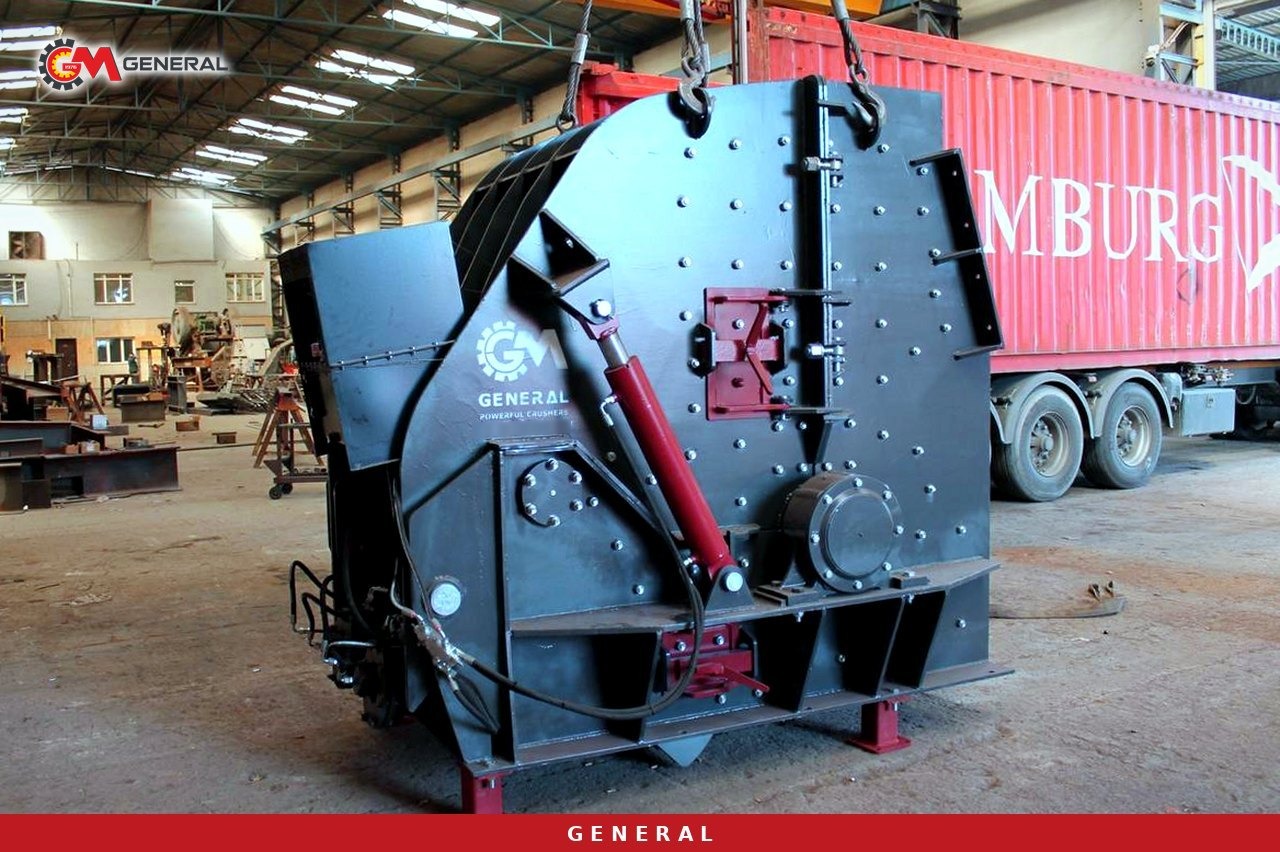
There are two reasons not to put an impact crusher in the main secondary position of a ballast line: fines generation and part consumption in abrasive rock. The GNR DMK series is rated at 120-180 t/h for the DMK01 and 250-300 t/h for the DMK03, and its product page lists limestone, dolomite and soft to medium rock as suitable feed. For high-silica granite and basalt, the same page recommends a cone crusher. If your quarry also processes limestone for concrete aggregate alongside ballast, a DMK can make sense on a separate circuit.
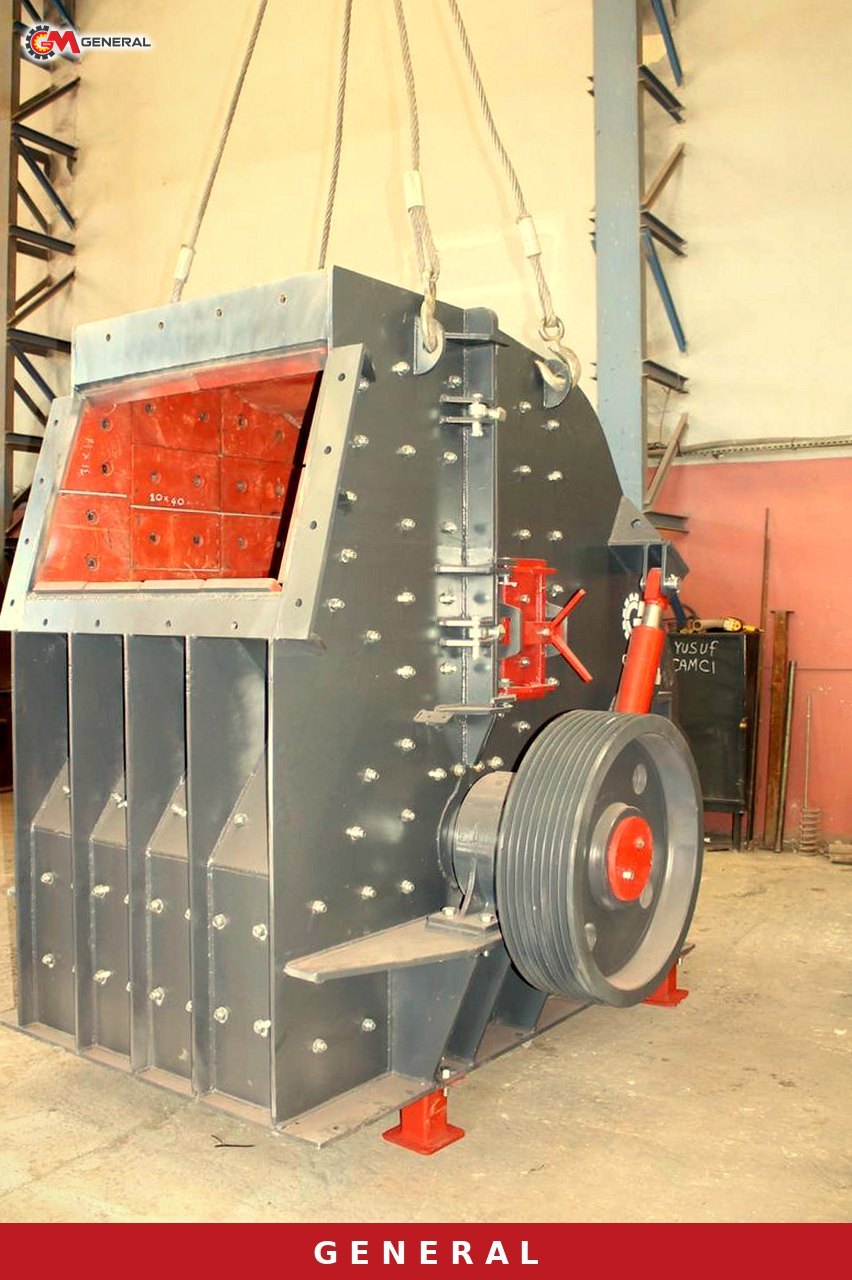
The tonnage that falls below the ballast band is not wasted: it can be sold as sub-base, concrete chippings and manufactured sand. When an asphalt or concrete specification calls for particle shape, the GNR K series cubicizer comes in. The GNR K110 is rated at 160-250 t/h with a maximum feed of 210 mm and a 160 kW motor. A cubicizer shapes rather than reduces; it is never applied to the ballast itself, because it would make the ballast band smaller.
Keeping ballast clean at the screen and in the stockyard
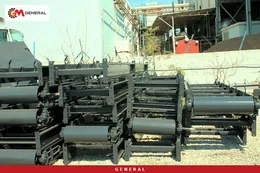
Ballast quality can be won at the crusher and lost at the screen and stockpile. The by-pass grizzly of the GNR grizzly feeder removes weathered rock and soil from the quarry face before it enters the primary crusher, and that material must never mix with ballast stock. On the screen, the ballast deck needs enough area. With the GNR circular vibrating screen range, each additional deck reduces capacity by about 10 percent, and that has to be included in the sizing. Put these checks on the site list:
- Does the grizzly by-pass discharge go to a separate stockpile on its own conveyor?
- Was the wire aperture of the ballast deck chosen against the lower and upper limits of the specified band?
- Is there a level-controlled surge bin ahead of the cone crusher?
- Is the ballast stockpile placed on hard, drained ground, or can truck tyres carry mud onto it?
- Is water spray dust suppression planned at transfer points for the dry season?
- Are spare liners and screen wire on site, or still on order?
Stockpile height matters as well. On tall conical piles, coarse particles roll down to the toe and segregation builds up inside the pile; loading from different points with the loader reduces this effect.
Power, ports and climate on a South African site
Periods of load shedding are a known risk for South African operations. If a stationary line runs on grid power, standby generator capacity should be planned from the start; in the two General 944 configuration, each unit runs on its own 550 kVA generator and does not depend on the grid. On remote sections of a rail route, fuel supply and generator servicing belong in the work schedule.
Equipment shipped from Türkiye is landed at Durban, Richards Bay, Port Elizabeth (Gqeberha) or Cape Town and trucked to site; the port is chosen by quarry location. On the highveld, winter mornings are cool and summer afternoons hot and dusty, so cleaning intervals for engine and hydraulic coolers and replacement intervals for air filters should be shortened accordingly. In areas with summer rainfall, clayey overburden can blind the grizzly bars; in that case pre-stripping and a separate stockpile are needed.
All our machines are built at our factory in Izmir, carry ISO 9001 and CE certification and come with a 1-year warranty excluding wear parts. We have been manufacturing crushing and screening plants since 1976.
Frequently asked questions
Is a cone crusher enough on its own for a ballast line?
No. A cone crusher is a secondary machine that accepts 50-250 mm feed. Large rock from the quarry face must first be broken in a jaw crusher such as the GNRK series, working together with a feeder and screens.
My quarry is dolerite; which primary should I choose?
For 200-300 TPH, the GNRK 110 (200-350 t/h) fits by table value. Dolerite is a tough rock, so work from the lower end of the capacity range and confirm with a sample test.
Two wheeled plants or one stationary line?
A stationary line if the quarry stays at one site for years; two General 944 units if you move along with the rail construction. Quarry life and relocation frequency decide.
What determines the quoted price?
Configuration type, number of screens and decks, cone crusher model, power source, conveyor lengths and port of delivery. Pricing is prepared per project.
Conclusion and quotation
For 200-300 TPH of ballast in South Africa, output is decided by a cone crusher set correctly and choke-fed behind the jaw primary. All options are on our crushers page. Send the quarry location, rock test report and the specified ballast band through our contact pageand we will prepare a suitable configuration and quotation.
Definitions of technical terms: Glossary