EN — English
 TR — Türkçe
 DE — Deutsch
 RU — Русский
 FR — Français
 ES — Español
 AR — العربية
 SR — Српски

West Africa Twin-Chassis Mobile Jaw Crushing & Screening Plant 250 TPH
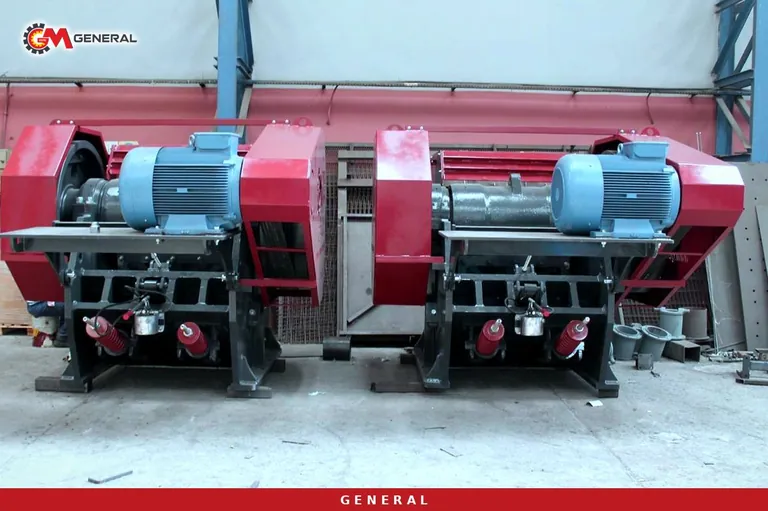
When a 250-tonne-per-hour aggregate line is planned for West Africa, the strength of the crusher is only half of the question; the other half is how the machine will travel from the port to the quarry. Equipment landed at a Gulf of Guinea port may still cross hundreds of kilometres of laterite road, bridges and town centres before it reaches a Sahel quarry. This is where a twin-chassis jaw plant earns its place: by splitting the load over two separate platforms, it adds flexibility to transport, erection sequence and investment timing. This article covers the two platforms of the GNR-MC110, the role of a jaw primary in the region's rock types, the precautions the climate calls for and the site data to prepare before requesting a quotation.
Why two chassis: split the weight for the road, the work for the site
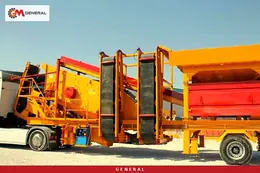
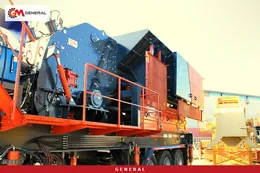
Put a jaw primary, a feeder hopper, an impact secondary and a four-deck screen on one chassis and the machine either pushes road limits or gives up capacity. The GNR-MC110 solves this with two platforms: two chassis of 55,000 kg each are hauled by separate tractor units, placed side by side on site and linked by conveyors. Output is 200-300 tonnes per hour; a 250 TPH target sits in the middle of that band and leaves headroom instead of running the crushers at their limit.
A further benefit of this layout is how breakdowns are handled. While screen media are changed or the rotor is serviced on the secondary unit, the primary chassis does not have to stop; coarse product can be sent to a separate stockpile and the quarry keeps working. On a single-chassis line the same maintenance halts all production.
How the two GNR-MC110 platforms work on site
Primary chassis: hopper and GPJ 110 jaw
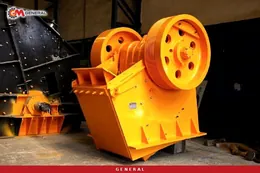
The first platform carries the mobile feeder hopper and the GPJ 110 jaw crusher. It accepts blocks up to 900 mm and delivers an output adjustable within 0-100 mm. The chassis measures 3000 × 13500 mm. Run-of-mine rock above 900 mm should be reduced at the face with a rock breaker; otherwise bridging and waiting time pull real output below what was expected.
Secondary chassis: GS1215/DMK03 impactor and 2000×6000 mm screen
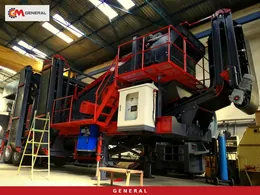
The second platform measures 4200 × 18300 mm and carries the GS1215/DMK03 impact crusher, a 2000×6000 mm four-deck screen and the conveyors. The screen separates four product groups: 0-5, 5-12, 12-19 and 19-40 mm. That split lets one shift supply a concrete batching plant, an asphalt plant and road sub-base at the same time. Screen apertures are fixed at the order stage according to the quarry rock and the products to be sold.
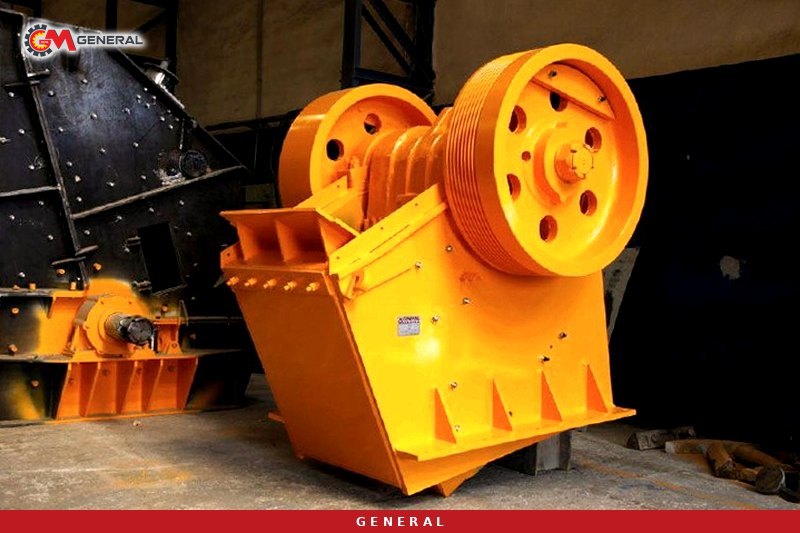
Primary on its own: a staged start
Because the two groups can run independently, the investment can be split into two steps. The primary chassis comes first; while the quarry is being opened it produces fill, coarse sub-base or stock for the future line. Once the order book is clear, the secondary chassis is added and the line moves to four products. This avoids tying up all the capital before the real behaviour of a new quarry's rock is known. For how the stages share the work, see the role of primary, secondary and tertiary crushers in mobile plants.
From a Gulf of Guinea port to a Sahel quarry
Ports such as Tema, Lomé, Cotonou, Abidjan and Dakar are the main entry points for heavy equipment arriving in West Africa. Niger, Burkina Faso and Mali are landlocked, so a plant bound for quarries there also uses a transit corridor. Each of the two chassis is planned as a separate convoy item, which reduces the route restrictions that a single, extremely heavy load would bring.
Even so, the 4200 mm width of the secondary chassis exceeds standard road width. Route, escort and abnormal-load permit conditions differ by country; confirm them with the relevant road authority and your haulage company. Since some dirt roads may close to heavy vehicles in the rainy season, scheduling shipment for the dry season is a practical precaution.
One of our references in the region is the General 950 mobile crusher delivered to Niger presented on our project page with a capacity of 240 t/h. It is worth reviewing to see the transport and erection logic of a plant sent inland.
Why a jaw primary in crystalline basement rock
Across much of the West African craton, granite, gneiss and migmatite lie close to the surface; the Birimian greenstone belts add metavolcanic rocks and, in places, dolerite dykes. Most of these rocks are quartz-rich and noticeably abrasive. A jaw crusher breaks material by compression, so metal consumption in such rock is easier to control than with an impact primary. The impact-primary General 02 and General 03 are strong in low-abrasion stone such as limestone; in a granite quarry, choosing a jaw for the first stage protects the wear budget.
The impact crusher at the secondary stage gives cubical grain shape, but blow bar and apron life in quartz-rich granite varies from quarry to quarry. Samples should therefore be taken from the face and tested for abrasion and compressive strength, and the wear part plan prepared from those results. The table lists the jaw-primary options for a 250 TPH target:
| Option | Primary / secondary | Capacity | Feed | Screen | Power | Weight |
|---|---|---|---|---|---|---|
| GNR-MC110 (twin chassis) | GPJ 110 jaw / GS1215-DMK03 impactor | 200-300 t/h | 900 mm | 2000×6000 mm, 4-deck | 750 kVA generator | 55,000 kg per chassis |
| GNR 110 mobile primary + M-DMK 03 mobile secondary | GNRK 110 jaw / impactor | 180-300 t/h and 175-300 t/h | 0-1100 mm and 0-350 mm | Separate screen required | / 250 kW | 55,000 kg + 45,000 kg |
| General 950 (single chassis) | GPJ 90 jaw / DMK01 impactor | 120-180 t/h | 800 mm | 1600×5000 mm, 3-deck | — | — |
Among single-chassis wheeled mobile crushing and screening plants the General 950 at 120-180 t/h falls short of a 250 TPH target; that tonnage calls for the twin-chassis solution or a combination of mobile units. On the mobile crusher units side, the GNR 110 mobile primary jaw crusher accepts 0-1100 mm feed and can be paired with the M-DMK 03; in that layout, however, the screen is selected separately and the conveyors are installed on site.
Whichever layout is chosen, the jaw plates are austenitic manganese steel (Mn13/Mn18) that work-hardens under impact. In high-quartz granite, the time to turn and replace the plates should be set from wear measurements taken in the first weeks. At a remote site, sending a set of spare jaw plates and impactor blow bars with the first shipment prevents long stoppages caused by port and customs procedures.
Harmattan dust, the rainy season and laterite
Dry season: fine dust and cooling
Between November and March the harmattan wind blowing from the Sahara fills the air with fine dust. During this period, air filters on the generator and engines, radiator cores and electrical cabinet seals need frequent checks. Water-spray dust suppression at the screen and transfer points, conveyor covers and filtered ventilation for the cabinet are measures that can be selected per project. Discussing them as separate items at the quotation stage causes less work than modifying the plant on site later.
Rainy season: clay and sticking
Laterite and weathered rock in the overburden turn into a sticky mass with rain. This material blinds the jaw cavity and the screen apertures. Careful stripping, keeping clean rock and overburden in separate piles and, if needed, adding grizzly pre-screening ahead of the feed protect production. In a quarry with a high share of overburden, a washing screen option should also be assessed.
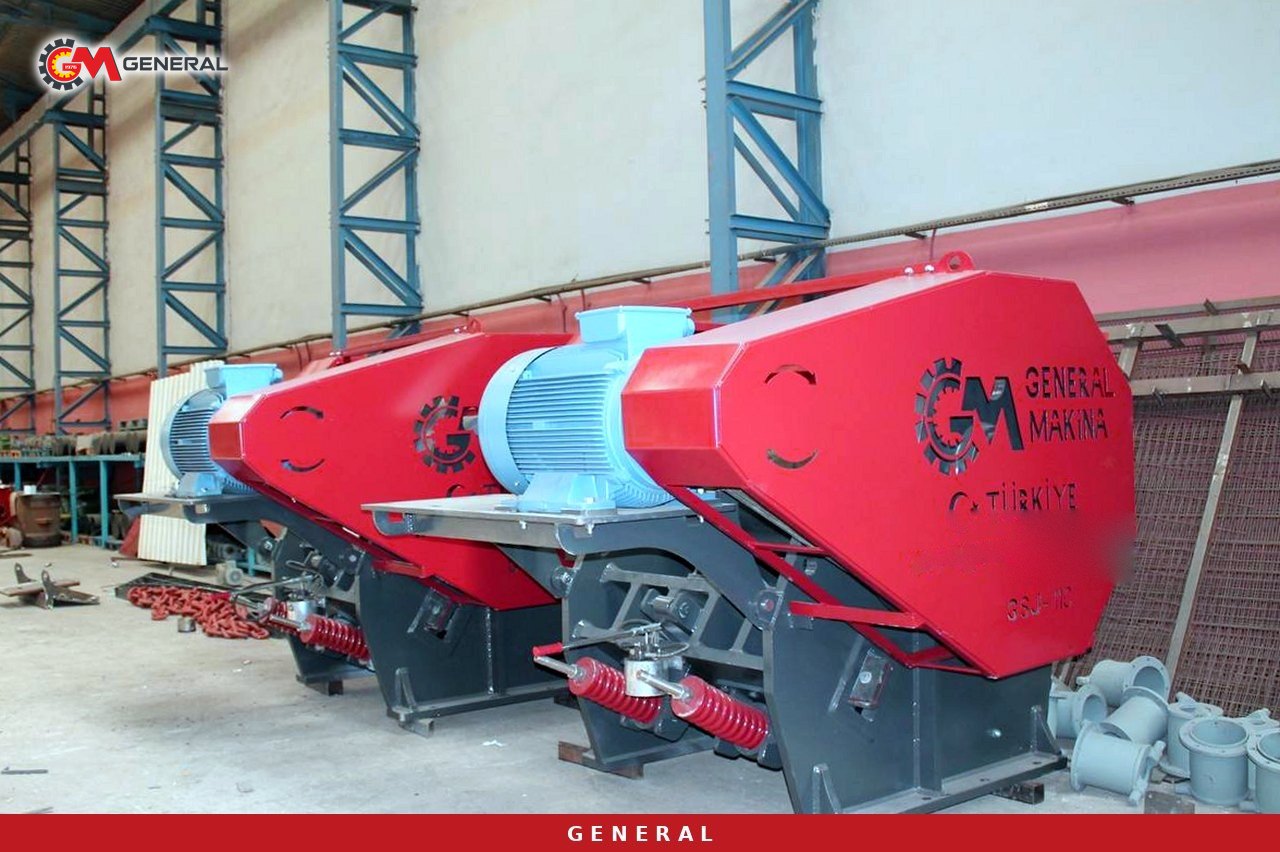
The 750 kVA generator lets the line run independently at remote sites where the grid is weak or absent. Fuel logistics, a spare filter stock and the generator's service intervals should be written into the operating plan from the start.
Data to collect at the quarry before a quotation
With the following information ready, the quotation can match your real requirement:
- Rock type, ideally with a laboratory report: compressive strength, abrasiveness and quartz content.
- Largest block size after blasting and the estimated share of material above 900 mm.
- Product mix: how much of each fraction will be sold per day and to which specification.
- Overburden and clay content; moisture condition of the quarry in the rainy season.
- Route from port to site, bridge limits and countries to be crossed.
- Power supply: is there a grid, or will the plant run on a generator?
- Whether there is a staged investment plan, such as starting with the primary and adding the secondary later.
Frequently asked questions
Can the GNR-MC110 produce 250 tonnes of granite per hour?
The plant's hourly capacity is 200-300 tonnes, and 250 TPH is within that range. The real figure depends on how the granite breaks, the feed size and the screen apertures, and should be confirmed with a quarry sample.
Can the two chassis be set up in different places on site?
The primary and secondary groups can run independently. The distance between them is planned around the length of the linking conveyor, and the layout is drawn together with you according to the quarry plan.
What warranty and certificates apply?
The machines carry ISO 9001 and CE certification. The warranty period is 1 year; wear parts are not covered.
What determines the price?
The selected configuration, screen and conveyor equipment, climate measures such as dust suppression and filters, the spare wear part package and the shipping method determine the price. The exact figure is given in a quotation prepared from project data.
Conclusion: two platforms, one decision file
For a West African quarry targeting 250 TPH, the twin-chassis GNR-MC110 brings together a jaw primary suited to crystalline rock, a four-product screen and the option of staged investment in one line. Prepare your rock tests, product mix and route information and reach us through our contact page; our team, manufacturing in Izmir since 1976, will build the configuration and quotation around that data.
Definitions of technical terms: Glossary