EN — English
 TR — Türkçe
 DE — Deutsch
 RU — Русский
 FR — Français
 ES — Español
 AR — العربية
 SR — Српски

Africa Budget Mobile Crushing & Screening Plant 60-100 Ton Per Hour
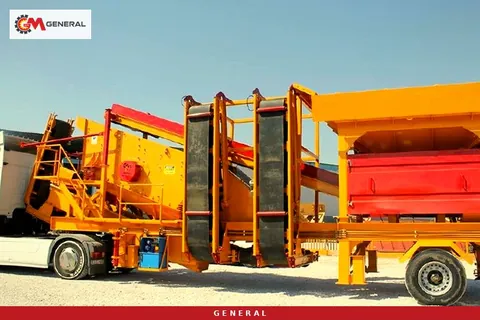
For a road contractor or a local quarry operator in Africa who wants to produce 60-100 tonnes of aggregate per hour, "budget" usually means the lowest quotation. What actually drains the budget on site, however, is less the purchase price than the energy, wear and idle time that a badly sized plant leaves behind on every tonne. This article looks at the real models that meet the 60-100 TPH target, which of them spends money more efficiently in the continent's different rock and site conditions, which items inflate a quotation for no reason or shrink it dangerously, and why a new machine is always the most sensible and correct choice despite the appeal of used equipment, seen through the eyes of an export consultant.
A cheap quotation and an economical plant are not the same thing
Whether a plant is economical is judged not by the first invoice but by the total cost that falls on every tonne it produces. A simple framework is enough for the decision: cost per tonne = (annual capital share + energy + wear parts + labour + maintenance) ÷ annual saleable tonnes. The word "saleable" in the denominator is critical; material that is crushed but fails the specification, sits in a stockpile or keeps returning from the screen earns nothing.
A hypothetical example: take two plants with identical annual costs. One produces 20 days a month, the other only 15 because it waits for parts. The second one's cost per tonne rises to roughly 1.33 times the first, even if its purchase price was lower. In inland regions where the spare parts chain is long, the first criterion that sets the budget is therefore uninterrupted running time. To test your own figures, use the energy and wear cost calculator per tonne.
Which African jobs fit the 60-100 TPH scale?
This band is the typical scale of rural roads and bridge approaches, municipal paving and block production, aggregate supply for small and medium ready-mix plants, and haul-road and fill material on mine sites. Actual output moves towards the lower or upper end of the range depending on the rock, the feed size and the required fraction. Planning around the middle of the range rather than its ceiling prevents disappointment in the first month.
The continent's geology directly affects model selection. Limestone quarries are common along the North African coastal belt. Basalt and volcanic rock dominate in the rift regions of East Africa. In West and Central Africa, granite and gneiss often lie beneath a thick laterite cover. On the Sahel and desert margins, hot dusty air and off-grid sites are the rule. The right crusher type for the same tonnage changes between these four pictures; the hardness and abrasiveness of your deposit must be established by laboratory tests on samples, not by guesswork.
As the scale grows, so does the number of loaders, excavators, trucks and operators that must work alongside the crusher. On a remote site, keeping the equipment needed to feed a larger line in working order can cost more than the price gap between two machines. 60-100 TPH is a starting point that a small team can sustain and that can be expanded as the market grows.
Four real options that cover this range
The table below contains only values published on our product pages; unknown cells or cells that do not apply to a model are marked "—". You can compare every wheeled option on the wheeled mobile crushing and screening plants page.
| Model | Capacity | Max. feed | Crusher | Screen | Power | Weight |
|---|---|---|---|---|---|---|
| General 640 | 60-100 t/h | 500 mm | GPJ 60 jaw + GNR 50 impact | 1200×4000 mm, 3 decks | 300 kVA generator (optional) | 38,000 kg |
| General 800 | 80-150 t/h | 600 mm | PDK 1280 primary impact | 1300×4000 mm, 3 decks | 450 kVA generator | 35,000 kg |
| GM 90JP (tracked) | 70-180 t/h | 700 mm | GNR 90 jaw, 95 kW | 1000×2000 mm, 2 decks | 250 kVA power unit | 35,000 kg |
| Mobile primary jaw GNR 90 | 70-180 t/h | — | GNRK 90 jaw | (separate screen needed) | — | 25,000 kg |
General 640: the complete line closest to a tight budget
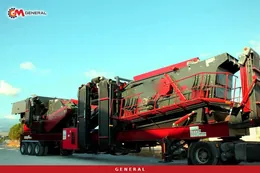
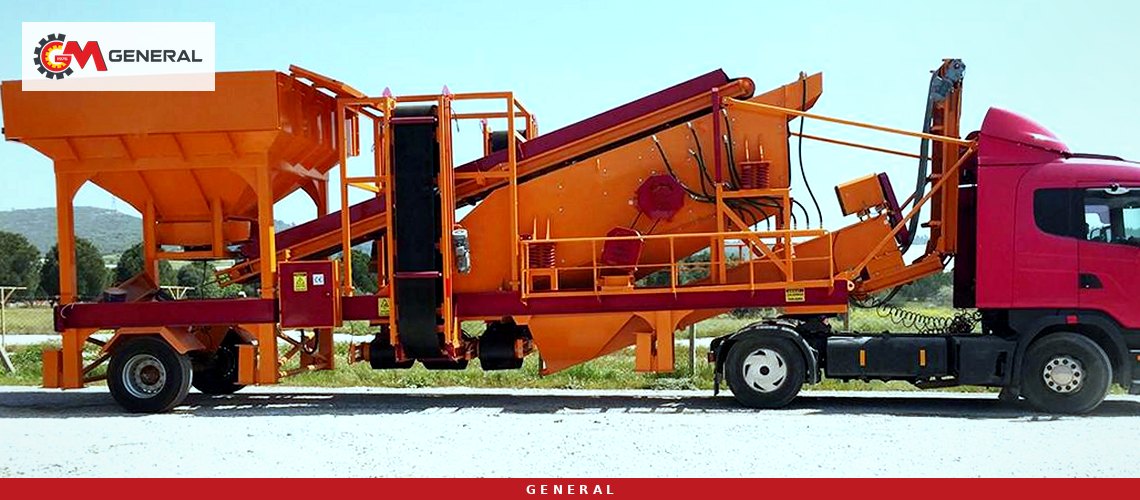
The General 640 is a closed-circuit plant carrying a GPJ 60 jaw crusher and a GNR 50 impact crusher on one chassis; oversize that does not pass the screen returns to the head of the line by conveyor until it reaches the target size. With a loading dimension of 3500×17000×4500 mm it fits behind a single tractor unit and is set up on hydraulic legs without a concrete foundation. Because the jaw and impact stages work together, it can also be used on West African granite and East African basalt; a measured tonnage means slower liner wear. Standard fractions are 0-5, 5-12 and 12-19 mm; if a coarser product is needed for road base, the screen mesh layout is planned accordingly at the order stage. You can review an application of the same model running at 60-100 t/h on the GNR 640 project page in Turkey.
General 800: for limestone-heavy northern quarries
In North Africa's limestone quarries, the General 800 with its PDK 1280 primary impact crusher covers the 60-100 TPH target at a comfortable load thanks to its 80-150 t/h range and delivers a highly cubical product. Running the same machine on quartz-rich granite, however, consumes the blow bars quickly; the low purchase price is paid back through the wear bill. If the rock type is unknown, this model should only be considered after the test results are in.
GM 90JP or a mobile primary unit: splitting the spend into stages
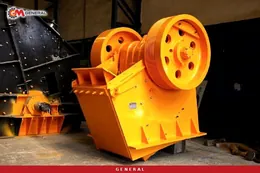
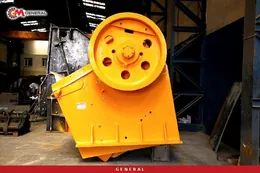
An operator with limited cash flow can start with primary crushing only, selling fill and coarse base material. The Strickland-tracked GM 90JP, with its 10 m³ hopper and 2-deck screen, relocates under its own power within the site. The mobile primary jaw GNR 90, on the other hand, carries no screen and does not produce a full grading on its own; a secondary crusher and a screen are added later. The smaller GNR 60 (20-80 t/h) is not enough on its own to approach 100 t/h.
When does washing or extra screening pay for itself?
Clay from the laterite cover and wind-blown Sahel dust can make it hard for dry-crushed product to pass the specification as concrete sand. If your target market is ready-mix and plaster sand, the GNR YM1240 compact sand washing and screening plant (60-100 t/h, 0-100 mm feed, 18,000 kg, 4200×10800×4500 mm), working at the same capacity as the crushing line, is a balanced match. No washing decision should be taken before the clay content is measured with a sand equivalent (SE) or methylene blue (MBV) test.
There is waste in the opposite direction too: if the entire output goes to road sub-base, washing is often unnecessary, and without a reliable water source on site the investment will not run at all. For those who want to separate river gravel and natural sand stockpiles dry, dry screening plants such as the ME1650 work at 120-180 t/h; next to a 60-100 TPH crushing line they only make sense when there is a second raw material source. The options are collected on the mobile sand washing and dry screening plants page.
Reading a quotation line by line
Comparing two quotations by the total figure alone is the most common budgeting mistake. A comparison made without equalising the scope easily wipes out the initial gap once items are added later. Before requesting a quotation, clarify the following points:
- Power: On the General 640 the 300 kVA generator is optional. If the grid reaches the site, leave the generator out of scope; if not, plan the fuel supply from the start.
- Climate measures: For hot and dusty regions, a high-capacity radiator, pre-filtered air intake, dust suppression sprays and covered conveyors are measures that can be selected per project; get in writing which of them are included.
- Wear package: An initial stock of jaw plates, blow bars and screen mesh is insurance against long resupply times inland. The 1-year warranty does not cover wear parts.
- Screen layout: The number of decks and mesh openings should be set according to the fractions you will sell; changing them later costs extra.
- Transport: Compare bridge, bend and pass restrictions between the port and the quarry with the machine's loading dimensions.
- Commissioning and training: Have the scope, duration and responsibility for installation support and operator training written into the contract.
Used equipment appeal versus the arithmetic of a new machine
The first route a buyer with a tight budget thinks of is a used machine. On a crusher with unknown running hours, however, bearing, eccentric shaft or chassis fatigue cannot be seen; finding parts for a machine with incomplete documents in a distant country can take weeks, and there is no warranty. Returning to the cost-per-tonne formula, the low purchase price of a used machine is quickly eroded by lost production days.
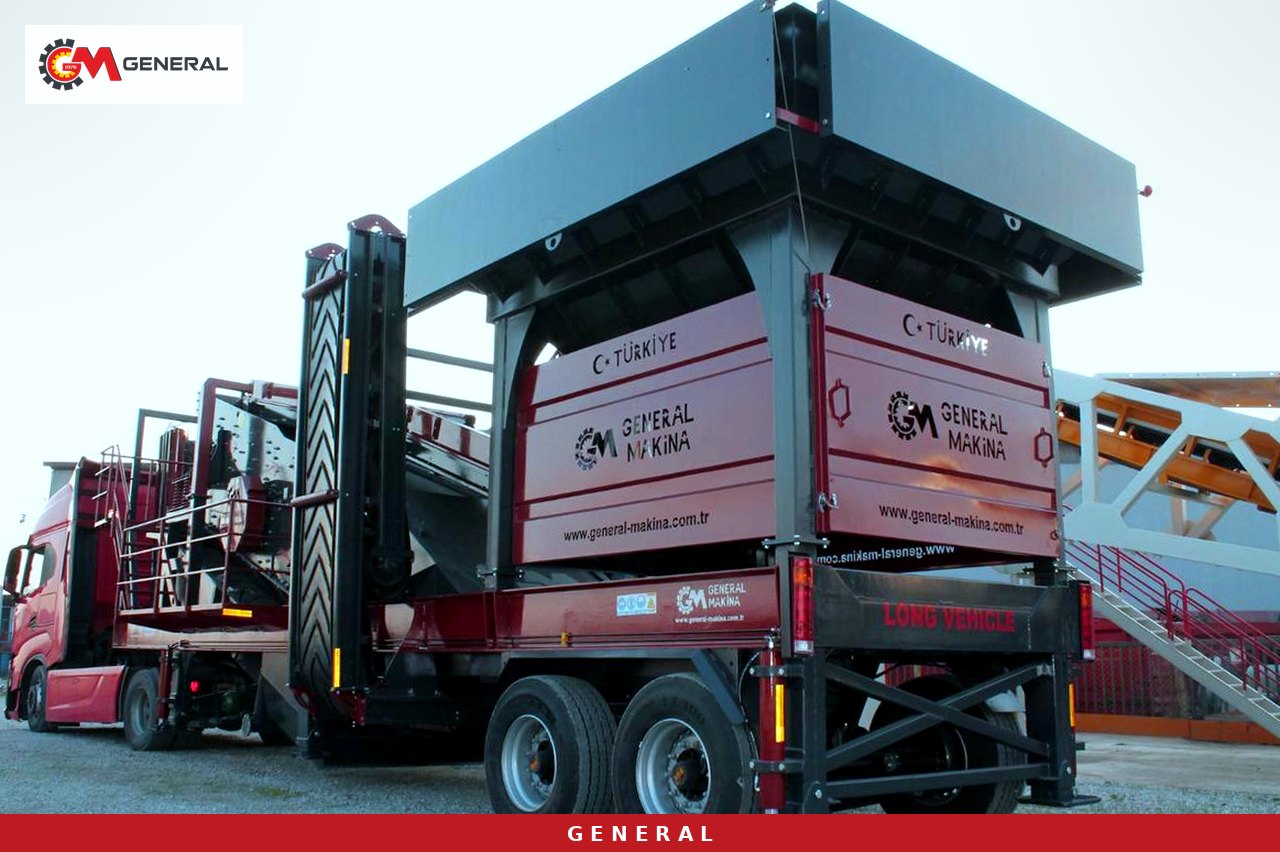
A new machine arrives CE and ISO 9001 certified, with a 1-year warranty excluding wear parts, a known parts list and a configuration matched to your rock: a grizzly by-pass feeder for a laterite quarry, a generator for an off-grid site and a washing line for concrete sand are built into the plan from the start. That is why, even for an operation starting on a low budget in Africa, a new machine is always the most sensible and correct choice; the real saving is made not at the moment of purchase but over years of production.
Frequently asked questions
If the budget is limited, can we start with a primary crusher only?
Yes. It is possible to start selling coarse product with the GM 90JP or the mobile primary jaw GNR 90 and add the secondary crusher and screen later. If the specification demands graded aggregate from day one, however, a complete line such as the General 640 requires less spending overall.
Can a 60-100 TPH plant crush hard granite?
The jaw and impact stages of the General 640 work on hard and abrasive rock. If your deposit is very abrasive and your tonnage needs will grow, a move to a jaw and cone line becomes necessary; as an example, see the GNR 944 hard-stone project in Africa.
How is power planned at a quarry with no grid connection?
On the General 640 the 300 kVA generator is optional; the power values stated on the product pages of the General 800 and GM 90JP appear in the table. If the grid situation is reported at the quotation stage, the scope is prepared accordingly.
What information should I prepare for a quotation?
Price and delivery time are prepared per project. It is enough to send the rock type, target fractions, site location, power situation and port of arrival.
Conclusion
An economical 60-100 TPH plant in Africa does not mean the lowest quotation; it means a crusher suited to the rock, a scope stripped of unnecessary items and uninterrupted operation. The General 640 stands out on granite and basalt, the General 800 on limestone and primary units for staged investment; in every case a new machine delivers the lowest cost per tonne in the long run. Contact us with your rock and site details and we will prepare a quotation for your project.
Definitions of technical terms: Glossary