EN — English
 TR — Türkçe
 DE — Deutsch
 RU — Русский
 FR — Français
 ES — Español
 AR — العربية
 SR — Српски

Choosing a VSI Crusher: Impact Principle, Particle Shape and Capacity Limits
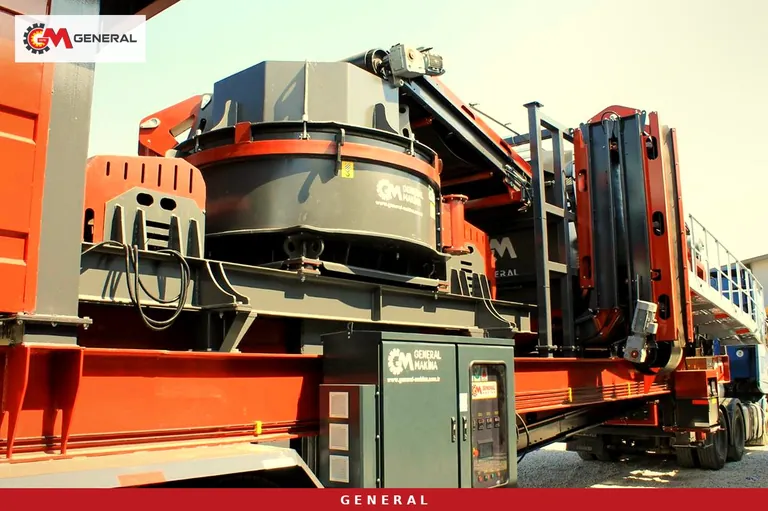
When sand has to be made from high-hardness material, the first machine that comes to mind is the vertical shaft impact crusher. The same crusher is also used to reduce hard stone to chippings size.
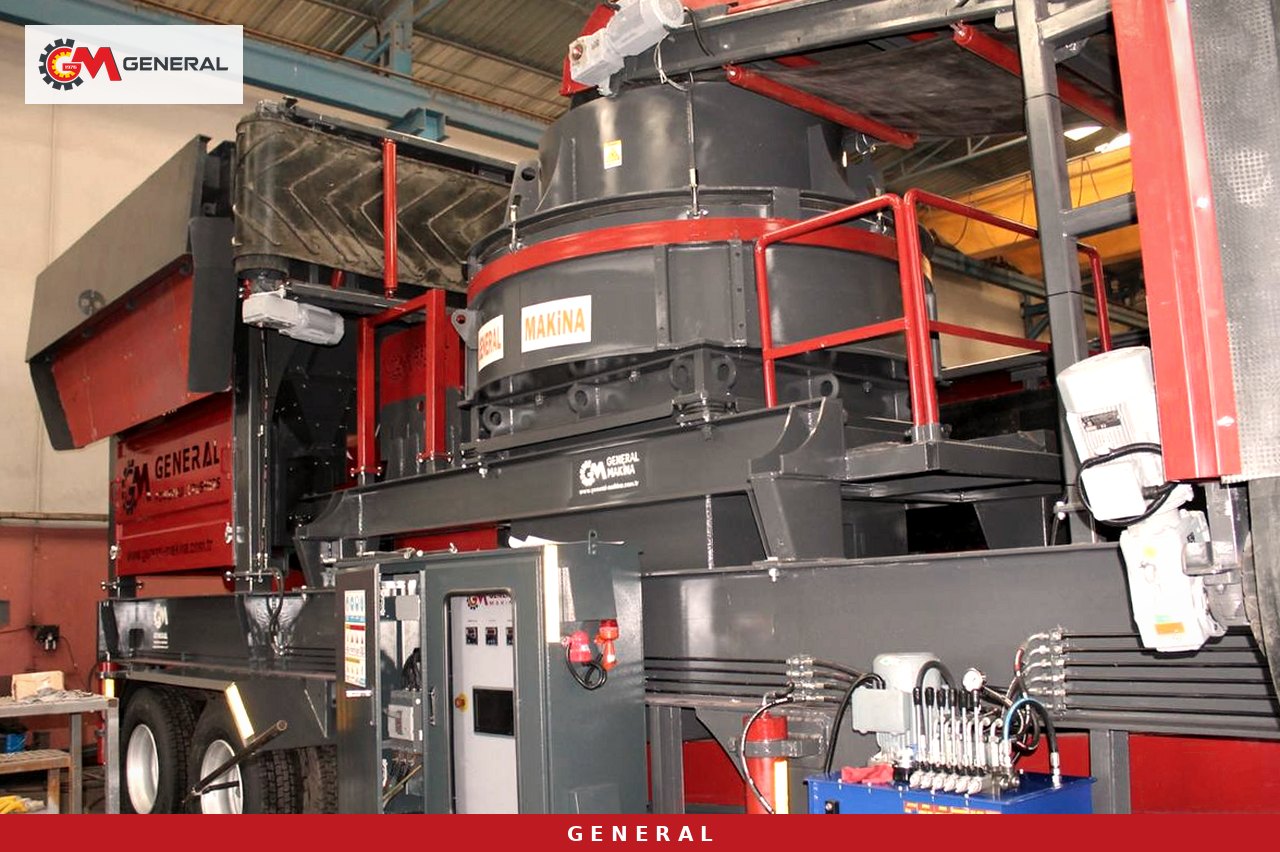
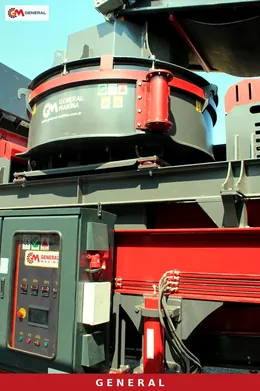
What sets this crusher apart is the way it breaks material. A rotor spinning on a vertical axis accelerates the particles to high speed and throws them against anvils or against a bed of its own material built up in the housing; breakage comes from impact energy rather than compression. That is why the real effect of a VSI shows up in particle shape rather than in size reduction.
In short, the goal is shaping, not just making smaller.
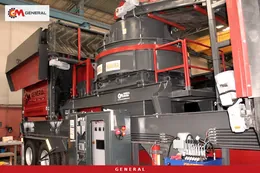
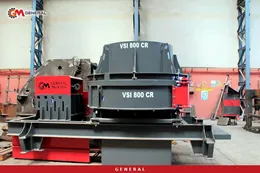
The GNR series VSI produces 45–210 t/h with a rotor diameter of 700–900 mm and draws 90–400 kW. The maximum feed size is 55 mm; anything coarser must be reduced in the previous crushing stage. Typical applications include limestone, basalt and dolomite from the quarry, sand, chippings and gravel production, the glass industry and wet or sticky materials.
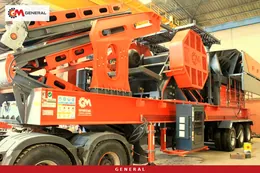
If the whole line needs to be mobile, the GNR-MVSI 900 works on the same principle: it delivers 0-20 mm product at 90-180 t/h and carries its own 850 kVA generator unit. Because rock-on-rock crushing keeps wear and spare part costs low, a VSI stage is usually added as the last link of the line in quarries with demand for manufactured sand.
Definitions of technical terms: Glossary