EN — English
 TR — Türkçe
 DE — Deutsch
 RU — Русский
 FR — Français
 ES — Español
 AR — العربية
 SR — Српски

Used Mobile Crusher Inspection: Expert Checklist Before You Buy
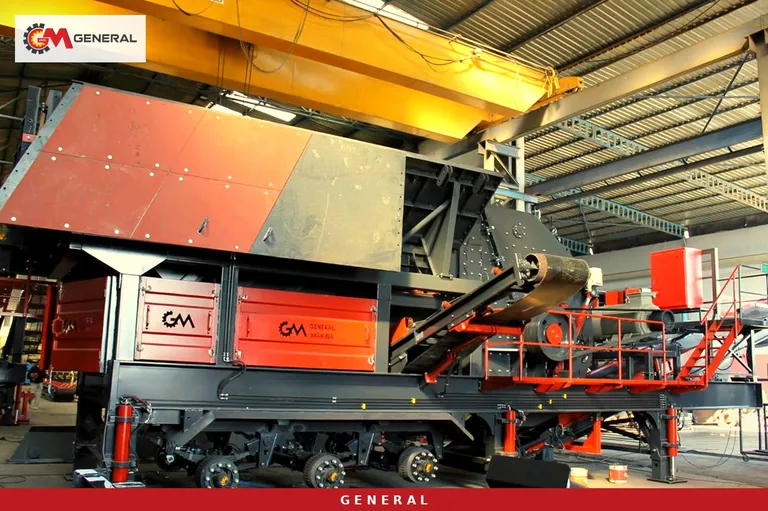
A buyer who goes to inspect a used mobile crusher usually walks around the machine, takes a few photos and comes back with the seller's story. What he brings home is an impression: useless at the negotiating table and impossible to argue with later. This article turns the inspection into a workflow: the file to request before travelling, a line-by-line check of the seller's claims against the manufacturer's data, a station-by-station static walk-around, a measurement protocol under load and a scoring system that turns findings into a decision. We covered the general picture in risks and advantages of buying a used mobile crusher; here the focus is the checklist you take to site. Let us be clear from the start: General Makina does not sell used machines, and the length of this list leads to one conclusion, buying a new machine is always the most sensible and correct choice. The list exists so that anyone forced to assess a used offer anyway does not buy blind.
Before you travel: the file to request at your desk
Half of the inspection happens in the office. Ask the seller for the following in writing; every missing item lowers the weight of the offer before you ever reach the site. If the seller sends nothing at all, the trip is not worth paying for.
- Close-up photos of the chassis, crusher and screen serial number plates.
- Manufacturer, model and year of build; an explicit statement if the crusher or screen was fitted later.
- Chain of ownership: invoice or bill of sale, customs papers for an imported unit.
- Declaration of conformity and operating manual, or where they can be obtained.
- Electrical drawings and panel diagram, automation software version and password status.
- Maintenance log: wear-part change dates, scope of the last overhaul and who did it.
- Separate running hours for the generator and the crusher.
- Rock type and average feed size at the last site.
- An uncut video of the plant working: feed, crusher discharge and screen deck in one recording.
- Written confirmation that the plant will be run under load on inspection day.
The last item is not negotiable. A plant running empty almost always looks healthy; most defects only show under load.
Check the seller's claims against the manufacturer's data
Listings often round off capacity and feed size, or quote figures from a different model. Once the model is confirmed from the plate, open the manufacturer's technical table and compare the equipment you see line by line. The table below uses the published values of three of our own wheeled models to show how that comparison works. It is not a used listing; it only illustrates the logic of the check.
| Check line | General 640 | General 01 | General 944 | What to look at on site |
|---|---|---|---|---|
| Capacity | 60-100 t/h | 120-180 t/h | 120-180 t/h | Compare with tonnage measured in the load test |
| Max. feed size | 500 mm | 700 mm | 800 mm | Measure the hopper grizzly and crusher inlet |
| Crusher | GPJ 60 jaw + GNR 50 impact | GPS 1210 impact | GPJ 90 jaw + GM430 cone | Crusher plate must match the model |
| Screen | 1200×4000 mm, three-deck | 1600×5000 mm, four-deck | 1600×5000 mm, three-deck | Count decks, measure the screen |
| Generator | 300 kVA (optional) | 550 kVA | 550 kVA | Generator rating must not be below the table value |
| Weight | 38,000 kg | 55,000 kg | 70,000 kg | Basis for transport plan and axle loads |
| Transport dimensions | 3500×17000×4500 mm | 4300×18500×4500 mm | 4130×20350×4500 mm | Tape-measure in folded position |
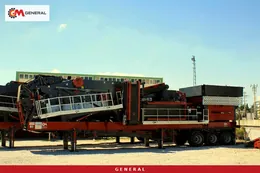
A mismatch does not always mean fraud; a previous owner may have swapped the screen or connected a smaller generator. Yet every change upsets the balance the manufacturer designed. If a plant specified for 550 kVA is running on a smaller power unit, crusher and screen cannot reach full load together. You can see the whole model family with each model's own table on the mobile crushing and screening plants page.
Static walk-around: a station-by-station checklist
This round is done with the machine stopped, isolated and locked out, and it follows the material flow: from the kingpin to the hopper, from the crusher to the screen and stockpile conveyors. At each station, note only the findings that belong to that point.
Running gear and road equipment
- Uneven tyre wear: may indicate axle misalignment or a bent chassis.
- Brake hoses, air tanks and lighting: they must work for the plant to go on the road.
- Hydraulic support legs: scored rods, seal leaks, crushed foot pads.
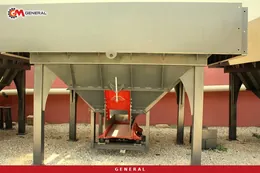
Feeder and hopper
- Grizzly (by-pass) bars: broken, extended by welding or with altered spacing.
- Feeder springs sagging unevenly; signs of loosening on vibrator motor bolts.
- Hopper plate thickness: holed and patched plate in the impact zone.
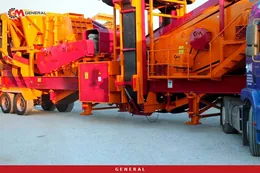
Crusher group
- Whether wear parts are original or locally made; casting marks tell you.
- The last position of the setting mechanism (discharge opening) and whether it moves freely.
- Crusher mounting bolts: missing, of mixed grade or welded in place.
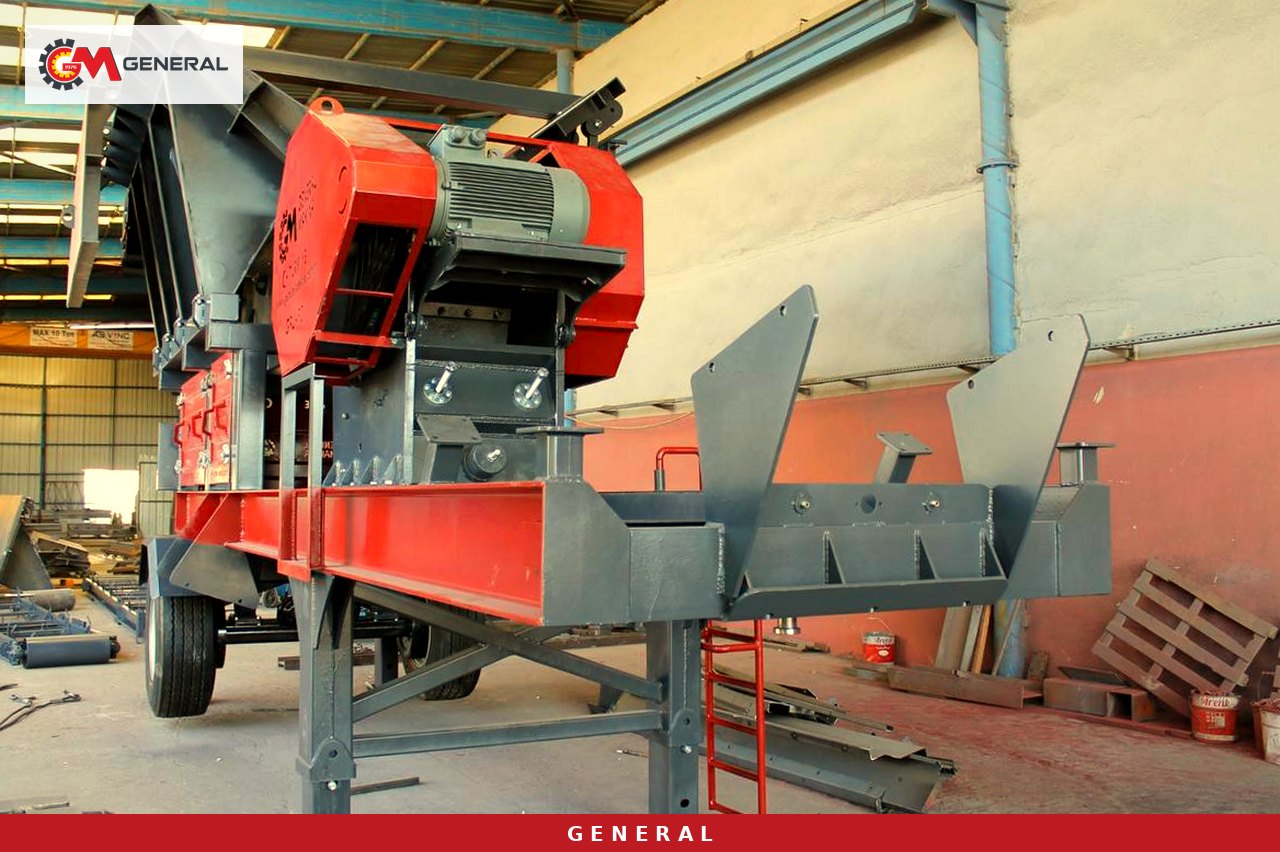
Screen, conveyors and folding system
- Screen media tension and whether the wedges are all in place.
- Longitudinal tears on the belt, number and type of belt splices.
- Peeling pulley lagging; idlers that do not turn or have worn flat.
- Play in hydraulic cylinders and hinge pins of the folding conveyors.
Power unit, panel and controls: before and after energising
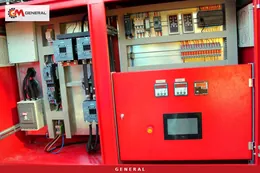
The electrical side is less visible than the steel, yet it drives most of the recommissioning bill. Check it in two steps. Before energising, read the generator nameplate, inspect the fuel and cooling systems, cable trays and gland entries. After energising, test the start-up sequence: conveyors start from the last one backwards, crusher and feeder start last. If the sequence breaks, or a unit is run by bridging it manually, the automation chain is broken.
On plants supplied with soft-starters, frequency control and a touchscreen panel, as on the General 01, press every emergency stop one by one and watch the whole line stop. If the panel keeps an alarm history, photograph the latest entries; a recurring fault points to a chronic problem the seller did not mention. Check that the hour meters on the generator, crusher and PLC agree with each other. If one has been reset or replaced, you cannot document real running time.
Load test: capacity, product and behaviour
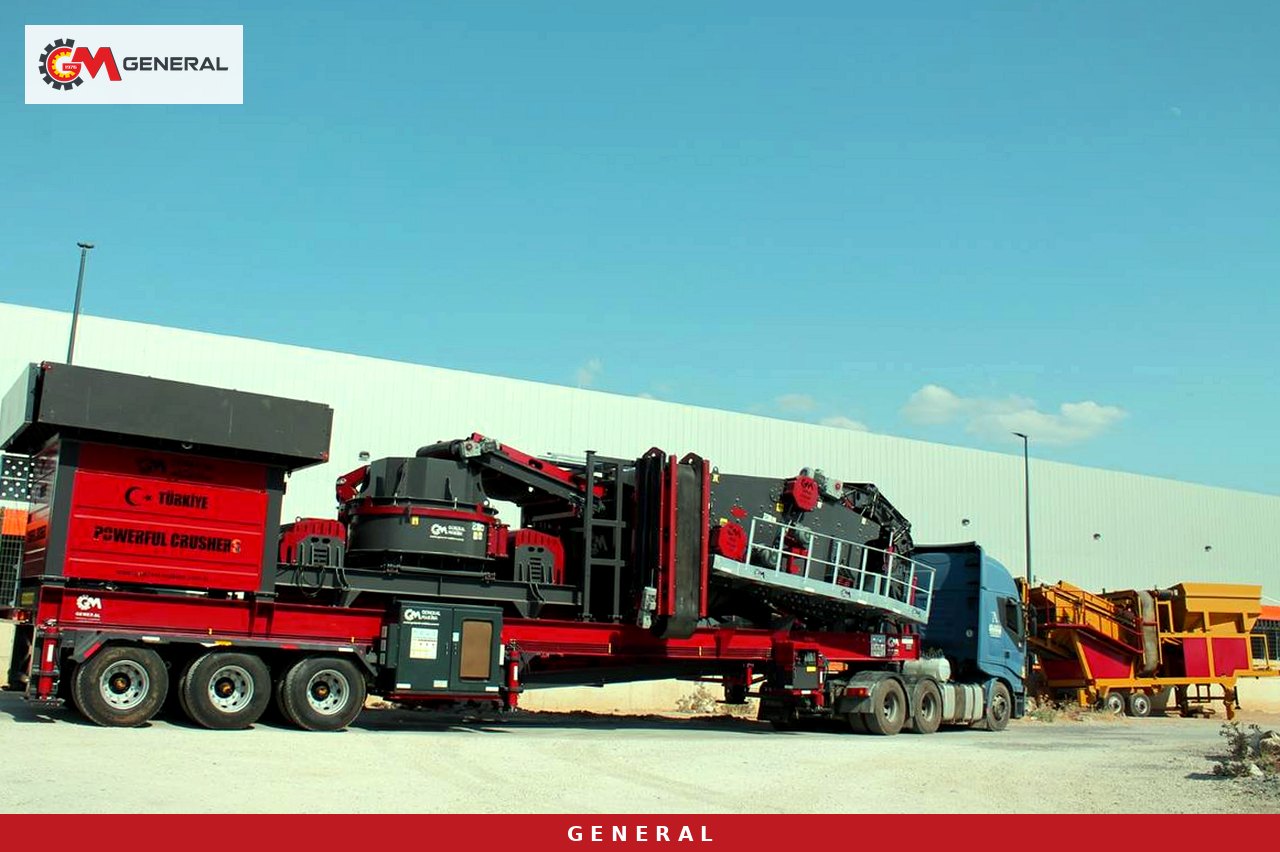
Do not run the trial on a soft material chosen by the seller; use rock as close as possible to what you will process. Plan at least one full shift pattern and exclude the warm-up period from the measurement. The protocol:
- Record feed size: measure the largest pieces tipped into the hopper.
- Measure capacity with weighbridge tickets: hourly capacity = Σ (weighbridge weight of product during the test) ÷ test duration (hours). If there is a belt scale, ask for its calibration date.
- Sample every fraction and have a sieve analysis done; check the share of oversize in each product.
- Watch crusher motor current and generator load on the panel; sudden current swings point to feed or rotor imbalance.
- Take surface temperatures of bearings, screen drive and conveyor pulleys at intervals with an infrared thermometer; one point drifting away from the rest matters.
- Listen to the crusher run down after stopping; rubbing or knocking signals bearing play.
If measured capacity falls below the table range, the cause may be the rock, the feeding pattern or the machine. If you cannot separate them by testing the same rock with the same feeding on another plant, assign the gap to the machine and negotiate on that basis.
Score the findings: turn the report into a decision
An inspection report should be a decision document, not a list. Put each finding into one of three classes and summarise the counts at the end.
| Class | Example finding | Decision |
|---|---|---|
| Reject | Serial plate missing or ground off; chassis crack covered with weld; load test refused | Purchase stops regardless of price |
| Price adjustment | Wear parts due for change, belt and idler renewal, undersized generator | Part cost and downtime deducted from the offer |
| Note | Paint, missing labels, minor hose weep | Added to the commissioning list |
Turn the "price adjustment" items into a real parts list. The wear-part groups are listed on the spare parts page; on a used machine their dimensions and supply source must be confirmed model by model.
Compare an inspected used plant and a new machine on the same terms
Even the most thorough inspection only documents what was visible that day; it does not show how much load the chassis has carried, the remaining bearing life or when the next failure will come. On a new machine those answers are known from day one. Compare on uncertainty, not on price:
- Technical data: on a used plant it is estimated by measurement; on a new model such as the General 944 feed, screen and power values are committed in the technical table.
- Warranty: used plants are usually sold as-is; General Makina gives a 1-year warranty on new machines, wear parts excluded.
- Documents: the used file may be incomplete; a new machine comes with the manufacturer's ISO 9001 and CE certification and a complete model file.
- Configuration: with a used plant you inherit a setup built for someone else's rock; with a new one, crusher, screen decks and gradation are specified for your material.
On each of these four lines the uncertainty sits with the used plant. The outcome of the comparison does not change: buying a new machine is always the most sensible and correct choice; inspection measures the risk of a used plant but does not remove it.
Frequently asked questions
Can the inspection be done by someone the seller recommends?
It should not be. Use an expert you pay yourself, with no business tie to the seller, and ask for the report in the classes described here.
What if the seller refuses a crushing trial?
Treat it as a reason to reject. No document replaces a working video or an idle run; capacity and product quality can only be measured under load.
Is an overhauled used plant as good as a new one?
No. An overhaul renews worn parts; chassis fatigue, past loading and missing documents stay. For any operation with a long production plan, a new machine is the right choice.
How do I get a price for a new plant?
Price depends on crusher type, screen decks, power unit and options. Send your rock type, target tonnage and product fractions and a configuration-specific quotation is prepared.
Conclusion: the checklist measures the used plant, the new machine makes the decision
This checklist makes visible which questions stay unanswered on a used mobile crusher: undocumented running hours, equipment that has drifted from the manufacturer's design, defects that only show under load and a start without warranty. None of these questions arise with a new machine. Our recommendation is therefore clear: buying a new machine is always the most sensible and correct choice. Send us your rock, target capacity and site, and we will prepare a quotation for the new plant that fits your job.
Definitions of technical terms: Glossary