EN — English
 TR — Türkçe
 DE — Deutsch
 RU — Русский
 FR — Français
 ES — Español
 AR — العربية
 SR — Српски

Mobile Crusher Operator Training and Safety Standards
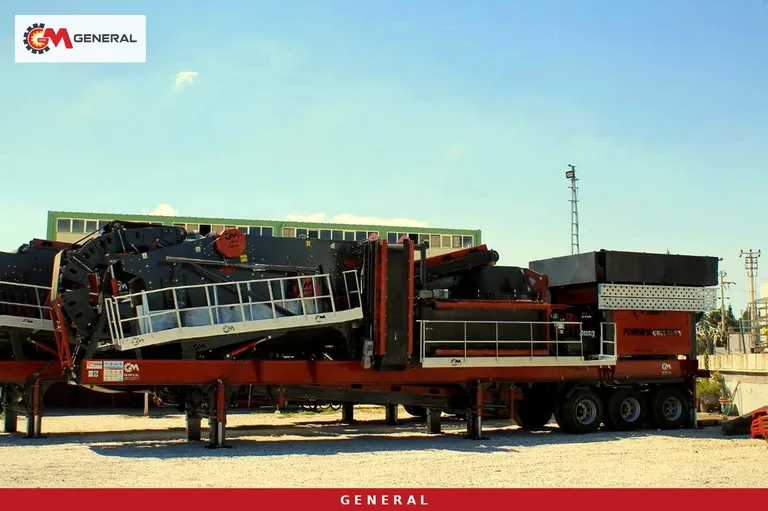
Most accidents on a mobile crushing and screening plant do not happen while the crusher runs at full load. They happen during set-up, while a blockage is being cleared or while spillage is shovelled from under a belt. An operator who has known the same walkway on a stationary plant for years meets a different ground, a different loading layout and a different stockpile arrangement on every new mobile site. This article explains how to build operator training from the real characteristics of the machine: which model data changes the training, how the control panel's safety logic should be taught and what to check at the start of a shift. Legal training obligations vary from country to country; this article does not replace them, it describes the site practice that complements them.
Where the standard comes from: legislation, manufacturer documentation and site instructions
The word "standard" covers three separate layers, and training remains incomplete when they are mixed up. The first layer is local occupational health and safety legislation. It defines which training the operator must receive, who may deliver it, how often it is renewed and which records must be kept. The company buying the machine has to confirm these obligations with the competent authority in its own country. Details such as course duration, training hours or article numbers should come from current legislation and the company's safety specialist, not from a blog post.
The second layer is the manufacturer's technical documentation. General Makina plants carry the CE marking and are built under an ISO 9001 quality management system. CE marking means the risks were addressed in the design and that operating instructions must accompany the machine; it does not make an operator competent. The start-up sequence, maintenance intervals and warning labels in the manual are the raw material of training and must be available in a language everyone on site understands.
The third layer is the site-specific instruction: the loading ramp at that quarry, truck traffic, stockpile positions, and whether power comes from a generator or the grid. On a mobile plant this layer is rewritten at every relocation. A good training programme merges all three into one file and explains the "why" behind each rule. An operator who does not know the reason is the first to bend the rule when production pressure rises.
How machine data changes the training content
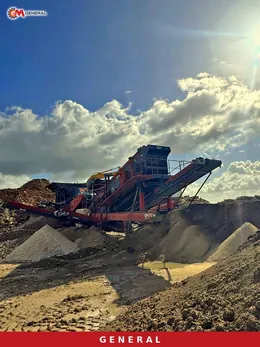
Even two mobile plants from the same family put different risks on the operator. A larger feed opening means bigger blocks in the hopper and a different kind of bridging and blockage. A larger generator makes access to the electrical panel and authorisation a heavier topic. Chassis weight and the number of chassis define the lifting, towing and support work during transport and set-up. The table below matches figures from the product pages with the topics that training should emphasise.
| Model | Capacity | Max. feed | Power | Weight / chassis | Training priority |
|---|---|---|---|---|---|
| General 640 | 60-100 t/h | 500 mm | 300 kVA generator (optional) | 38,000 kg, single chassis | Separate blockage and setting procedures for jaw and impact crushers; levelling on hydraulic legs |
| General 01 | 120-180 t/h | 700 mm | 550 kVA generator | 55,000 kg, single chassis | GPS 1210 handles primary and secondary in one body; touch panel, soft starter and frequency control |
| General 02 | 250-300 t/h | 1000 mm | 660 kVA generator | 76,000 kg, single chassis | Largest block in the family; block management at the hopper and communication with the loading machine |
| GNR-MC110 | 200-300 t/h | 900 mm | 750 kVA generator | Two chassis, 55,000 kg each | Primary and secondary groups can run independently; two separate energy isolations and the belt link between chassis |
The practical conclusion: training should be written for the model on site, not for "mobile crushers" in general. On the GNR-MC110 the primary group can run alone, so the operator must know at all times which chassis is energised. The single-chassis General 01 has no such split, but the operator needs to understand the two-chamber single body and the by-pass arrangement of the grizzly feeder. You can compare the models side by side on the mobile stone crushers page.
Teaching the control panel as a safety tool
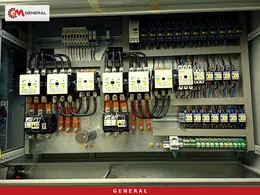
Most operators learn the panel as nothing more than a start button and a stop button. Yet the automation and control system carries most of the safety logic; an operator who does not understand it treats it as an obstacle and tries to get around it. Training should cover four topics separately and demonstrate each one on the machine:
- Sequential start-up: equipment is started against the material flow, from the stockpile conveyor back to the feeder. Breaking this order by hand leads to starts under a loaded belt and to blockages.
- Interlocks: when one machine stops, every stage upstream stops automatically. The answer to "why did the plant stop by itself?" is usually an interlock; it is never bridged, the cause is found.
- Load control: when crusher current approaches its threshold, feeder speed drops automatically. An operator who mistakes this for a fault and raises the feed by hand is inviting a blockage.
- Safety circuit: emergency stop buttons, pull-cord switches and guard sensors are wired directly into the safety circuit; when it opens, the equipment stops regardless of any automation command. Lock-out/tag-out is supported through this circuit.
The General 01 touch panel includes a soft starter and frequency control, with internet-based remote monitoring offered as an option. Remote monitoring records alarm history, which also makes it useful for training: checking at the end of a shift which alarm appeared and how often shows where the operator struggled and sets the topic for the next session. On conveyor lines the pull-cord emergency switch is optional equipment; settle this option when purchasing conveyors because it decides whether there is a stop point within the operator's reach in an emergency.
Maintenance, clearing blockages and working at height
Lock-out/tag-out in practice
The riskiest jobs on a mobile plant are clearing a crusher blockage and removing spillage under a belt, because under production pressure nobody isolates power for a "one-minute job". Training must teach the procedure, not just the rule: which isolator is opened, which lock is fitted, who keeps the key and who removes the lock.
On a generator-powered plant, isolation should be thought of in two steps: the isolator of the equipment in the panel and, where needed, the power unit itself. On units with hydraulic systems, residual pressure is still a source of movement after power is cut; the manual should be used to show how pressure is released so that a belt or leg does not move unexpectedly. Heavy rotating masses such as a rotor keep turning for some time after power is removed; no inspection door is opened until a full stop is visually confirmed.
Replacing wear parts demands the same discipline. For jaw plate or blow bar changes, the lifting equipment, slings and attachment points are planned before work begins. For planning intervals and parts stock, see our article on crusher maintenance and spare parts management.
Platforms and screen maintenance
The screen is the most frequently accessed high point on a mobile plant: mesh changes, tension checks, clearing pegged decks. It deserves its own training module: confirm the screen is stopped and isolated before climbing, check that guardrails and walkway gratings are intact, and carry tools and removed mesh so that nothing can fall.
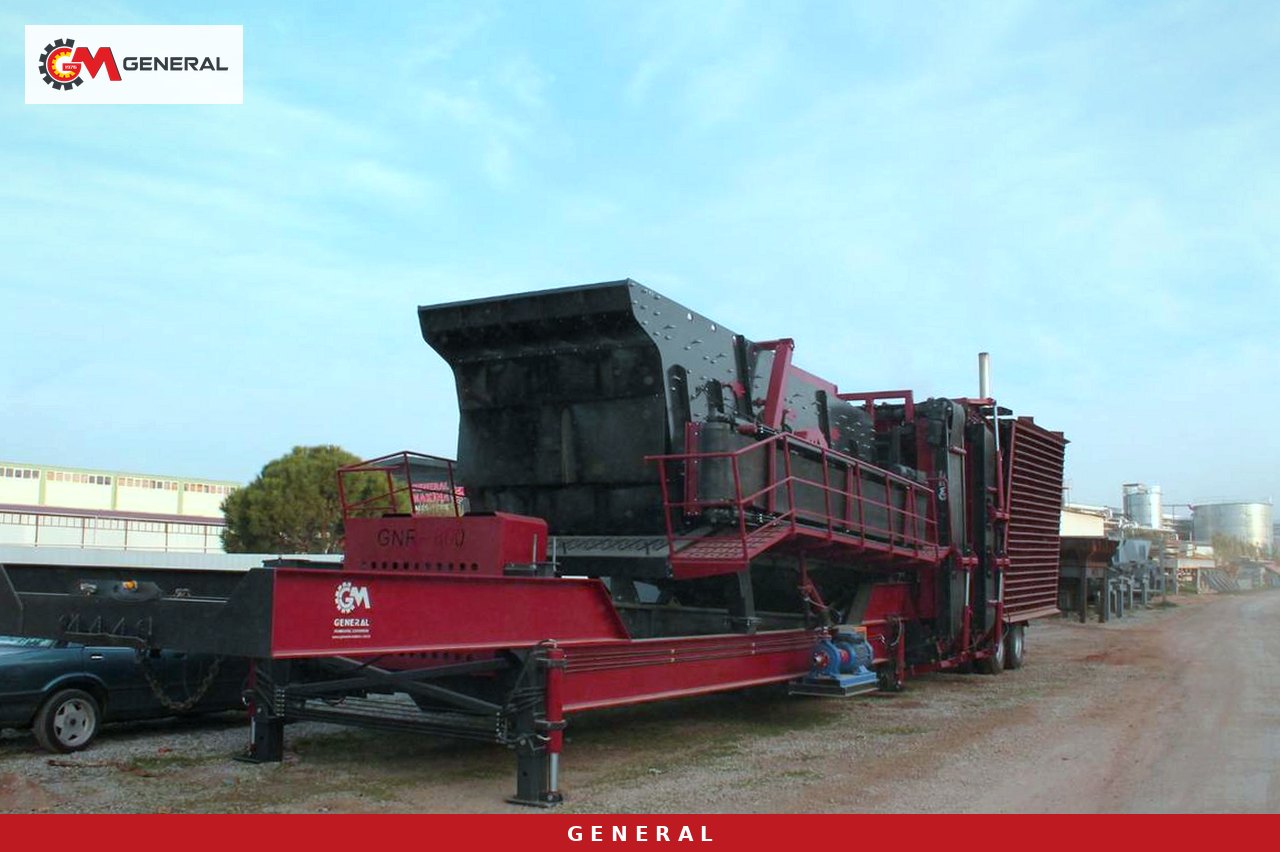
On mobile plants some platforms fold or are removed for transport. After set-up, the checklist should confirm that every guardrail is back in place and its pins are locked. A forgotten folding guardrail does not stop production, but it leaves the platform unsafe and nobody may notice.
Training for set-up, transport and site layout
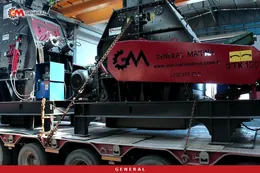
Transport and re-erection are jobs a stationary plant operator almost never does and a mobile plant operator does often. The General 640 is moved from site to site on its hydraulic legs; on the General 800, folding hydraulic conveyors and support legs are combined on one chassis and no excavation or concrete foundation is needed. That convenience shifts the training focus: instead of foundations, teach ground bearing condition, the support placed under the legs, chassis levelling and the order in which belts are unfolded.
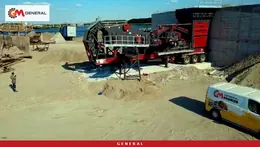
Three questions must be answered again on every site. First, how will the loader or excavator operator communicate with the plant operator? If visibility at the hopper is limited, radio or hand signals must be agreed in advance. Second, how will truck and loader traffic be separated from pedestrian routes? The area under stockpile conveyors must not be used as a walkway. Third, where will the generator and fuel area be placed? Hot surfaces and refuelling need a separate, marked zone.
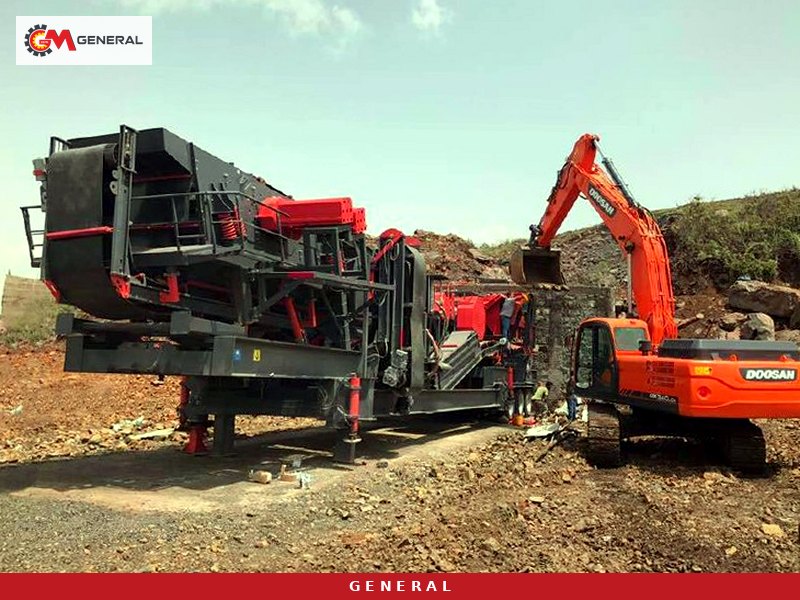
Lifting is a separate competence. When a heavy screen or crusher module is lifted, nobody stands under the load, the load is guided with a tag line and only one person signals the crane operator. Which equipment and which certified personnel may perform this work is defined by local legislation; do not assume the mobile plant operator holds that authorisation.
Pre-shift checklist
- Test the emergency stop buttons and any pull-cord switches; confirm on the panel that each stops the relevant equipment.
- Check that guards and belt-pulley covers are in place and secured.
- Inspect platform guardrails, stairs and walkway gratings; verify the pins of folding parts.
- Check that hydraulic legs sit fully on the ground, the chassis is level and hoses show no leaks.
- Check the earthing of the generator or grid connection and that the panel door is closed.
- Confirm nobody is at the hopper or under the belts and that communication with the loading machine operator works.
- Review the alarm history on the panel; if an alarm was left open from the previous shift, do not start until you know why.
- Start in the sequential order and watch the feeder at low speed during the first minutes.
This list is a starting point. It should be extended with the safety specialist's site risk assessment and attached to the shift record with the operator's signature. A signed list is the only reliable answer to "was the check done?" after an incident.
Frequently asked questions
Which certificate is mandatory for a mobile crusher operator?
That depends on the occupational health and safety legislation of the country where the plant is installed. For mandatory content, duration and the bodies allowed to certify, rely on the local competent authority and your company's safety specialist.
Does a CE-marked plant remove the need for safety training?
No. CE marking concerns the machine's design and documentation. Operator competence, site-specific risks and work organisation remain the responsibility of the operating company.
Does training content change from model to model?
Yes. Feed opening, crusher type, number of chassis and power source create different risks on each model. On the twin-chassis GNR-MC110, for example, the primary group can run independently, so energy isolation is planned separately for each chassis.
Does remote monitoring remove the need for an operator on site?
No. Remote monitoring logs alarms and production and helps the service team make a preliminary diagnosis, but block management at the hopper, clearing blockages and pre-shift checks are the job of a competent operator on site.
Conclusion: plan training together with the purchase
Training planned after the machine arrives on site is always rushed. At the purchasing stage, get written answers to these questions: in which languages the operating and maintenance manual will be delivered, which topics will be demonstrated on site during commissioning, which user authorisation levels exist on the panel, and which safety devices are standard and which are optional. These answers feed directly into your safety specialist's risk assessment and training plan. A new site, a new model or a new piece of equipment added to the line should trigger a repeat of the training. You can see the steps of the quotation and commissioning process on our how we work page. To get a quotation for the right model and safety equipment for your site, contact us.
Definitions of technical terms: Glossary