EN — English
 TR — Türkçe
 DE — Deutsch
 RU — Русский
 FR — Français
 ES — Español
 AR — العربية
 SR — Српски

Aleppo & Homs Basalt Chippings Stone Crushing Plant 150-250 TPH
When a housing block goes up in Aleppo or Homs, the item that most often holds up the foundation pour is not cement but clean, cubical chippings for the concrete. This article walks an investor planning 150-250 TPH of basalt chippings through the decisions in order: how the rock behaves, which models fit, how to power the plant and how to get it to site. Every model name and figure comes from General Makina's published product data; the final call for your own quarry is made with sample testing.
Black stone in Homs, white stone in Aleppo: the raw material decision
The dark building stone of historic Homs is basalt, while the old city of Aleppo is built from pale limestone. That visual contrast carries over to the quarries of the two cities: volcanic basalt sheets are more common around Homs, limestone quarries in the Aleppo basin. For an investor this has a practical side. The same machine crushing basalt one season and limestone the next is a realistic scenario, and locking the line to today's quarry alone tends to trigger extra investment later.
Basalt is fine-grained, dense and hard, and noticeably more abrasive than limestone. Its vesicular (porous) layers break more easily but can yield more fines and more flaky particles, and massive and vesicular beds often alternate in the same face. At quotation stage, therefore, have samples from different benches tested for Los Angeles abrasion, compressive strength and flakiness; crusher type and wear-part alloy are chosen from those results. The general logic for hard rock is covered in our guide to the best mobile crushing plant for basalt and granite.
What does house foundation concrete expect from chippings?
Foundation concrete is the least visible part of a building and carries all of its load. Three properties of the chippings used in a raft or strip footing decide how many stages the crushing and screening plant needs and which crushers it uses.
Particle shape
Flaky and elongated particles reduce workability and demand more water and cement for the same slump. In basalt the output of a jaw primary is usually angular and slab-like; it becomes cubical in the second stage. A rotor-type cubitzer or a choke-fed cone crusher are the two real routes to that transformation.
Fines and clay
Soil and clay from the quarry overburden weaken the bond between cement paste and aggregate. By-passing fines on a grizzly feeder ahead of the primary makes the downstream stages cleaner. If dry screening is not enough, a washing unit is added to the scope.
Alkali-silica reactivity
Some basalts containing a glassy phase can react with the alkalis in cement. No crusher can fix this material property, so the rock should not be approved as concrete aggregate until a reactivity test has been run. If the result is negative for concrete use, the product goes to sub-base and fill, and another quarry is sought for concrete.
The typical product list for a housing site looks like this: 0-5 mm crushed sand for mortar and plaster, 5-12 and 12-19 mm chippings for foundation and slab concrete, 19-40 mm coarse material for blinding concrete and hardcore. The number of decks on the final screen determines how many of these fractions can be separated in a single pass.
Four real layouts covering 150-250 TPH
The table below contains only published model data. Actual throughput varies with feed size, rock hardness and the required grading curve; a line only produces as much as its narrowest stage. The full family of wheeled mobile crushing and screening plants can be compared on the category page.
| Layout | Primary | Secondary stage | Screen | Capacity (t/h) | Feed | Power |
|---|---|---|---|---|---|---|
| A, GNR-MC110, twin chassis | GPJ 110 jaw | DMK03 impact | 2000×6000 mm, 4-deck | 200-300 | 900 mm | 750 kVA generator |
| B, GNR 110 + GNR MK110, mobile units | GNRK 110 jaw, 1100×4750 mm feeder | MK110 cubitzer, rotor 1550×1800 mm | — | Primary 180-300 / cubitzer 160-250 | Cubitzer max. 350 mm | Cubitzer motor 200 kW |
| C, Stationary line | GNRK 110, mouth 1100×850 mm | GNR MK110 cubitzer | GNR 2460, 2400×6000 mm | Primary 200-350 / cubitzer 160-250 | — | 110/132 kW + 200 kW + screen 22 kW |
| D, General 944, single chassis | GPJ 90 jaw | GM430 cone | 1600×5000 mm, 3-deck | 120-180 | 800 mm | 550 kVA generator |
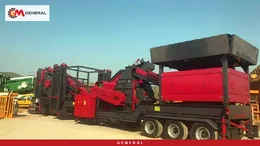
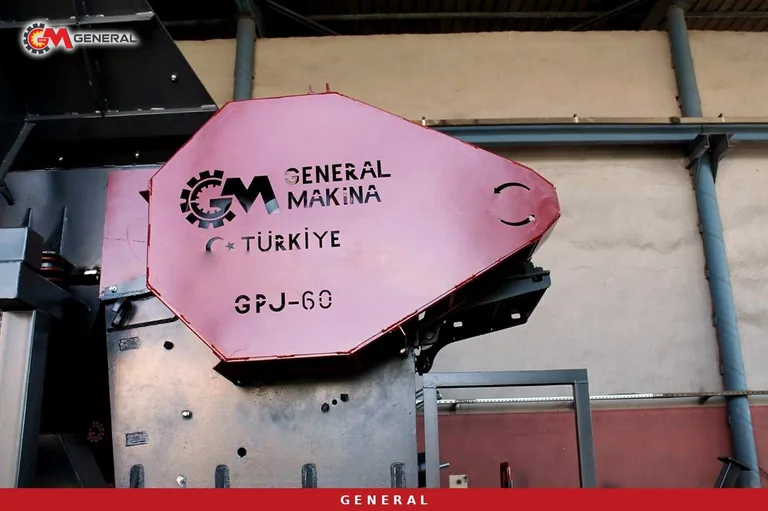
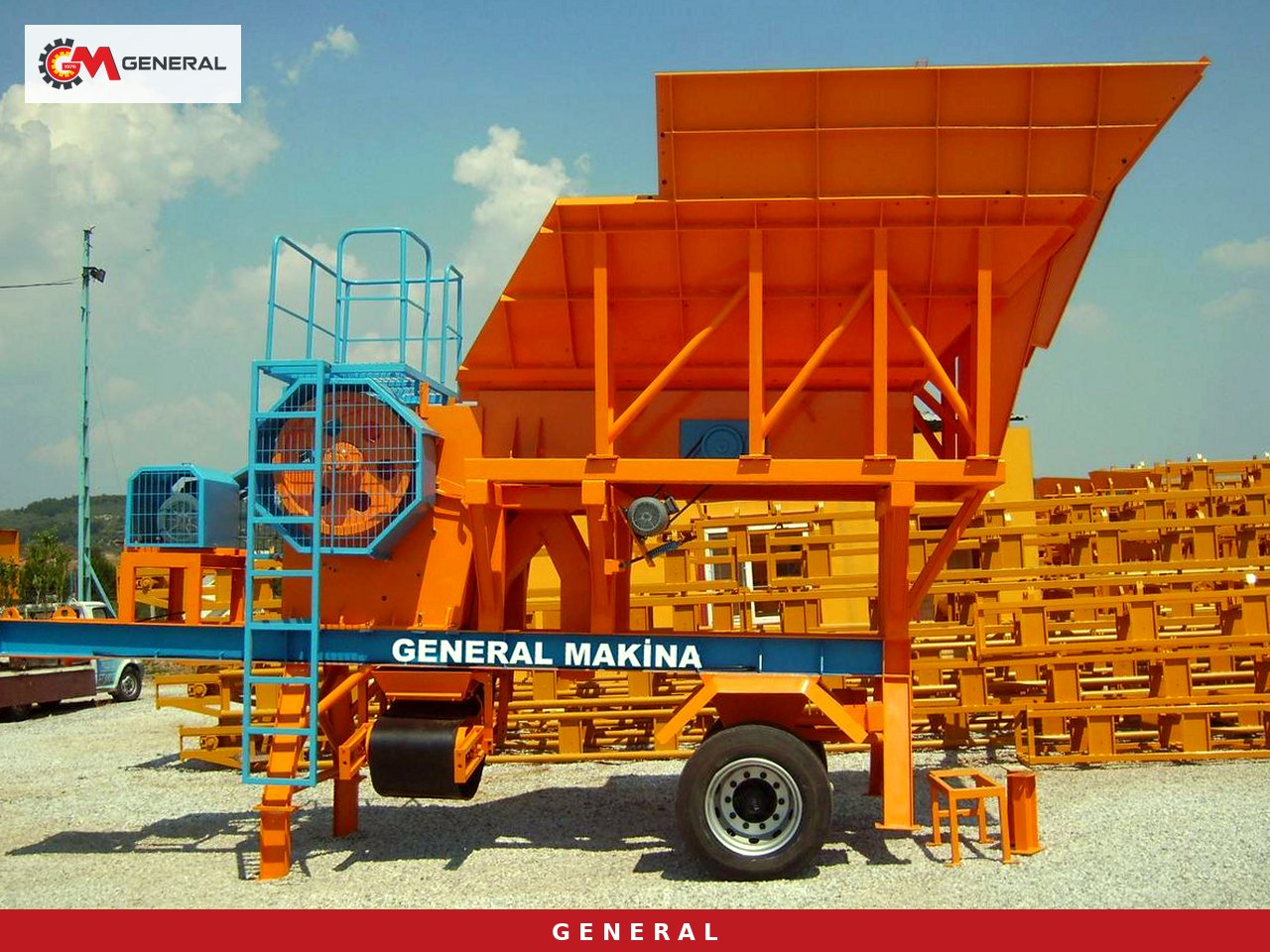
Layout A, the GNR-MC110consists of two separate wheeled chassis: the GPJ 110 jaw primary on one, the DMK03 impact secondary and four-deck screen on the other. At 200-300 TPH it covers the upper half of the band in a single line and directly separates the four fractions a housing site needs: 0-5, 5-12, 12-19 and 19-40 mm. The primary chassis measures 3000×13500 mm and the secondary 4200×18300 mm, each weighing 55,000 kg. Because the primary can run independently, you can produce only hardcore in the first months and commission the secondary later. In basalt the impact secondary will consume blow bars faster than a cone would, so plan the spare-parts stock from day one.
Layouts B and C: cubitzer lines
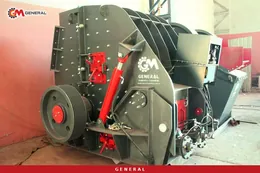
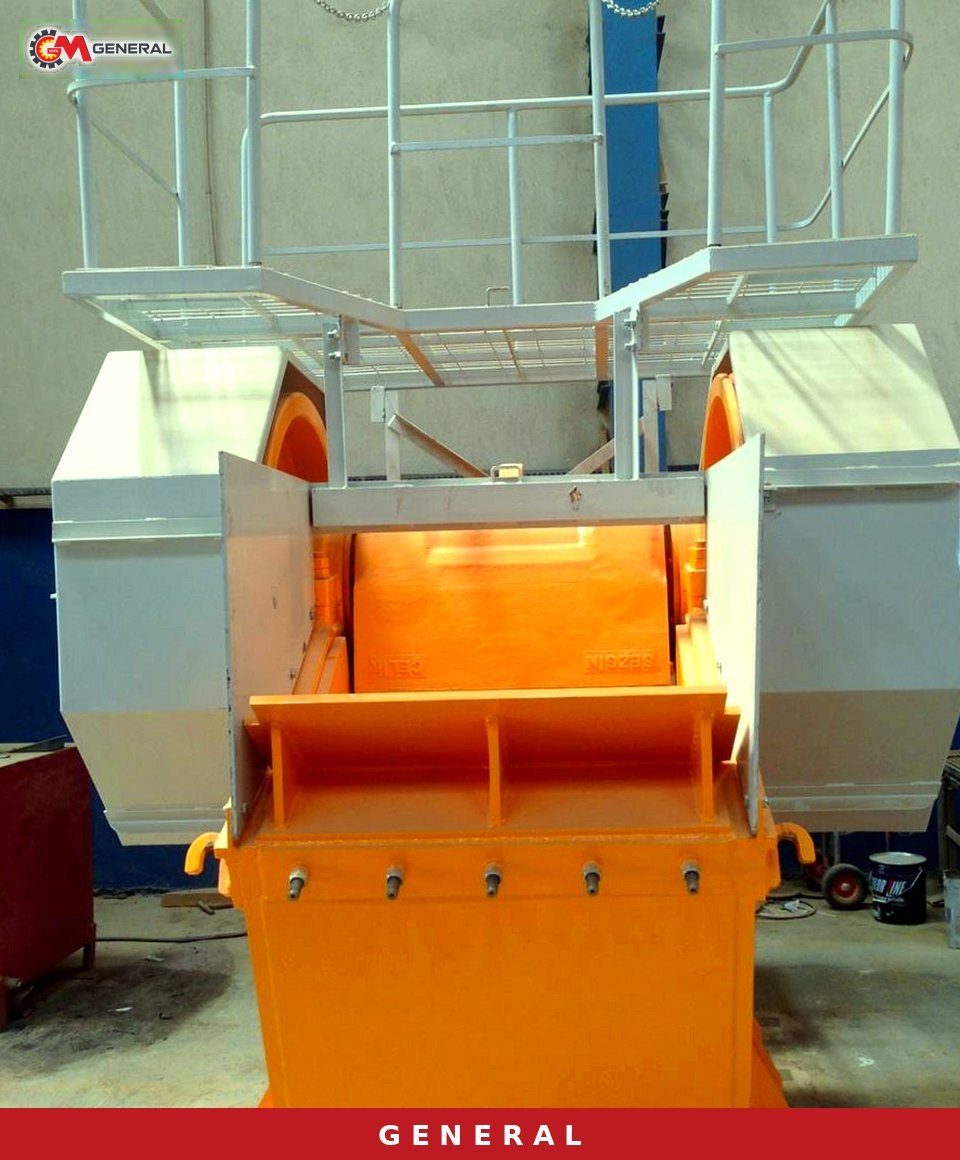
In Layout B the GNR 110 mobile primary jaw crusher carries a 1100×4750 mm feeder hopper and the GNRK 110 jaw on the same chassis; it weighs 55,000 kg and sets up on hydraulic legs without a foundation. The GNR MK110 cubitzer behind it processes 160-250 TPH with Hardox 500 inner liners. The cubitzer sets the ceiling of this line, which makes it the layout closest to the headline target. One detail matters: the cubitzer delivers 0-25 mm final product, so the 19-40 mm hardcore fraction must be split off by a screen before the cubitzer. Other modular units are listed under portable rock crushers.
Layout C moves the same pair onto a stationary steel structure: the 33,000 kg GNRK 110 primary, the GNR MK110 secondary and a GNR 2460 screen to split the products. It suits an investor with a long-term quarry licence and a steady ready-mix customer; when there is no need to move between sites, a fixed structure makes maintenance access easier.
Layout D: staged growth
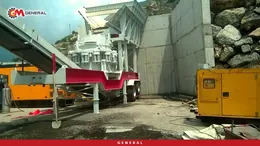
The General 944 combines a GPJ 90 jaw primary with a GM430 cone secondary on a single 70,000 kg chassis. Working by compression, the cone secondary is favourable for metal life in basalt. One unit covers the lower part of the band; when demand approaches 250 TPH a second unit or an extra cubitzer stage is added. For an investor who wants cash flow tied to the housing programme, this route keeps the initial budget smaller.
Four settings that control wear in basalt
A wear-resistant line is not one component but the sum of material choice and operating discipline. In basalt these four decisions make the difference:
- Set the primary's closed side setting to the feed limit of the secondary. For the MK110 that limit is 350 mm; oversize primary output overloads the rotor with impact.
- Keep the primary mouth full (choke-feed). A half-empty jaw wears its plates locally and produces more flaky particles.
- Separate fines on the grizzly feeder. When material that needs no crushing stays out of the crusher, manganese steel plates last longer.
- Choose the wear-part alloy from the sample results: austenitic manganese steel is standard for jaw plates, while high-chrome liners can be considered for a cone in high-silica rock.
In basalt the choice between impact and cone is a balance between parts cost per tonne and product shape. The cubitzer is strong on cubical particles; the cone protects metal. If the product goes into foundation concrete, shape wins; if it goes into sub-base, parts cost wins. Many Homs quarries will need both products at once, and in that case designing the line with two separate stockpiles is more economical than forcing the crusher toward a single product.
From Izmir to Aleppo and Homs: shipping, power and climate
Road transport is the natural route from the Izmir factory to northern Syria. Wheeled chassis travel on their own axles behind a tractor unit; a stationary line is loaded onto trucks as modules. If sea freight is chosen, Latakia or Tartus port is a comparatively close entry point for Homs. Whatever the route, current export, customs and heavy-haul conditions should be confirmed with the relevant authorities before contract. The twin-chassis design of the GNR-MC110 is an advantage on narrow bridges and bends compared with a single heavy load.
It is safer to start the power plan on the assumption that a reliable grid may not be available at the quarry. The product data lists a 750 kVA generator for the GNR-MC110 and 550 kVA for the General 944. For the mobile cubitzer line, total connected load should be taken from the motor list and the generator sized accordingly; the MK110 alone is 200 kW.
Dry, dusty operation is to be expected in summer. Water-spray dust suppression at belt transfer points, enclosed chutes at crusher discharges and frequently changed air filters on the generator and motors are measures that can be selected per project. At a quarry close to residential areas, dust and noise decide the plant location as much as the machinery does.
Information to gather at the quarry before asking for a quote
- Quarry location, access road, gradient and turning space for a tractor unit
- Test results for basalt samples from different benches: Los Angeles, flakiness, reactivity
- Largest block size after blasting
- Target hourly capacity and number of daily shifts
- Required fractions and the approximate share of each (concrete, mortar, hardcore)
- Power source: grid, generator or both
- Water access and any washing requirement
- Likelihood of switching to limestone and expected moves between sites
With this information our engineers narrow the table down to your quarry and propose a flow sheet. Our machines carry ISO 9001 and CE certification; the warranty is one year, excluding wear parts.
Frequently asked questions
Can limestone from around Aleppo be crushed on the same line?
Yes, with setting and wear-part changes. A line selected for basalt handles limestone comfortably; the reverse is not always true. In limestone an impact crusher gives higher reduction and the parts wear more slowly.
Cubitzer or cone crusher for concrete chippings?
If particle shape comes first, the cubitzer leads; if parts cost per tonne comes first, the cone leads. No final choice should be made before sample results and the product split are clear.
Can demolition concrete go through the same line?
Concrete rubble with the rebar removed can pass through a jaw primary. Using it in new foundation concrete, however, requires separate testing and specification approval, and it must be stockpiled apart from basalt chippings.
What determines the quoted amount and delivery schedule?
Layout, number of stages, screen decks, generator, belt lengths, dust-suppression scope and transport method. These are fixed in a written quotation once the quarry data has been received.
Decision summary
In a region where basalt dominates around Homs and limestone around Aleppo, the right investment is a line chosen for hard rock that also adapts to softer rock. The GNR-MC110 for those wanting the whole band in one line, the GNR 110 with GNR MK110 for those focused on cubical concrete chippings, and the General 944 for those growing in stages are solid starting points. Send us your sample results via our contact page and we will define the layout for your quarry together.
Definitions of technical terms: Glossary