EN — English
 TR — Türkçe
 DE — Deutsch
 RU — Русский
 FR — Français
 ES — Español
 AR — العربية
 SR — Српски

How Much Does a 90 Stone Crushing Plant Produce on Limestone and Basalt?
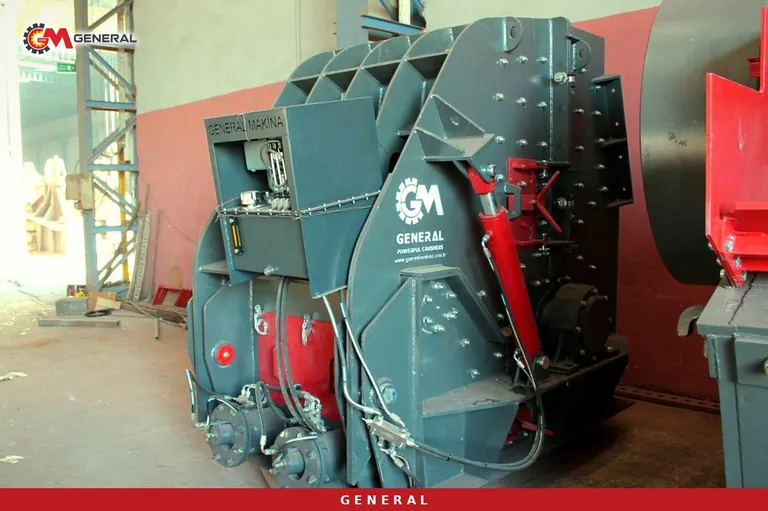
How much product a stone crushing plant delivers per hour depends largely on how hard and how abrasive the rock being fed is. The same body that easily reaches a high tonnage on soft stone slows down noticeably on hard stone. Comparing a classic crushing plant on two common materials is enough to see this.
Let us start with the 90 plant:
- Fed with limestone, the 90 stone crushing plant turns out between 150 and 180 tonnes of product per hour.
- Because basalt is much harder than limestone, the same plant's hourly output drops to the 100-120 tonne band.
Moving up to larger bodies does not change the picture; only the numbers get bigger.
- On limestone, the 110 stone crushing plant delivers between 250 and 300 tonnes in one hour of operation.
- When the feed is switched to basalt, the same plant's hourly output falls back to 200-230 tonnes.
The same trend continues in the largest class:
- Running on limestone, the 140 stone crusher reaches an average of 550 to 600 tonnes of production in one hour.
- Fed with basalt, the same machine's hourly performance is pulled down to around 400-450 tonnes.
In short, as the stone gets harder, capacity drops for every plant size. These figures, however, are the result of the plant as a whole, not of the crusher alone. Added screening units, feeders, extra crushers, hoppers and similar quarry equipment can push the efficiency of stone crushing plants clearly upwards. With a well-planned line, it becomes possible to reach higher production potential whatever material you process and whatever standard is expected from your product.
You can find our full product range in our digital catalogue. To get an offer suited to your project, simply fill in the form and our team will get back to you shortly.
Definitions of technical terms: Glossary