EN — English
 TR — Türkçe
 DE — Deutsch
 RU — Русский
 FR — Français
 ES — Español
 AR — العربية
 SR — Српски

South Sudan Generator-Powered Aggregate Crusher Plant 80-150 TPH
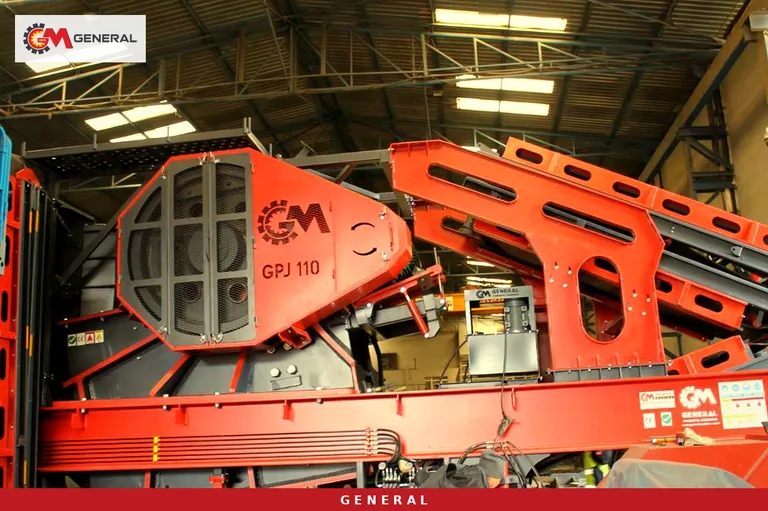
A contractor in South Sudan pricing a bridge approach, a line of culverts, a school or clinic foundation, or an airport apron usually faces two gaps at once: no grid power and no quarry operating nearby. This article works through the choice of a generator-powered mobile crushing and screening plant producing 80-150 TPH, starting from what infrastructure construction actually consumes rather than from a brochure. Every figure quoted comes from the technical data on our product pages. For the volume, material specification and schedule of any particular tender, the only valid source is the employer's technical specification; read the comparison below alongside that document.
An infrastructure site asks the crusher for three products at once
Road work tends to be dominated by one gradation: sub-base or plant-mix base. Infrastructure construction is more scattered. Concrete aggregate for bridge piers and decks, drainage stone behind culverts and retaining walls, and crushed fill under buildings and platforms can all be ordered in the same week. That makes the screen as important as the crusher: the number of screen decks decides how many separate fractions reach the stockpiles in a single pass.
Particle shape matters too in concrete aggregate. Flaky, elongated particles reduce workability and demand more water and cement for the same slump. In a market like South Sudan, where cement is also imported and travels a long road journey, this feeds directly into site cost. So the choice between an impact or a cone crusher in the second stage should take into account rock hardness together with the structural element the product will go into.
A practical rule: write your product list before you pick a crusher model. If you need 0-5 mm manufactured sand, 5-12 and 12-19 mm concrete chippings and 19-40 mm drainage stone, look for a line that delivers four fractions; if the job only needs sub-base and fill, a three-deck screen may be enough.
Models that fit the 80-150 TPH target and their generator ratings
The table brings together the wheeled models that cover the target range directly or touch it with their upper limit, together with the generator rating stated on each product page. All values belong to the named model; unknown cells are marked with a dash.
| Model | Capacity | Generator | Crusher arrangement | Max. feed | Weight | Screen |
|---|---|---|---|---|---|---|
| General 800 | 80-150 t/h | 450 kVA | PDK 1280 primary impact | 600 mm | 35,000 kg | 1300×4000 mm, 3-deck |
| General 640 | 60-100 t/h | 300 kVA (optional) | GPJ 60 jaw + GNR 50 impact | 500 mm | 38,000 kg | 1200×4000 mm, 3-deck |
| General 01 | 120-180 t/h | 550 kVA | GPS 1210 impact (primary+secondary) | 700 mm | 55,000 kg | 1600×5000 mm, 4-deck |
| General 944 | 120-180 t/h | 550 kVA | GPJ 90 jaw + GM430 cone | 800 mm | 70,000 kg | 1600×5000 mm, 3-deck |
| Mobile primary jaw GNR 90 + separate secondary unit | 70-180 t/h (primary unit) | — | GNRK 90 jaw + secondary to suit | — | 25,000 kg (primary unit) | — |
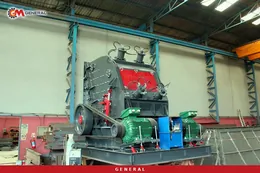
The exact match for the target is the General 800: 80-150 t/h, 600 mm feed and the lightest chassis in the table. As a primary impact plant it gives high reduction and cubical product in limestone and low-abrasion rock. The General 640 sits in the lower half of the band; it is enough for building and culvert work whose demand stays below 100 tonnes per hour, and its jaw pre-crusher lets it accept hard rock.
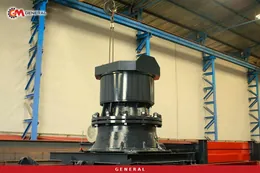
If the rock turns out to be granite or gneiss, two routes open. The first is the General 944: jaw primary plus cone secondary, so metal wear parts are consumed more slowly in abrasive stone. The second is the General 01 whose four-deck screen separates concrete aggregate and drainage stone in the same pass; its impact design, however, raises the wear budget in high-silica rock. Both carry a nominal 120-180 t/h, so against a 150 TPH target they leave headroom when the rock is harder than expected or the closed-circuit load rises. The price of that headroom is a heavier chassis and a bigger generator.
In a staged approach, a primary jaw unit from our portable crushers range reaches site first, and the secondary unit and screen are added as the work grows. The generator rating for this arrangement is calculated per project from the chosen secondary and screen combination, which is why it is left blank in the table.
Choose the generator as part of the plant
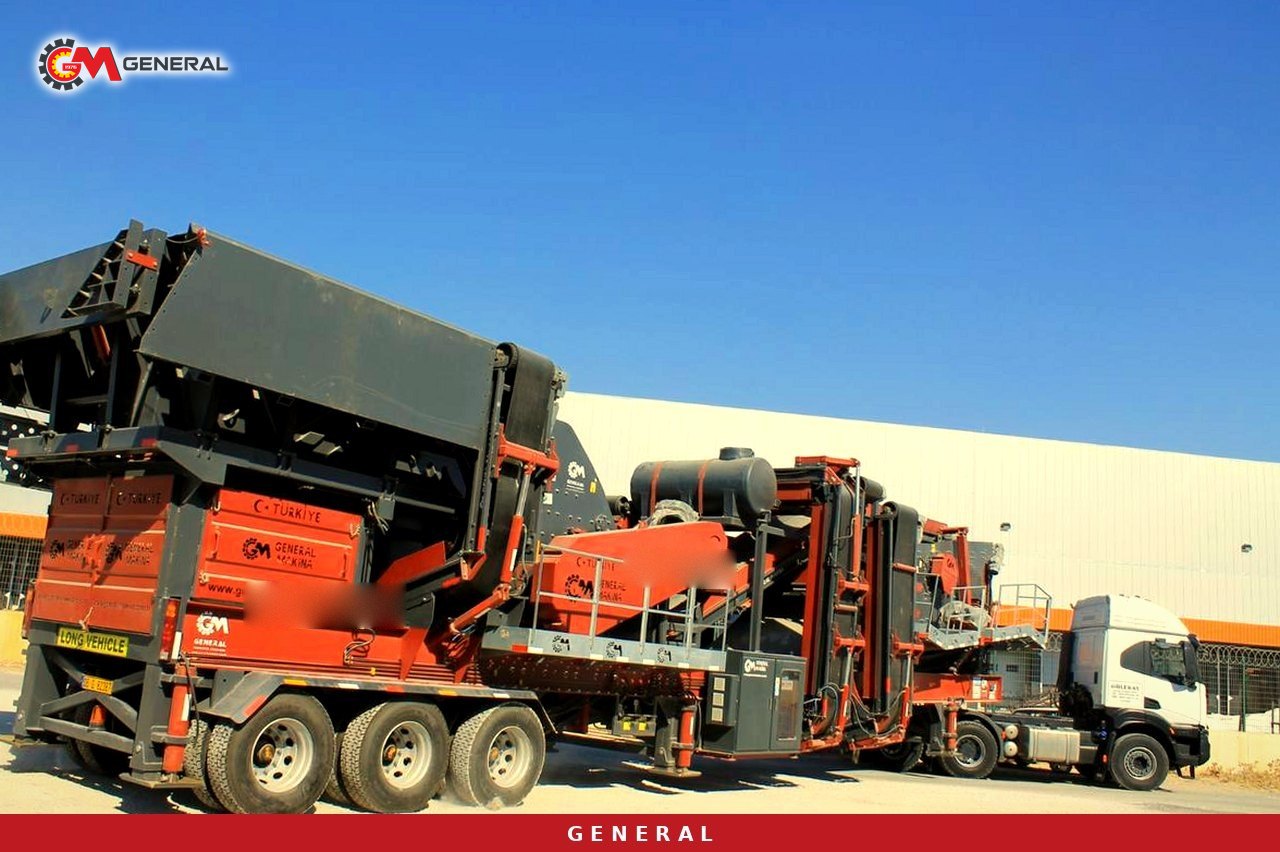
On an off-grid site, when the generator stops, the crusher, screen, feeder and every conveyor stop with it. Treat the power unit as main equipment whose failure stops the whole line, not as an accessory added to the plant. The kVA figures on the product pages are references set for each model's total load: 450 kVA for the General 800, 550 kVA for the General 01 and 944, and an optional 300 kVA for the General 640.
Start-up sequence and voltage dips
Large electric motors draw several times their running current at start-up. If the crusher, screen and conveyor motors all start together, the generator voltage sags, contactors drop out and the operator has to restart the line. The correct practice is to start motors in sequence, largest first: crusher running empty, then screen, then conveyors, and the feeder last. The General 01 control panel includes a soft-starter and frequency control; on other models, soft-start equipment of this kind should be discussed as an option chosen per project. Trying to restart a crusher that stopped under load with a full chamber strains both the generator and the belts, so emptying the crusher before stopping at shift end belongs in the site instructions.
Build the fuel plan from a formula, not a number
A generator's hourly diesel use depends on the engine maker, load factor and maintenance condition, so we do not quote a fixed litre figure here. Use a simple calculation instead: daily need = hourly consumption at average load from the generator maker's catalogue × daily operating hours. Storage volume = daily need × the longest gap in days between two tanker deliveries + a safety margin. Because roads can close to heavy vehicles in the rainy season, keep that gap higher than the dry-season value. Generator oil, fuel filters and air filters belong on the same stock list as the diesel.
Reading the rock in the White Nile basin
The rocky hills rising out of South Sudan's wide plains are mostly crystalline basement rock; granite and gneiss are common. These can be hard and abrasive, but the degree of weathering changes from hill to hill and even between faces of the same hill. Weathered rock near the surface brings more fines and clay, while fresh rock a few metres in behaves far harder. Laterite gravel, widespread in the region, can serve as fill but is often unsuitable as concrete aggregate.
So make the model choice after the laboratory result, not after a quarry walk. Los Angeles abrasion, compressive strength and silica content decide directly between an impact or cone second stage. Samples should be taken both from the surface and from the depth where production will happen. For more detail, see our article on choosing a mobile plant for hard rock such as basalt and granite.
Access, heat, dust and rain
South Sudan is landlocked. The machine is unloaded at an East African port such as Mombasa and makes a long road journey through neighbouring countries. On that journey weight and transport dimensions matter as much as capacity: the General 800, at 35,000 kg and 3600×15500×4500 mm, is the lightest single-chassis package in the table, while the General 944, at 70,000 kg and 4130×20350×4500 mm, is the heaviest. Confirm bridge load limits and permit requirements along the route with the haulier in advance.
On site, heat and dust are the worst enemies of the generator and the electrical panel. Place the generator upwind of the crusher's dust cloud, not downwind, and check the radiator and air filter at the start of every shift. Give the panel shade and ventilation. Water-spray dust suppression at the crusher discharge and conveyor transfer points, conveyor covers and extra filter stages are measures that can be selected per project. In the rainy season, black clay soils make it hard to reposition a wheeled chassis: set the plant on a compacted crushed-stone pad and build up enough stock in the dry season, before the rains start.
What belongs in your enquiry
A sound proposal can only be prepared from a set of information that describes the site. Before you write to us, gather the following:
- Products required and the approximate share of each: concrete chippings, manufactured sand, drainage stone, fill.
- Target hourly capacity and daily operating time.
- Rock type and, if possible, a laboratory report: abrasion, compressive strength, silica, clay content.
- Largest block size at the face and the loading equipment to be used.
- Power situation: generator only, or a chance of a grid connection later.
- Port of arrival and any weight or height restrictions on the route to site.
- Whether the work spreads over several sites and how many relocations are expected.
- Stock of spare wear parts and filters wanted with the first shipment.
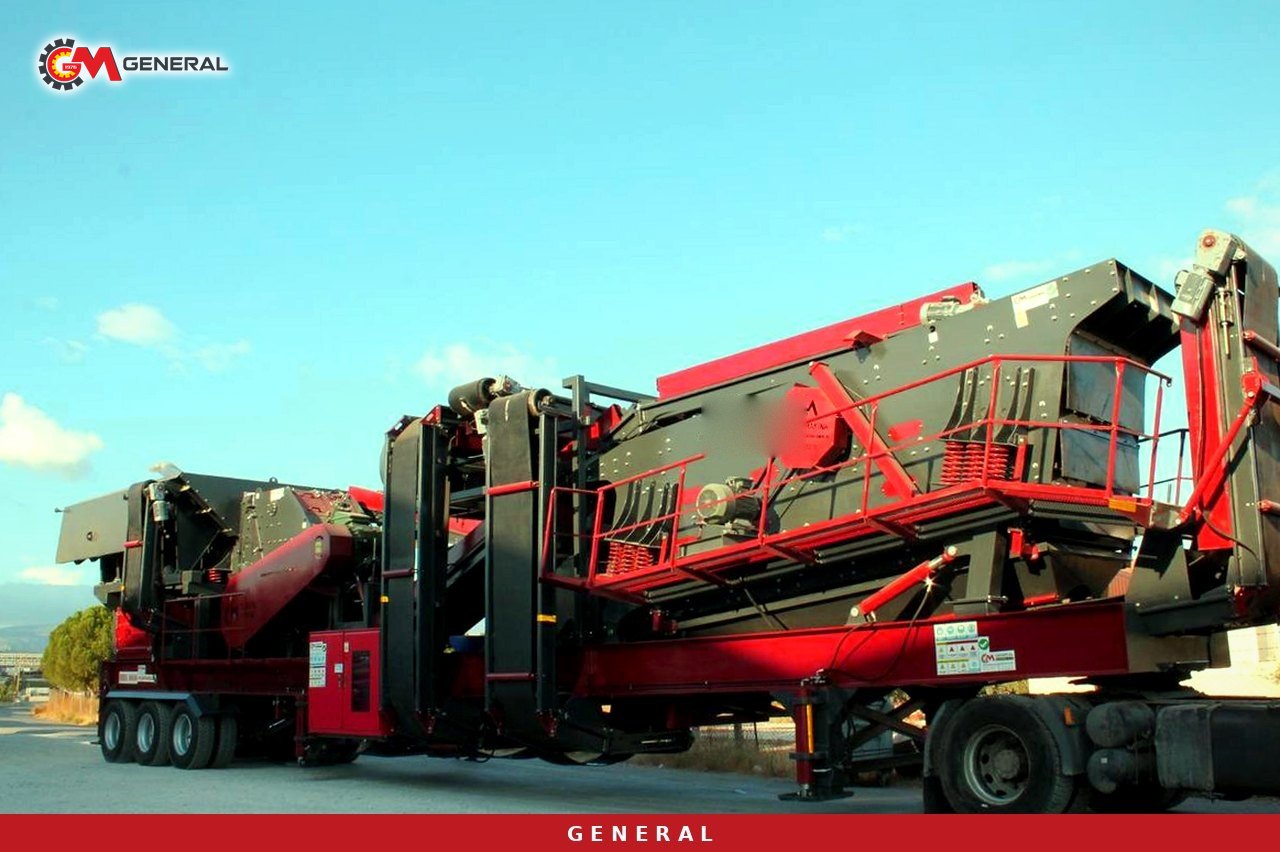
Together these decide the product list, screen deck count, generator rating and wear-part package. You can compare all wheeled options on our mobile crushing and screening plants page.
Frequently asked questions
Does the generator come with the plant?
The product pages state the recommended generator rating for each model: 450 kVA for the General 800, 550 kVA for the General 01 and 944. On the General 640 a 300 kVA generator is optional. Scope and brand preference are settled at quotation stage.
Can the same plant produce both concrete aggregate and fill?
Yes, but the screen layout decides. If four fractions are needed, the 1600×5000 mm four-deck screen of the General 01 is an advantage. On three-deck models, the product list is adjusted to each phase of the job by changing the screen meshes.
Is the General 800 still suitable if the rock is granite?
Being a primary impact plant, the General 800 performs best in limestone and low-abrasion rock. If the laboratory result shows high silica and high abrasion, the General 944 with jaw primary and cone secondary is the better choice.
What does the warranty cover?
Our plants carry CE and ISO 9001 certification and a 1-year warranty excluding wear parts. Jaw plates, blow bars and screen meshes are not covered, which is why we recommend shipping spares with the first delivery.
Conclusion: product list first, power second, model last
Choosing an 80-150 TPH generator-powered plant for an infrastructure site in South Sudan follows three steps: the products the specification asks for, the laboratory result for the rock, and the load limits of the route to site. In low-abrasion rock the General 800 meets the target directly; in hard granite the General 944 leads, and for multi-fraction output the General 01. Our team, building crushing and screening plants in Izmir since 1976, will prepare a proposal specific to model, generator and spare-parts package once we have this information. Send your project details through our contact page.
Definitions of technical terms: Glossary