EN — English
 TR — Türkçe
 DE — Deutsch
 RU — Русский
 FR — Français
 ES — Español
 AR — العربية
 SR — Српски

Niger Niamey Ring Road Granite Aggregate Crusher Plant 200-300 TPH
For an investor planning road aggregate production around Niamey, the first problem is usually not the crusher but what arrives in front of it. In many quarries in the area, a reddish-brown laterite crust and a weathered, clayey transition zone have to be dug out before sound granite is reached. If a long-running job such as a ring road calls for 200-300 tonnes of granite aggregate per hour, the plant design must start by keeping those three layers apart. This article compares a cone-centred line that keeps laterite out of the crushing circuit and suits the abrasiveness of granite, together with mobile alternatives that reach the same capacity, using only the data published on our product pages.
Quarry profile around Niamey: laterite cap, weathered zone, sound granite
In south-western Niger, on both banks of the Niger River, granite and granitoid basement rocks are widespread, and they are frequently capped by lateritic plateau crusts. That general picture does not mean every bench of a quarry will yield the same material. The thickness of the laterite, how deep the weathered granite (arena) extends and the joint spacing of the fresh rock all change from one quarry to the next. Before any investment decision, take samples from at least three depths and have Los Angeles abrasion, water absorption, flakiness and clay-silt content measured by an independent laboratory.
That distinction drives crusher selection directly. Sound granite is high in silica and wears out the hammers and plates of an impact crusher quickly. Our product page gives granite an abrasion index of Ai~0.55, against Ai~0.20 for basalt in the same table. Metal consumption in Niamey granite is therefore markedly higher than in basalt, and the secondary stage should use a machine that crushes by compression. Do not start sizing the plant before the aggregate classes in the ring-road specification have been formally confirmed with the contracting authority or its consulting engineer.
Keeping laterite out of the crushing circuit
When laterite and weathered-zone material reach the crusher, they cause three problems: they pack in the cone chamber and narrow the opening, they blind the screen meshes, and they push up the fines content that concrete and asphalt aggregate cannot tolerate. The first line of defence is at the face; the second is at the feeder.
Stripping and selective excavation
The laterite crust and the clayey transition zone should be excavated separately from the sound granite bench and stockpiled on their own. The loading crew should send only blasted fresh rock to the crusher. Laterite is often used as sub-base fill in road building, but its suitability is decided by the specification and laboratory results, not by the crushing plant.
Pre-separation on the grizzly feeder
Even with selective digging, soil and fines get mixed into the blasted muck pile. The by-pass section of a vibrating grizzly feeder removes that material before it enters the primary crusher. The model matching a 200-300 TPH target is the GNR 110: 1100 mm wide, 4750 mm long, 200~300 tph capacity and 2x7.5 kW motors. The dirty undersize passing the grizzly should go to its own stockpile on a separate belt and never be blended into the clean product circuit. If clay content turns out high, adding a washing unit can be assessed on the basis of the sample results.
Three flowsheets for 200-300 TPH
The target range can be met either with a single mobile chassis or with a stationary layout. The table below compares three options using values from the product pages. Cells left blank or given as a range are defined per project.
| Configuration | Primary | Secondary | Screen | Capacity | Max. feed | Power |
|---|---|---|---|---|---|---|
| Stationary line | GNR 110 feeder + GNRK 110 jaw | General cone crusher (model per project) | GNR 2060, 2000×6000 mm | Jaw 200–350 tph; feeder 200~300 tph | Opening 1100×850 mm | Jaw 110/132 kW; cone 90–500 kW range; screen 18.5 kW |
| GNR-MC110 (twin chassis) | GPJ 110 jaw | GS1215 / DMK03 impact | 2000×6000 mm, four-deck | 200–300 tph | 900 mm | 750 kVA generator |
| General 944 + General 950 | 2 × GPJ 90 jaw | GM430 cone / DMK01 impact | 2 × 1600×5000 mm, three-deck | 2 × 120–180 tph | 800 mm | 550 kVA + 600 kVA |
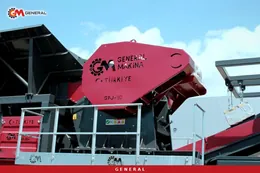
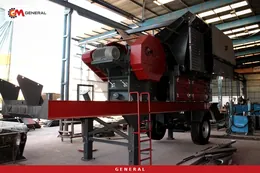
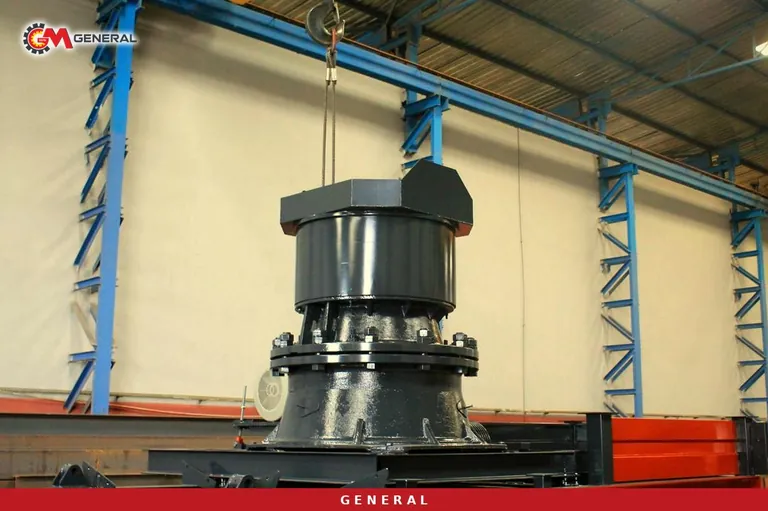
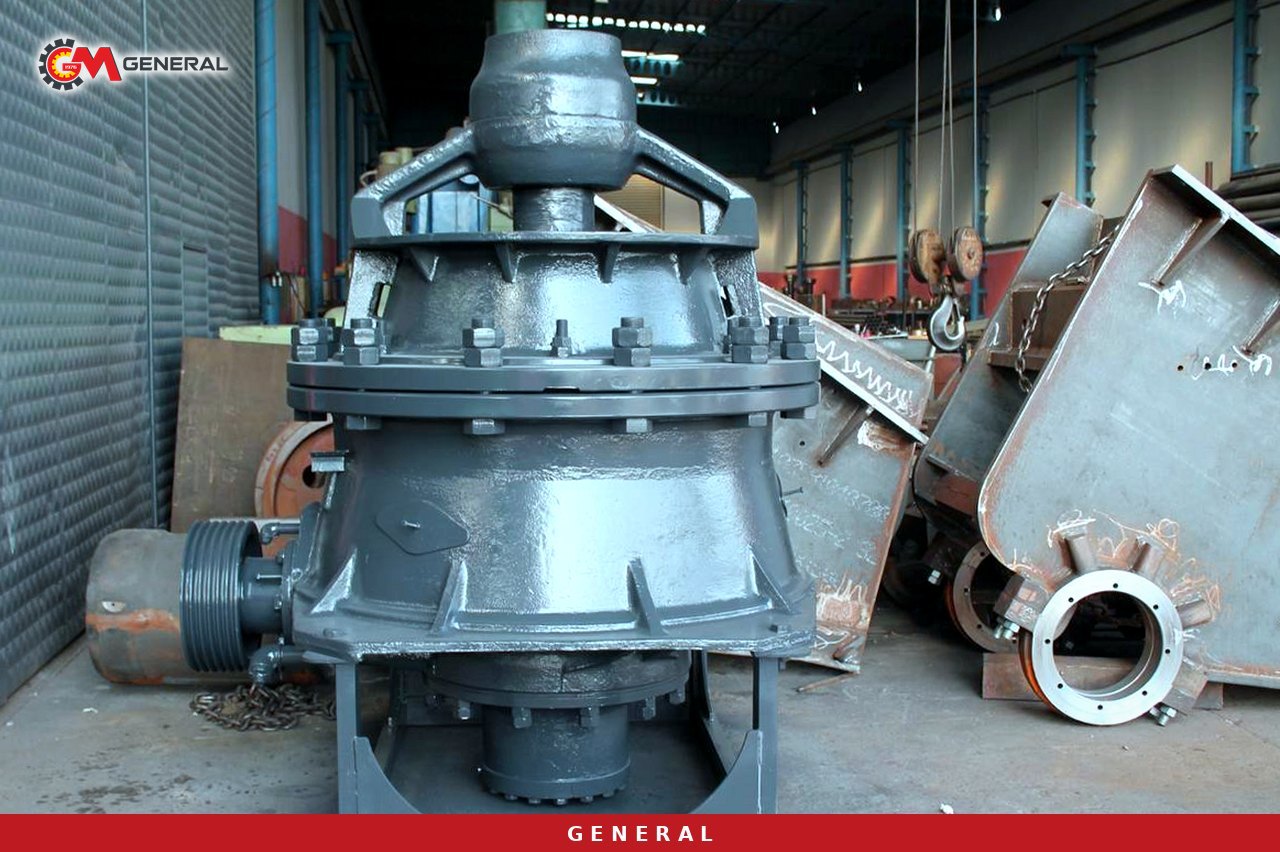
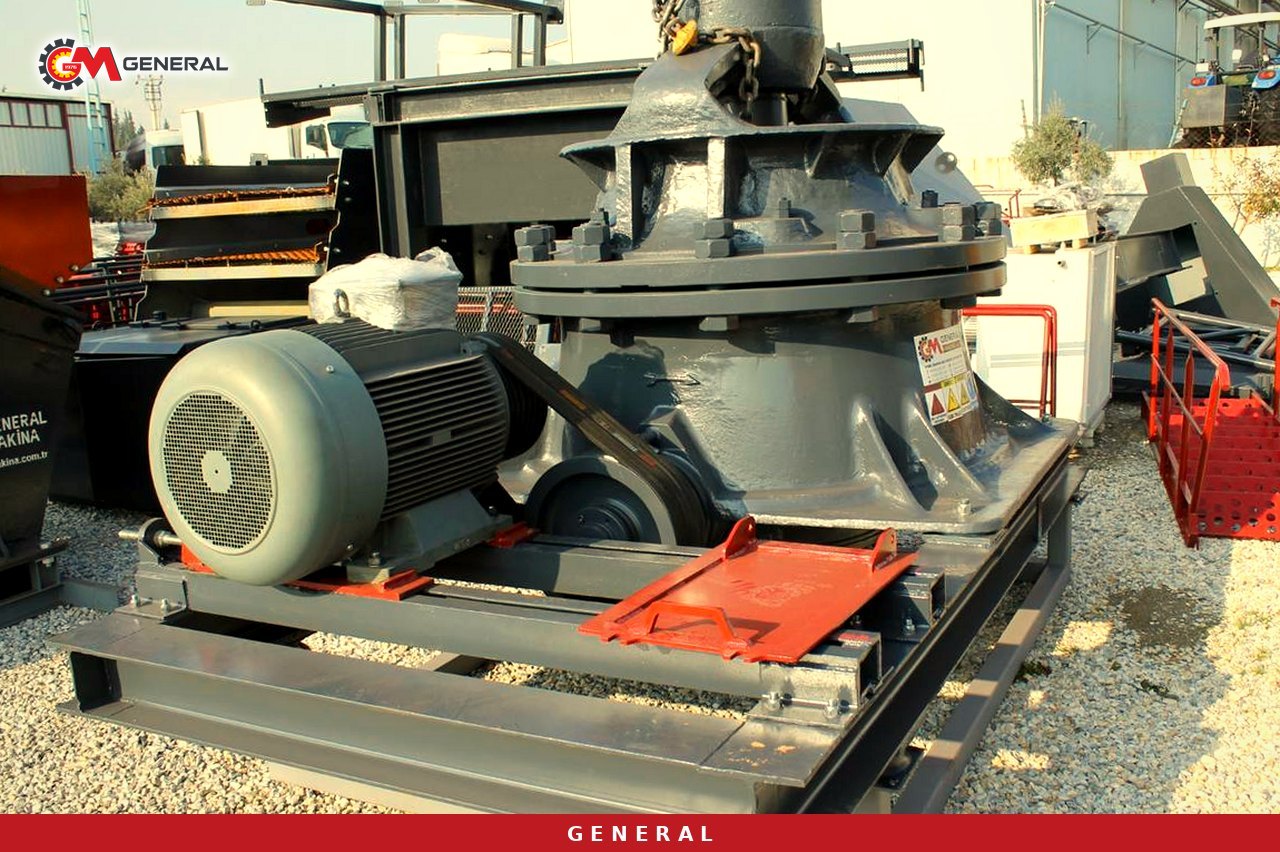
A ring road is a multi-year job that can stay tied to one quarry, so for granite our first choice is a stationary crushing and screening plant. The GNRK 110 jaw crusher accepts large blasted blocks through its 1100×850 mm opening and, with an output setting adjustable between 150 and 225 mm, sizes the feed for the secondary. It weighs 33,000 kg and sits on a concrete foundation. Behind it, the cone crusher handles the high silica of granite by compression.
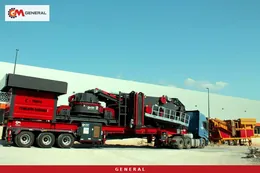
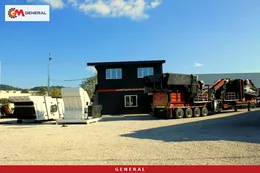
On the mobile side, the GNR-MC110 is the model that delivers 200–300 tph from one machine while splitting the primary and secondary groups over two separate chassis. Its secondary is an impactor, though, so wear-part consumption in granite will be higher than in a cone line. The General 944 and General 950 pair gives a combined 240–360 tph. The General 950 mobile crusher delivered to Niger is an example of this family working in the region, while the GM430 cone secondary of the 944 is the unit that extends metal life in abrasive granite.
Ring-road specification and product fractions
A ring-road quarry never makes a single product. Sub-base and base layers need graded mixes, asphalt surfacing needs cubical chippings, and bridge and culvert concrete needs washed or low-fines aggregate. Each class has its own grading envelope, flakiness limit and abrasion value in the specification.
The cone crusher's product range is in the order of 0–60(75) mm and its CSS is set hydraulically. Reduction is 6:1–8:1 in the secondary stage and about 10:1 in the tertiary. If asphalt chippings must be cubical, a tertiary stage can be added after the secondary cone with a second cone fitted with short-head liners. On the mobile side, the four-deck screen of the GNR-MC110 separates 0-5 / 5-12 / 12-19 / 19-40 mm fractions. In a stationary line the number of decks and mesh apertures follow the specification classes; at high tonnage a GNR 2460 (2400×6000 mm, 22 kW) can also come into play.
- Grading envelope and flakiness limit of every aggregate class in the specification
- Daily and annual tonnage target, operating hours and number of shifts
- Laboratory results of granite samples from three depths
- Estimated thickness of laterite and weathered zone, and their clay-silt content
- Whether grid power or a generator will be used
- Suitability of the site access road for heavy haulage, and the installation area
Power, dust and haulage on a Sahel site
At most quarries around Niamey the plant is either connected to the grid or run on a generator. For the mobile options the generator ratings are stated on the product pages: 750 kVA for the GNR-MC110, 550 kVA for the General 944 and 600 kVA for the General 950. For a stationary line, motor powers are added up item by item to size the generator or transformer; the cone crusher, with its 90–500 kW power range depending on the model chosen, is the largest item in that calculation.
The harmattan wind of the dry season carries fine dust everywhere. Inspection intervals for engine and generator air filters should be shortened, and water-spray dust suppression at screen discharges and transfer points, plus covered conveyors, are measures that can be selected per project. Electrical panels should be housed in a shaded, ventilated cabin.
Niger is landlocked: machines arrive by sea at ports in neighbouring countries and continue to Niamey by road. Chassis dimensions should therefore be shared with the haulier at quotation stage. The GNR-MC110 primary chassis is 3000 × 13500 mm and 55,000 kg; its secondary chassis is 4200 × 18300 mm and 55,000 kg. The General 944 and 950 measure 4130 × 20350 × 4500 mm in transport and weigh 70,000 kg. A stationary line travels as modules in containers and on flat racks. Confirm route, clearance and transit permits with the haulage company in advance.
Managing cone liners in granite
The wear parts of a cone crusher are the mantle and concave liners, usually cast in manganese steel; high-chrome liners are also considered for high-silica granite. Two operating habits decide liner life more than anything else: keeping the crusher choke-fed and correcting the CSS regularly as the liners wear. A cone running half empty wears its liners unevenly and makes the product flaky.
On a remote site, a liner change must not turn into an unplanned stoppage. Keep one set of mantle and concave in reserve at the start of the season, and add jaw plates and screen meshes to the same list. Our wear and spare parts page shows the scope of cast parts. The hydraulic cylinder protects the crusher against sudden packing; even so, a metal detector over the feed belt stops a bucket tooth or drill bit from the muck pile entering the chamber.
Frequently asked questions
Why do you recommend a cone rather than an impactor as secondary for granite?
Granite is high in silica and wears an impactor's hammers and plates quickly. A cone crusher breaks rock by compression, so metal consumption and part cost per tonne fall. An impact option is considered when cubical product is the priority and the higher wear cost is accepted.
What happens if laterite gets into the crusher?
Clayey laterite packs in the cone chamber, blinds the screens and can push fines in the aggregate above the specification limit. Selective excavation and the by-pass section of the grizzly feeder reduce that risk. If clay content is high, a washing unit should be considered.
Can I start mobile and move to a stationary line later?
Yes. Because the primary group of the GNR-MC110 can run on its own, work can begin with the primary chassis and the secondary chassis can follow. Once the quarry reserve is proven, switching to a stationary line is a more balanced route for long-term production. Other wheeled models are listed on our mobile crushing plants page.
What determines the price?
Configuration (stationary or mobile), number of crushing stages, cone crusher model, number of screen decks, generator requirement, add-ons such as dust suppression and washing, and the scope of transport all set the price. For an exact figure, request a quotation with your sample results and target fractions.
Conclusion
The success of a line producing granite aggregate for the Niamey ring road depends on how well laterite and the weathered zone are kept out of the crushing circuit and on choosing a granite-suited crusher for the secondary stage. For a long-running job, a stationary line with a GNRK 110 jaw and a cone crusher stands out; for a fast start, the GNR-MC110 or the General 944 and 950 pair. Manufacturing in Izmir since 1976, our team designs this line from a single source, with ISO 9001 and CE certified machines and a 1-year warranty (wear parts excluded). Send your sample results and specification classes through our contact page and we will prepare a quotation with a flowsheet matched to your target tonnage.
Definitions of technical terms: Glossary