EN — English
 TR — Türkçe
 DE — Deutsch
 RU — Русский
 FR — Français
 ES — Español
 AR — العربية
 SR — Српски

Port Sudan 5-25 mm Concrete Aggregate Crusher Plant 150-250 TPH
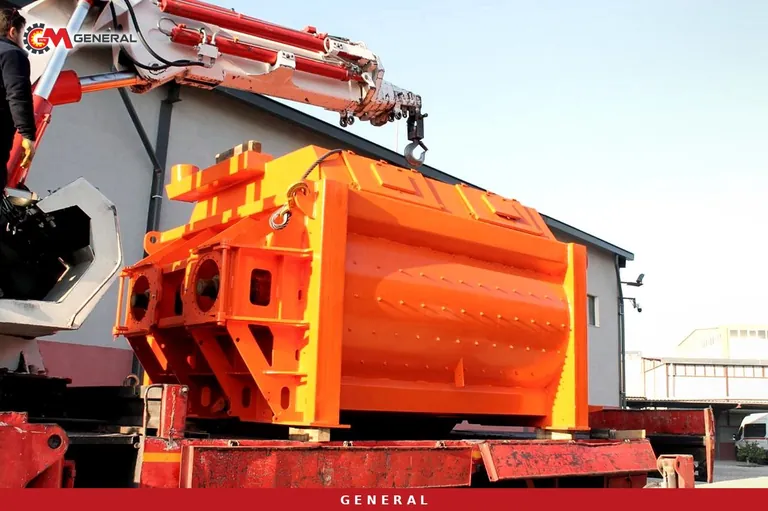
A contractor in Port Sudan who has to pour quay walls, pile caps, breakwater superstructures or warehouse slabs wants a specific range from the aggregate: 5-25 mm coarse aggregate plus separately stockpiled 0-5 mm sand. In this Red Sea port city the concrete must withstand seawater, salt-laden wind and heat for decades, so particle shape, fines content and grading continuity are the most closely checked items of the specification. This article explains how to set up a crushing and screening plant in the 150-250 TPH band that produces 5-25 mm aggregate for port concrete, based on the rock types in the region, the coastal climate and the fact that the machine lands at the same port by ship before it is moved to the quarry. All machine figures come from the technical tables on our product pages. For concrete class, maximum aggregate size and grading limits, the current specification of the port authority and the project consultant is what counts.
The 5-25 mm range sets the screen layout from day one
A standard crushing plant is often delivered with fractions such as 0-5, 5-12, 12-19 and 19-40 mm. If the maximum aggregate size for the port concrete is limited to 25 mm, the top deck aperture is chosen accordingly and anything above 25 mm returns to the crusher instead of going to stock. General 02 and GNR-MC110 run in closed circuit; oversize is re-crushed until it reaches the target size. Screen apertures are defined for every order according to the rock and the required curve, so the 25 mm cut should be requested in writing at the design stage.
Keeping coarse aggregate in two stockpiles
If the batching plant operator draws 5-25 mm material from a single pile, the loader picks up a different blend with every bucket and the mix design drifts during the day. A safer approach is to keep the coarse aggregate as two separate stockpiles, 5-12 mm and 12-25 mm, and to combine them in the required ratio in the plant's weigh hopper. That means one more deck and one more stockpile conveyor; models with a 4-deck screen fit this layout directly.
Particle shape and surface cleanliness
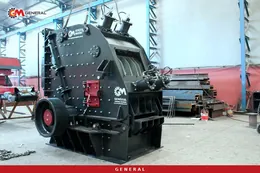
Flaky and elongated particles reduce workability and call for more water and cement for the same consistency. Cubical grains require the right crusher at the secondary stage and the right feed level: a cone crusher gives a cubical product when choke-fed, an impact crusher when rotor speed and setting are chosen correctly. With dusty quarry rock, fines stick to the aggregate surface after crushing; if the specification limits clay and dust content, wet screening can be added according to the project.
From the Red Sea Hills to the coast: the rock going into the crusher
The Red Sea Hills rising west of Port Sudan sit largely on an old basement of granite, gneiss and other crystalline rocks, with volcanic rocks in places. Along the coastline there is coral limestone and loose sediment. These two rock groups lead to completely different machine choices.
Granite and gneiss are hard and high in silica; in an impact crusher, blow bar and hammer wear accelerates. For this rock, a jaw primary with a cone secondary working on the compression principle, or a jaw primary followed by an impact secondary, is considered. Coral limestone breaks easily but can be porous and may contain chlorides; its suitability for marine concrete should not be accepted without laboratory tests. Do not decide on the crusher type before compressive strength, abrasion value and water absorption tests have been run on samples from your chosen quarry. The recommendations below are narrowed down according to those results.
Matching models to 150-250 TPH
There are three real ways to cover the target band. All figures are taken from the technical tables on the relevant product pages; unknown values are shown as "—".
| Configuration | Capacity | Feed size | Crushers | Screen | Generator | Suitable rock |
|---|---|---|---|---|---|---|
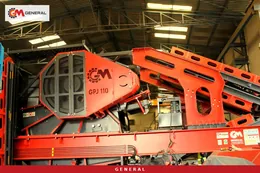
| GNR-MC110 (twin chassis) | 200-300 t/h | 900 mm | GPJ 110 jaw + DMK03 impact | 2000×6000 mm, 4-deck | 750 kVA | Granite, gneiss, basalt |
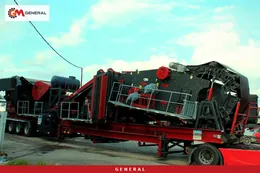
| 2 × General 944 | 2 × 120-180 t/h | 800 mm | GPJ 90 jaw + GM430 cone | 1600×5000 mm, 3-deck (each unit) | 550 kVA (each unit) | Hard, abrasive rock |
| General 02 | 250-300 t/h | 1000 mm | GPS 1413 primary impact | 2000×5000 mm, 4-deck | 660 kVA | Limestone, low-abrasion rock |
| Stationary plant | Project-specific | — | Jaw + cone or impact | Project-specific | — | Long-term single quarry |
One line for a granite or gneiss quarry
GNR-MC110 carries the GPJ 110 jaw primary on one chassis and the DMK03 impact secondary with a 2000×6000 mm 4-deck screen on the second. Its 200-300 t/h capacity covers the entire 150-250 TPH target and it accepts 900 mm feed. Because the primary group can also run on its own, the primary is installed first when the quarry opens; while site roads are built with coarse material, the secondary group is brought into service. The impact secondary gives a cubical product; in granite, wear part consumption has to be calculated from the sample results.
Two cone lines when wear cost comes first
In high-silica rock, two General 944 units are a sensible alternative. Each unit delivers 120-180 t/h; since the GM430 cone secondary works on the compression principle, metal life in abrasive rock is longer than with an impact rotor. Together the two units comfortably cover the 150-250 TPH band, and one keeps producing while the other is in maintenance. The screen on each unit has 3 decks, so the 5-12 and 12-25 mm split plus sand has to be planned around three decks.
If the quarry is chosen in the coastal limestone and the tests support it, General 02 with 250-300 t/h and 1000 mm feed is enough as a single unit. If the project will run in the same quarry for years, stationary crushing and screening lines should also be considered; with no chassis limit, more screen decks and stockpile conveyors can be installed. You can compare all wheeled models on the mobile crushing and screening plants page.
Sand, fines and matching the batching plant mixer
In port concrete, 0-5 mm sand needs as much attention as the coarse aggregate. If manufactured sand carries too many fines, the concrete demands more water; too few and the mix segregates. The sand yield of a cone secondary line differs from that of an impact line, and this difference decides whether natural sand has to be added in the mix design. Around Port Sudan, wind-blown fine dust can contaminate open sand stockpiles; siting the stockpiles with the prevailing wind in mind and covering them where needed is a practical measure.
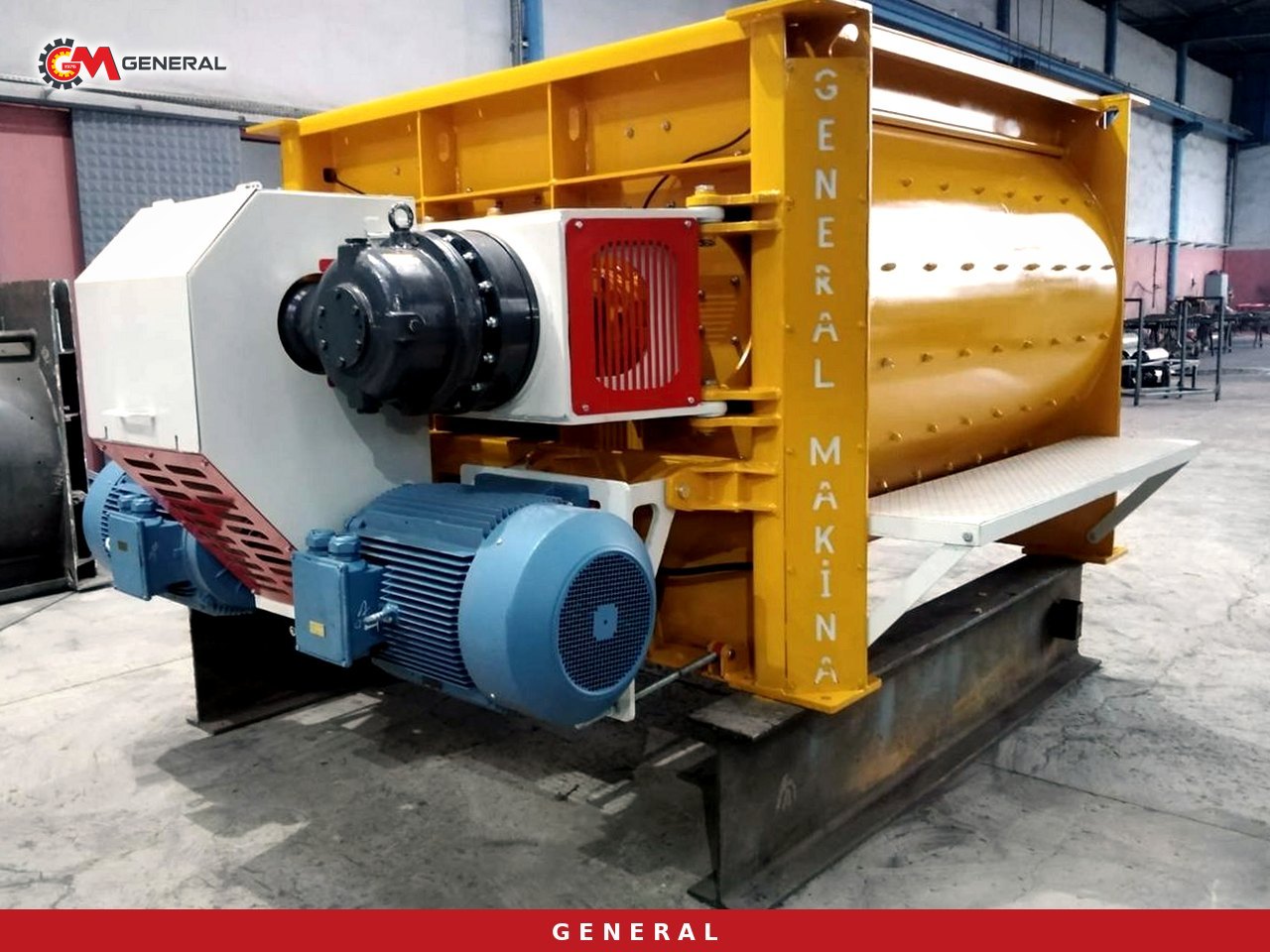
When the crushing plant and the concrete batching plant are planned in the same project, the capacity balance must be checked. General Makina twin-shaft mixers are built in batch sizes of 1, 2, 3 and 4.5 m³ compacted concrete, with motor power from 2×18.5 kW to 2×90 kW; the liner is Ni-Hard and the mixing arms are Hardox. The plant's daily concrete schedule determines how much stock of each fraction the crushing plant has to hold. For plant options, see the concrete batching plants category.
Coastal climate and transport from quay to quarry
Operating in hot, humid, salty air
On the Port Sudan coast, temperatures are high and the air is humid and salt-laden. Under these conditions the service intervals for the generator radiator, crusher motors and screen drive air filters are shortened, and filter stock is kept on site. Since corrosion accelerates on exposed metal, the paint system and the sealing class of the electrical panels should be discussed at the order stage. Dust suppression spray, enclosed conveyor transfers and dust covers at crusher discharge are measures that can be selected per project; where clean water is scarce, the source of spray water is planned in advance.
On the energy side, if the line is far from the grid, generator capacity follows the table: 750 kVA for GNR-MC110, 550 kVA for General 944, 660 kVA for General 02. Fuel delivery and generator service intervals should be planned around whether the quarry road stays open on rainy days.
From the ship to the quarry site
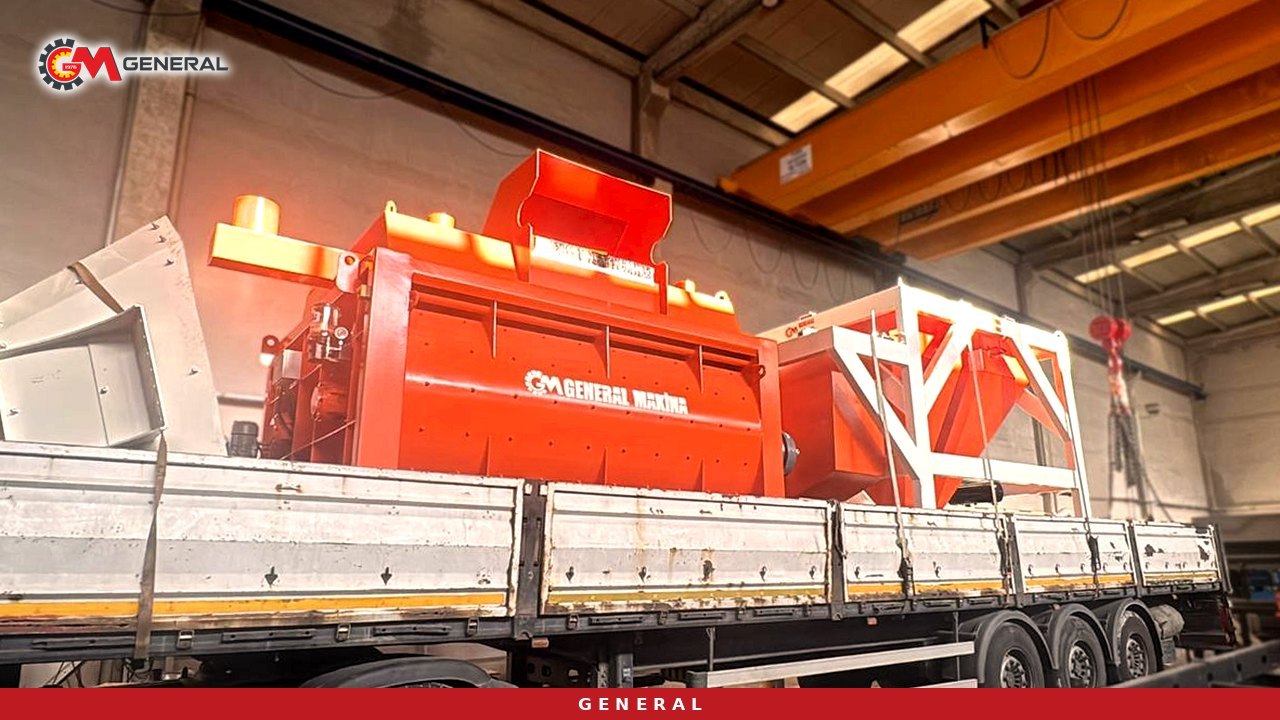
Because Port Sudan is both the port where the machine lands and the place where the aggregate will be used, the transport chain looks short; the real distance is the road from the port to the quarry. General 944 weighs 70,000 kg and measures 4130×20350×4500 mm. General 02 weighs 76,000 kg and measures 4340×20600×4500 mm. GNR-MC110 is split over two chassis: the primary chassis is 3000×13500 mm and 55,000 kg, the secondary chassis 4200×18300 mm and 55,000 kg. Heavy haulage permits, bridge and culvert crossings and the gradient of the quarry road should be checked on site before shipment.
What to put on the table when requesting a quotation
- Maximum aggregate size, grading curve and required fractions from the port concrete specification.
- Compressive strength, abrasion and water absorption test results for quarry samples.
- Daily operating hours and the hourly demand of the batching plant.
- Largest block size of the run-of-mine rock and the soil or clay content in the quarry.
- Power source: grid or generator.
- Road route from the port to the quarry, with weight and height restrictions.
- Water source: the amount available for washing and dust suppression.
Frequently asked questions
Can the same plant produce 5-25 mm aggregate and road base material together?
Yes. On a 4-deck screen line, material above 25 mm can be taken to stock on a separate conveyor instead of returning to the crusher and used as road base. This choice changes the balance of the closed circuit, so the screen layout is designed together with the order.
Can coral limestone give port concrete aggregate?
It is easy to crush, but porosity and chloride content can cause problems for marine concrete. A plant based on this rock should not be set up without laboratory tests and approval from the project consultant.
What warranty and certificates are provided?
The machines carry a 1-year warranty; wear parts are excluded. Production follows an ISO 9001 quality management system and the machines are CE certified.
What do price and delivery time depend on?
The model, number of screen decks, number of stockpile conveyors, generator, optional equipment such as dust suppression and washing, and the transport method make up the total. A quotation prepared with the specification and sample data shows each of these items separately.
Final assessment
The right way to produce 5-25 mm aggregate for port concrete in Port Sudan is to identify the quarry rock through testing first, then to build the screen layout around the grading in the specification. For granite and gneiss, GNR-MC110 or two General 944 units are realistic options; for limestone backed by test results, General 02. Send your specification, sample results and route details via our contact pageand our engineers will prepare the configuration and the quotation items from that data.
Definitions of technical terms: Glossary