EN — English
 TR — Türkçe
 DE — Deutsch
 RU — Русский
 FR — Français
 ES — Español
 AR — العربية
 SR — Српски

Somalia Coastal Coral Rock Crusher and Screener Plant 80-150 TPH
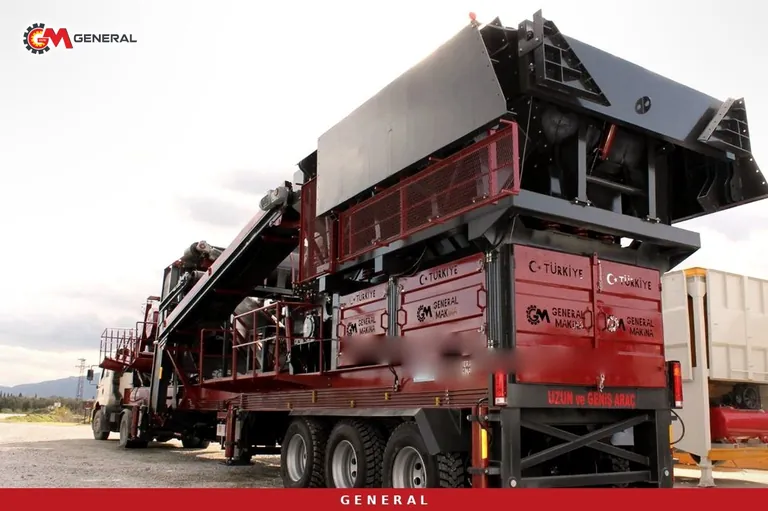
For a contractor building a port, quay, coastal road or breakwater on Somalia's Indian Ocean or Gulf of Aden shoreline, the nearest stone is very often coral rock. It breaks easily, yet from the moment it enters the crusher until it reaches the batching plant it brings problems of its own: its porous structure generates excess fines, it comes off the shore damp and salty, and harder bands can be mixed into it. This article looks at a coral rock crushing and screening plant for an 80-150 TPH target from a field engineer's point of view: how the material behaves, which products coastal works need, the real models that fit this range, the salt and washing decision, how to protect the machine in a marine climate and how to prepare the route from port to site. We give no information on the scope, volume or schedule of any specific port or public project; please confirm those details in the specifications of the relevant authority.
How coral rock behaves inside a crusher
Young coral reef limestones and calcite-cemented dune sandstones are common along the Somali coastline. Geologically both are carbonate rocks, lighter and more open-textured than a dense limestone. For crushing design this has three consequences.
Porosity, fines and water absorption
Porous stone does not simply split to the intended size under impact; its cell walls crumble and produce dust and sand-sized material as well. At the same tonnage the 0-5 mm fraction therefore grows noticeably compared with a dense limestone. These fines can be sold as manufactured sand, but the screen layout must allow for them from the start. Coral-derived aggregate also absorbs a lot of water, which matters for concrete mix design and for compaction water in road bases. Absorption and strength values should not be stated with certainty until a quarry sample has been tested in a laboratory.
Hard bands and foreign material
Some coastal quarries contain harder layers of calcite-cemented beach rock or fragments of crystalline stone carried down from inland between the coral limestone. Where rubble from old harbour structures is processed, scrap steel can enter the feed. Both situations decide the crusher type and the wear-part metallurgy. Strength and abrasion tests on a few quarry samples are the cheapest way to avoid investing in the wrong crusher.
What coastal works expect from a coral rock line
Coastal projects never ask the crusher for a single product, and each product has its own quality criteria. Fixing the product list against the specification before ordering is the basis for choosing the screen and the crusher.
- Breakwaters and shore protection: the core fill is often built from quarry run and may not need crushing. Filter and transition layers require a defined grading, which is produced by crushing and screening. Armour units are selected at the quarry, not made in the crusher, and the specification decides whether coral rock is acceptable for that role.
- Port yards and coastal roads: well-graded crushed material for sub-base and base courses; here surplus fines are not a problem and are often an advantage.
- Quay walls and structural concrete: clean, desalinated, closely graded aggregate and manufactured sand. With coral rock this is the hardest product to make.
- Fill and drainage: separated coarse and fine material; high volumes but a low quality threshold.
The decision rests on one question: what share of the plant's total tonnage will be concrete aggregate? The lower the share, the more a dry crushing and screening plant is enough; the higher it gets, the more a washing stage becomes unavoidable.
Four configurations that fit the 80-150 TPH range
Because coral rock is low in abrasion, our first choice of main crusher is an impactor: impact crushing gives a high reduction ratio and cubical grains in this stone while wear-part consumption stays reasonable. The table below lists the models that cover the target range, using the catalogue values from our product pages.
| Configuration | Crusher | Capacity (t/h) | Max. feed (mm) | Screen | Power | Weight (kg) |
|---|---|---|---|---|---|---|
| General 800 (wheeled) | PDK 1280 primary impactor | 80-150 | 600 | 1300×4000 mm, 3 decks | 450 kVA | 35,000 |
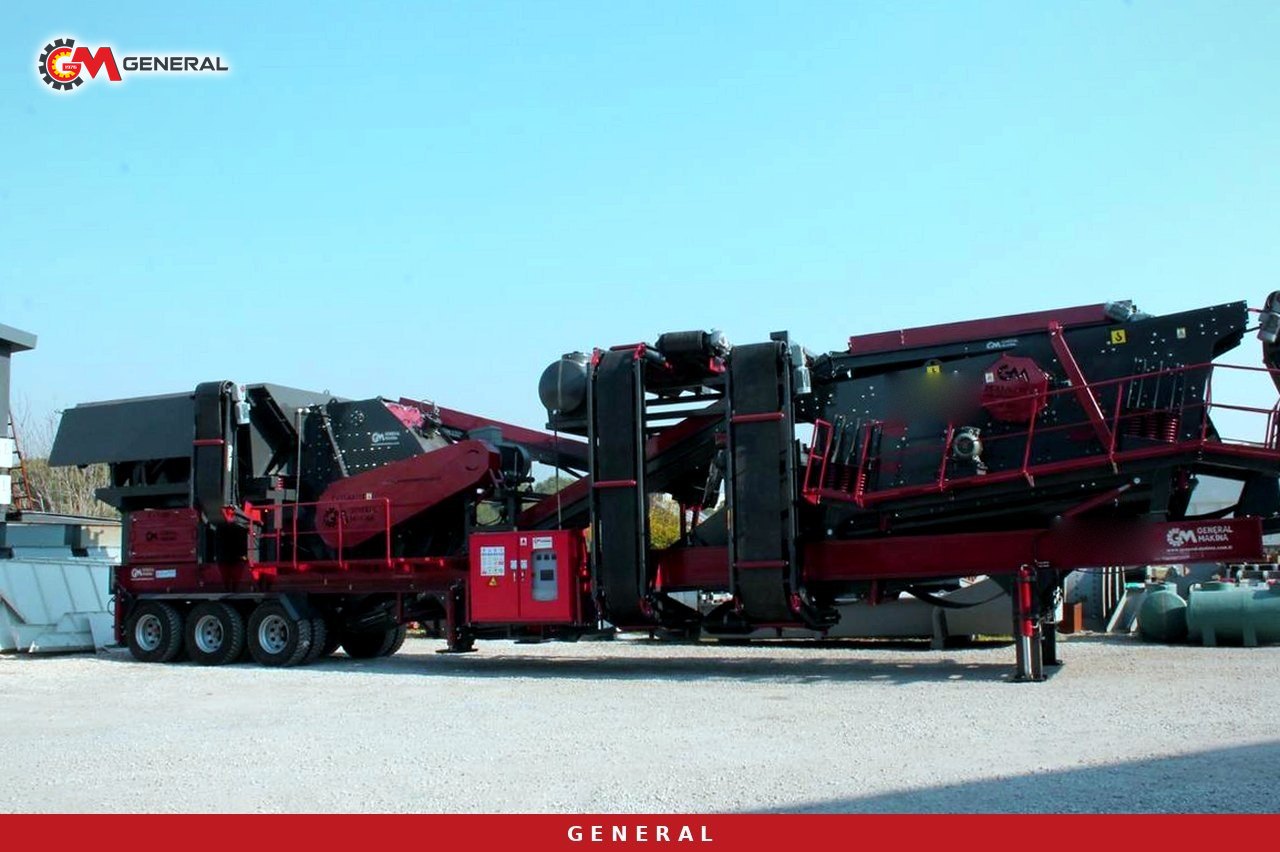
| GM 100 (tracked) | GNR-01 impactor, 160 kW | 100-180 | 600 | 1500×5500 mm, 3 decks | 450 kVA | 42,000 |
| GNR 90 + M-DMK 01 (two towed units) | GNRK 90 jaw + secondary impactor (160 kW) | 70-180 / 120-180 | / 350 | Separate screen needed | — | 25,000 + 32,000 |
| General 640 (wheeled) | GPJ 60 jaw + GNR 50 impactor | 60-100 | 500 | 1200×4000 mm, 3 decks | 300 kVA (optional) | 38,000 |
Main recommendation: General 800
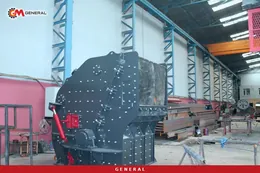
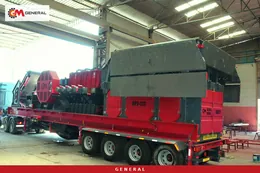
The model that matches the target range exactly is the General 800. Its PDK 1280 primary impactor reduces feed of up to 600 mm to a cubical product in a single stage, and the 3-deck screen separates 0-5, 5-12, 12-19 and 19-40 mm fractions. On this model the high fines yield of coral rock turns into an advantage: 0-5 mm is stockpiled as manufactured sand while the coarser fractions go to road and filter works. Its 35,000 kg weight and single chassis make it easy to tow from one site to the next along the coast.
Jobs that walk along the shore: GM 100
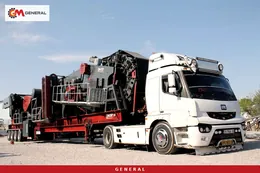
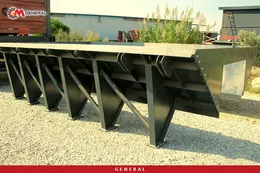
On linear projects such as a coastal road the plant changes position often. The GM 100 is track-mounted, moves under its own power and needs no ground preparation. Its 1000×1500 mm grizzly pre-screen removes sand and shell debris mixed into coral rubble before it reaches the crusher, which cuts unnecessary fines in porous stone. With a range of 100-180 t/h it works comfortably in the upper half of the target band.
Quarries at risk of hard bands: two towed units
If sample tests show hard beach rock or crystalline inclusions, it is safer to leave the primary stage to a jaw. The GNR 90 towed jaw unit (70-180 t/h) is set up together with the M-DMK 01 secondary impactor (120-180 t/h); the primary's 0-250 mm output stays within the secondary's 350 mm feed limit. A separate screen is added in this layout and the actual line capacity is fixed in the project according to the stone. The General 640 is an option for a smaller start below 100 t/h. The whole wheeled family is on our wheeled mobile crushing plants page.
The salt question: washing concrete aggregate
Coral rock from the shoreline carries sea salts in its pores. For road bases and fill this rarely causes trouble, but in reinforced concrete chloride is the main driver of rebar corrosion. If concrete aggregate is to be produced, the chloride and sulphate contents should therefore be measured in a laboratory against the limits of the concrete standard used on the project.
If the results exceed the limits, the crushed aggregate has to be washed with fresh water. For this the GNR YM1650 can be added at the end of the line: a 120-180 t/h unit that accepts 0-100 mm feed and carries a sand hopper, washing screen and screw washer on a single 21,000 kg chassis. If only the concrete fractions need washing, the 60-100 t/h GNR YM1240 may be enough. Fresh water is limited on the coast, so the water source, settling pond and recovery plan must be decided together with the washing decision. You can compare the options on the sand washing and screening plants page.
Protecting the machine in a marine climate
When salty, humid air meets hot, sandy wind, the parts of a crushing plant that suffer most are often not the crusher itself but the electrical cabinet, the bearing housings and the steel surfaces. The measures below are not model standards but options that can be specified per project at the order stage.
- A paint system with a coating thickness suited to marine atmospheres, and corrosion-resistant finishes on bolted joints.
- Dust- and moisture-tight sealing of the electrical cabinet and motor terminal boxes, with the cabinet placed on the side sheltered from sun and wind.
- Frequent greasing of bearings and housings; rinsing salt deposits off with fresh water at the end of each shift.
- Coral dust is fine and white: water sprays at the feed and transfer points, belt covers where needed. Dust suppression water is planned from the same source as washing water.
- More frequent servicing of generator air filters because of sandy wind; the catalogue power for the General 800 and GM 100 is 450 kVA.
On the wear side, high-chrome blow bars give long life in clean carbonate stone such as coral limestone. If scrap steel from demolished structures may enter the feed, manganese or martensitic blow bars are the safer choice. For general impactor settings in limestone see our guide to mobile crushers for limestone.
From Somali ports to site: preparation list
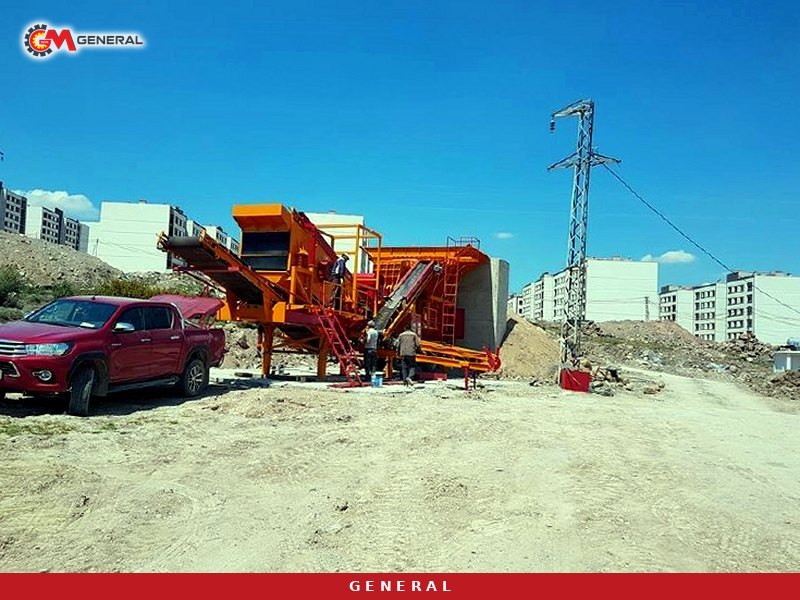
The machine arrives by sea at a port such as Mogadishu, Berbera, Kismayo or Bosaso and is towed to site by road. Settling the points below before ordering is the way to avoid surprises on installation day.
- Strength, abrasion, water absorption, chloride and sulphate test results for the quarry sample.
- Product list and the hourly share of each product; the proportion of concrete aggregate in the total.
- Bridges, passes and bends on the route between port and site; the transport dimensions of the General 800 are 3600×15500×4500 mm.
- Bearing capacity of the installation area, prevailing wind direction and stockpile locations.
- Power source: if there is no grid, the generator and fuel logistics.
- Fresh water source and, if washing is planned, space for a slurry pond.
- An initial spare package of wear parts and consumables.
Our plants carry CE and ISO 9001 certification and are covered by a 1-year warranty, excluding wear parts.
Frequently asked questions
Can coral rock produce aggregate for quay concrete?
Yes, on two conditions: the strength and water absorption of the aggregate must meet the specification, and its chloride and sulphate contents must stay within the limits of the concrete standard. If salt is high, a washing unit is added to the line. The decision follows the laboratory results.
Why do you recommend an impactor rather than a jaw crusher?
Coral rock is low in abrasion; an impactor gives high reduction and cubical grains in a single stage in this stone, and wear stays acceptable. If the samples reveal hard, siliceous bands, the two-unit layout with a jaw primary is preferred.
Is a crushing plant necessary for breakwater work?
The core fill is often quarry run and armour stone is selected at the quarry. Filter and transition layers, port yard material and road material, however, require crushing and screening. The project specification determines which layer is built with which material.
What determines price and delivery time?
The chosen configuration, whether a washing unit is included, the generator, corrosion measures, the spare parts package and the shipping method. Once you send the stone type, product list and target tonnage, a project-specific quotation is prepared.
Conclusion
For a line processing coral rock on the Somali coast, the right starting point is not the machine but the sample. If tests show a clean, low-abrasion carbonate stone, an impact line with the General 800 or GM 100 is enough; with hard bands a two-unit layout with a jaw primary takes over, and if concrete aggregate is salty a washing unit is added. Share your sample results and product list through our contact page and our engineers will prepare the right configuration and quotation for your project.
Definitions of technical terms: Glossary