EN — English
 TR — Türkçe
 DE — Deutsch
 RU — Русский
 FR — Français
 ES — Español
 AR — العربية
 SR — Српски

Site-to-Site Mobile Crusher Transport and Logistics Planning
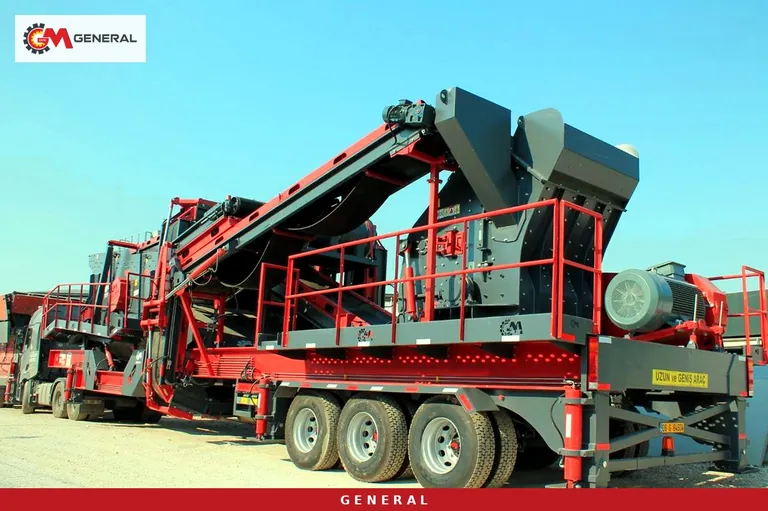
Moving a mobile crushing and screening plant to a new site is more than backing a tractor unit up to the gate and driving off. Every day between the last truck loaded at the old site and the first truck filled at the new one means aggregate that is not produced and a crew that is waiting. This article treats a site-to-site move as a small project in its own right: how many transport units each machine layout creates, how to leave the old site, in which order the convoy should travel, what has to be ready at the new site in advance, and how to calculate what the move really costs. Dimensions and weights are taken from the technical tables on our product pages. Legal limits for dimensions, axle loads and permits differ from country to country, so confirm them with the local traffic and highway authority along the route.
Plan the move as a four-phase job
A relocation schedule written as a single "transport day" almost always slips. The reliable approach is to split the work into four phases, each with an owner and a clear completion criterion:
- Demobilisation: stopping the plant, emptying the line, and folding belts and platforms into transport position. Done when every unit is ready to be coupled to a tractor.
- Road transport: loading, route, permits and unloading. Done when the last vehicle has been unloaded at the new site.
- Mobilisation: positioning, levelling, power and intermediate conveyor connections. Done when the plant runs empty without faults.
- Setting and first production: output setting, screen mesh check, sampling and first stockpile. Done when the first specification-compliant fraction is in stock.
Each phase needs an owner: demobilisation and mobilisation belong to the site crew, transport to the haulier, and setting to the production manager. Responsibility usually becomes blurred where phases meet. If a vehicle arrives and the crane or loader is not ready, and the contract does not say who pays for waiting time, the argument starts on site. Write the phase handovers (vehicle delivery time, unloading equipment, acceptance signature) into the transport contract as explicit clauses.
The machine layout decides how many transport units you move
The first line of any logistics plan is "how many vehicles?", and that question is really answered at the purchasing stage. A plant that carries all crushing and screening equipment on one chassis leaves with one tractor unit. A modular line that splits primary, secondary and screening onto separate chassis means several vehicles, several loading operations and conveyor connections on site at every move. In return, the modular line gives the flexibility to run each unit separately and to add or remove a crushing stage.
The table below compares several layouts that contractors who change sites frequently tend to weigh up, seen from a transport point of view. Values come from the technical tables on the relevant product pages; unpublished cells are marked "—" and should be requested in writing with the quotation.
| Model / layout | Transport units | Weight | Transport dimensions | Power / drive | Capacity |
|---|---|---|---|---|---|
| General 950 (jaw + impact, single chassis) | 1 | 70,000 kg | 4130 × 20350 × 4500 mm | 600 kVA generator | 120-180 t/h |
| Mobil 90 (crushing + washing-screening, single chassis, 3 axles) | 1 | 45,000 kg | 3600 × 15700 × 4500 mm | 350 kVA generator | 90-150 t/h |
| GNR-MC110 (twin chassis) | 2 | 55,000 kg + 55,000 kg | 3000 × 13500 mm / 4200 × 18300 mm | 750 kVA generator | 200-300 t/h |
| GNR 90 portable primary jaw unit | 1 | 25,000 kg | — | — | 70-180 t/h |
| M-DMK 01 portable secondary impact unit | 1 | 32,000 kg | — | 160 kW motor | 120-180 t/h |
| GNR ME1650 mobile dry screening plant | 1 | 18,000 kg | 3800 × 10800 × 4500 mm | Generator or mains | 120-180 t/h |
| GNR YM1650 mobile washing-screening plant | 1 | 21,000 kg | 4200 × 13600 × 4500 mm | Mains or generator | 120-180 t/h |
Two planning conclusions follow. First, the more weight is concentrated on one vehicle, the heavier the vehicle class. The 70,000 kg General 950 travels in one trip, but it needs a heavy-haul trailer and tractor and will very likely fall under an abnormal-load permit, while the 18,000 kg GNR ME1650 can be moved by a much wider pool of vehicles. Second, a modular line increases the number of vehicles even if its total output is similar. A line built from a GNR 90 primary, an M-DMK 01 secondary and a GNR ME1650 screening unit means three separate units plus link conveyors; each is loaded, unloaded and aligned on site separately. Which vehicle, axle configuration and permit class is required is decided by the traffic authority on the route; work through the figures in the table together with your haulier and the competent authority.
How much this difference is worth depends on how often you move. For a road contractor who changes site every month, single-chassis mobile crushing plants cut the repeated vehicle and set-up workload. For an operator who stays on one site for long periods and occasionally adds a stage, portable crusher units need more vehicles in transport but keep the line configuration flexible. The GNR-MC110 sits in between: it is split across two chassis, but because the primary chassis can run on its own, coarse crushing can start before the second vehicle arrives.
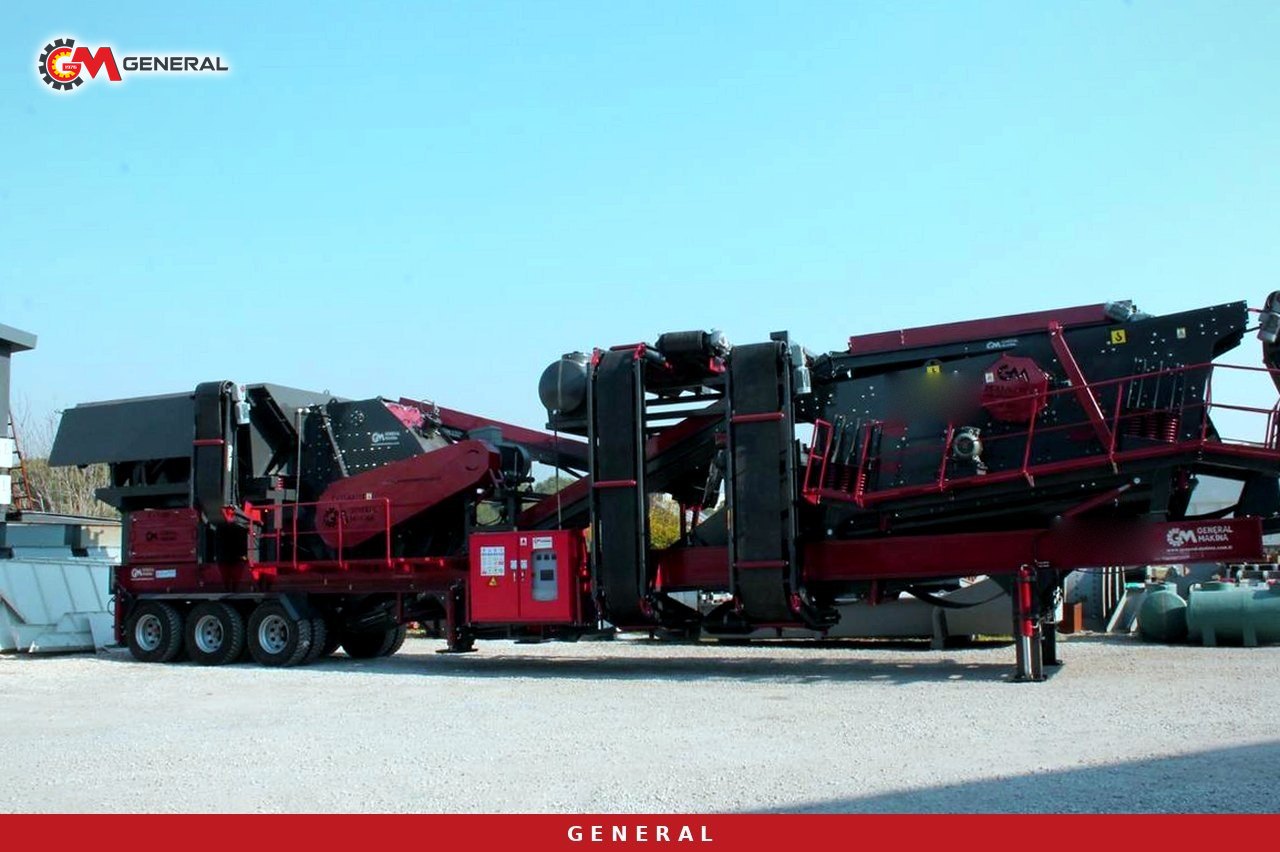
Leaving the old site: demobilisation checklist
Mistakes made on dismantling day are paid for on the first day at the new site. The site manager should complete the following list as a signed form before the plant stops:
- Are the hopper, feeder, crushing chamber and belts completely empty? Material left inside changes both transport weight and centre of gravity.
- Has caked material been cleaned off screen decks and the chassis? Dried clay falls off on the road and causes trouble during setting at the new site.
- Have wear parts (jaw plates, blow bars, screen meshes) been measured? Replacing parts close to their limit during set-up at the new site turns two shutdowns into one; send the new parts with the same convoy.
- Are folding conveyors, platform handrails and hydraulic legs locked in transport position? Have pins and safety chains been checked one by one?
- Have control panel cable connections, the remote control and small removable parts been labelled and packed in a separate crate?
- Is there any oil or fuel leak on the generator? What does the haulier require regarding fuel level during transport?
- Are the chassis tyres, brakes and lights roadworthy? Agree in advance with the haulier who carries out this check.
- Have remaining stockpiles, delivery records and site handback conditions at the old site been closed out?
Convoy order, loading and route planning
When more than one unit is moved, the shipping order must match the set-up order at the new site. The rule is simple: the unit that sits first in the material flow is the first to be unloaded. Primary first, then secondary, then the screening unit and stockpile conveyors. That way, whenever a vehicle arrives, the unit ahead of it is already in place and alignment is done in one go. The reverse order means setting a unit down at the side and lifting it a second time.
Three documents are prepared together for the route: a loading list with transport dimensions and weight of every unit, a route survey and the permit file. Limits for height, width, axle load and gross weight, and whether an abnormal-load permit is required, vary by country and road class. Do not take numerical limits from this article or from another country's practice; have them confirmed by the local traffic and highway authority on the route. In cross-border moves each country is checked separately, and customs paperwork is prepared with the machine serial numbers.
Ancillary equipment that should travel with the main machines is often forgotten: a wheel loader or excavator, a crane where needed, link conveyors, cable reels, spare wear parts, oil and grease. If any one of these arrives late, production does not start even though the main machine is ready. For tracked machines, add the low-loader to the convoy plan; a tracked crusher travels between sites on a trailer, not on its own tracks.
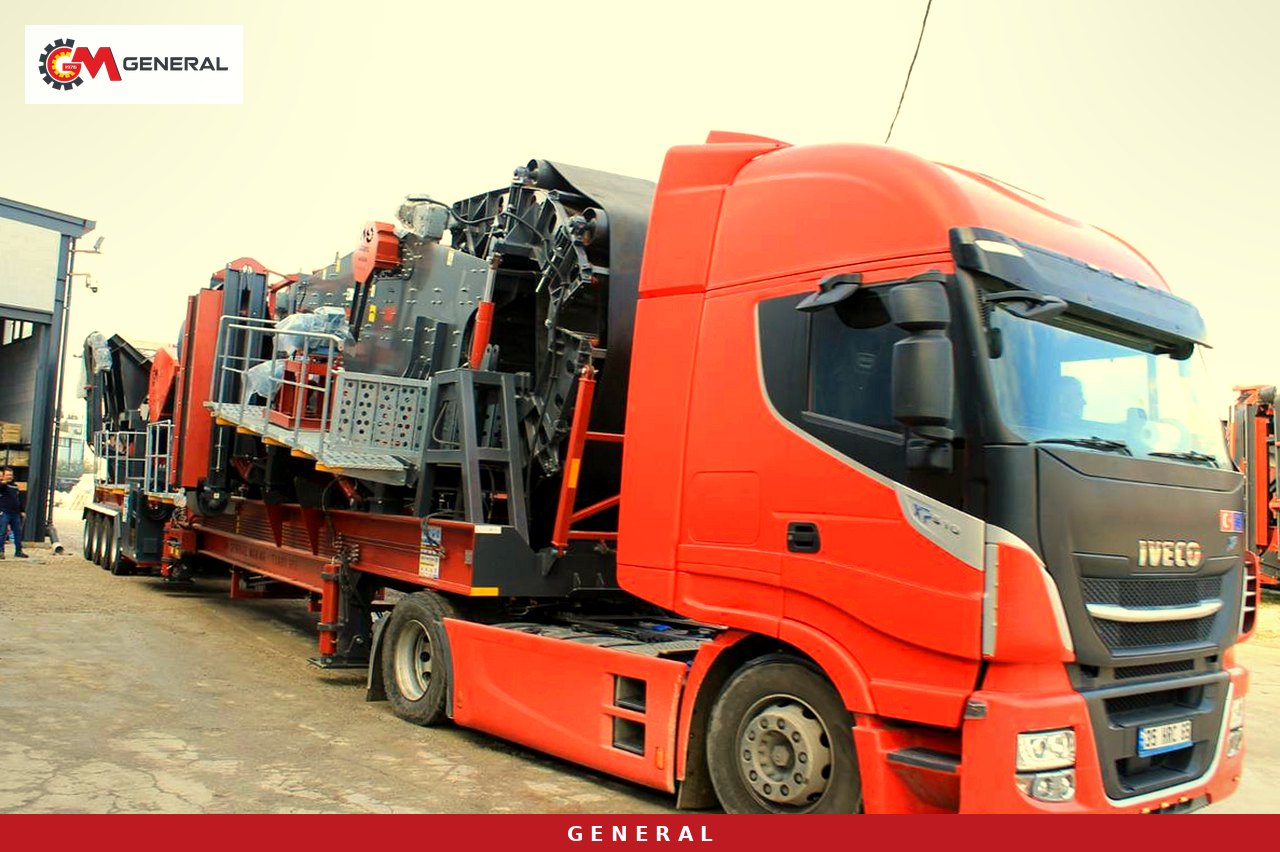
Mobilisation at the new site: what must be ready before the vehicles arrive
The most expensive item at the new site is a loaded vehicle standing idle. That is why mobilisation begins before the first vehicle leaves. An advance team sent to the site should close out four topics:
- Layout sketch: mark the position of each unit, the feed direction and the stockpile areas, plus a turning area where the tractor can reverse the plant into position.
- Working platform: the area where the units will stand must be levelled, compacted and drained.
- Power: does the plant carry its own generator, will it be connected to the grid, or will an external generator be brought in? The General 950 table lists a 600 kVA generator and the Mobil 90 table a 350 kVA generator; the GNR ME1650 and GNR YM1650 can run on mains or a generator. If the grid is chosen, the connection application and panel installation can become the longest item in the schedule.
- Water: if a washing plant is moved (such as the Mobil 90 or GNR YM1650), the water source, settling pond and wastewater arrangement must be ready before set-up. The dry-screening GNR ME1650 does not have this item.
If the material changes, the setting changes too. If limestone was crushed at the old site and clayey run-of-quarry or river gravel is expected at the new one, review screen mesh apertures and the need for washing before the move. Running clayey material through a dry screening line means blinded screens and off-specification product; in that case mobile washing and screening plants should be considered at the planning stage.
Calculate the production gap and the cost of the move
The plant does not produce while it is being moved, but customer deliveries often continue. The gap is bridged with buffer stock:
Buffer stock = daily dispatch × (demobilisation + transport + set-up + setting days)
Hypothetical example, not a real value: an operator dispatching 600 tonnes per day who expects the move to take 5 days in total should have at least 3000 tonnes of saleable product in stock before leaving. Stock is calculated per fraction; even if total tonnage is sufficient, running out of a single fraction stops deliveries.
Broken down into items, the cost of a move becomes comparable across different machine layouts:
Relocation cost = (number of vehicles × trip rate) + (crane and loader hours × hourly rate) + escort and permit costs + (crew days × daily crew cost) + (non-productive days × daily gross margin lost)
The last item is often the largest and is directly affected by machine architecture. A single-chassis plant reduces the number of vehicles and link-conveyor connections, shrinking both the first and the last item; a modular line offers flexibility in exchange for more vehicles and a longer set-up. If you move several times a year, multiply the formula by the annual number of moves and make the machine choice with that total in view. To see the per-tonne effect of energy and wear separately, use the operating cost calculator.
Frequently asked questions
Which permits are needed for the move?
That depends on the size and weight of the load and the countries crossed. Take transport dimensions and weights from the quotation documents and pass them to your haulier; confirm abnormal-load permits, escort vehicles and time-of-day restrictions with the local traffic and highway authority on the route. Processing times vary by authority, so put the permit work at the very start of the schedule.
Is a single-chassis plant or a line built from separate units easier to move?
In terms of vehicle count and set-up labour, a single-chassis plant creates fewer items. Separate units are lighter individually: the GNR 90 primary jaw unit weighs 25,000 kg and the GNR ME1650 screening plant 18,000 kg. The right choice depends on how many times a year you move and how often you change the line configuration.
Can a tracked crusher drive itself between sites?
Tracks are for repositioning within a site. Between sites a tracked machine is also loaded onto a trailer, so a carrier vehicle must be added to the convoy plan.
How long does a move take and what does it cost?
Distance, vehicle count, permit lead time and the readiness of the new site differ on every project, so giving a single duration or amount would be misleading. Enter your own items into the formula above, and ask for transport dimensions and weight in writing in the quotation when selecting the machine.
Conclusion
A site-to-site move is a logistics chain that starts with machine selection and ends with buffer stock. An operator who knows the number of transport units, the power source and the set-up order from the outset turns relocation into a predictable line in the schedule. General Makina has been building crushing and screening plants in Izmir since 1976; to define the layout that fits your moving frequency and your material, request a quotation through our contact page.
Definitions of technical terms: Glossary