EN — English
 TR — Türkçe
 DE — Deutsch
 RU — Русский
 FR — Français
 ES — Español
 AR — العربية
 SR — Српски

Senegal Asphalt & Concrete Aggregate Crushing and Screening Plant 150-250 TPH
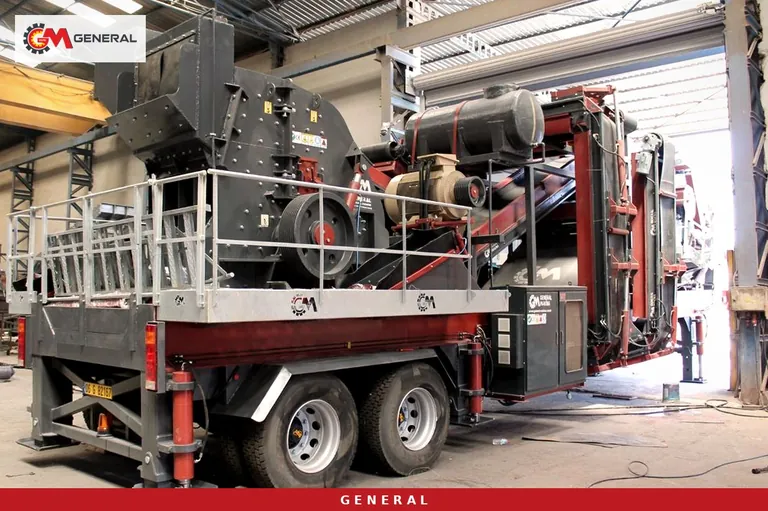
For a contractor holding a road or building contract in Senegal, the aggregate job usually means supplying two customers at once: the cold bins of the site asphalt plant and the aggregate bins of the concrete batching plant. The asphalt plant wants well-shaped, low-dust chippings in narrow size ranges. The batching plant expects coarse aggregate with a continuous grading and sand with little clay or fines. When you build a line that produces both from one quarry at 150-250 TPH, the rock decides the crusher arrangement and the two specifications decide the product split. Below we compare three real configurations from our catalogue data against Senegal's rock sources, harmattan dust and shipment through the port of Dakar.
Asphalt chippings and concrete aggregate: where the two products part ways
In an asphalt wearing course the aggregate is the skeleton that carries the load. Flaky and elongated particles break under the roller, upset the void content of the mix and raise the bitumen demand. That is why flakiness index and particle shape are the first values checked on asphalt chippings. Dust left on the chippings weakens bitumen adhesion and throws off the plant's filler balance. For the surface course the road authority often specifies stone with high abrasion and polishing resistance.
Concrete shifts the criteria. Shape still matters, since flaky stone needs more water and cement for the same workability. On the concrete side, though, the usual problem is fines and clay. Clay weakens the bond between cement paste and particle, and strength drops. The batching plant also wants a stable grading in the 0-5 mm sand; sand that arrives coarse one day and fine the next keeps the plant operator busy adjusting water.
These differences go straight into the plant design. For asphalt, crusher choice targets shape and screen choice targets narrow fractions. For concrete, pre-screening removes soil and clay before the crusher, and sand washing may be needed. Confirm the applicable limits in the project's technical specification and with the supervising engineer. The recommendations below become firm once you have those values.
Rock sources in Senegal: basalt, limestone and crystalline rock in the east
In the west of the country, on the Cap-Vert peninsula and around Thiès, volcanic basalt and sedimentary limestone quarries are known sources. Moving east and south-east towards Kédougou, granite and other crystalline rocks dominate. Sand and gravel deposits along the coast and in river valleys are also worked. In practice this variety means that the machine that suits a basalt quarry near Dakar can be more than a limestone quarry at Thiès needs, and too light for a granite site in the east.
Basalt is the stone sought for asphalt wearing courses: hard and resistant to polishing, but it consumes crusher metal fast. Limestone breaks easily and cubically in an impact crusher and is economical for concrete aggregate and base course. Whether it can go into the wearing course depends on the specification's polishing requirement. No crusher type should be fixed before a sample from your quarry has been tested for Los Angeles abrasion loss, compressive strength and silica content. We do not guess the analysis of a specific quarry; once the test result arrives, we recommend the configuration that fits it.
Three line options for 150-250 TPH
All figures in the table below are technical data from our product pages. Cells without a published value are marked "—". For the full range see the wheeled mobile crushing plants category.
| Model | Capacity | Max. feed | Crushers | Screen | Power |
|---|---|---|---|---|---|
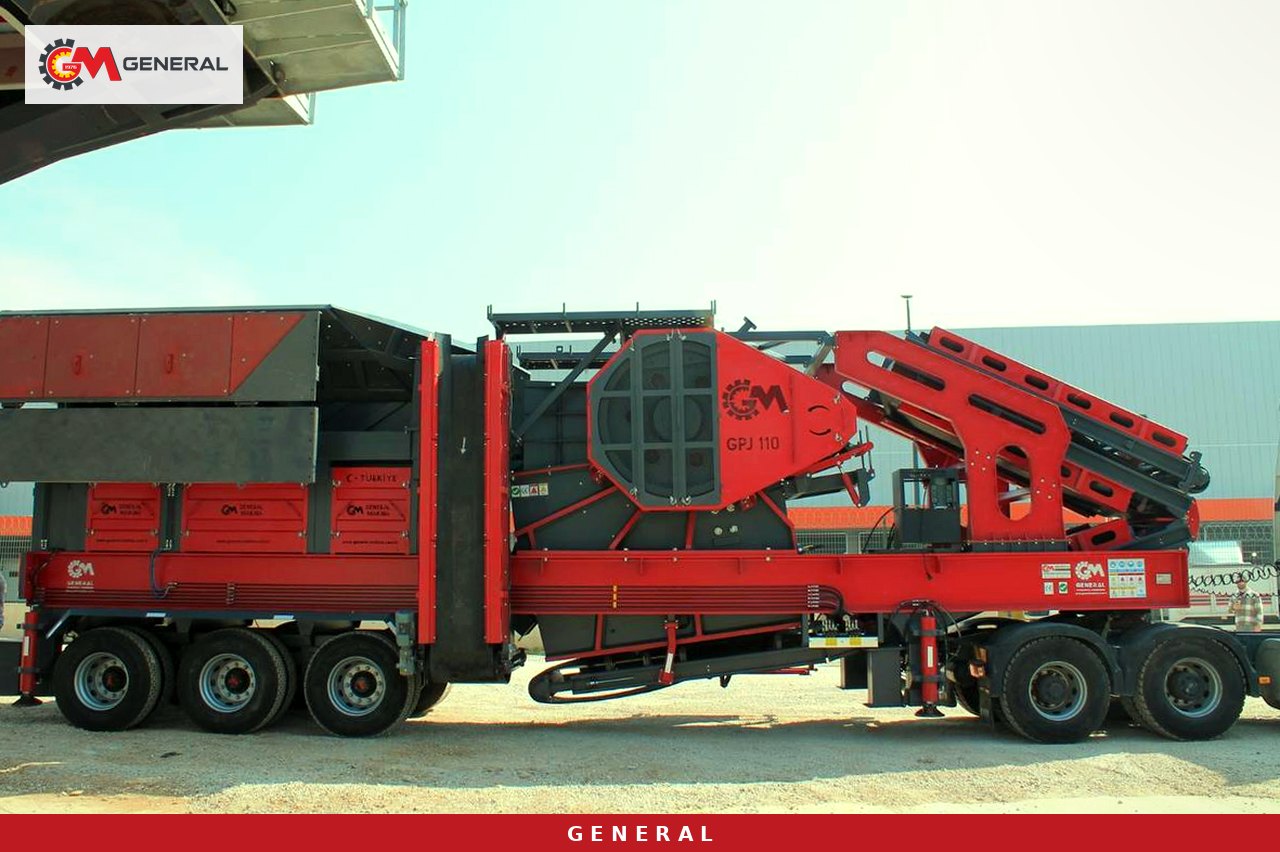
| GNR-MC110 (twin chassis) | 200-300 t/h | 900 mm | GPJ 110 jaw + DMK03 impact | 2000×6000 mm, 4 decks | 750 kVA generator |
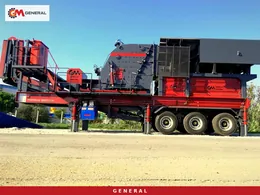
| General 02 (single chassis) | 250-300 t/h | 1000 mm | GPS 1413 impact | 2000×5000 mm, 4 decks | 660 kVA generator |
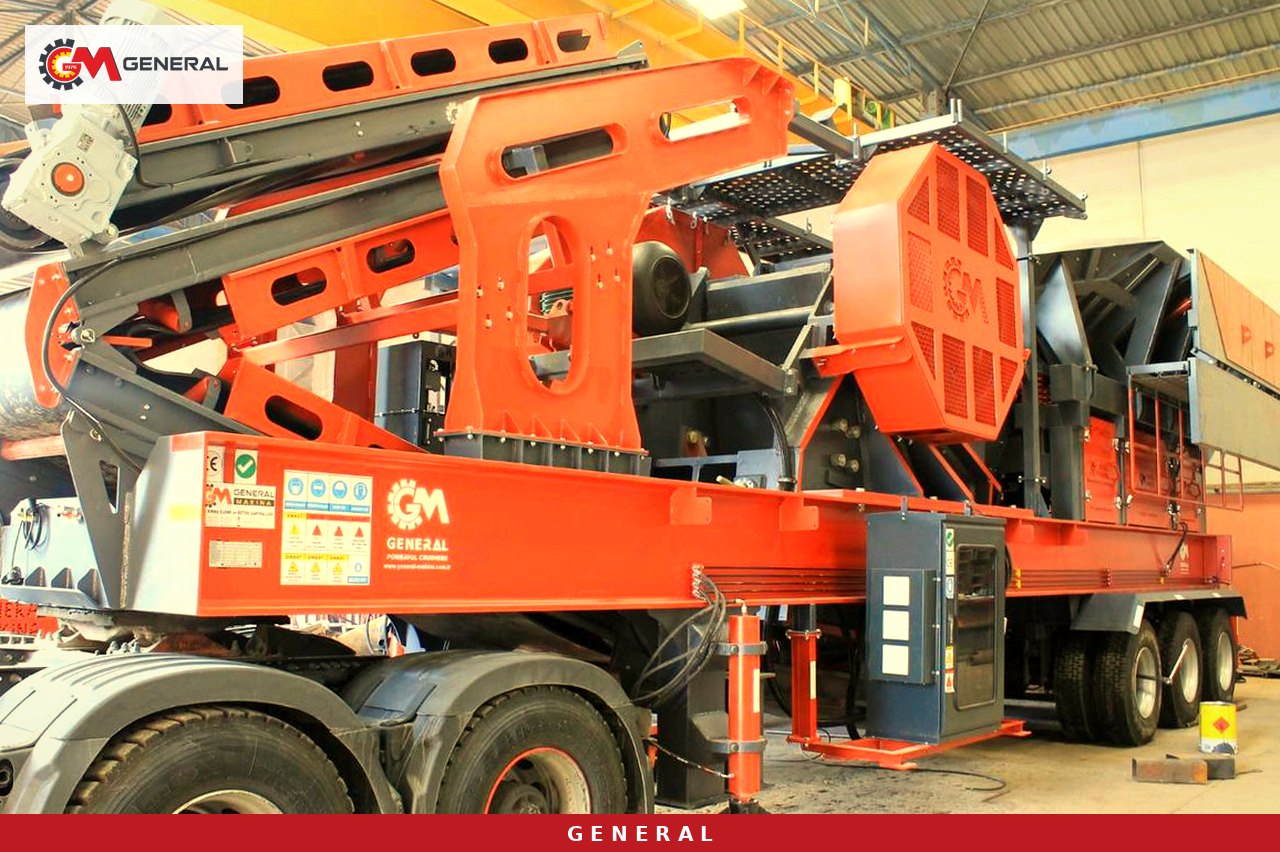
| General 03 (4-axle chassis) | 250-375 t/h | 900 mm | GPS 1415 impact | 2400×5000 mm, 4 decks | 750 kVA generator |
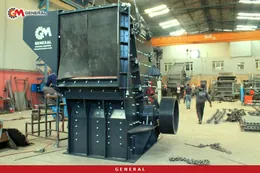
| GNR K110 cubicizer (added stage) | 160-250 t/h | 210 mm | Shaping rotor 1550×1800 mm | — | 160 kW motor |
| Mobile pre-screen DMK (added stage) | 40-300 t/h | 0-100 mm | Impactor with two crushing chambers | Integrated vibrating pre-screen | — |
GNR-MC110 for a basalt quarry
Meeting hard basalt with a jaw crusher at the first stage keeps metal consumption reasonable. GNR-MC110 carries the GPJ 110 jaw primary and the DMK03 impact secondary on two separate chassis of 55,000 kg each. Because the primary group can run alone, it can be set up first when the quarry opens and build a stockpile. The 2000×6000 mm four-deck screen delivers 0-5, 5-12, 12-19 and 19-40 mm separately; these four products cover the basic needs of both the asphalt and the concrete side. The impact secondary gives cubical product in basalt, and in return blow bars are changed more often than in limestone. Allow for this when planning spare parts stock.
General 02 or General 03 for a limestone quarry
In a quarry fed with limestone, as around Thiès, a primary impact crusher gives high reduction and cubical particles in a single stage. General 02 runs at 250-300 t/h with the GPS 1413 impact crusher and a 1000 mm feed opening, weighing 76,000 kg on one chassis. If you will run near the top of the target range or raise tonnage later, General 03 with 250-375 t/h and a 2400×5000 mm screen is the next step up. Limestone is efficient for concrete aggregate and base course; check beforehand whether the specification allows it for wearing course chippings.
A shaping stage for asphalt chippings
If the flakiness limit on the asphalt side is tight, a third stage is added behind the main line. The GNR K110 cubicizer accepts material up to 210 mm and, at 160-250 t/h, reprocesses the 12-19 and 19-40 mm fractions into cubical shape. Where a finer end product range is needed, the mobile pre-screen DMK reduces 0-100 mm feed to 0-30 mm product; its integrated pre-screen lets ready-sized fines bypass the crusher, so unnecessary crushing and wear go down. Which added stage you need is decided by the flakiness value measured on a sample from the main line.
Product split at the stockyard
In a quarry supplying two customers the real problem is not hourly tonnage but imbalance between fractions. On a day the asphalt plant runs, 5-12 mm can disappear fast; in a week of heavy concrete pours it is 12-19 and 19-40 mm. The crusher produces one curve. You bring that curve closer to consumption through screen mesh selection, crusher setting and, when needed, recirculating surplus fractions for re-crushing.
Calculate hourly output per fraction like this: fraction tonnage (t/h) = line feed (t/h) × that fraction's share in the screen analysis. Hypothetical example: at 200 t/h feed, if a trial crush shows 30% in 0-5 mm, the line makes 60 tonnes of sand per hour. If the batching plant uses less, the surplus goes to the asphalt plant or to stock; if it uses more, the shift plan changes. Do this for every product and compare it with the weekly consumption table of both sites.
Do not mix asphalt and concrete products in the stockyard. Even at the same size, keeping dedusted chippings for asphalt in a separate pile makes filler control at the plant easier. Leave concrete dividing walls or enough distance between piles, and give the loader operator written instructions on which pile goes to which plant.
Harmattan dust, coastal humidity and running on generators
In the dry season the harmattan wind from the Sahara carries fine dust. It clogs generator and engine air filters quickly, so the filter inspection interval should be shortened in line with the manufacturer's advice and spare filter elements kept on site. Water-spray dust suppression at crushing and screening points and covers at conveyor transfers are measures that can be chosen per project; they also help product quality because they cut dust on the asphalt chippings.
In the rainy season the picture flips: the quarry floor turns to mud, the feed gets wet and clay sticks to the crusher and screen. A grizzly pre-screen that takes soil out before the crusher makes the difference in this period. If sand cannot meet the specification on the concrete side, it is easier to plan a washing unit at the start than to add one mid-season.
Quarries that cannot connect to the grid run the line on generators. The generator ratings in the table cover the main line; include the power demand of units added later, such as a cubicizer or extra conveyors, when sizing the generator. Near the coast, salty and humid air can corrode electrical cabinets, so regular checks of cabinet seals and cable glands belong in the maintenance plan.
From the port of Dakar to the quarry: shipment and site preparation
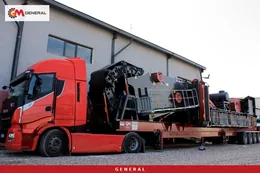
Machines coming from Türkiye are mostly discharged at the port of Dakar and towed to the quarry by road. Wheeled chassis are designed for this, but bridge load limits, tight junctions and overhead obstacles on the route must be checked beforehand. Because the weight of the twin-chassis GNR-MC110 is split over two platforms, it eases the single heavy load problem. For single-chassis models, total weight and transport dimensions decide the route permit.
Ground levelling and compaction at the installation point must be ready before the machine arrives. If the points where the support legs sit are not firm, screen vibration loads the chassis. Complete this list before shipment:
- Test results of the quarry sample for Los Angeles abrasion, compressive strength and silica content
- Fraction limits plus flakiness and fines values from the asphalt and concrete specifications
- Weekly consumption of both plants and the target hourly capacity
- Largest block size and an observation of soil and clay content in the feed
- Grid or generator, and the power demand of added units
- Route from the port of Dakar to the quarry and the state of site preparation
A move to a fixed installation should also stay on the table. If the quarry will work in the same place for years and tonnage will grow, fixed crushing plants may suit better in the long run. For a comparison of crusher types in hard rock, see our article on choosing a mobile crushing plant for basalt and granite.
Frequently asked questions
Can one line produce both asphalt and concrete aggregate?
Yes. A four-deck screen delivers 0-5, 5-12, 12-19 and 19-40 mm separately. If the flakiness requirement on the asphalt side is tight, a cubicizer or an extra impact stage is added; if sand is not clean enough for concrete, washing is added.
How suitable is an impact secondary for basalt?
An impact secondary gives cubical product in basalt, but blow bars are changed more often. We assess wear part consumption together with the sample test result and plan spare parts stock accordingly.
What warranty and certificates apply?
Our machines carry ISO 9001 and CE certificates. The warranty is 1 year, excluding wear parts. General Makina has been manufacturing in İzmir since 1976.
What determines the price and delivery time?
The chosen model, added stages (cubicizer, washing), generator, number of conveyors and shipping method set the price. Delivery time depends on the production schedule at the time of order; both are confirmed in the quotation.
Making the decision
If you will produce asphalt and concrete aggregate from the same quarry in Senegal, have the rock tested first, then put the two specifications side by side. GNR-MC110 with its jaw primary is the starting point for basalt, General 02 or General 03 for limestone; whether a cubicizer or the pre-screen DMK is added for chipping shape follows from the sample result. Send us the test report, specification values and target tonnage through our contact pageand we will size the line for your quarry together.
Definitions of technical terms: Glossary