EN — English
 TR — Türkçe
 DE — Deutsch
 RU — Русский
 FR — Français
 ES — Español
 AR — العربية
 SR — Српски

Angola Concrete Aggregate Mobile Washing, Crushing & Screening Plant 100-200 TPH
At an Angolan quarry that supplies a concrete batching plant, the hard part is rarely the strength of the rock. It is the clay stuck to it. Gravel dug from the beds of rivers such as the Kwanza and the Bengo, sand from the coastal belt and the fines from granite quarries on the inland plateau often arrive mixed with red lateritic soil. Run that material over a dry screen and the fractions look right, yet the sand equivalent stays low and the concrete needs more water. On a 100-200 TPH concrete aggregate line, placing the crusher, the washing screen and the screw washer in one flow is therefore the starting point of the design. Below we set out layouts built from real models for the material types found on Angolan sites, along with the water circuit and shipping preparation.
Aggregate sources in Angola and the contamination they carry
River gravel and sand
On the floodplains of the Kwanza, Bengo and Catumbela, rounded gravel and medium-to-coarse sand occur together. The grading usually suits concrete. The trouble is the clay and organic matter brought into the bed during the rainy season. Clay coats the gravel as a thin skin or stays inside the sand as lumps. The skin weakens the bond between cement paste and particle; a lump leaves a weak spot in the concrete. The bed also holds gravel larger than 60 mm, which cannot be used as dug and has to be crushed down to concrete sizes. That is why a jaw crusher in front of the washing line makes sense.
Sand and limestone on the coastal belt
In the coastal basin between Luanda and Benguela, sedimentary rocks such as limestone and sandstone dominate. Sand pits close to the shore can carry a high share of fine sand, and where seawater has reached the deposit, chloride control becomes a separate issue. Washing helps lower chloride, but the limit for reinforced concrete must be read from the project specification and the washed sample retested in a laboratory.
Granite and gneiss quarries on the inland plateau
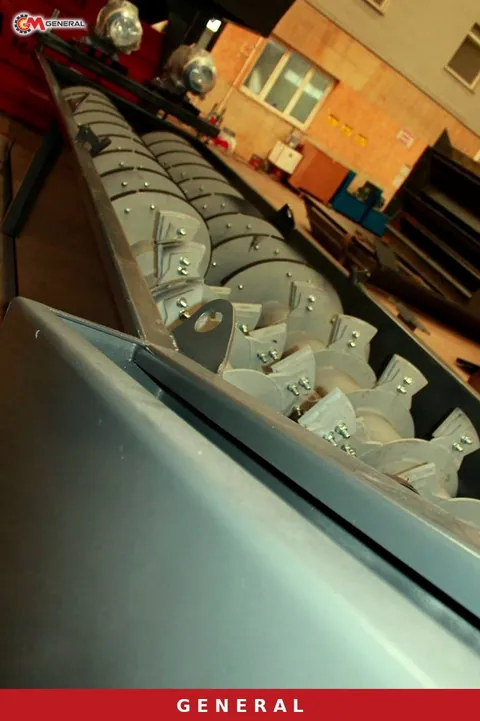
Crystalline basement rocks, granite and gneiss, are common in inland provinces such as Huambo, Malanje and Huíla. The crushed rock itself is sound, but even after stripping, lateritic soil from the upper benches gets into the feed. The 0-5 mm manufactured sand leaving the crusher carries that soil together with crusher dust. The answer is to pass the sand through a screw washer: clay and silt leave with the overflow, clean sand comes off the discharge end.
No flow sheet before the sample is analysed
The size of a washing line depends as much on the fines and clay load as on the target tonnage. For an Angolan pit, preparing the following from representative samples taken at different benches and depths prevents a wrong machine choice from the outset.
- A sieve analysis showing the 0-5, 5-20, 20-60 mm and over-60 mm shares separately; the over-60 mm share tells you whether a crusher is needed.
- Sand Equivalent (SE) and Methylene Blue (MBV) values, which show how much clay there is and how it behaves.
- The largest block size and rock type: granite, gneiss, limestone or rounded river gravel.
- The fractions the batching plant wants and the moisture range it accepts in sand.
- The water source (river, borehole or storage pond) and the area where waste slurry will be placed.
- Whether there is a grid connection on site or the plant will run entirely on a generator.
Sand with a low SE but also a low MBV has a high fines content, yet those fines are mostly inactive silt and crusher dust; a screw washer handles that well. A high MBV means the clay is active, does not disperse easily in water and clings to the grains. On Angola's lateritic soils, this distinction decides whether a log washer goes at the head of the line.
Models that fall within the 100-200 TPH band
No single machine covers the 100-200 TPH range in the title from end to end. Mobil 90which crushes, washes and screens on one chassis, handles the lower half of the band; reaching the upper half takes a second washing unit or a separate crushing line. The figures in the table come from the product pages.
| Unit | Function | Capacity (t/h) | Feed (mm) | Weight (kg) | Power / motor |
|---|---|---|---|---|---|
| Mobil 90 | Jaw crushing, wet screening, twin screw washer | 90-150 | 800 | 45,000 | 350 kVA generator |
| GNR YM1650 | Wet screening and screw washer | 120-180 | 0-100 | 21,000 | Grid or generator |
| GNR YM1240 | Wet screening and screw washer | 60-100 | 0-100 | 18,000 | Grid or generator |
| Log washer | Breaking up hard, plastic clay | 50-250 | 0-200 | — | — |
| Twin screw washer GNR 800 | Sand washing and partial dewatering | 50-250 (series range) | 0-50 | — | 2×11 kW |
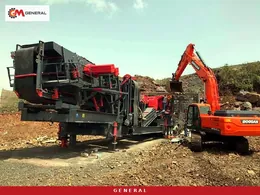
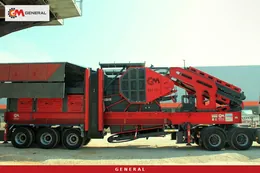
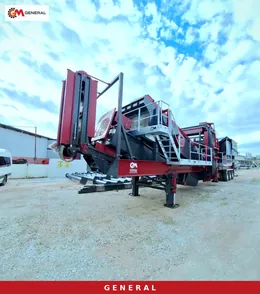
The Mobil 90's 1600×5000 mm, 3/4-deck washing screen and its 600×6000 mm twin screw washer deliver 0-5, 5-20 and 20-60 mm fractions in one pass. Because the GPJ 90 jaw primary takes blocks up to 800 mm, oversize gravel from the riverbed does not have to be hauled to a separate crushing yard. The YM series accepts 0-100 mm feed, so these units run either on pre-sized material or behind a crushing line.
Line layout by material
Low-clay river gravel: one Mobil 90
In a sandy gravel bed where the clay breaks up easily, a Mobil 90 is enough on its own. The loader tips run-of-pit material into the hopper with its vibrating feeder, the GPJ 90 crushes the oversize, the washing screen both cleans and sizes the fractions, and the twin screw washer captures the 0-5 mm sand without losing it to the water. With little over-60 mm material, the jaw runs lightly loaded and output moves toward the top of the 90-150 TPH range. As the oversize share grows, the crusher becomes the limit.
Approaching 200 TPH: Mobil 90 alongside a YM1240
Once demand passes 150 TPH, adding a second washing unit is more flexible than moving to one large line. The Mobil 90 crushes and washes the coarse material on its own line, while the pit's natural 0-100 mm sand and gravel goes to a GNR YM1240 with a separate loader. The catalogue ranges of the two units add up to 150-250 TPH. When one is under maintenance the other keeps producing, which is the practical way to avoid stopping the batching plant in a country where spare parts arrive by sea.
Cleaning manufactured sand at a granite quarry: YM1650 behind the crushing line
At inland granite and gneiss quarries, the crushing is done by a wheeled line carrying a jaw primary and a cone or impact secondary; the model is chosen from the wheeled mobile crushing and screening plants according to how abrasive the rock is. If the 0-5 and 5-20 mm product from that line is dirty with lateritic soil, a GNR YM1650 goes behind it. Its 120-180 TPH capacity and 0-100 mm feed suit taking the crushing line's product directly.
Hard clay lumps: putting a log washer first
In some deposits lateritic clay comes out with the gravel as hard lumps. These do not break down on a washing screen, pass into the product stockpile and remain as mud pockets in the concrete. For such material a log washer that accepts 0-200 mm feed goes at the head of the line. Manganese-alloy paddles on two counter-rotating shafts scrub the lumps apart, and the material then moves on to the washing screen and screw washer. The log washer's 50-250 TPH range covers the whole line.
Water circuit, slurry and the rainy season
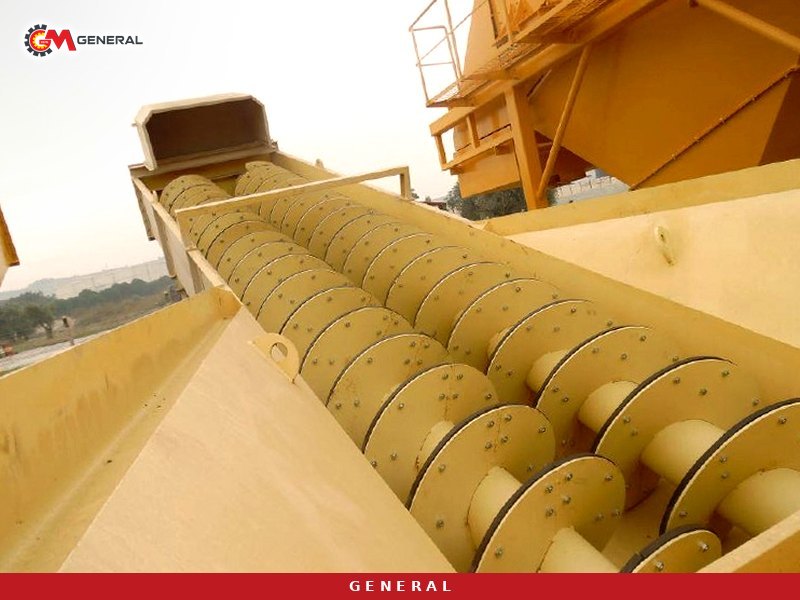
The water demand of a screw washer rises with the silt in the feed; the product page gives roughly 190 L/min per t/h of silt. A hypothetical example: at 150 t/h feed with 6% silt, the silt load is 9 t/h and the screw washer needs on the order of 9 × 190, about 1,710 L/min. Water for the washing screen nozzles comes on top of that. On an Angolan site, the first job is to measure the flow that can be drawn from the river or borehole and to plan the return ponds.
In a closed circuit, overflow water goes to settling ponds, silt drops out and the clarified water is pumped back to washing. Ponds are laid out in series, with a ramp left so an excavator can reach a full pond and empty it. For the log washer, a recirculation arrangement with about 95% water recovery is listed; the loss leaves with sand moisture and evaporation from the pond surface.
In the rainy season, a riverbed pit can flood and the ponds can overflow. This is where a mobile plant pays off: the chassis is towed to higher ground, and feed stockpiled in the dry season is processed during the wet months. Building flood berms around the ponds and keeping slurry out of the river is also something environmental permits will ask about; local requirements should be confirmed with the relevant authority.
Sand moisture at the screw washer discharge is typically 15-30%. If moisture in the sand entering the batching plant keeps changing, the water-cement ratio drifts with it. For steadier moisture, a hydrocyclone and dewatering screen are added to the chain; moisture falls into the 8-20% band, and the hydrocyclone recovers part of the fine sand that would otherwise escape with the overflow.
Port-to-site shipping and power
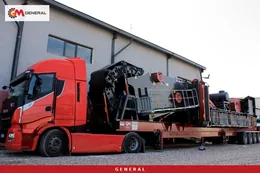
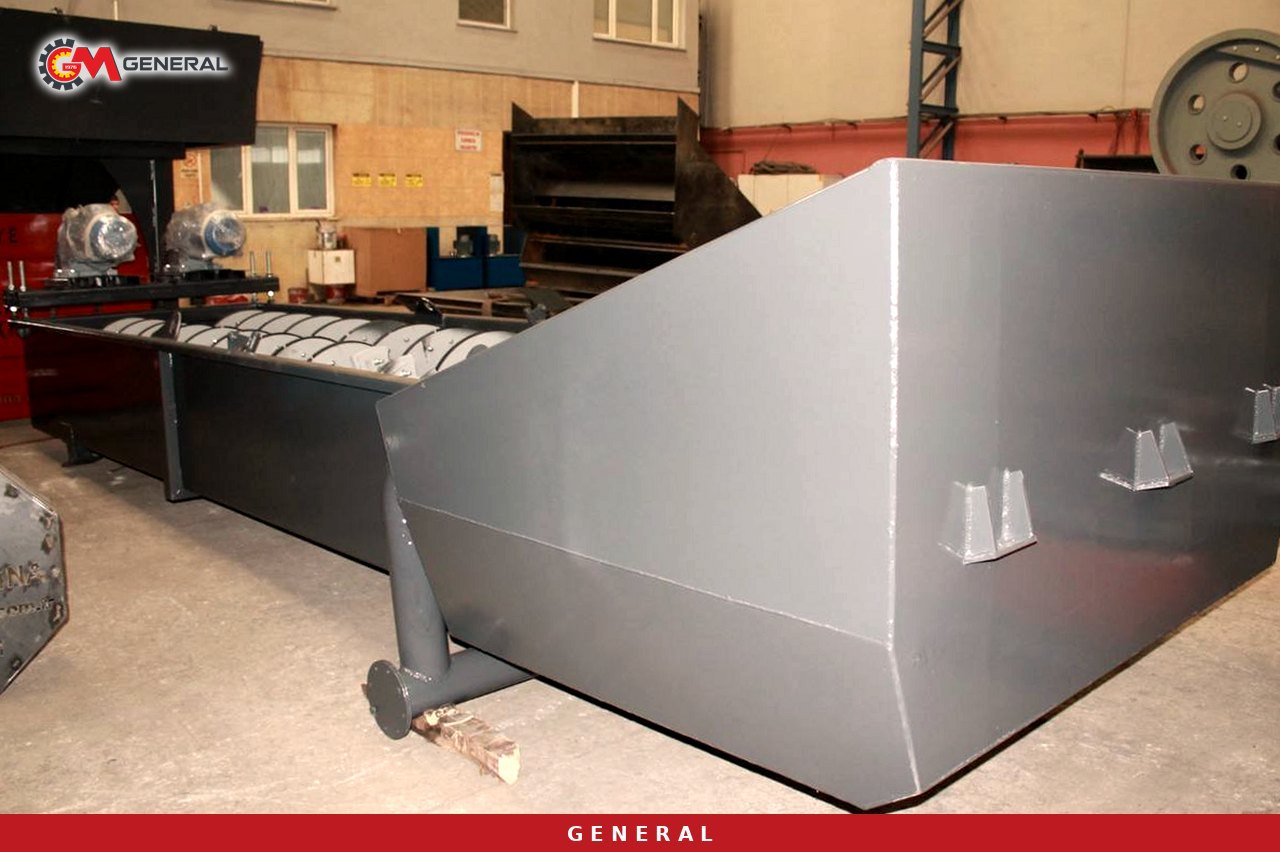
Equipment shipped from Türkiye can enter Angola through the port of Luanda or Lobito and be towed to site by road. The Mobil 90 measures 3600 × 15700 × 4500 mm, weighs 45,000 kg and sits on a 3-axle wheeled chassis. The YM1650 has a loading size of 4200 × 13600 × 4500 mm and weighs 21,000 kg; the YM1240 measures 4200 × 10800 × 4500 mm and weighs 18,000 kg. For loads wider than 4 metres, bridges, narrow passages and special transport permits along the route should be checked with the haulier in advance.
Pits far from towns often have no grid line, or an unreliable one. The product data for the Mobil 90 lists a 350 kVA generator. The YM series can run from the grid or a generator; generator size is calculated in the project from the total of pump, screw washer and screen motors. In the dusty dry season, the generator's air filter and radiator, and in the wet season the protection of the electrical panel from humidity, belong in the maintenance plan.
The warranty is 1 year and does not cover wear parts. Shipping the first spare set of jaw plates, screw flight segments and screen meshes in the same consignment as the machine is the simplest way to keep production running at a site far from the port.
Frequently asked questions
Is washing Angolan river sand without a crusher enough?
If all the material is under 100 mm and the grading is suitable, a GNR YM1240 or YM1650 can work without a crusher. If the bed contains oversize gravel, a unit with a jaw crusher such as the Mobil 90 is needed to turn it into 5-20 and 20-60 mm fractions instead of discarding it.
Will this line clean material mixed with laterite?
Sandy laterite that disperses is removed by the washing screen and screw washer. Hard, plastic lumps call for a log washer. SE and MBV tests, together with how the sample breaks down when soaked in water, show which one is sufficient.
What certificates come with the machines, and what is the warranty?
Manufacturing follows an ISO 9001 quality system and the machines carry CE marking. The warranty is 1 year; wear parts are excluded.
What determines the cost of the plant?
Whether a crusher is included, the number of washing units, the need for a log washer, the hydrocyclone and dewatering screen, the generator, the number of stockpile conveyors and freight. Send your sample data and a project-specific quotation will be prepared.
Final assessment
In Angola, clay sets the shape of a concrete aggregate line. One Mobil 90 for low-clay river gravel, a Mobil 90 with a YM1240 when demand nears 200 TPH, a YM1650 behind the crushing line at a granite quarry, and a layout led by a log washer for hard lateritic lumps are the options that stand out. For other choices, see our mobile sand washing and screening plants and screw washers and mining washers. Send your sieve analysis, SE and MBV results, water source and target fractions through our contact pageand we will prepare a configuration and quotation for your site.
Definitions of technical terms: Glossary