EN — English
 TR — Türkçe
 DE — Deutsch
 RU — Русский
 FR — Français
 ES — Español
 AR — العربية
 SR — Српски

Screen Mesh Selection for a 100-250 TPH Crushing and Screening Plant
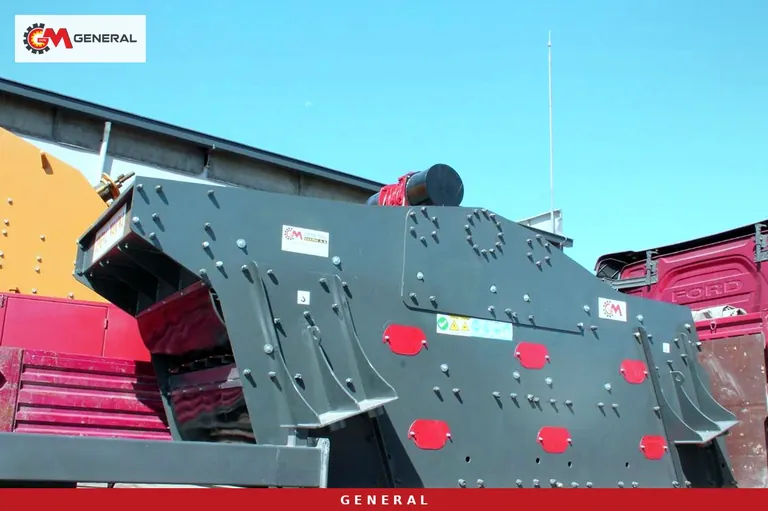
On a crushing and screening plant running at 100 to 250 TPH, the size of the product you sell is set by the screen mesh, not by the crusher. The jaw or impact crusher reduces the rock; the 0-5, 5-15 or 15-25 mm fraction written in the buyer's specification comes from the aperture, wire diameter and media type stretched across each deck. A badly chosen mesh wastes a well chosen crusher: oversize stays in the product pile, chippings creep into the sand fraction, the return conveyor overloads and the crusher breaks the same stone two or three times. This article explains how we plan screen media deck by deck, which media type we recommend for which material, and what shortens mesh life on site.
Aperture and product size are not the same number
The most frequent mistake we see on orders is writing the product size straight in as the mesh size. Asking for "15 mm product, so fit 15 mm mesh" ignores the screen slope, the vibration motion and the particle shape. On an inclined deck a particle meets the opening at an angle, not head-on; the steeper the slope, the smaller the effective aperture. Circular-motion screens typically run at 15-30°, and at the steep end of that range capacity rises while the cut tightens. Flat and elongated particles can also slip through sideways, so the same mesh gives a different grading curve on cubically crushed basalt than on flaky schist.
The second idea is the near-size particle. Grains between roughly 75% and 125% of the aperture are where a screen struggles most: they enter the opening, wedge, and either pass or stay. As a hypothetical example, on a 10 mm deck everything from 7.5 to 12.5 mm falls into this band. The more crowded that band is in the feed, the harder it becomes to reach the 90-95% commercial screening efficiency, and the higher the pegging risk. That is why we ask for a sieve analysis of the crusher discharge before fixing mesh sizes.
The word "mesh" adds confusion. Mesh counts openings per inch and belongs to fine material; coarse aggregate is discussed in millimetres. For scale, 600 microns is about 30 mesh, and only a linear-motion fine material screen such as the IME-GM155 (5-10 TPH, 5 decks) from our aggregate vibrating screen decks range cuts in that zone. The main screens of a 100-250 TPH aggregate line work with millimetre apertures.
Where the screen load really comes from at 100-250 TPH
The tonnage a mesh sees is higher than the plant's nameplate. In closed circuit, oversize returning from the secondary crusher arrives at the main screen again; as recirculating load grows, the screen carries more material than the plant sells. So every mesh decision starts with two questions: how many tonnes per hour actually land on the deck, and what share of that is near-size?
What happens upstream also matters. A grizzly ahead of the primary crusher removes soil and fines early, so less muddy dust reaches the bottom deck of the main screen. In our grizzly screens the G-type works before the primary and the M-type before the secondary; the bars are Mn13-type manganese castings with an adjustable gap. On the mobile side, the GNR ME2060 takes out oversize rock with a 100 mm grizzly on the hopper before it reaches the screen, then splits the material into 4 fractions in one pass on a 2000×6000 mm triple-deck screen. Keeping large rock off the top deck is the first thing that decides top-deck mesh life.
Media types and the deck each one suits
Different screening surfaces can be fitted to the same screen body. The choice follows particle size, moisture, clay content and how much downtime the operator accepts for a change.
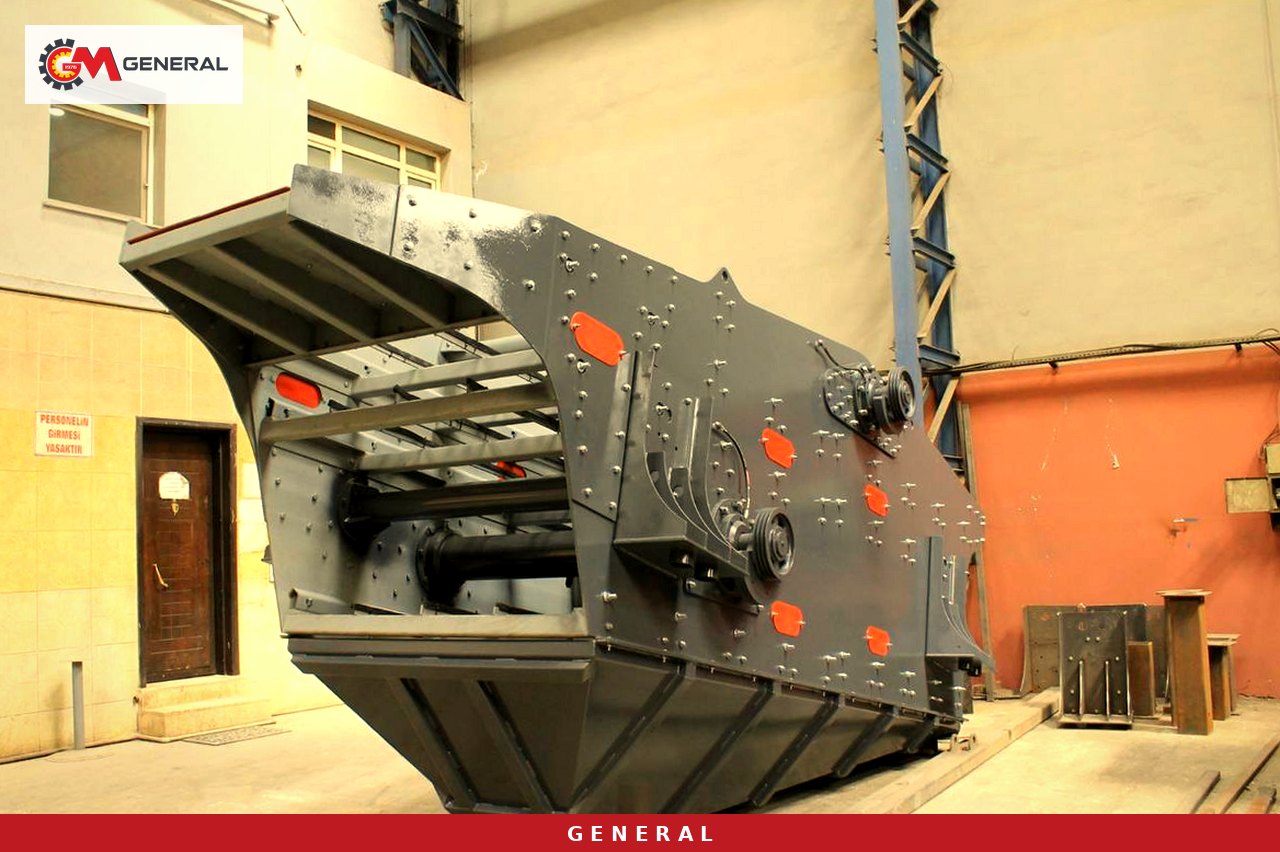
Woven steel wire: square and slotted openings
This is the most common surface on crushed stone lines. Its open area is high, so it passes the most tonnage for a given screen size. A square opening gives a sharp cut and suits concrete and asphalt aggregate with tight specifications. A slotted opening passes more material and pegs less, but lets flaky particles into the product. Wire diameter is a trade-off: thicker wire lasts longer but reduces open area; thinner wire raises capacity but breaks quickly on hard, abrasive rock.
Self-cleaning harp wire
The wires are tensioned in one direction with free sections vibrating between them. On slightly damp feed with a lot of near-size, they throw particles out of the opening and reduce blinding. We use them mainly on the bottom deck, where fines stick. Cut accuracy is a little lower than with square mesh, so for a very tight specification they need careful judgement.
Polyurethane and rubber panels
Fitted as modular panels, they last longer than steel wire in abrasive and wet duty and run quieter. Their open area is lower than woven wire, which means some loss of capacity on the same body. They are often chosen on wet lines and in layouts built with washing and screening plants. On the top deck, where coarse rock lands, rubber impact pads or perforated plate protect the mesh from direct hits.
A deck-by-deck aperture plan
A triple-deck screen gives 4 products. Apertures shrink from top to bottom and each deck relieves the one below. Each successive deck reduces capacity by about 10%, so the bottom deck, which makes the finest cut, is usually the bottleneck and the body size is chosen for it. For the 0-5, 5-15 and 15-25 mm curve common in stationary plants, a typical starting plan looks like this:
- Top deck: separates everything above 25 mm and sends it back to the secondary or tertiary crusher. Impact is highest here; thick steel wire or impact-protected panels are chosen.
- Middle deck: retains the 15-25 mm product. A square opening is safer for a cubical product that meets the specification.
- Bottom deck: splits 5-15 mm from 0-5 mm sand. It is the first deck to blind on damp days; harp wire or polyurethane is considered here.
- Undersize: 0-5 mm manufactured sand goes straight to the stockpile conveyor or to the washing unit.
Final apertures are tuned with sieve analyses of samples taken during trial production. One more rule: at the discharge end, bed depth should not exceed 3-4 times the aperture. As a hypothetical example, on a 25 mm deck the bed at discharge should be no deeper than 75-100 mm. If that limit is exceeded, fines cannot work down through the layer above and leave over the end with the product; the problem is then screen area, not mesh.
Matching media and motion to the screen body
Mesh is never chosen alone; the vibration under it and the body size decide the result. A circular-motion conventional vibrating screen works well on dry, clean sand and gravel. The three-shaft oval-stroke adjustable-stroke screen reduces pegging on near-size-rich and slightly damp material, with stroke angle and amplitude set to the feed. The elliptical top-driven ELK-U series also helps on damp feed and in wet screening. Bodies that fit a 100-250 TPH target are listed below:
| Model | Motion | Screen size (mm) | Motor | Decks | Series capacity |
|---|---|---|---|---|---|
| GNR 1650 | Circular | 1600×5000 | 15 kW | 1-4 | 100-400 t/h |
| GNR 2060 | Circular | 2000×6000 | 18.5 kW | 1-4 | 100-400 t/h |
| GNRTK-1550 | Oval stroke | 1500×5000 | 22 kW | 3 | 100-400 t/h |
| GNRTK-2060 | Oval stroke | 2000×6000 | 30 kW | 3 | 100-400 t/h |
| ELK-U2060 | Elliptical | 2000×6000 | 2×15 kW | 3 | 100-400 t/h |
| GNR ME2060 (mobile) | Circular | 2000×6000 | 22 kW | 3 | 200-350 t/h |
Series capacity is not a guaranteed figure for a single model; it moves with gradation, moisture and wet or dry operation. Even swapping thick square mesh for thin slotted mesh on the same 2000×6000 mm body changes throughput noticeably. At higher flows where one screen chokes, a twin screen (100-500 TPH) or a two-screen layout inside our stationary crushing plants is worth considering.
Site mistakes that shorten mesh life
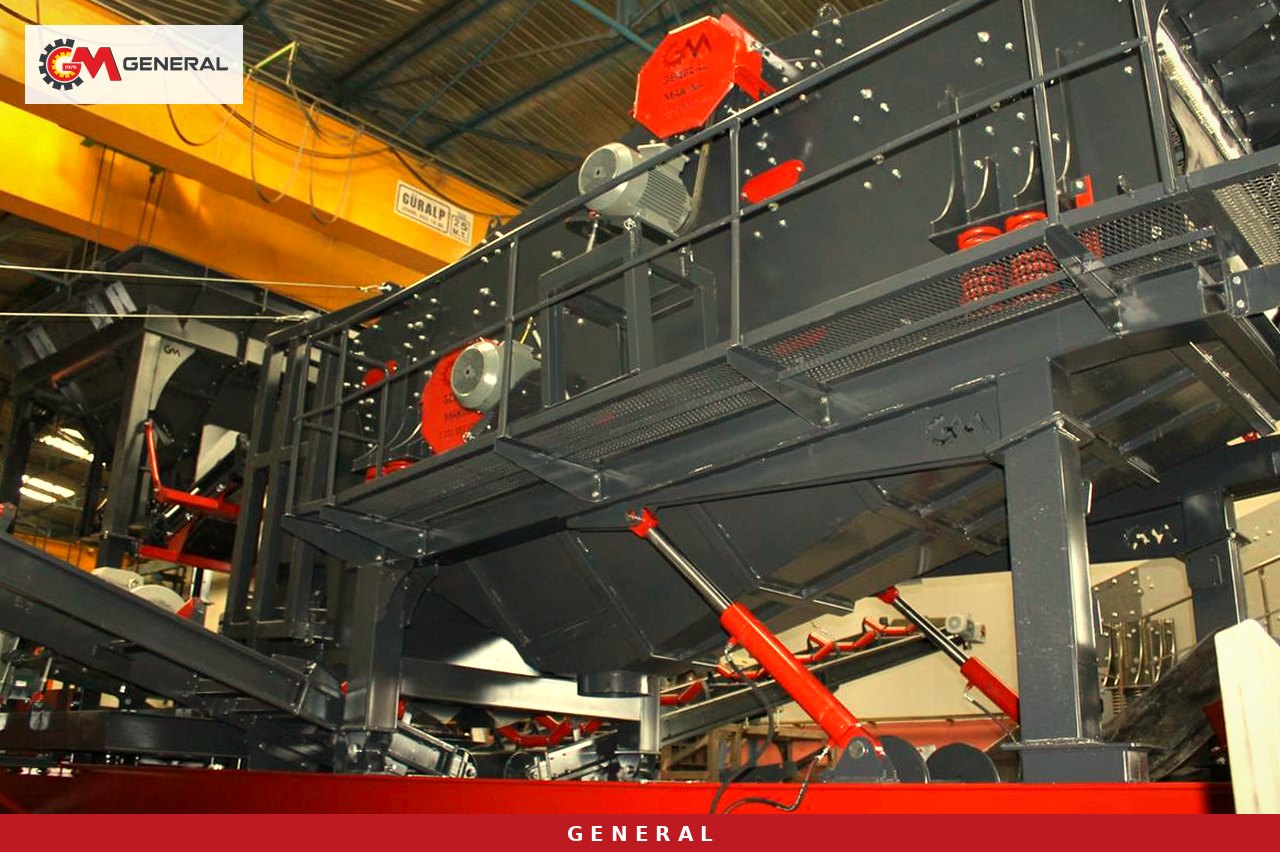
When mesh fails early, the cause is usually fitting and operation rather than wire quality. Loosely tensioned mesh sets up its own vibration, rubs on the support beam and fatigues at the edge. On a deck with worn rubber capping strips, the wire sits straight on steel. If the feed chute drops material on one side of the screen instead of the centre, that half of the mesh is gone within weeks while the other half looks new. Stone-box feed boxes move impact from the mesh onto a bed of rock.
The checklist we use before and after a mesh change:
- Does the new mesh sit fully on the deck beams, with tension hooks pulled evenly on both sides?
- Are the rubber strips on the beams intact, with no missing or torn pieces?
- Does the feed spread across the full screen width, or gather on one edge?
- Is bed depth at the discharge end under the 3-4 times aperture limit?
- Was tension checked again after the first shift?
- Is at least one spare set of mesh in store for every deck?
Screen media is a wear part and falls outside the 1-year warranty. Woven steel and polyurethane media are supplied under our crusher wear and spare parts range; an order should state deck number, aperture, wire diameter and tensioning type together.
Frequently asked questions
Can we choose and fit the mesh ourselves?
Yes, but set the aperture from slope, motion type and particle shape rather than making it equal to product size. Plan to correct the first set using sieve analyses from trial production.
Is polyurethane always better than steel wire?
No. It lasts longer in abrasive and wet duty, but its open area is lower. On a dry line where capacity comes first, woven steel usually passes more tonnes.
Why does the bottom deck blind before the top deck?
Fine particles hold more moisture and stick in the opening, and the near-size share is usually highest on the bottom deck. Harp wire, oval stroke or an elliptical screen reduces blinding there.
What drives the cost of mesh changes?
Media type, wire diameter, deck size, change frequency and downtime. The right metric is mesh cost per tonne fed to the screen, not the price of one panel. Send material and deck details for a current quotation.
What to prepare before asking for a quote
To choose screen media correctly, send the sieve analysis of the crusher discharge, the moisture and clay condition of the material, the target fractions and the real hourly feed together. If you already have a screen, its model, number of decks and body size are enough. Our engineers build a deck-by-deck aperture and media proposal from that data; for a quotation and technical discussion, reach us through our contact page.
Definitions of technical terms: Glossary