EN — English
 TR — Türkçe
 DE — Deutsch
 RU — Русский
 FR — Français
 ES — Español
 AR — العربية
 SR — Српски

Ethiopia Railway Ballast Crushing and Screening Plant 200-300 TPH
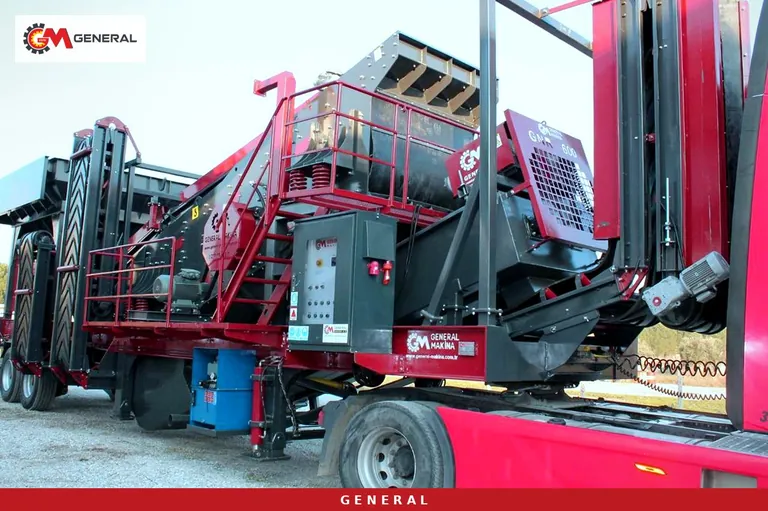
Railway ballast is the most demanding product a quarry can make. Small deviations in concrete aggregate can be absorbed by the mix design; ballast, however, is reloaded under the sleeper every time a train passes, and once its edges round off and its fines content climbs, the track geometry starts to drift. In Ethiopia, along the corridors that start at the port of Djibouti and climb onto the highlands, and on newly planned lines, ballast demand often calls for steady output of around 200-300 tonnes per hour from a single quarry. This article sets out the real machine layouts that meet that target, the screening decisions specific to ballast and the questions to settle before any equipment heads for site.
Four requirements that separate ballast from ordinary crushed stone
Every railway authority writes its own ballast specification, so the exact sieve limits, abrasion and shape thresholds must be confirmed in the relevant technical specification. Almost all of them, though, share four themes, and the plant design follows directly from them:
- A coarse, narrow size band: ballast sits well above the fine fractions aggregate quarries are used to, such as 0-5 or 5-12 mm, in a coarse and tight range. Screen decks and wire openings have to be chosen for that.
- Angular, fractured particles: the stones lock into each other to spread the load. Rounded or flaky particles weaken the interlock.
- Very low fines: dust and small particles clog drainage once the rains arrive. Ballast has to enter the stockpile clean and stay clean.
- Durability: the stone must not break down under impact and attrition, which puts rock selection ahead of crusher selection.
The common consequence of these four points: on a ballast line the goal is not to reduce the rock as far as possible, but to win the coarse fraction in few stages, with controlled reduction and minimal fines. The high reduction ratio that counts as efficient in an aggregate plant usually means waste in a ballast plant.
Ballast rock in Ethiopia: basalt is common, samples are essential
Volcanic rocks, basalt above all, cover large parts of the Ethiopian highlands; limestone and sandstone units occur in the east and southeast, with granite and metamorphic rocks in some regions. For ballast, dense hard basalt and granite are generally sought. Yet one basalt deposit can contain vesicular, weathered or coarse-crystalline zones that sharply reduce ballast durability.
Quarry selection should therefore begin with a laboratory programme: the abrasion and impact tests required by the specification, water absorption, flakiness and particle shape measurements. The results decide both whether the quarry is fit for ballast and which crusher family to use. In hard, siliceous rock, jaw and cone crushers working on the compression principle keep metal wear low, whereas impact crushers drive wear-part costs up quickly. At quotation stage we ask for these test reports, ideally together with representative samples taken from the face.
Our 150 t/h basalt crushing and screening project in Jijiga in the east of the country, is a concrete reference for why compression crushing takes priority in this regional basalt.
Flow of a 200-300 TPH ballast line
The classic and safest ballast line is built in three stages: grizzly feeding with a primary jaw, controlled secondary crushing and screening tuned to the coarse fraction. The models and values below come from the technical tables on our product pages.
Feeding and primary: GNR 110 feeder with GNRK 110 jaw crusher
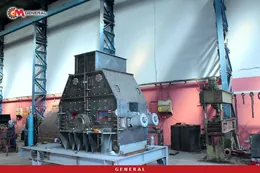
Run-of-quarry rock is tipped into the 1100×4750 mm GNR 110 vibrating grizzly feeder, rated at 200-300 t/h and accepting material up to 1500 mm. The grizzly section removes soil and fines before they reach the crusher. On a ballast line this has a second benefit: topsoil and weathered rock from the face never reach the ballast stockpile. At the primary stage the GNRK 110 jaw crusher covers the whole target band with its 1100×850 mm opening, 110/132 kW motor and 200-350 t/h capacity. Its discharge setting ranges from 150 to 225 mm.
Secondary: controlled descent to ballast size with a cone crusher
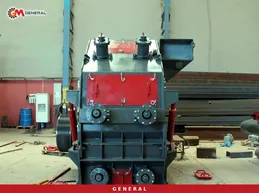
The stage that takes primary product down to the ballast range is the one that sets ballast quality. With standard liners the General cone crusher works at the secondary stage with a 6:1-8:1 reduction ratio, takes 50-250 mm feed (300 mm in some configurations), and its hydraulic CSS adjustment fixes product size precisely. For ballast the setting is kept open so that most of the product stays in the coarse band; when the crusher is choke-fed, particles break against each other and come out angular and cubical. Model-specific cone crusher capacity tables are issued per project; for a 200-300 t/h target the crusher size is chosen together with the test results and the target grading.
Screening: enough screen area for a coarse fraction
On ballast, the screen both separates the product and cleans it. In the conventional circular vibrating screen range, large bodies such as the GNR 2060 (2000×6000 mm, 18.5 kW) or GNR 2470 (2400×7000 mm, 30 kW) stand out for this tonnage. The top deck returns oversize, the middle deck isolates ballast and the lower decks strip fines away from it. Since each additional deck cuts capacity by roughly 10%, it is better not to add decks beyond need and to choose a wider screen if required.
Three layouts in one table
The same target can be built differently depending on quarry life and corridor length. Figures in the table belong only to the named model; unknown values are left as a dash.
| Layout | Feeding / primary | Primary capacity | Secondary | Screening | Best-suited site |
|---|---|---|---|---|---|
| A, Stationary line | GNR 110 feeder + GNRK 110 jaw | 200-350 t/h (GNRK 110) | General cone crusher (standard liners) | GNR 2060 or GNR 2470 | Long-life central ballast quarry |
| B, Mobile primary + stationary station | GNR 110 mobile primary jaw unit | 180-300 t/h | General cone crusher | GNR 2060 or twin screen | Quarry where the face advances and the primary relocates |
| C, High-tonnage screening | Layout A or B | — | General cone crusher | Twin vibrating screen (100-500 t/h) | Quarry selling ballast and by-products together |
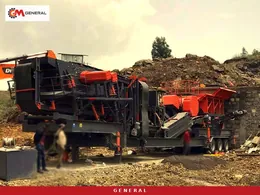
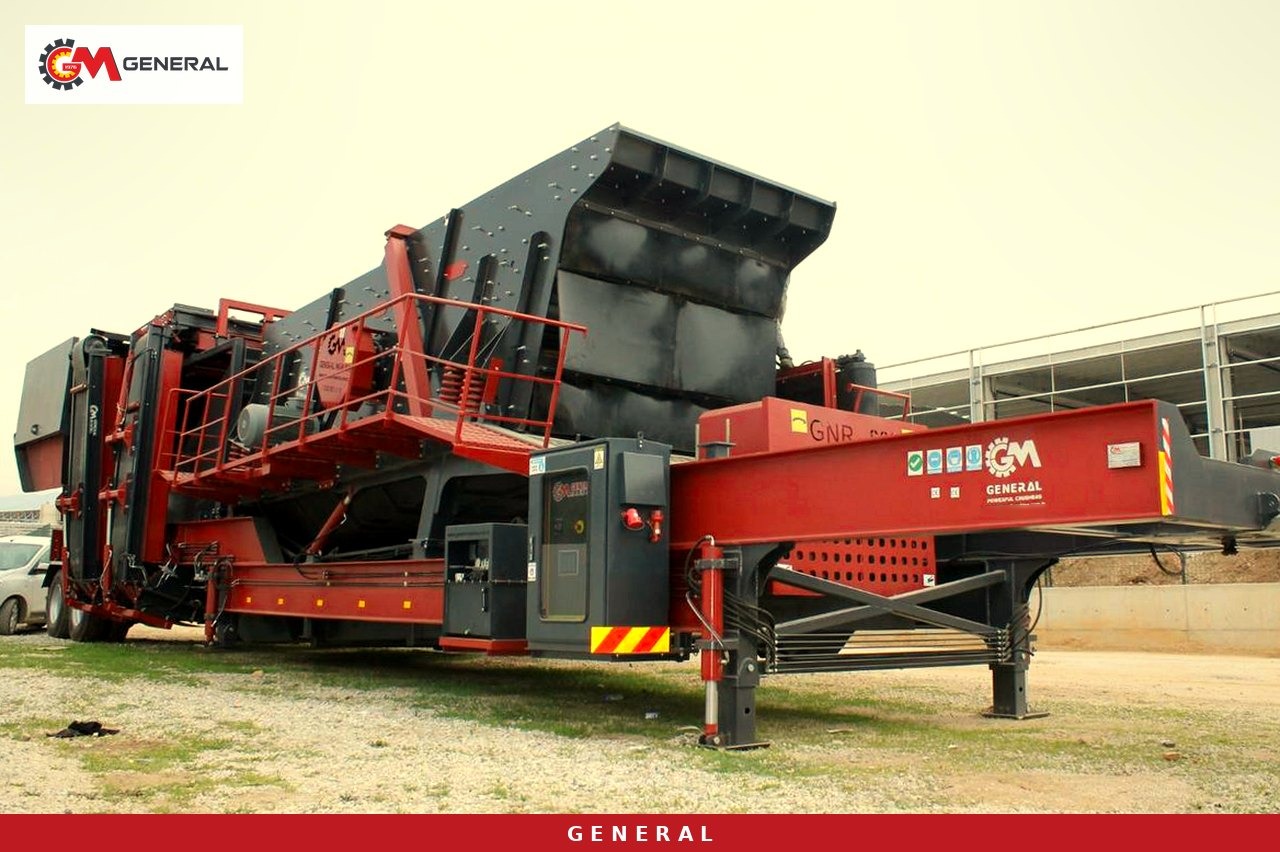
The GNR 110 mobile primary jaw unit in layout B carries the GNRK 110 crusher and an armoured feeder on one chassis; it accepts 0-1100 mm feed, delivers 0-250 mm product, weighs 55,000 kg and is set up without foundations on hydraulic legs. Keeping the primary close to the face shortens truck haul distances. For the overall framework of the stationary layout see stationary crushing plants; for mobile options see the portable rock crushers category.
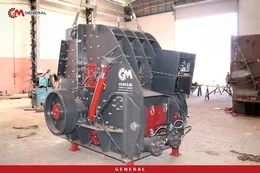
Wheeled plants with impact primaries (for example General 02 or General 03) deliver strong reduction in limestone, but in hard basalt their liner consumption and fines generation are a drawback for ballast. That is why, when a ballast quarry is basalt or granite, our first choice is a jaw plus cone layout.
Putting the non-ballast tonnage to work
No quarry turns its entire feed into ballast. The material below the ballast band, if planned well, is valuable to the railway project itself: sub-ballast layers, concrete for bridges and culverts, aggregate for sleepers and station structures. Planning the plant not just for ballast but for by-products that will be sold or used on the project directly improves quarry economics.
Where particle shape matters for concrete, a GNR MK110 mobile cubitzer can be added on a side circuit: with a 1550×1800 mm rotor, 350 mm maximum feed, 200 kW motor and 160-250 t/h capacity it converts screen oversize into 0-25 mm cubical aggregate, and its inner liners are Hardox 500 wear steel. A cubitzer is a shaping machine and does not replace the ballast crusher; it processes material diverted from the main ballast line.
A hypothetical formula helps planning: hourly ballast tonnage = primary feed (t/h) × ballast yield measured in a trial crush. Because the yield varies from quarry to quarry, the figure can only be fixed by a sample crush and sieve analysis, and that measurement also sets the quoted capacity.
From Djibouti to the highlands: transport, power and seasons
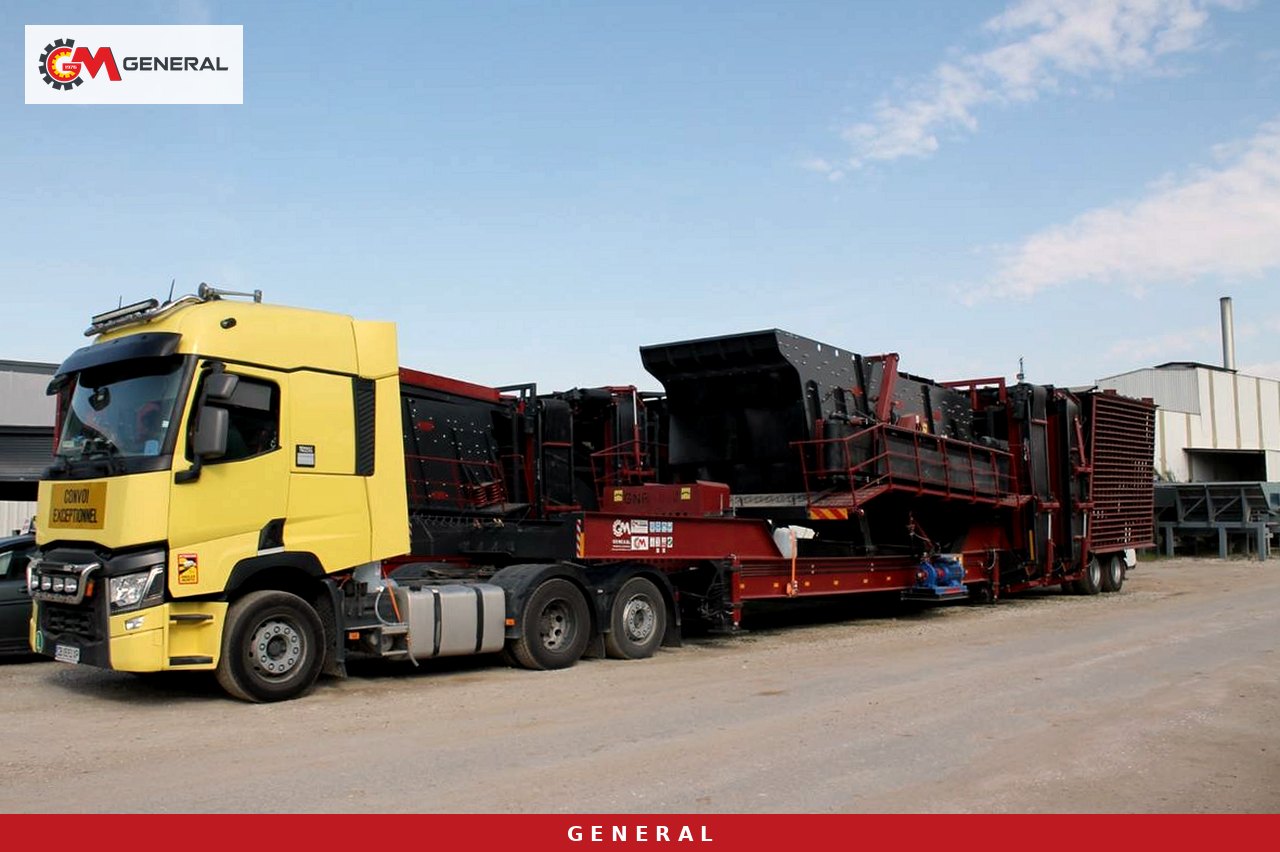
Ethiopia is landlocked; equipment usually travels by road from the port of Djibouti to inland sites. The route passes from a hot, dusty coastal plain to a cooler, rainy plateau. That transition has three consequences for plant design:
- Transport dimensions: mobile units ship on a single chassis within road dimensions, while the steel structures of a stationary line (crusher, screen, conveyors) are packed in modules. Bridge and curve limits along the route must be built into the shipping plan in advance.
- Power: most quarries along a rail alignment are far from the grid. Generator rating should match the sum of crusher and screen motors, starting currents and the effect of altitude on engine output; at central quarries that can be connected to the grid, a stationary line runs on mains power.
- Rain and dust: in the wet season, damp clayey feed blinds screen wires, and pre-separation at the grizzly feeder becomes decisive. In the dry season, water-spray dust suppression at transfer points and covered conveyor runs are measures that can be specified per project. Filtered ventilation for electrical panels is assessed the same way.
On the wear side, jaw plates are made of austenitic manganese steel (Mn13/Mn18), with Mn18/Mn22 chosen for high-silica rock. Cone liners are usually manganese steel as well, with high-chrome liners considered for high silica. Keeping at least one spare set of jaw plates and cone liners at a remote quarry turns breakdowns into planned maintenance.
Frequently asked questions
Why is an impact crusher not the first option for ballast?
Impact crushers give good particle shape in soft, low-abrasion rock, but in hard basalt and granite their liner consumption accelerates and the fines ratio rises. On ballast, fines are waste. The compression principle of jaw and cone crushers produces fewer fines and lower wear-part costs in these rocks.
Can a single mobile plant produce 200-300 TPH of ballast?
The GNR 110 mobile primary jaw unit covers the primary stage on its own at 180-300 t/h, but reaching ballast size and screening it clean needs a separate secondary and screening station. At this capacity a ballast line should be planned as linked stages rather than one unit.
What warranty and certificates apply?
Our machines carry ISO 9001 and CE certification. The warranty period is 1 year; wear parts are excluded. General Makina has been building crushing and screening equipment in Izmir since 1976.
What determines price and delivery time?
The layout (stationary, mobile or hybrid), crusher and screen size, generator needs, conveyor lengths, options such as dust suppression, and shipping packaging set the price. Delivery time depends on the production schedule at the time of order; both are stated in writing in the quotation once the configuration is fixed.
Decision and quotation step
The right plant for a ballast quarry in Ethiopia is designed backwards from the rock test results and the authority's specification. To speed up the quotation, we suggest sending the following together:
- The relevant section of the ballast specification: grading band, abrasion, shape and fines limits.
- Laboratory reports on the quarry rock and, if possible, a representative sample.
- Target hourly ballast tonnage and where by-products will be used.
- Quarry location, grid availability, access road and expected operating period.
- Whether the primary will move along with the quarry face.
With this information we size layout A, B or C for your quarry and submit it with a model list and site layout. Request a quotation for your ballast line through our contact page.
Definitions of technical terms: Glossary