EN — English
 TR — Türkçe
 DE — Deutsch
 RU — Русский
 FR — Français
 ES — Español
 AR — العربية
 SR — Српски

Railway Ballast Requirements for a 200-300 TPH Stone Crushing Plant
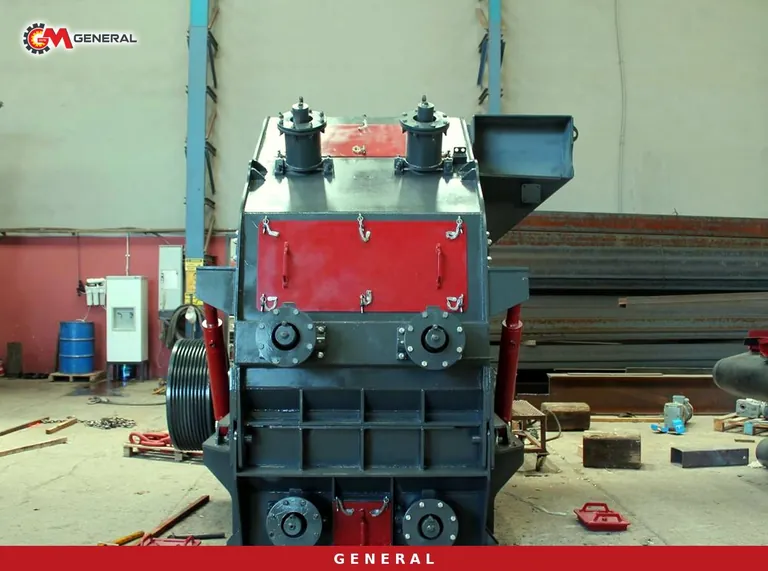
When a railway authority tenders a ballast contract, it is not asking the quarry owner for "250 tons of stone an hour". It is asking for a product that falls inside the grading envelope of the specification, has fractured faces, is clean, and comes with test reports to prove all of it. The plant requirements are worked backwards from that product: screen apertures come from the grading band, crusher type from the abrasiveness of the rock, and machine size from the ballast tonnage you can actually sell. In this article we walk through that chain step by step and match the 200-300 TPH target against real models from our product tables. Whatever country or line you are working on, confirm the exact acceptance limits against the specification issued by the authority running the tender.
Turning the four specification clauses into machine terms
Ballast specifications are published under different numbers from country to country. In Europe the reference is EN 13450, while many other countries apply the railway authority's own technical specification. The content, though, almost always falls under four headings: particle size distribution, particle shape, rock strength and cleanliness. Each heading corresponds to a machine or a setting in the plant.
The grading band sets the screen decks
The specification gives a lower and an upper sieve limit, and it defines the small percentages allowed to fall outside those limits. In the plant this means at least two cuts on the same screen. Oversize above the upper limit goes back to the crusher; undersize below the lower limit is taken off on a separate conveyor before it can contaminate the ballast stockpile. The ballast band is noticeably coarser than the chippings fractions that aggregate plants are used to. The General 944 product page lists the standard fractions as 0-5 / 5-12 / 12-19 mm, and the same page states that screen mesh openings are agreed at the order stage according to the stone to be processed. That is why, in a ballast quotation, the screen meshes are selected against the specification right from the start.
Shape and fractured faces narrow down the crusher type
Flaky and elongated particles break under load beneath the sleepers and disturb how the bed settles. Specifications therefore set flakiness and elongation limits, and they often require particles to have fractured faces as well. Rounded material such as river gravel cannot meet this clause without being crushed. The two factors with the biggest influence on particle shape are the type of secondary crusher and whether the crushing chamber is kept full.
Strength and cleanliness
Abrasion and impact resistance depend on the rock itself; no machine can turn weak rock into ballast. These tests are run in an accredited laboratory on representative samples taken from the quarry face. Cleanliness, on the other hand, is entirely a matter of plant design. Fines and clay have to be kept apart from the ballast at every point, from the scalping stage all the way to the stockyard.
Converting hourly capacity into daily ballast tonnage
The 200-300 TPH figure is the run-of-quarry feed entering the plant. The tonnage committed in the tender, however, is what lands on the ballast stockpile. The gap between the two is set by how the rock breaks, the block size after blasting and the screen configuration. Only a trial crushing run, or data from a line working the same rock, will show you that ratio.
For planning purposes this formula is enough: daily ballast tonnage = feed capacity (t/h) × operating hours per day × ballast yield × availability. A hypothetical example: with 250 t/h feed, a 10-hour shift, 50 percent ballast yield and 85 percent availability, the plant produces roughly 1,060 tons of ballast a day. If the ballast yield drops to 40 percent, the same plant delivers about 850 tons a day. These ratios were picked to show how the calculation is built; they are not the real figures for your quarry.
Two conclusions follow from the calculation. The starting point for capacity selection is the daily ballast quantity the authority wants, not the top figure in the brochure. And raising the ballast yield usually takes less investment than buying a bigger machine. The cone setting, the screen apertures and pulling ballast out early at the primary discharge all have a direct effect on that yield.
The ballast line stage by stage and what each machine does
The line starts with a grizzly feeder. The GNR 110 vibrating grizzly feeder measures 1100×4750 mm, handles 200-300 TPH and runs on 2x7.5 kW motors. Its grizzly section removes clay and fines before they reach the primary crusher. Under no circumstances should this material end up in the ballast; it is sent on a separate conveyor to a fill stockpile.
The primary stage is handled by a GNRK series jaw crusher. The GNRK 110 has a 1100×850 mm feed opening, a 110/132 kW motor, a weight of 33,000 kg and a capacity of 200-350 TPH. Because it breaks rock by compression, the jaw plates wear in a predictable way on ballast rocks such as granite, basalt and quartzite. The primary discharge already contains ballast-sized stone. Taking it off with an intermediate screen relieves the secondary and avoids reducing the particles more than necessary.
At the secondary stage the General cone crusher is the backbone of the line. According to the product page, secondary reduction runs between 6:1 and 8:1, the feed range is 50-250 mm (300 mm in some configurations), the product range is 0-60 mm (75 mm in some configurations) and power ranges from 90-500 kW; model-specific capacity is quoted per project. Moderate reduction protects the share of material that stays inside the ballast band. Hydraulic CSS adjustment and choke feeding improve particle shape. Put the upper limit of the specification band next to the cone's product range: if the upper limit lies outside that range, part of the coarse ballast is screened off at the primary discharge.
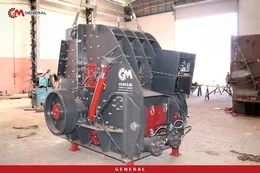
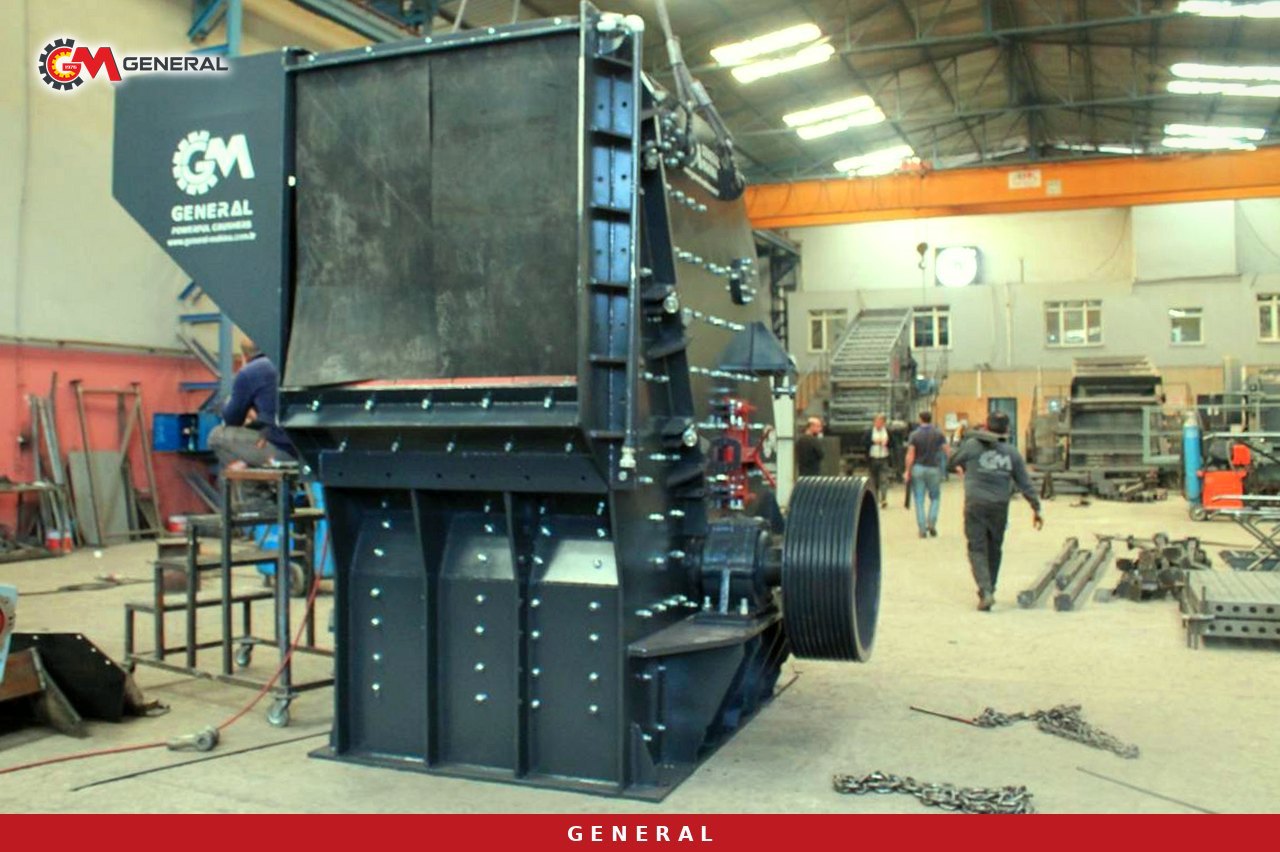
The impact crusher has a different role in this line. The GNR DMK series secondary impact crusher is recommended on its product page for limestone and low to medium abrasive rock; in high-silica granite and basalt a secondary cone is the better choice. The typical ~10:1 reduction of the DMK produces more fines than ballast production can tolerate. In a ballast line, the DMK's job is to turn the material below the ballast band into chippings. For a general comparison of crusher types, see our article on the differences between jaw, impact and cone crushers.
Machine combinations that hit the target range
The table below lists four configurations that fall within the 200-300 TPH range. All figures come from our product tables. The last column shows how well each configuration suits ballast production from hard rock, based on the type of secondary crusher.
| Configuration | Primary | Secondary | Screen | Capacity (TPH) | Power supply | Ballast from hard rock |
|---|---|---|---|---|---|---|
| Stationary line | GNR 110 feeder + GNRK 110 jaw (200-350) | General cone | GNR 2460, 2400×6000 mm, 22 kW | 200-300 (limited by feeder) | — | Suitable |
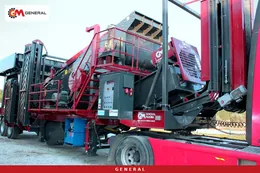
| Two General 944 units | GPJ 90 jaw, 800 mm feed | GM430 cone | 1600×5000 mm, 3-deck horizontal | 2 × 120-180 | 2 × 550 kVA generator | Suitable, meshes selected to the band |
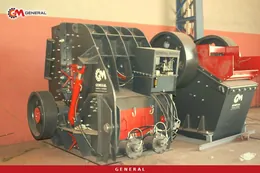
| GNR-MC110 (twin chassis) | GPJ 110 jaw, 900 mm feed | DMK03 impact | 2000×6000 mm, 4-deck | 200-300 | — | Limited |
| General 03 | GPS 1415 primary impact | — | 2400×5000 mm, 4-deck | 250-375 | 750 kVA | Low-abrasion rock only |
If the quarry will stay in one place for the full duration of a railway project, stationary crushing and screening plants give you the most flexibility. On a concrete foundation there is no chassis transport limit, so a wider screen, an intermediate surge bin and a dedicated ballast conveyor all fit comfortably. If several quarries will be opened along the route, wheeled mobile crushing and screening plants come to the front. Two General 944 units deliver 240-360 TPH combined while keeping a cone secondary, and when demand drops one unit can be moved to another site. On the GNR-MC110 the primary and secondary groups sit on separate chassis and run independently, and the primary can also be operated on its own; the DMK03 secondary, however, tends to shrink the ballast band in hard rock.
The tonnage below ballast size: putting it to use with a cubicizer and DMK
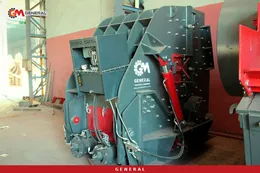
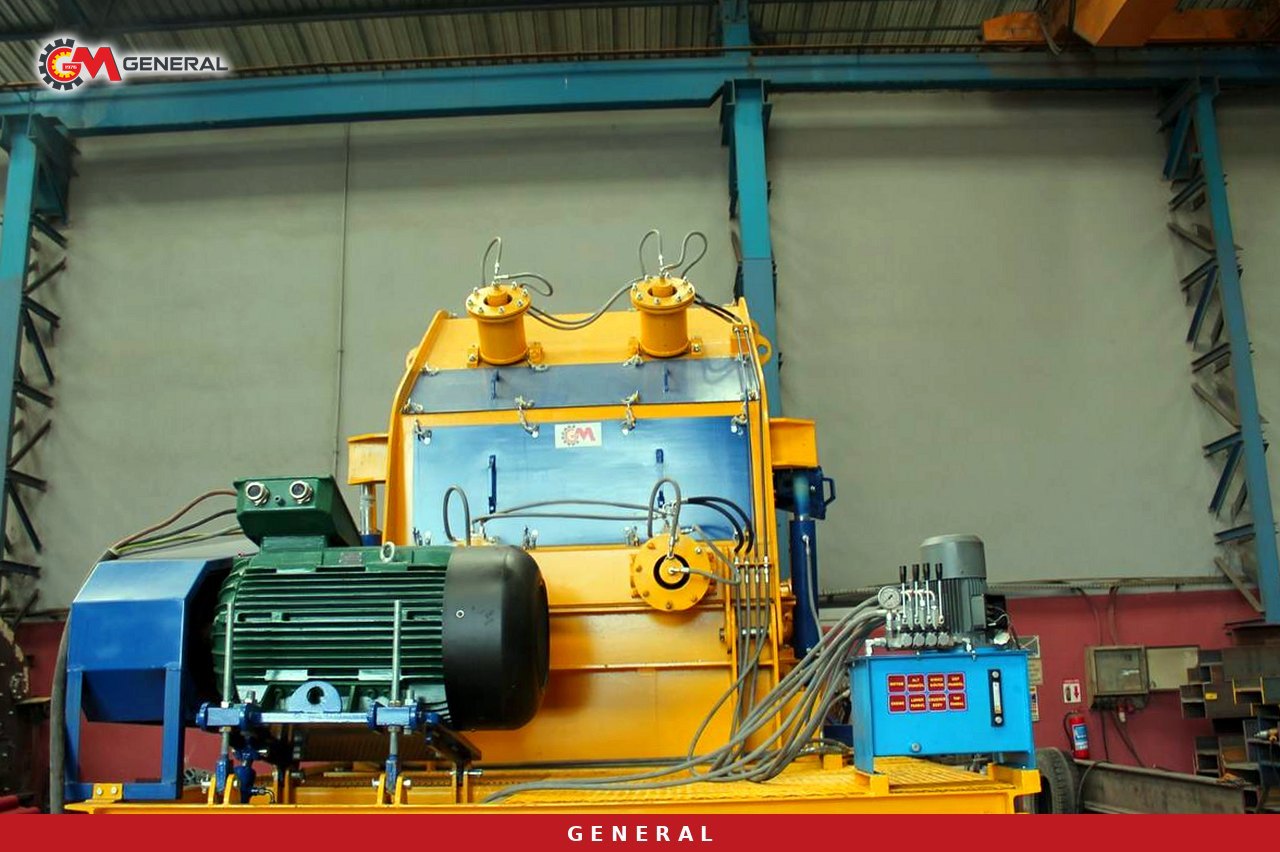
Material below the ballast band can be sold as concrete and asphalt aggregate or as sub-base. The value of that tonnage depends on particle shape. The GNR K series cubicizer crusher turns flaky particles into cubical ones and lowers the flakiness index. The GNR K110 has a 1550×1800 mm rotor, a maximum feed size of 210 mm, a capacity of 160-250 TPH and a 160 kW motor. The GNR K100 runs at 90-130 TPH with a 90 kW motor. Because feed size is capped at 210 mm, the cubicizer is not fed the whole primary discharge; it is connected to the lower fractions coming off the screen.
The cubicizer's product page also carries a warning: under continuous wear in very high-silica rock, parts cost rises and high-chrome or ceramic materials become necessary. If a cubicizer is going into a granite ballast quarry, wear part consumption should be discussed as a separate line item in the quotation. In limestone and medium-abrasive rock that burden is lighter.
Running the ballast fraction through the cubicizer would be a mistake. While correcting shape, the machine also reduces size, so it cuts down the top of the band and raises the fines content. Both the cubicizer and the DMK belong on the side branch of a ballast line.
Stockyard and operating checklist
Ballast that passes in the lab can still fail the acceptance sample if it is stockpiled badly on site. The points below should be planned into the installation project from day one.
- Set aside a separate area for the ballast stockpile with drainage and a compacted or concrete floor, and keep the loader bucket from scraping the ground.
- Keep the discharge height of the ballast stockpile conveyor low, because coarse particles dropping from a height break and generate fines.
- Dust suppression sprays and belt covers are options that can be chosen per project; in a dry, dusty quarry they reduce the amount of fines sticking to the ballast surface.
- Check the screen meshes at the start of every shift; a torn mesh lets oversize or undersize particles into the ballast band.
- Measure the cone liner profile regularly, because a worn liner effectively opens up the setting.
- Take regular samples from every stockpile and track the grading in your own lab; the authority usually takes its acceptance sample at the loading point.
- Keep a spare set of jaw plates and cone liners on site.
On the power side, a stationary line is connected to the grid or to a generator sized for the project. The General 944 uses a 550 kVA generator and the General 03 a 750 kVA unit. For quarries far from the grid, generator fuel and service intervals should be written into the operating plan from the outset.
Frequently asked questions
Can a primary impact crusher be used in a ballast line?
In low-abrasion rock such as limestone, primary impact crushers like the GPS 1415 on the General 03 can do the job. The strength that ballast specifications call for, however, usually comes from hard igneous rock, and in that rock a jaw primary with a cone secondary runs at a lower wear cost. Do not decide on crusher type before the rock test results are in.
Can a 300 TPH ballast line be built with a single mobile plant?
The GNR-MC110 and the General 03 both fall within this range on capacity. But because one has an impact secondary and the other an impact primary, ballast yield may drop in hard rock. If you want a mobile solution with a cone secondary, two General 944 units together deliver 240-360 TPH.
What information should I send for a quotation?
The ballast grading band and acceptance limits from the specification, the rock's lab report, your daily ballast target, daily operating hours, grid or generator preference, and whether the fractions below ballast size will be sold. With this information the screen apertures, cone setting and side-branch machines are calculated together.
What warranty and certificates apply?
General Makina has been manufacturing in Izmir since 1976. The machines carry ISO 9001 and CE certification and come with a 1-year warranty, excluding wear parts. Delivery time is set in the quotation according to the scope of the configuration.
A roadmap for your ballast line
Start by putting the specification and the lab report on the table, then convert the daily ballast target into capacity using the formula, and only then choose the machine configuration. In hard rock, the jaw primary and cone secondary form the backbone; impact crushers and cubicizers sit on the side branch that turns the below-ballast tonnage into saleable product. Send your specification and sample results through our contact pageand our engineers will prepare the flow sheet and a quotation for your 200-300 TPH line.
Definitions of technical terms: Glossary