EN — English
 TR — Türkçe
 DE — Deutsch
 RU — Русский
 FR — Français
 ES — Español
 AR — العربية
 SR — Српски

Algeria Railway Ballast Stone Crushing Plant 200-300 TPH
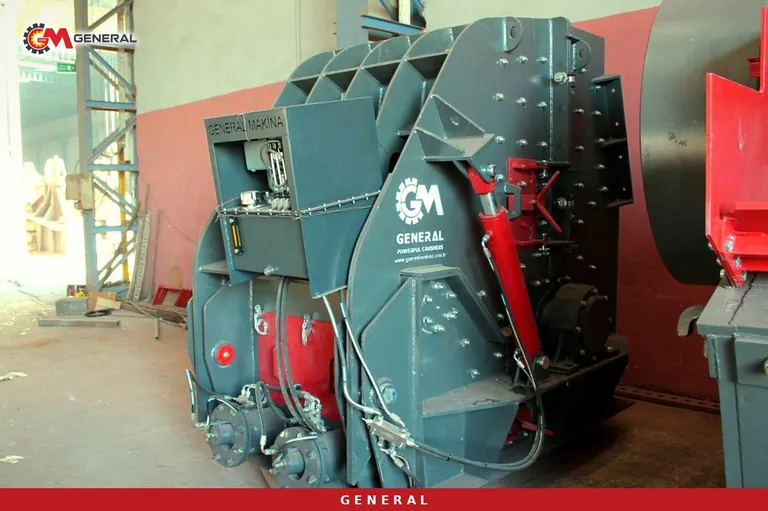
When a railway section in Algeria is being supplied with stone, the conversation usually opens with "how many tonnes?" In ballast work, however, the figure that decides the job is how much of that tonnage reaches the stockpile as coarse, angular stone that meets the specification. A plant fed at 200-300 tonnes per hour can turn a large share of that feed into fines instead of ballast if its crushers are arranged in the wrong order. This article looks at a ballast line for the territory between the Mediterranean coastal quarries and the High Plateaus through four lenses: rock selection, crushing stages, real model combinations and site conditions. Every technical value comes from the tables on our product pages.
The specification comes first: acceptance criteria for a ballast line
Ballast grading, abrasion and impact resistance, flakiness limit and fines content are defined in the technical specification of the authority building the line. For railway investments in Algeria these values are also set project by project, so we recommend obtaining the ballast specification and test methods from the tender documents before selecting any machine. The points that change plant design are:
- Target fraction: Ballast is required in a much coarser and narrower band than concrete aggregate. Screen decks and wire openings must be chosen for that band from the outset.
- Fractured faces and cubicity: Under the sleeper, particles carry load by interlocking; rounded or flaky particles weaken that interlock.
- Cleanliness: Dust and fines impair drainage. Ballast must enter the stockpile clean and stay clean during loading.
- Rock strength: Rock that fails laboratory abrasion and impact tests will not become ballast, whichever crusher processes it.
On the plant side these four criteria translate clearly: few stages, controlled reduction and low fines generation. High reduction, a mark of success in an aggregate quarry, usually means unsellable fines in a ballast line.
Rock selection from the Tell Atlas to the High Plateaus
Limestone and dolomite quarries are common in Algeria's northern belt; some coastal areas expose igneous and metamorphic rock, and the Hoggar region in the south has crystalline rock. This variety means a ballast line cannot be built from a single recipe.
Hard, dense igneous rock (granite, basalt, andesite types) is the first candidate for ballast. Part of the limestone may also meet the abrasion threshold of the specification, but this should not be assumed until test results prove it. The same deposit may also contain weathered, fractured or clayey bands. That is why, at quotation stage, we ask for abrasion, impact, water absorption and flakiness test reports on representative samples taken from the quarry. These reports answer two questions at once: can the quarry produce ballast, and if so, which crusher family will be economical?
If the rock has a high silica content, jaw and cone crushers working on the compression principle keep wear cost low. Impact crushers, by contrast, consume wear parts quickly in such rock and should stay out of the main branch of a ballast line.
Crushing stages: a jaw-and-cone backbone with an impact side branch
In hard rock, the safe route to ballast is a primary jaw crusher followed by a secondary cone crusher. This sequence keeps both metal wear and fines content low.
Feeding and primary stage
Run-of-mine rock is dumped onto the GNR 110 vibrating grizzly feeder, with a body 1100 mm wide and 4750 mm long. This model is rated at 200-300 t/h, accepts rock up to 1500 mm and runs on a 2x7.5 kW drive. Its grizzly section separates soil and fines from the quarry face before they reach the crusher; in a ballast line, that means dirty material never reaches the ballast pile. For the primary, the GNRK 110 from the GNRK series jaw crusher range stands out: 1100×850 mm opening, 110/132 kW motor, 150-225 mm discharge setting and 200-350 t/h capacity. If the target band is to rise above 300 t/h, the GNRK 130 (1300×1000 mm, 160 kW, 400-500 t/h) leaves headroom.
Secondary stage and particle shape
The secondary stage is what determines ballast quality. The General cone crusher with standard liners delivers 6:1-8:1 reduction, accepts 50-250 mm feed (300 mm in some configurations) and holds product size precisely with hydraulic CSS adjustment. For ballast, the setting is kept open so that most of the product stays in the coarse band. When the crusher chamber is kept full (choke-feed), particles break against each other and take on an angular, cubical shape. Because model-specific capacity tables for the cone crusher are prepared per project, its size is selected by weighing test results and the target screen range together.
Where the impact crusher belongs: non-ballast fractions
No ballast line produces only ballast. Medium and fine fractions passing the screen can be used as sub-base, embankment fill or concrete aggregate. Retaining structures, culverts and station buildings along a railway section also need aggregate. If the quarry rock suits impact crushing (limestone, dolomite), this secondary flow can be processed in a separate branch.
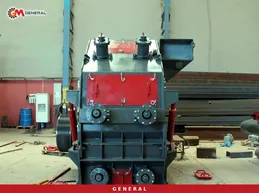
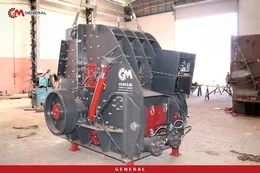
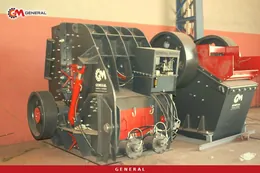
In the GNR DMK secondary impact crusher series, the DMK03 offers a 1100×1500 mm rotor, 800 mm maximum feed, 250 kW motor and 250-300 t/h capacity. Its typical reduction is about 10:1. That high reduction is a drawback for ballast and an advantage for concrete aggregate. For chippings with a strict shape requirement, the GNR K110 cubicizer (1550×1800 mm rotor, 210 mm maximum feed, 160 kW, 160-250 t/h) corrects flaky particles and completes the second branch. In high-silica rock such as granite and basalt, this branch too should be built with a cone or VSI instead of an impactor.
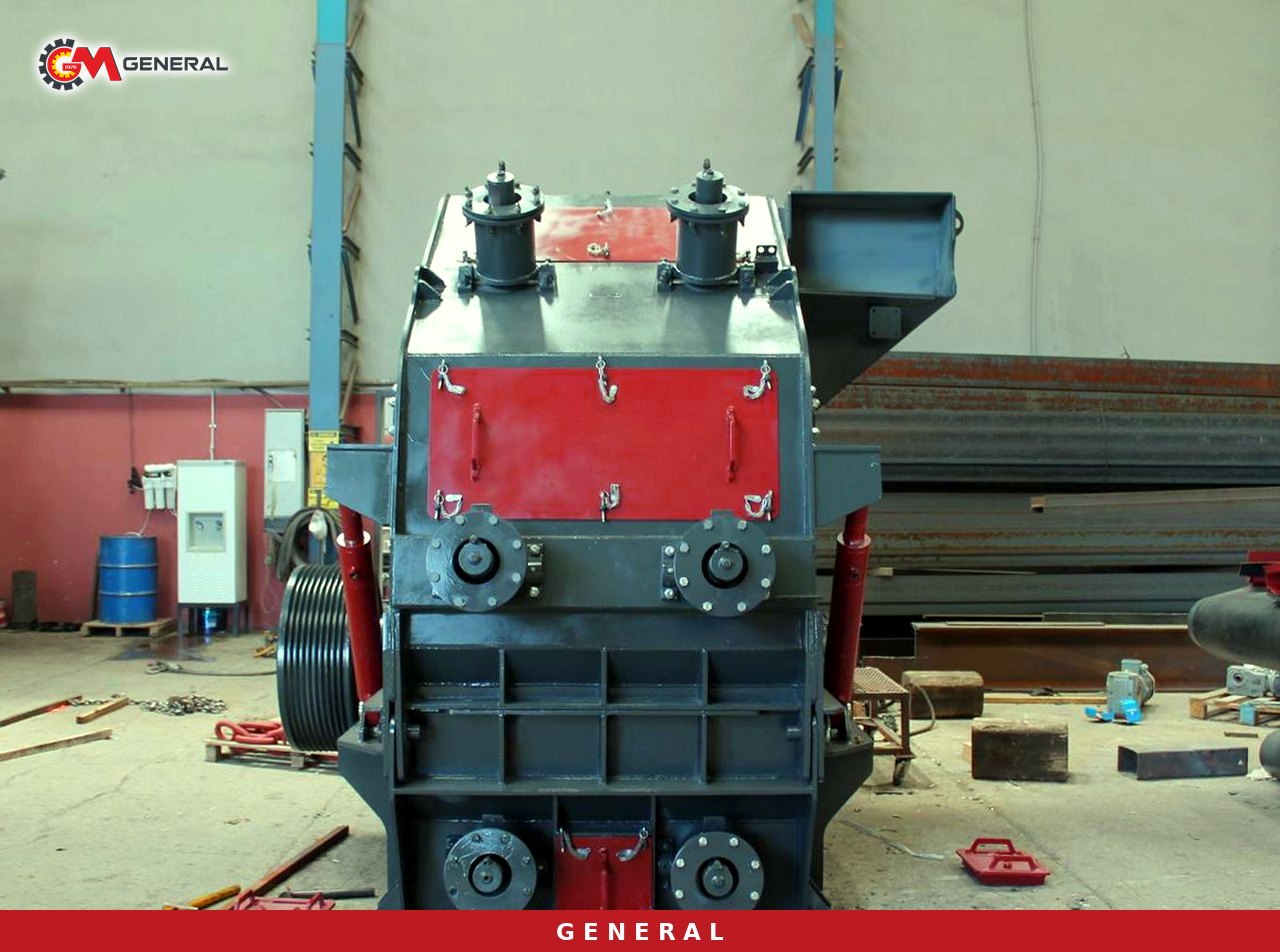
Three real configurations for 200-300 TPH
The table below compares configurations that meet the capacity band in the title using only values from our product tables. Unknown or project-specific values are shown as "—".
| Configuration | Main machines | Capacity | Max. feed | Suitability for ballast |
|---|---|---|---|---|
| A, Stationary jaw + cone | GNR 110 feeder, GNRK 110 jaw (110/132 kW), cone secondary, GNR 2060 screen (2000×6000 mm, 18.5 kW) | Primary 200-350 t/h | Jaw opening 1100×850 mm | Best in hard rock |
| B, Two General 944 units | Each GPJ 90 jaw + GM430 cone, 1600×5000 mm 3-deck screen, 550 kVA generator | 2 × 120-180 t/h | 800 mm | Suitable; cone secondary |
| C, GNR-MC110 | GPJ 110 jaw + DMK03 impactor, 2000×6000 mm 4-deck screen, 750 kVA generator | 200-300 t/h | 900 mm | Only in low-abrasion rock |
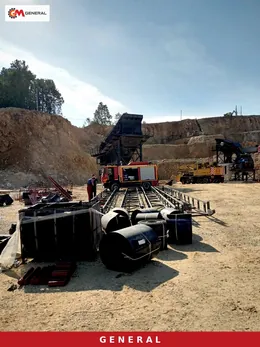
Configuration A is planned as a stationary crushing and screening plant that will sit on concrete foundations and work the same quarry for many years; feed opening and screen area are not limited by mobile chassis dimensions. Configuration B suits a contractor who may change quarries along the railway route: while one General 944 unit is under maintenance, the other keeps producing. Configuration C offers high capacity on a single platform, but because its secondary is an impactor it is not the main solution for high-silica ballast rock.
Screening layout and keeping ballast clean
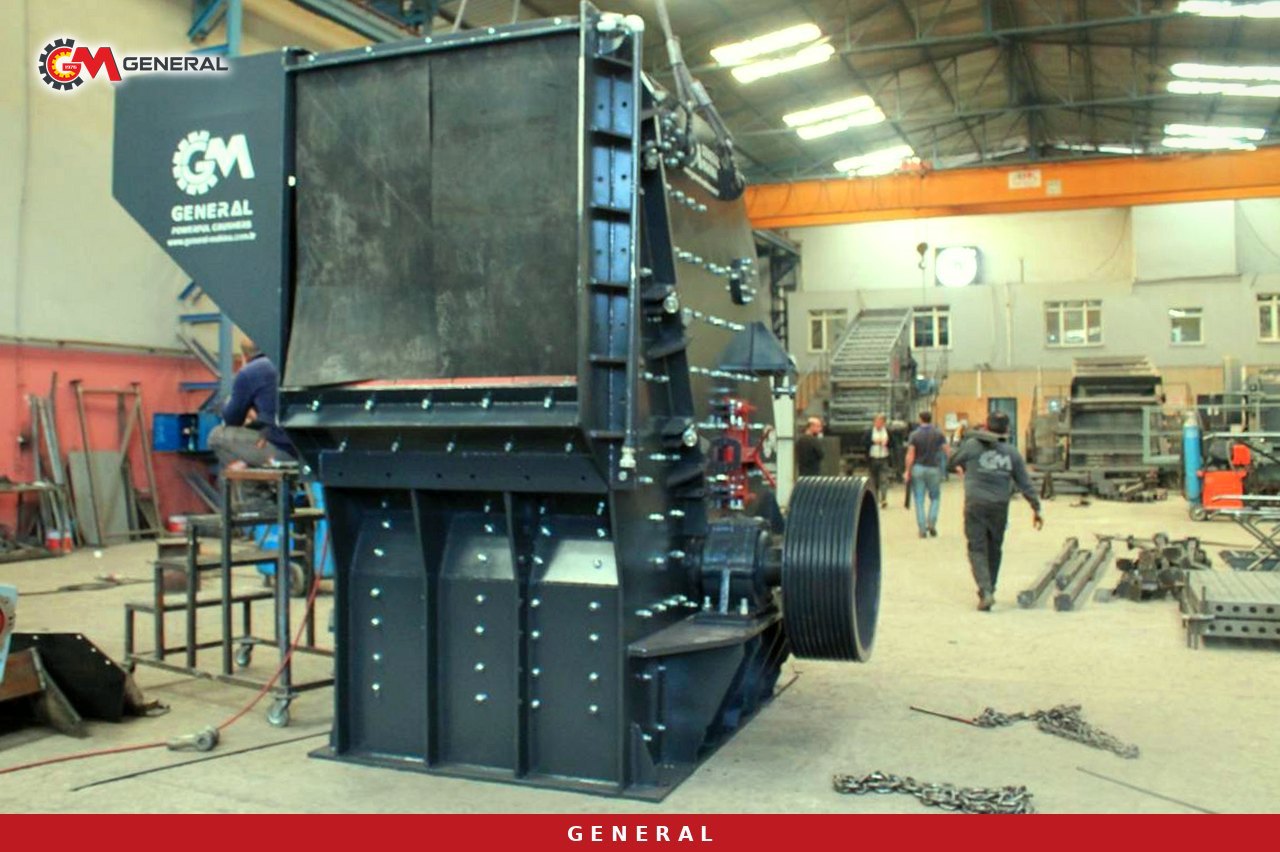
In ballast production the screen cleans as well as classifies. In the vibrating screen range, the GNR 2060 (2000×6000 mm, 18.5 kW) and GNR 2460 (2400×6000 mm, 22 kW) are the bodies that stand out for this tonnage. The top deck returns oversize to the secondary crusher, the middle deck separates ballast and the lower decks classify by-products. Since each additional deck reduces capacity by roughly 10%, the screen body should be chosen one size larger.
In dry, windy inland areas, dust affects both the working environment and the product. Water-spray dust suppression at crusher discharges and transfer points, covered conveyors and screen hoods are measures that can be selected per project. The ballast stockpile should be placed away from fines piles, taking the prevailing wind into account.
From port to quarry: shipping and site preparation in Algeria
A line leaving Izmir reaches one of Algeria's Mediterranean ports by sea and is then hauled to the quarry by road. For a stationary line, this means preparing the concrete foundation design in parallel with the machines; for mobile units, it means checking chassis dimensions against bridges and bends on the route. Points to settle before installation:
- Test reports on quarry samples against the ballast specification.
- Target ballast band and by-product list (fractions and proportions).
- Power source: grid connection or generator (550 or 750 kVA on mobile units)?
- Engine and hydraulic cooling in hot periods, dust filter service intervals.
- Water source for dust suppression and, if needed, ballast washing.
- Stockyard layout and truck or wagon loading arrangement.
Our 150 t/h General 01 mobile crusher project in Algeria is a concrete example of the experience we gained in shipping to the country and commissioning on site. All our machines carry ISO 9001 and CE certification and are covered by a 1-year warranty, excluding wear parts.
Frequently asked questions
Can a limestone quarry be used for ballast?
Only if the rock passes the abrasion and impact tests in the specification. A limestone quarry that fails is used for sub-base and concrete aggregate; for ballast, a quarry with hard igneous rock is sought.
Why don't you recommend an impact crusher as the secondary?
The impactor's roughly 10:1 reduction increases fines, and in high-silica rock wear part consumption speeds up. A cone crusher produces the ballast band more efficiently through controlled reduction and compression.
Is 300 TPH of ballast possible with a single mobile plant?
The GNR-MC110 is rated at 200-300 t/h, but its secondary is an impactor. In hard rock, two General 944 units with cone secondaries (each 120-180 t/h) are a better mobile solution.
What determines price and delivery?
Configuration (stationary or mobile), crusher sizes, number of screen decks, power source, dust suppression scope and shipping method. With this information we prepare a project-specific quotation.
Conclusion and quotation
A ballast line in Algeria is built right first through rock testing, then on a jaw-and-cone backbone, and finally with screening and dust measures. Impact crushers belong to the by-product branch of this line. Send your quarry test reports, target ballast band and site details through our contact page and we will prepare the configuration and quotation for your 200-300 TPH target.
Definitions of technical terms: Glossary