EN — English
 TR — Türkçe
 DE — Deutsch
 RU — Русский
 FR — Français
 ES — Español
 AR — العربية
 SR — Српски

Gabon Railway Ballast Mobile Stone Crushing Plant 150-250 TPH
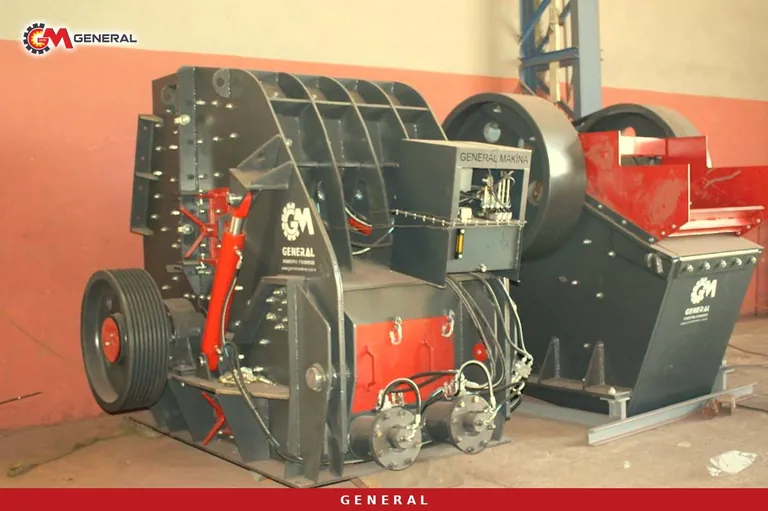
In Gabon, railway ballast means one line above all: the Transgabonais, running from the port of Owendo inland towards Franceville. Trucking ballast from a distant quarry for maintenance, renewal or new branches of that line gets expensive fast. Contractors therefore often take the machine to the rock and set up a mobile crusher on an outcrop close to the track. This article covers the real models that meet a 150-250 TPH ballast target, the work an equatorial climate adds to a crushing line and the site information to collect before asking for a quote. For work volume, tenders and schedules, check the specification of the relevant authority; here we deal with the machinery side.
Opening a quarry along the Transgabonais: what you meet on site
Much of inland Gabon sits on Precambrian basement rock, and granite and gneiss outcrops are common. The coastal basin is dominated by sedimentary rock. The hard, angular, wear-resistant stone that ballast needs usually comes from the crystalline rock inland. Weathering varies even within one outcrop, and you cannot reach sound rock until the laterite cover and the weathered band beneath it are stripped. Before choosing a crusher, take samples and have Los Angeles abrasion and flakiness tests run by an independent laboratory. Guessing at the rock of a specific quarry is a good way to pay for the wrong secondary crusher.
Access is a separate issue. Quarry roads cut through forest break up in the rain. The route that has to carry a single 70-tonne chassis, or two chassis of 55 tonnes each, should be walked and checked before the wet season starts. The railway itself is a logistics opportunity: if the quarry is close to the track, ballast can be loaded straight into wagons. In that case the loading ramp and stockpile area should be drawn together with the plant layout.
Most sites have no grid connection, so the plant runs on a generator. Generator rating depends on the model; the figures are in the table below.
Real configurations that cover 150-250 TPH
The range in the title is a target. Whether you reach it with one model, two units or a stationary line depends on quarry life and rock abrasiveness. The figures in the table come from our product pages; cells we do not know are left blank.
| Layout | Primary | Secondary | Capacity (t/h) | Max. feed | Screen | Generator | Weight |
|---|---|---|---|---|---|---|---|
| GNR-MC110 (twin chassis) | GPJ 110 jaw | DMK03 impact | 200-300 | 900 mm | 2000×6000 mm, 4-deck | 750 kVA | 2 × 55,000 kg |
| General 944 (single unit) | GPJ 90 jaw | GM430 cone | 120-180 | 800 mm | 1600×5000 mm, 3-deck | 550 kVA | 70,000 kg |
| 2 × General 944 (parallel) | 2 × GPJ 90 jaw | 2 × GM430 cone | 240-360 (combined) | 800 mm | 2 × 1600×5000 mm | 2 × 550 kVA | 2 × 70,000 kg |
| Stationary: GNRK 110 + cone + GNR 2060 | GNRK 110 jaw, 1100×850 mm opening | General cone crusher | GNRK 110: 200-350 | — | GNR 2060: 2000×6000 mm | — | GNRK 110: 33,000 kg |
GNR-MC110: the upper half of the range with one plant
The GNR-MC110 covers the upper half of the target on its own at 200-300 TPH. Its twin-chassis design helps on a ballast job: the primary chassis with hopper, feeder and GPJ 110 jaw can run alone, so during the first weeks of opening the quarry you can operate only the primary and produce stripping spoil and fill. The DMK03 impact crusher on the secondary chassis does well in limestone and medium-hard rock; in high-silica granite its blow bars wear faster. If you are considering the MC110 for a granite or gneiss quarry, wait for the abrasion result and ask for wear part consumption as a separate item in the quote.
General 944: cone secondary for abrasive rock
The secondary on the General 944 is a GM430 cone. Because it works by compression, metal part life in hard, abrasive granite is longer than with an impact rotor, and the product comes out cubical. A single 944 sits at the lower end of the range with 120-180 TPH. To get close to 250 TPH, two units have to run in parallel at the same quarry. That brings a side benefit: while one is down for maintenance the other keeps producing, and ballast delivery keeps pace with the track possession schedule.
Stationary line: a quarry that stays put for years
If the quarry will work the same spot for several years and a permanent rail loading ramp is planned, consider a line that starts with a GNRK 110 jaw crusher (200-350 TPH) and continues with a cone secondary and a GNR 2060 screen. The cone crusher's model-specific capacity table is supplied per project, so we left those cells empty. Stationary options are collected on the stationary crushing plants page, wheeled options on the mobile crushing and screening plants page.
A crushing sequence that protects the ballast grain
Ballast is the coarsest and most selective product a quarry makes. Running a tight setting is no problem for concrete chippings; for ballast, a tight setting crushes the target fraction into small sizes and dust. In practice, ballast yield depends on how coarse a setting the primary and secondary crushers can run.
A jaw primary is the clear choice here. The compression principle of the GNRK series handles high-silica rock safely, and the manganese steel jaw plates work-harden under impact. The secondary depends on the rock: cone for granite and gneiss, impact for softer, less abrasive rock. The high reduction of an impact crusher is not always an advantage for ballast, because it raises the share of material below ballast size. That undersize is not waste; it sells as road sub-base and concrete aggregate. Still, if you need to hit a ballast tonnage, the crusher settings must be set up for it.
Shaping crushers such as the cubicizer and VSI usually have no place in the ballast circuit; their job is shaping smaller aggregate and making sand. They come in as a second branch when the same quarry will also supply concrete and asphalt aggregate.
Laterite and clay in the wet season: remove them before the crusher
Gabon is wet for most of the year. Laterite and clay mixed into the feed from the quarry face turn sticky when wet; they build up in the jaw cavity, blind screen meshes and coat the ballast stone. Clean ballast is among the first clauses of any specification, because dirty stone ruins track drainage.
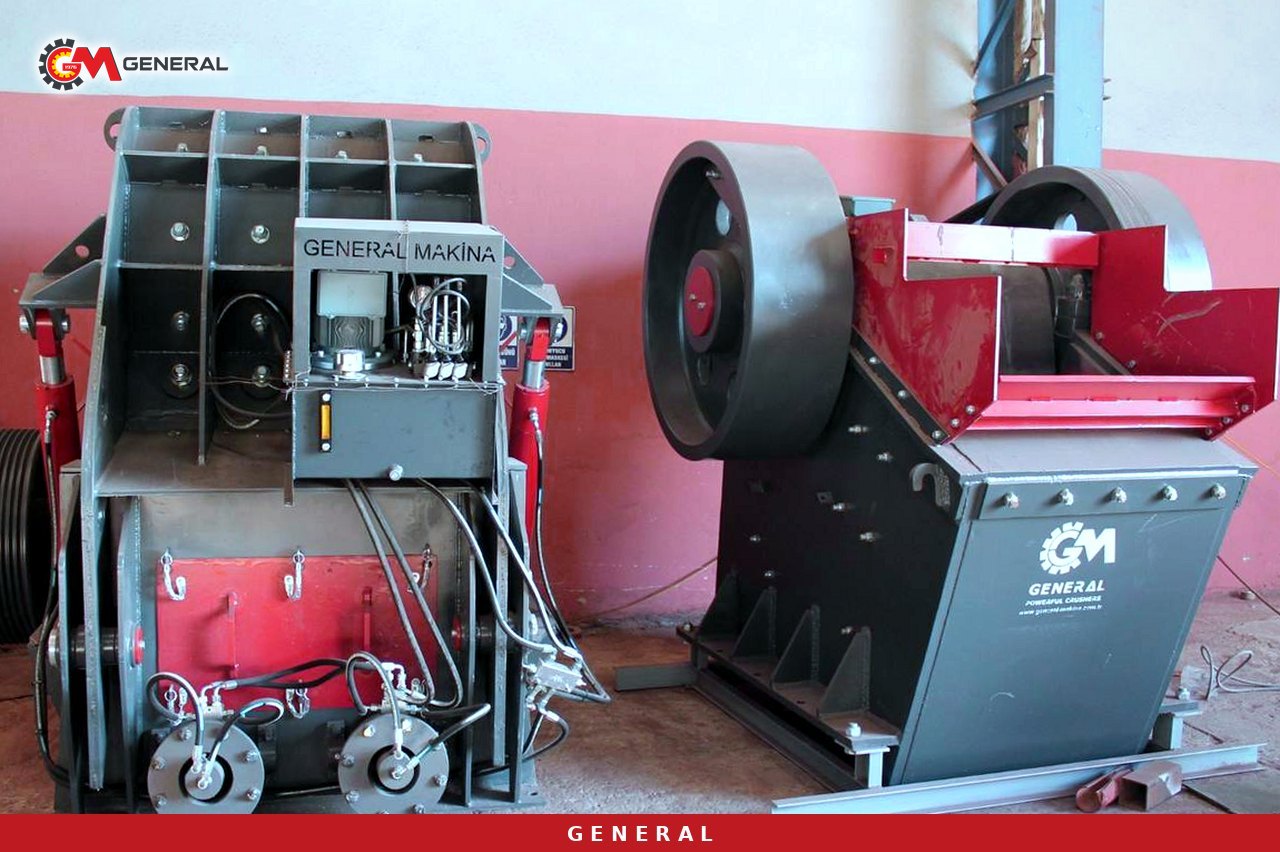
The fix starts before the crusher. The grizzly by-pass section of the vibrating grizzly feeder removes fines and soil without sending them through the crusher. The GNR 110 model of this feeder works at 200-300 TPH, matching the MC110's capacity. The soiled material goes on a separate conveyor to its own pile and never mixes with ballast. If clay content stays a problem, washing screens come into the discussion; that means extra investment and a steady water supply, so decide on the basis of sample results.
On a wet site, also check these points:
- Conveyor inclines should be chosen to stop wet material slipping, with chevron belts considered for steep transfers.
- Electrical panels and generator air intakes need protection from rain and humidity, and filter change intervals should be shorter than on a dry site.
- The ballast stockpile base should be drained and compacted; stock that sinks into mud gets contaminated and must be rescreened.
- Haul roads inside the quarry should be reinforced with crushed stone to carry heavy chassis in the rain.
Screen setup and using the material below ballast size
The lower and upper limits of the ballast fraction come from the railway specification. They are not the standard fractions on the product pages: 0-5 / 5-12 / 12-19 / 19-40 mm for the MC110 and 0-5 / 5-12 / 12-19 mm for the 944. Those are typical splits for concrete and road aggregate. For ballast, screen mesh openings are chosen at the order stage to match the specification. The top deck is set to the ballast upper limit and the one below to the lower limit; oversize returns to the crusher in closed circuit.
The MC110's 2000×6000 mm four-deck screen gives flexibility here: one deck goes to ballast and the others to by-products. The 944's 1600×5000 mm three-deck screen has fewer decks; if you need more by-product sizes, a separate screening unit can be added.
The undersize below ballast is a product that finds buyers in road and concrete work. To make it cubical at the same quarry, a cubicizer crusher can be put on a second branch; the GNR K110 model runs at 160-250 TPH with a maximum feed of 210 mm.
From Owendo to the quarry: shipping, power and spare parts
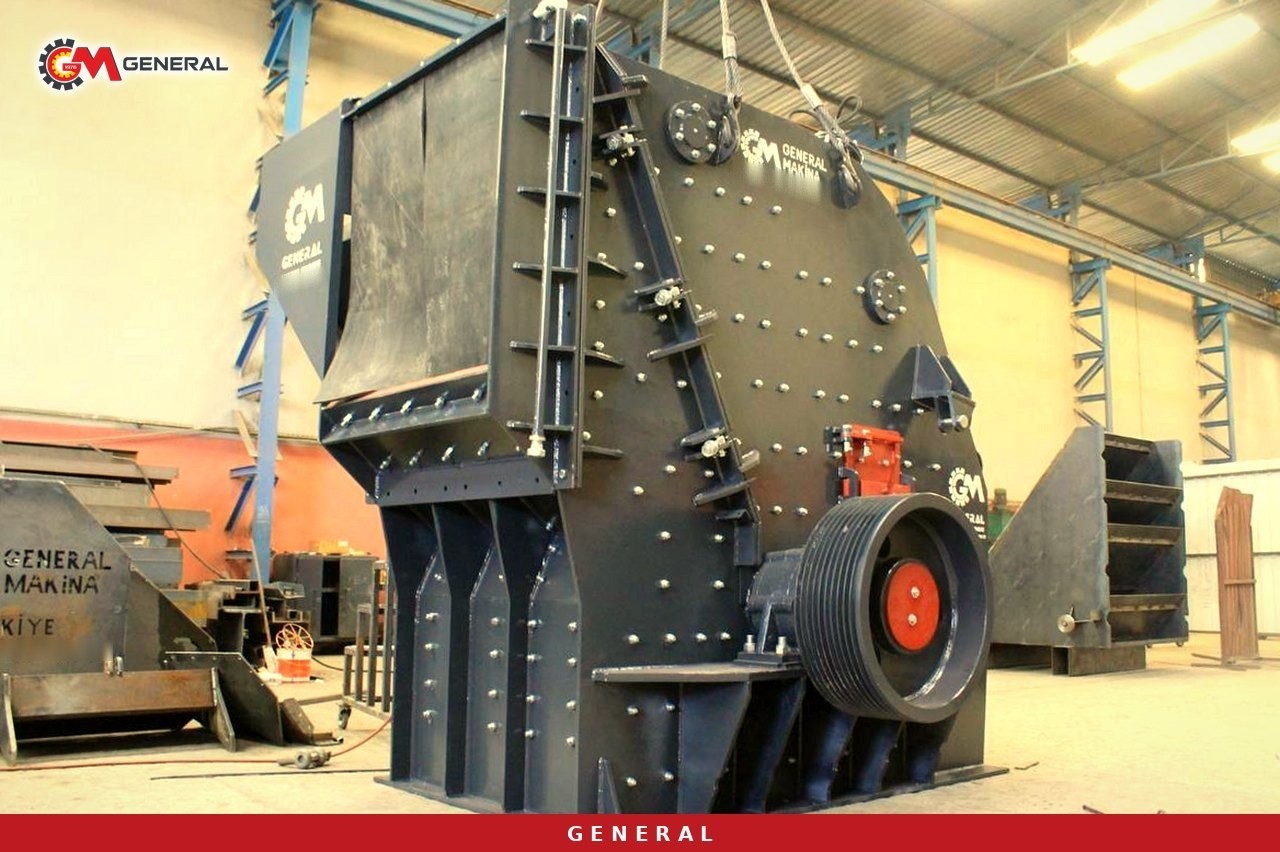
Equipment leaving Turkey reaches the port of Owendo by sea and continues to the quarry by road. Wheeled chassis pay off at this point: they are hitched to a tractor, towed along the route and need no concrete foundation on site. Plan around chassis dimensions. The 944 has a transport size of 4130 × 20350 × 4500 mm and weighs 70,000 kg. The MC110's primary chassis measures 3000 × 13500 mm and its secondary chassis 4200 × 18300 mm, each weighing 55,000 kg. Confirm bridge and culvert load limits with the road authority.
Allow for generator derating in hot, humid air. The 550 kVA figure for the 944 and 750 kVA for the MC110 cover the plant itself; the site office, workshop and lighting must be added separately. Waiting for parts at a remote site is lost production. It makes sense to order a set of jaw plates, cone liners or blow bars with the first shipment. Wear parts are excluded from the 1-year warranty, so plan consumption from the start. Our equipment carries ISO 9001 and CE certification.
The site file to send to our engineers
- Distance from the quarry to the track and to Owendo port, road condition and bridge limits.
- Rock samples and lab results: Los Angeles abrasion, flakiness, water absorption.
- Screen limits and allowed fines content in the ballast specification.
- Daily operating hours, target ballast tonnage and whether there is a market for by-products.
- Thickness of the laterite cover and observations on clay content in the feed.
- Water source for dust suppression or washing, and the power situation.
With this information our engineers prepare a reasoned recommendation between the MC110, the 944 and a stationary line. For the general framework of crusher choice, see our article on the best mobile crushing plant for hard, abrasive rock.
Frequently asked questions
Can an impact secondary be used in a ballast line?
It depends on the rock. In low-abrasion rock an impact secondary such as the DMK03 performs well. In high-silica rock such as granite and gneiss the blow bars wear quickly and the fines share rises; there a cone secondary like the one on the 944 is the better fit.
Can a single General 944 produce 250 TPH of ballast?
No. The 944 is rated at 120-180 TPH. Around 250 TPH needs two 944 units in parallel or the GNR-MC110 rated at 200-300 TPH.
Can the primary crusher run on its own?
On the MC110, yes; the primary chassis runs independently of the secondary. If you prefer a separate unit, the GNR 110 mobile primary jaw crusher with feeder hopper (180-300 TPH, 55,000 kg) is another option.
What sets the price and delivery time?
They depend on the chosen layout, screen decks and mesh openings, generator, spare wear part set and shipping method. We need to see the site file before we can give figures.
A closing note for a Gabon project
If the rock turns out to be granite or gneiss and the target is 150-180 TPH, a single General 944 is a sound start. For a target approaching 250 TPH, two 944 units come into play, or the GNR-MC110 if the rock is low-abrasion. If the quarry will stay in one place for a long time, a stationary line is worth evaluating. Send us your sample results and ballast specification, and let us settle the right layout together over WhatsApp or through our contact page.
Definitions of technical terms: Glossary