EN — English
 TR — Türkçe
 DE — Deutsch
 RU — Русский
 FR — Français
 ES — Español
 AR — العربية
 SR — Српски

Qatar Mobile VSI Sand Crushing & Screening Plant 90-180 TPH
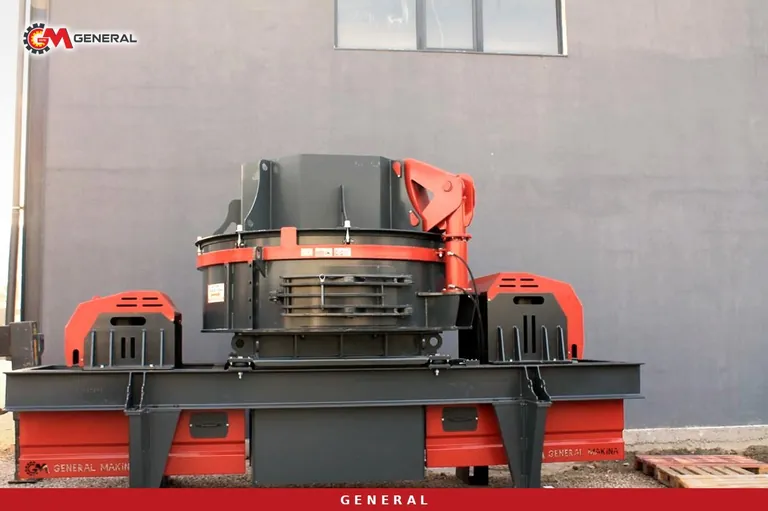
A ready-mix, precast or asphalt producer in Qatar has two weak options for sand. One is dune sand, rounded by wind and squeezed into a narrow size range. The other is material from near-shore areas, which carries a chloride risk. Meanwhile the same pile grows every day under quarry and crushing lines: 0-5 mm crusher dust, 5-20 mm chips left on the screen, and gabbro and limestone fines. A vertical shaft impactor (VSI) turns that pile into cubical manufactured sand with broken corners and the same grading from batch to batch. This article covers what is inside the wheeled GNR-MVSI 900 for an investor targeting 90-180 TPH of sand on a Qatar site, how it is set for each rock, how chloride and fines decide between a dry and a washed line, and the details that keep the machine running on a hot, humid and dusty coast.
All capacity, feed, power and weight values in the text come from our product pages. Confirm the project's sand specification (Qatar projects usually reference QCS) and quarry permits with the relevant authority and the project documents.
Three things a Qatar site expects from sand: chloride, particle shape and fines
In the Gulf, reinforcement corrosion is one of the main things that shortens the life of a concrete structure, and its source is often chloride and sulphate brought into the mix with aggregate. That is why project specifications in Qatar set separate chemical limits for sand. Manufactured sand has a natural advantage here: it comes from a known quarry face, not a coastal deposit. Salt can still be present in the rock itself or in sabkha zones at the quarry floor. Choosing a machine before the laboratory has measured it usually means adding a washing unit later.
The second criterion is particle shape. Dune sand is rounded and gathers in a very narrow size band, so it cannot fill voids in the mix. Flaky, angular crushed sand, on the other hand, hurts workability and raises water demand. The VSI rotor throws each particle at high speed against rock or an anvil, so flat and sharp pieces break and a cubical grain remains. This makes it easier for the batching plant to hold its water-cement ratio.
The third is the fraction below 75 microns. When sand is crushed from limestone, fines rise quickly. Whether those fines are rock flour or clay changes the outcome: rock flour is accepted up to a limit, clay is not. The methylene blue test separates the two. Its result decides whether the line can stay dry.
Limestone, dolomite and gabbro fines: the rock decides the rotor mode
The surface of the Qatar peninsula is largely limestone and dolomite layers. Most of these rocks are low in silica and brittle. On the other hand, gabbro brought from neighbouring countries is widely used as coarse aggregate in Qatar concrete, and screening that aggregate produces fine chips and dust. A sand line can see both materials, but not with the same setting.
Gabbro is hard and abrasive. On this material the VSI runs in rock-on-rock (autogenous) mode: the particle thrown by the rotor hits a bed of its own rock built up inside the crusher instead of a metal anvil. Metal wear drops to a minimum, and the wearing parts are mainly the rotor tips and wear plates. On high-silica rock, ceramic or tungsten carbide reinforced tips can be selected.
Clean limestone behaves differently. The rock is soft, so anvil mode gives a stronger crushing effect and a higher sand yield. On a face with chert or silicified bands, though, the anvil plates wear faster than expected. So look at the hard bands in the face as well as the sample average. On low to medium abrasive limestone, the GNR series tertiary impact crusher can also produce crushed sand; on siliceous material a VSI gives a more economical and more cubical result.
GNR-MVSI 900: a sand line on a single wheeled chassis
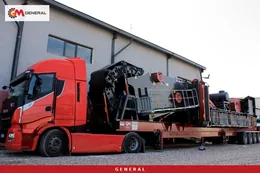
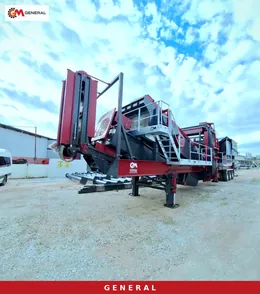
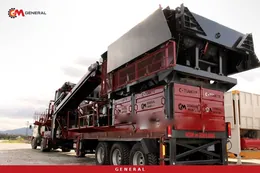
The GNR-MVSI 900 is a shaping stage added behind a primary and secondary plant. According to its product page it runs at 90-180 TPH, accepts feed up to 50 mm and delivers a 0-20 mm product. It weighs 42,000 kg and its transport dimensions are 4100 × 16200 × 4500 mm. It draws power from an 850 kVA generator, the highest power unit in our mobile range. At a quarry around Doha with no grid connection, or at a temporary sand point inside a construction site, this unit solves the power question on its own.
Hopper, sand feeder and VSI 900
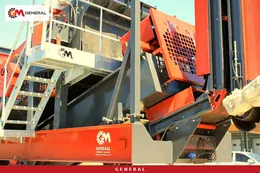
Material is first tipped into a hopper with a vibrating sand feeder. The feeder steadies the flow and gives the VSI 900 crusher a constant amount of material. When the rotor is fed full and evenly, the rock bed forms properly and the grain shape comes out consistent. Irregular feeding is the most common efficiency loss on a VSI: when the rotor alternates between empty and full, sand yield falls and the tips wear unevenly. The rhythm of the loader operator filling the hopper matters as much as the machine setting.
1600×5000 mm 3-deck screen and fractions
Material leaving the crusher is split on a 1600×5000 mm, 3-deck horizontal screen on the same chassis into 0-3, 3-5 and 5-12 mm groups. Conveyors carry each group to its own stockpile. A concrete plant in Qatar can take 0-3 and 3-5 mm sand separately and blend its own curve; an asphalt plant uses the 5-12 mm group as fine chips. If too much oversize comes off the screen, a belt can return it to the VSI to form a closed circuit.
Which layout to choose for 90-180 TPH of sand
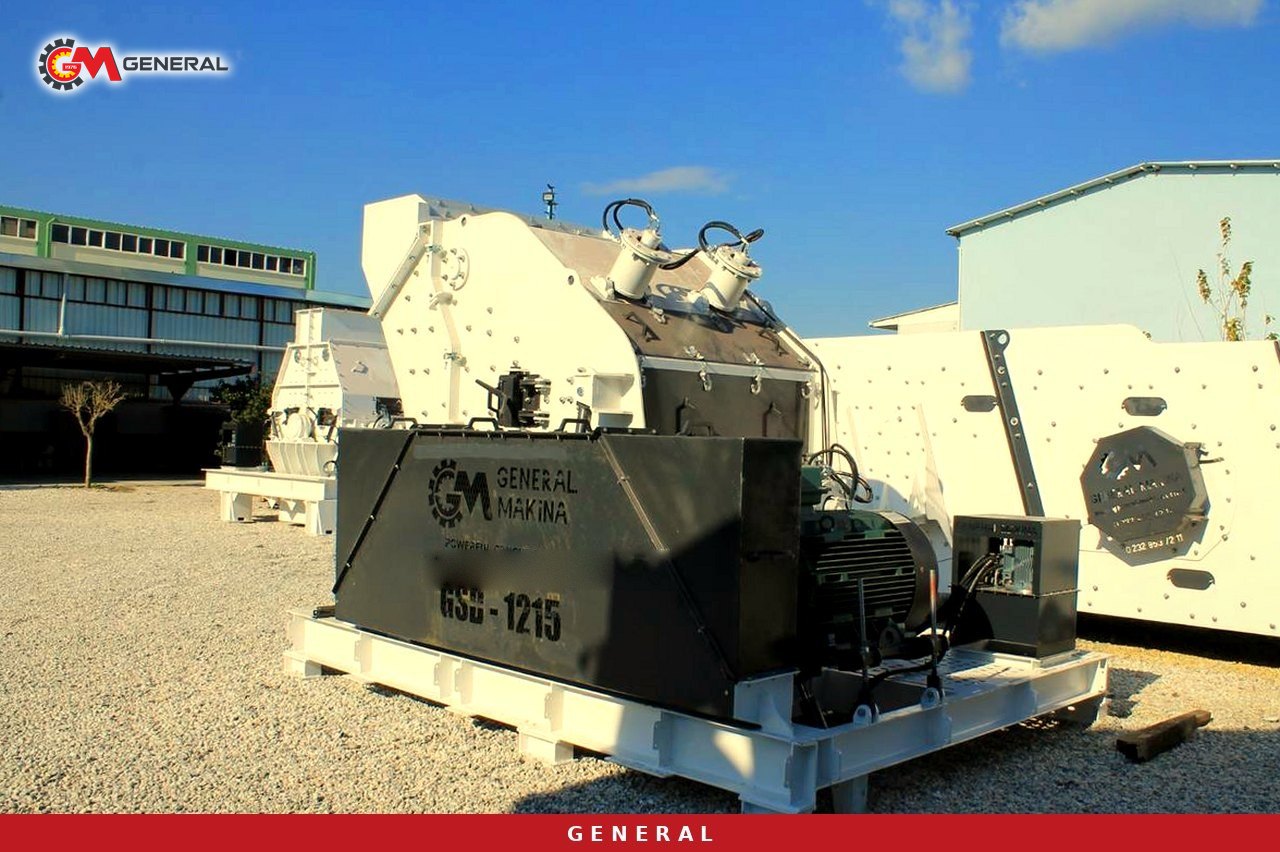
A single wheeled unit covers the title range, but the situation of a Qatar operator does not always suit one unit. If a sand stage is being added to an existing stationary line, if the electrical infrastructure is ready, or if the material is soft limestone, other models come into play. The table below uses the values on our product pages; unknown cells are left blank.
| Model | Type | Capacity (t/h) | Max. feed (mm) | Power | Output |
|---|---|---|---|---|---|
| GNR-MVSI 900 | Wheeled VSI + 3-deck screen | 90-180 | 50 | 850 kVA generator | 0-3 / 3-5 / 5-12 mm |
| Mobile VSI tertiary unit | Single-chassis VSI sand maker | 60-250 | 0-200 | — | 0-10 mm |
| GNR 900 VSI (stationary) | Vertical shaft impactor, 900 mm rotor | 80-210 | 50-55 | 2×200 kW | — |
| GNR 800 VSI (stationary) | Vertical shaft impactor, 800 mm rotor | 55-160 | 40-50 | 132-160 kW | — |
| GNR 100 tertiary | Tertiary impact crusher | 90-160 | 150 | 160 kW | mainly 0-5 mm sand |
The GNR-MVSI 900 is the only model carrying a screen and a generator on its chassis. For a Qatar project that moves between sites, has no grid or needs a short installation time, it is the first candidate. The mobile VSI tertiary unit was designed to turn the oversize of an existing mobile crusher into sand; it has no screen of its own and connects to the screening layout of the plant already on site.
At a long-life quarry with a ready power connection and a fixed line position, the stationary GNR series vertical shaft impactor may fit better. The 80-210 t/h range of the GNR 900 also covers the top of the title band, but it needs a separate screen, hopper and steel structure. On clean, chert-free limestone the GNR series tertiary crusher is worth considering; because it accepts 150 mm feed, the crushing stage in front of it can be kept simpler. If gabbro fines are also processed, this option raises wear part consumption.
Dry line or washed line: the salt and dust decision
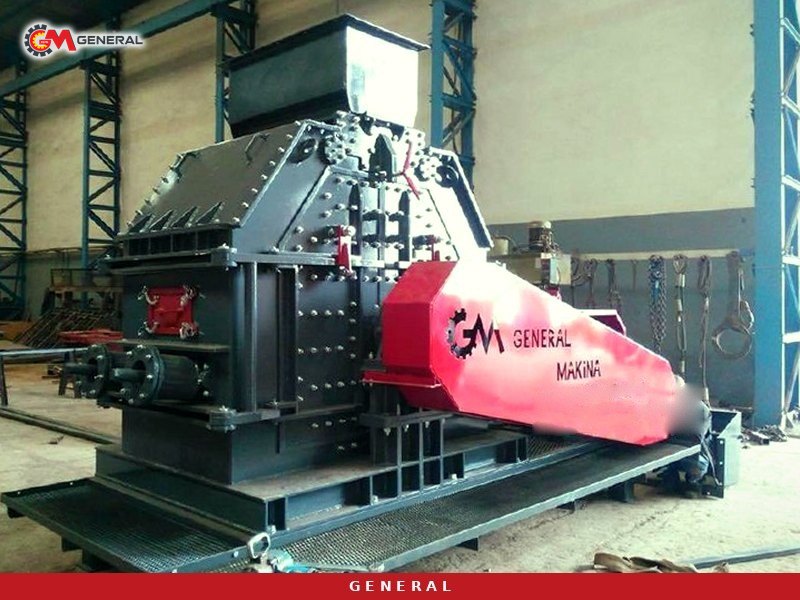
In Qatar, where water is costly and arrives by tanker at most sites, the first choice is a dry line. In a dry line the fines content of the sand is controlled through screen settings and feed preparation: if part of the 0-3 mm dust is removed on a pre-screen before the VSI, the rotor does not carry useless material and fines at the outlet drop. If the methylene blue result is good and chloride is within limits, this route is enough.
If the laboratory shows clayey fines or high salt, washing cannot be avoided. In that case a sand washing screw and mining washer unit is added behind the VSI. To cut water demand, a settling pond or recovery system is planned for the project. Because the washing decision changes the number of machines, the site area and the power demand, it should be settled at the quotation stage.
Use this checklist for the sample sent to the laboratory:
- At least two representative samples, taken separately from the face and from the crusher dust pile
- Sieve analysis and the share below 75 microns
- Methylene blue test (clay or rock flour)
- Water-soluble chloride and sulphate values
- The blend ratio if gabbro and limestone will be processed together
- Los Angeles abrasion value or a similar hardness indicator
Keeping a VSI running on a hot, humid and dusty coast
In Qatar's summer months, heat is joined by high humidity and salty air at sites close to the coast. Under these conditions the generator and the electrical panel take the most strain. Extra pre-filters and frequently checked cartridges on the air intake of the 850 kVA generator, dust seals on the panel and air-conditioned or fan cooling are measures that can be chosen per project. A sunshade on the sun-facing side of the generator is a simple but effective site practice.
Dust leaves a VSI line at two points: the crusher discharge and the top of the screen. Enclosed belt transfers, a dust cover over the screen and water-spray dust suppression at discharge points should be planned for worker health and for relations with neighbouring facilities. On a dry line the spray dose is kept low; excess moisture makes 0-3 mm sand clump on the screen.
Inspection of rotor tips and wear plates should be tied to the shift pattern. On a line working night shifts, maintenance is usually moved to the cool morning hours. Spare tips and plates kept in stock on site turn a long stoppage into a change of a few hours. Wear parts fall outside the 1-year warranty, so adding a spare set to the first order makes sense. For a shipment arriving through Hamad Port, check in advance that the 4100 × 16200 × 4500 mm transport size fits the route between port and site.
Frequently asked questions
Can I make concrete sand by passing dune sand through a VSI?
Usually not. Dune sand grains are already fine and single-sized; a VSI cannot create a new fine fraction from them. Dune sand can be blended with manufactured sand at a set ratio, and the laboratory decides that ratio.
Can I feed run-of-quarry rock directly into the GNR-MVSI 900?
No. The machine takes feed up to 50 mm. It needs a primary and secondary crushing plant in front. If there is an existing limestone plant in Qatar, its undersize and oversize can feed this unit. For the front stages, see our wheeled mobile crushing and screening plants.
Can I switch between rock-on-rock and anvil mode later?
On a VSI the operating mode is set by the arrangement inside the crusher. Which mode suits which rock, and how the switch is made, is clarified from the sample before the order.
What warranty and certificates apply?
Our machines are manufactured under ISO 9001 and CE and carry a 1-year warranty; wear parts are excluded. Price and delivery plan are given in the quotation, based on the sample result and the required layout.
Conclusion and quotation file
For 90-180 TPH of manufactured sand in Qatar, the GNR-MVSI 900 is the first candidate on most sites because it carries the crusher, screen and generator on one chassis. On clean limestone a tertiary impact crusher, and at a long-life quarry with grid power a stationary GNR 900 VSI, are worth considering. The sample result makes the decision, not the catalogue. To prepare a quotation, send us the rock type and laboratory results, target fractions, feed source, site power situation and washing requirement through our contact page; our engineers, building crushing and screening plants in Izmir since 1976, will prepare a configuration for your project.
Definitions of technical terms: Glossary