EN — English
 TR — Türkçe
 DE — Deutsch
 RU — Русский
 FR — Français
 ES — Español
 AR — العربية
 SR — Српски

Kuwait Road & Housing Mobile Crushing & Screening Plant 150-250 TPH
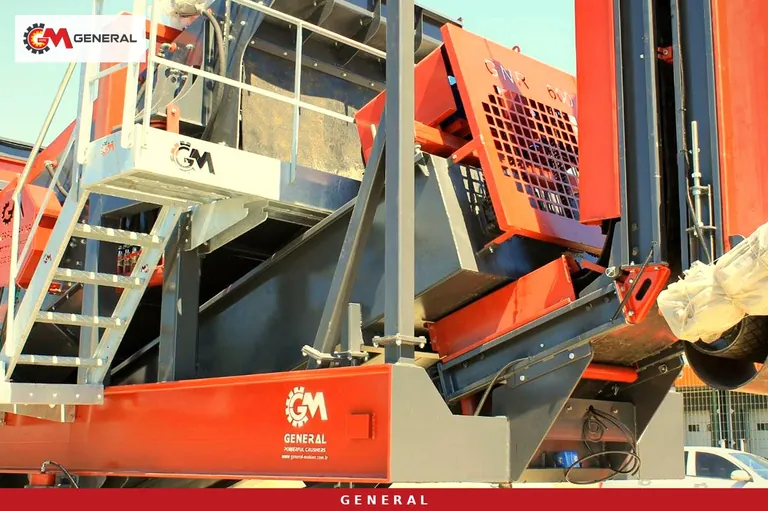
For a contractor running road and housing work in Kuwait at the same time, the aggregate problem is less about finding a quarry and more about splitting the available material into the right products. Most of the country is flat desert, hard rock outcrops are scarce, and site feed usually comes from one of three sources: desert gravel deposits, large rock shipped in by sea, and demolition concrete from older buildings being replaced. Housing sites want clean concrete sand and washed coarse aggregate; road sites want base, sub-base and asphalt chippings. This article splits the 150-250 TPH target across those three feed sources and two buyer profiles. Every model and figure quoted comes from the technical tables on our product pages; the aggregate specification of your own project must always be confirmed with the relevant authority and the contract documents.
The feed source decides half of the plant
The same 200 tonnes per hour turns into three different plant layouts depending on the feed. Choosing a crusher type before the incoming material is known is the most common planning mistake on Kuwaiti jobs.
Desert gravel: screen first, crush second
Material won from the gravel plains in the north and west of the country is mixed in size, largely rounded and dusty. A large share of it is already sand or fine gravel; sending all of it through a crusher wastes energy and wear parts. The right layout separates the material on a mobile screen first and sends only the oversize to the crusher. Crushed particles gain fractured faces; the fractured-face share required for asphalt wearing course and concrete is defined in the specification and should be checked on samples together with a sieve analysis.
Imported rock by sea: jaw primary
When hard rock is sourced from regional quarries by ship, it lands at the port stockyard as blocks or large pieces. Hardness and abrasiveness vary with the supplier; on high-silica rock, starting with a jaw primary keeps wear cost under control. If a softer block such as limestone arrives, an impact primary gives higher reduction and a more cubical product. Base the rock type on a laboratory test, not on the supplier's declaration.
Demolition concrete: impact rotor
Concrete from old housing blocks removed in urban renewal zones can serve as road sub-base material if crushed correctly. An impact rotor separates mortar from coarse aggregate and helps free the rebar; a magnetic separator to pull steel off the belts is added per project. Details are on our concrete recycling plant page. Which layer may accept recycled aggregate depends on the authority's specification.
Housing and roads want different products from one line
When housing and road sites are fed from the same crushing and screening plant, the real job is balancing the fractions. A four-deck screen produces four products in one pass, but demand for each does not move at the same pace. A typical split looks like this:
- Housing concrete: 0-5 mm concrete sand, 5-12 and 12-19 mm coarse aggregate; dust and clay in the sand are limited, so washing is often required.
- Road base and sub-base: 19-40 mm and graded material; aggregate recovered from demolition concrete can also fit here if the specification allows.
- Asphalt layers: cubical 5-12 and 12-19 mm chippings with fractured faces; the flaky particle share must stay low.
- Utilities and fill: undersize and by-pass product, used for pipe bedding and backfill.
When housing phases peak, the bottleneck is usually concrete sand; during road phases the 19-40 mm stockpile shrinks fast. A closed-circuit plant can shift the product split to some degree by returning oversize to the crusher, but the stockyard still needs a separate, sufficiently large area for each fraction.
Real models and configurations for 150-250 TPH
The table below holds only values defined on our product pages. Actual throughput depends on the hardness, moisture and grading of the feed.
| Configuration | Capacity | Max. feed | Crusher / screen | Power unit | Suitable feed |
|---|---|---|---|---|---|
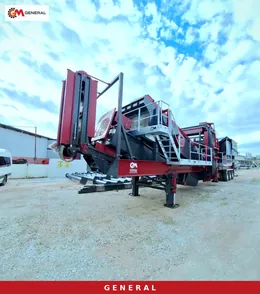
| General 02 | 250-300 t/h | 1000 mm | GPS 1413 impact; 2000×5000 mm 4-deck screen | 660 kVA | Demolition concrete, limestone block, gravel oversize |
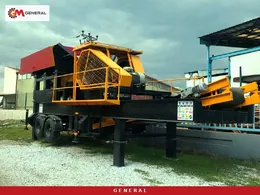
| GNR-MC110 (twin chassis) | 200-300 t/h | 900 mm | GPJ 110 jaw + DMK03 impact; 2000×6000 mm 4-deck screen | 750 kVA | Abrasive, hard imported rock |
| General 03 | 250-375 t/h | 900 mm | GPS 1415 impact; 2400×5000 mm 4-deck screen | 750 kVA | High tonnage at one site, low-abrasion stone |
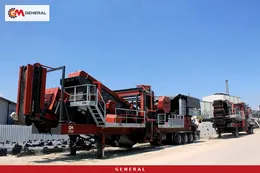
| GNR ME2060 + General 01 | Screening 200-350 t/h; crushing 120-180 t/h | 0-100 mm / 700 mm | 2000×6000 mm 3-deck screen + GPS 1210 impact | / 550 kVA | Desert gravel |
| GNR YM1650 (add-on unit) | 120-180 t/h | 0-100 mm | Washing screen + sand screw | Grid or generator | Concrete sand washing |
Read the table with one point in mind: 250 TPH, the top of the target band, is the bottom of the range for the General 02 mobile crushing and screening plant. The machine therefore runs without straining at its limit and leaves headroom to recover the daily target after wear-part changes or short stops. For hard, abrasive rock the GNR-MC110 twin-chassis jaw line stands out; because its primary group can run on its own, port-delivered blocks can be pre-crushed and stockpiled first, with the secondary group brought in later. For gravel feed a two-unit combination makes more sense than a single crusher: the ME2060 strips out finished fractions up front and the General 01 crushes only the oversize. The 120-180 TPH crushing rate of the General 01 alone does not reach the top of the target; total line output depends on the oversize share in the gravel and must be calculated from the sieve analysis. Other wheeled options can be compared in the mobile crushing and screening plants category.
Dry screening or washing: the water question in Kuwait
The GNR ME2060 runs dry and carries no washing unit. A 100 mm grizzly over its 20 m³ hopper removes large rock at the first stage, an 800 mm main belt carries material to the 2000×6000 mm three-deck screen, and the screen, driven by a 22 kW motor, splits the feed into four fractions. A fan-cooled electrical panel, remote control and a double-axle chassis are standard. That is enough to strip the oversize out of desert gravel and to classify material bound for road base.
Concrete sand is a different matter. In desert-origin sand, fine dust and clay affect concrete strength and water demand, and dry screening cannot fully remove that fine fraction. Decide with sand equivalent (SE) and methylene blue (MBV) tests rather than by eye. If the tests show washing is needed, the GNR YM1650 mobile washing and screening plant working in the same 120-180 TPH band, produces clean sand with a washing screen and a sand screw. Fresh water is a limited resource in Kuwait, so the water supply, settling pond and water recovery for a washing line must be planned before the machine is ordered; otherwise water supply will cap production once the unit arrives.
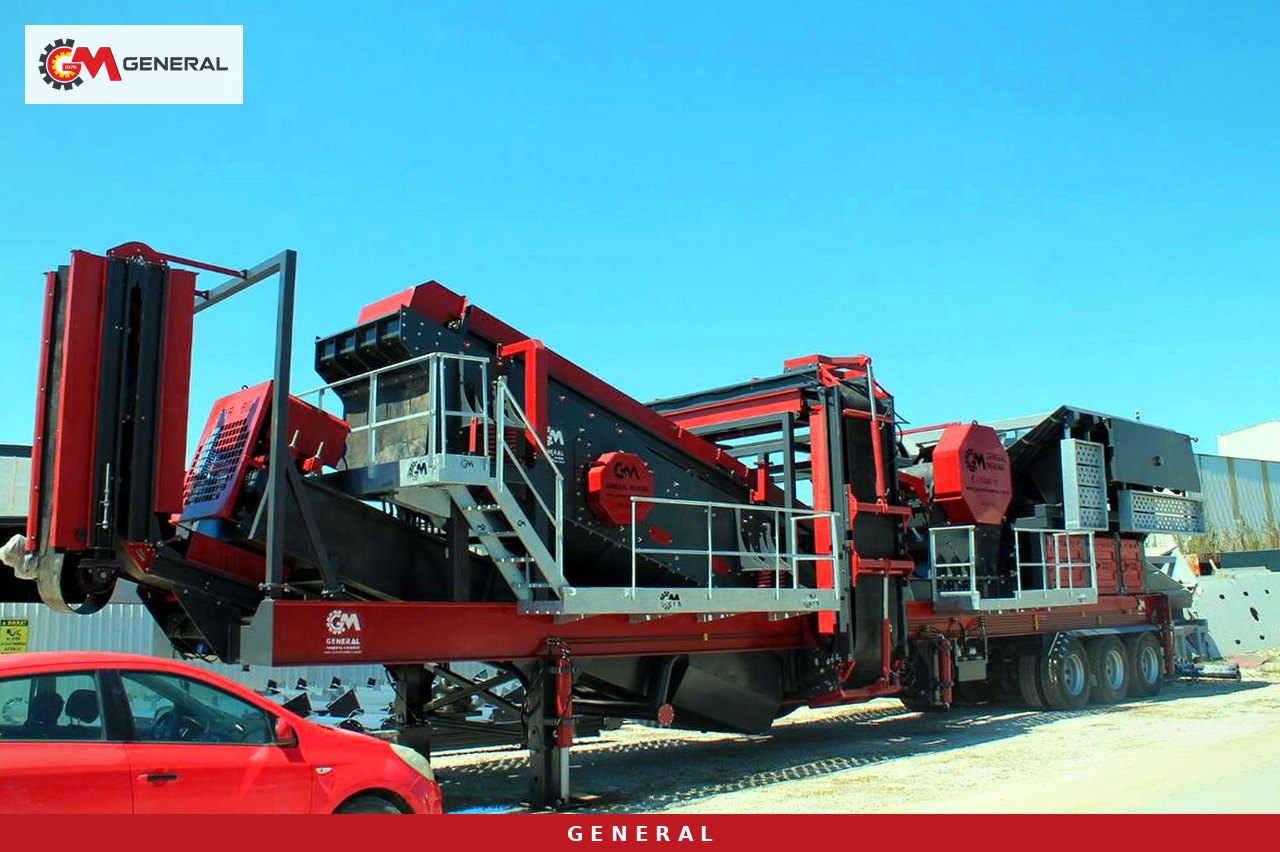
Shamal wind, fine dust and heat: site operating measures
The north-westerly shamal wind and high summer temperatures in Kuwait hit engine and generator air filters first, then electrical panels and bearings. The measures available are at design and operating level; none of them is a guaranteed figure on its own:
- Generator and engine air filters are checked more often than the manufacturer's normal interval during dusty periods, with spare filters kept on site.
- Ambient site temperature is taken into account when sizing the generator. The 660 kVA and 750 kVA values in the table are the standard power units of each model; derating in extreme heat is checked against the generator maker's data.
- Water-spray dust suppression at the crusher discharge and transfer points, plus belt covers, are added per project; this matters most on urban renewal sites close to housing.
- Screen media and belt maintenance is scheduled at shift start or in the evening rather than in the hottest hours.
A fan-cooled panel is standard on the ME2060; panel cooling for other models is discussed at project stage. Wear parts use manganese-cast jaw and impact elements, and inspection intervals should be kept short on the assumption that sandy feed accelerates wear.
From port to site: what a wheeled chassis means in Kuwait
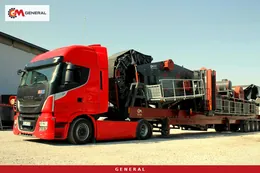
Machines arrive by sea at Kuwaiti ports and are towed to site by road. The wheeled chassis does two jobs here: it simplifies heavy haulage, and it lets the plant relocate quickly as the road alignment advances or a new housing phase opens. Weights and dimensions drive the transport plan: the General 02 weighs 76,000 kg with dimensions of 4340×20600×4500 mm; the GNR-MC110 splits into a primary and a secondary chassis of 55,000 kg each. The YM1650 is a single chassis of 21,000 kg measuring 4200×13600×4500 mm. Get current information on heavy-load permits and route restrictions from the competent authorities.
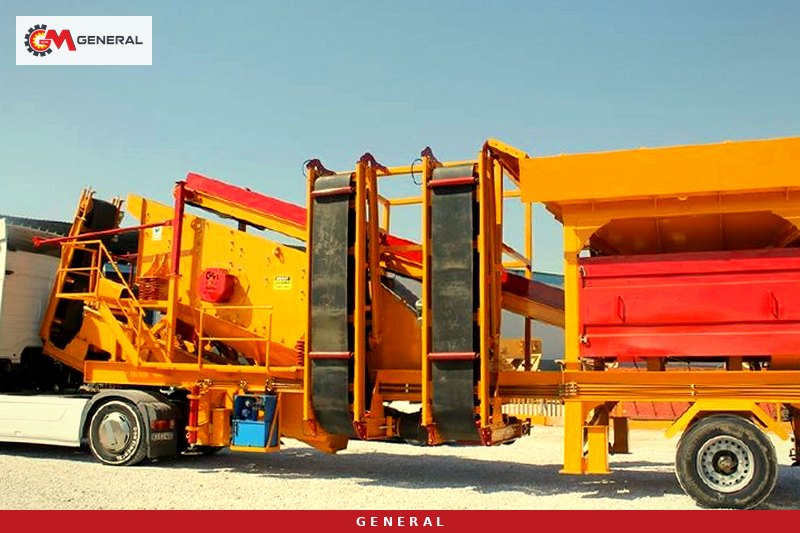
When siting the plant, distance to the housing and road sites, truck traffic and stockyard space are assessed together. One line at a central point can feed both sites; as the alignment gets longer, moving the crushing group along the road while keeping the washing unit near the housing side can be more efficient. All washing and dry screening options are listed on the mobile sand washing and dry screening plants page.
Frequently asked questions
Can desert gravel be used directly as concrete aggregate?
Yes, if sieve analysis, sand equivalent and fractured-face share meet the specification. In most cases the oversize needs crushing and the sand needs washing, which is why adding a YM1650 to the ME2060 + General 01 layout is a common setup.
Can aggregate from demolition concrete go into road base?
Technically an impact crusher produces suitably sized product; whether it is permitted, and in which layer, depends on the authority's specification. Clarify that approval and the required test methods before ordering.
Should I choose impact or jaw?
On limestone, demolition concrete and low-abrasion feed, the impact-primary General 02 or General 03 gives high reduction and a cubical product. On high-silica hard rock, the jaw-primary GNR-MC110 gets longer life from its wear parts.
What drives the quotation?
Model and configuration, generator or grid supply, washing unit, extras such as dust suppression and belt covers, shipping method and the spare wear-part package. Once these are clear, a project-specific quotation is prepared.
Conclusion: pre-order checklist
The right plant for road and housing aggregate in Kuwait is chosen working back from the feed source. Bring the following to the first meeting and the configuration can be settled in one round:
- Feed source (desert gravel, imported rock, demolition concrete) and largest lump size.
- Sieve analysis, sand equivalent and methylene blue results.
- Product list for housing and roads with estimated shares.
- Fractured-face and flakiness limits in the specification.
- Power source: grid or generator.
- If washing is needed, the water source and recovery plan.
- Route from port to site and how many times the plant will relocate.
General Makina has built crushing and screening plants in Izmir since 1976; our plants carry ISO 9001 and CE certification and a 1-year warranty excluding wear parts. For a model recommendation and quotation for your Middle East project, contact us.
Definitions of technical terms: Glossary