EN — English
 TR — Türkçe
 DE — Deutsch
 RU — Русский
 FR — Français
 ES — Español
 AR — العربية
 SR — Српски

Opening a Quarry: Which 100-300 TPH Stone Crushing Plant Do You Need?
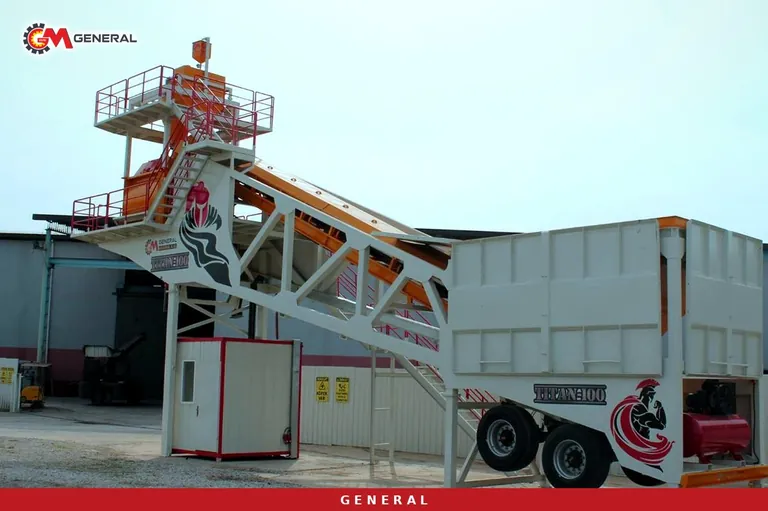
Once the permit is granted and the haul road is cut, the crushing and screening plant becomes the first large purchase in a new quarry, and it shapes the next ten years of the operation. A plant that is too small cannot deliver the orders your sales team brings in. One that is too large runs half loaded, burns generator fuel for nothing and takes a long time to pay back. This article walks an investor planning 100 to 300 TPH through the information needed before ordering, the crusher arrangement that suits each rock type, and the real models in our range that cover this band.
Every figure below comes from the technical data on our product pages. Capacity ranges shift with rock hardness, moisture and the product sizes you want, so the final selection is always made on the test result of a sample taken from your own face.
Reserve, market and rock: three inputs that size the plant
In our first meeting with a quarry owner we do not talk about machines. We settle three questions. The first is the reserve: the workable rock inside the permit area tells you how many years the plant will stay on site. A reserve of a few years points to a mobile line; several decades bring a stationary line on concrete foundations into the discussion. The second is the market: who buys the aggregate, in which fractions and how much per year? Ready-mix producers want 0-5 mm sand plus 5-12 and 12-19 mm chippings, while road contractors look for coarser material and sub-base for stabilization plants. The third is the rock itself: basalt and limestone are not processed efficiently by the same crusher.
Collecting the following on one page before asking for quotations lets you put the same question to us and to other manufacturers, so the offers can be compared side by side.
- Rock type and lab results: compressive strength, Los Angeles abrasion loss, silica content.
- The largest block size after blasting, which is what has to enter the crusher mouth.
- Products you plan to sell and the expected annual tonnage of each.
- Whether grid power reaches the site or the plant will run on a generator.
- How many years the reserve will last and whether the plant will move to another site.
- Daily operating hours, number of shifts and working days per year.
From an annual target to an hourly rating
Investors usually speak in tonnes per year; manufacturers speak in tonnes per hour. The conversion is simple, but the availability factor that goes into it is often too optimistic. Maintenance stops, screen mesh changes, waiting during blasting and weather all eat into the hours that look available on paper.
Method
Required hourly capacity = annual target in tonnes / (working days per year × net operating hours per day × availability). For a new line, an availability between 0.70 and 0.80 is realistic. The result should fall in the middle of the chosen model's capacity range, not at its upper limit.
Hypothetical example
Take a hypothetical quarry: 250 days a year, 9 net hours a day, availability 0.75. For an annual target of 300,000 t the calculation is 300,000 / (250 × 9 × 0.75), roughly 178 TPH. With the same assumptions, an operation aiming at 500,000 t a year needs about 296 TPH. In the first case a 120-180 TPH line would run at its limit; if sales are expected to grow, a 200-300 TPH class plant is a more comfortable start. These numbers are only an illustration, so redo the calculation with your own calendar and market forecast.
Matching the crusher sequence to the rock
Two plants with the same tonnage can produce very different wear costs on different rock. That is why we look at crusher type first and capacity second.
Basalt, granite and quartz-rich rock
On hard rock with high silica, the primary stage is a jaw crusher. In the second stage a cone crusher works by compression, so its metal parts last longer in abrasive stone. Where cubic shape and a high reduction ratio come first, a jaw plus impact arrangement is chosen with an impact crusher in the second stage; the rotor wear parts then need closer monitoring.
Limestone and low-abrasion rock
In soft, low-abrasion stone such as limestone or dolomite, a primary impact crusher achieves high reduction in a single stage and produces cubic chippings. The initial investment for this layout is usually simpler. Running the same machine in a basalt quarry, however, consumes blow bars and plates very quickly. If your face has several veins, decide on the test result of the hardest one.
Models that cover 100-300 TPH
Within our wheeled mobile crushing plants, four models fall into this band. All values in the table are taken from the product data sheets.
| Model | Capacity | Product sizes | Crusher arrangement | Feed size | Generator |
|---|---|---|---|---|---|
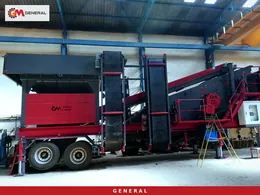
| General 944 | 120-180 t/h | 0-5 / 5-12 / 12-19 mm | GPJ 90 jaw + GM430 cone | 800 mm | 550 kVA |
| General 950 | 120-180 t/h | 0-5 / 5-12 / 12-19 mm | GPJ 90 jaw + DMK01 impact | 800 mm | 600 kVA |
| General 02 | 250-300 t/h | 0-5 / 5-12 / 12-19 / 19-40 mm | GPS 1413 primary impact | 1000 mm | 660 kVA |
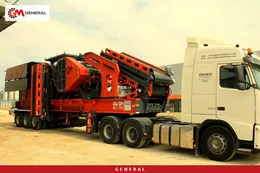
| GNR-MC110 | 200-300 t/h | 0-5 / 5-12 / 12-19 / 19-40 mm | GPJ 110 jaw + DMK03 impact, twin chassis | 900 mm | 750 kVA |
If your target is 120-180 TPH and the rock is hard, the General 944 is the first model to look at. It delivers three fractions, 0-5, 5-12 and 12-19 mm, and travels on a single chassis. The General 950 has the same dimensions but uses an impact crusher in the second stage, which gives a higher reduction ratio.
In the 200-300 TPH band for hard rock, the GNR-MC110 stands out. The primary and secondary groups sit on two separate chassis, and the primary chassis can run on its own. This opens a practical route for a new quarry: during stripping and the first blasts, produce fill or coarse material with the primary group alone and start selling, then bring the secondary chassis in once the market settles. The four-deck screen yields four products including 19-40 mm. For a limestone quarry in the same band, the General 02 is considered; its 1000 mm feed opening accepts large blocks without pre-breaking.
Mobile start or stationary line
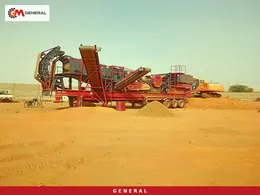
A mobile plant starts producing without waiting for foundations and buildings, and it follows the face as the quarry advances, which keeps truck distances short. A stationary line suits a long-life reserve: with no chassis transport limit it allows a larger feed opening, more screen decks and eight or more product sizes. In stationary crushing plants we build jaw plus cone for hard rock and impact layouts for limestone, with a grizzly feeder at the head of the line to regulate the feed.
As an example of a fixed plant in this band, see our 200-300 t/h stationary stone crushing and screening plant in Antalya. A long reserve, a wide product list and nearby grid power favour a stationary line. For an investor with an uncertain reserve or more than one permit area, we recommend a mobile start.
Whichever you choose, the following work should be finished on site before the plant arrives:
- Levelling the plant area and checking bearing capacity; the outriggers of a mobile chassis must stand on firm ground.
- Building a feed ramp at a height where trucks or loaders can tip into the hopper safely.
- Laying out stockpile areas by product and marking the discharge points of the stockpile conveyors.
- Positioning the generator and fuel tank, or preparing the transformer connection if grid power is available.
- Planning a water source and line for dust suppression.
- Having operators and maintenance staff on site during commissioning.
Turning screen oversize into manufactured sand
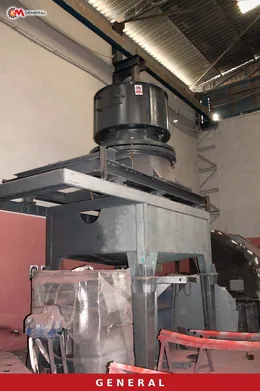
Most new quarries face the same problem in year one: 19-40 mm and coarser material piles up and does not sell. Converting it into sand adds a second revenue line. Our mobile tertiary crusher (sand making machine) accepts 0-200 mm feed, produces 0-10 mm manufactured sand and runs at 60-250 t/h. Because the vertical shaft impact principle throws rock against rock, metal wear stays low even in abrasive granite and basalt.
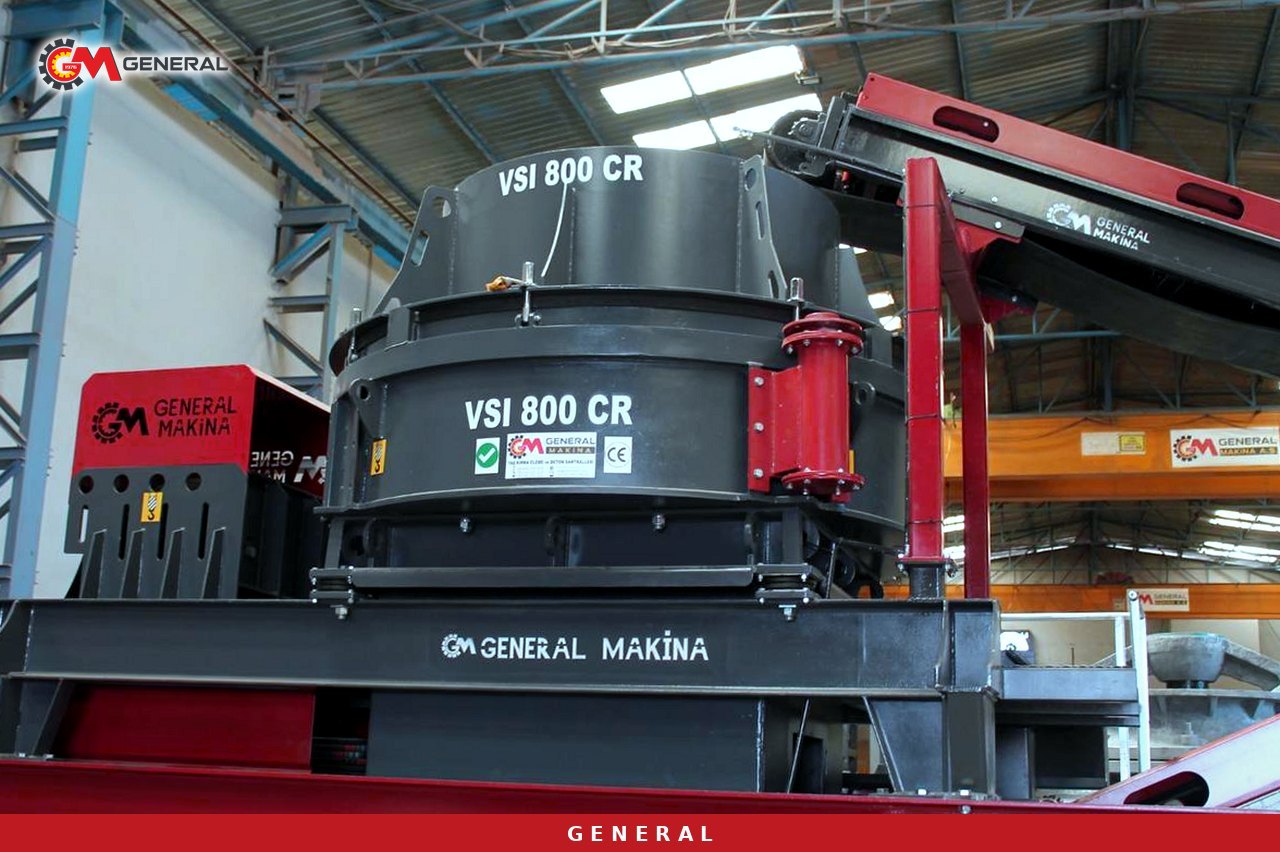
You do not need to buy the sand maker on day one. It is enough to design the main line's screening plan so that a third stage can be added later, leaving room for a return conveyor and a stockpile point. If the sand carries a lot of clay, a washing unit should also be part of the plan.
A batching plant beside the quarry
When the distance between quarry and construction site is short, turning aggregate into concrete instead of selling it is more profitable for some investors. Chippings and sand go straight from the quarry into the batching plant bins, and the haulage cost shrinks. Our mobile concrete batching plants range from 30 to 150 m³/h. The M-Titan 100, for instance, produces 100 m³ per hour with a 2×45 kW twin-shaft mixer and 4×15 m³ aggregate bins. The four-compartment bin can be arranged to take the 0-5, 5-12 and 12-19 mm products of the crushing plant separately.
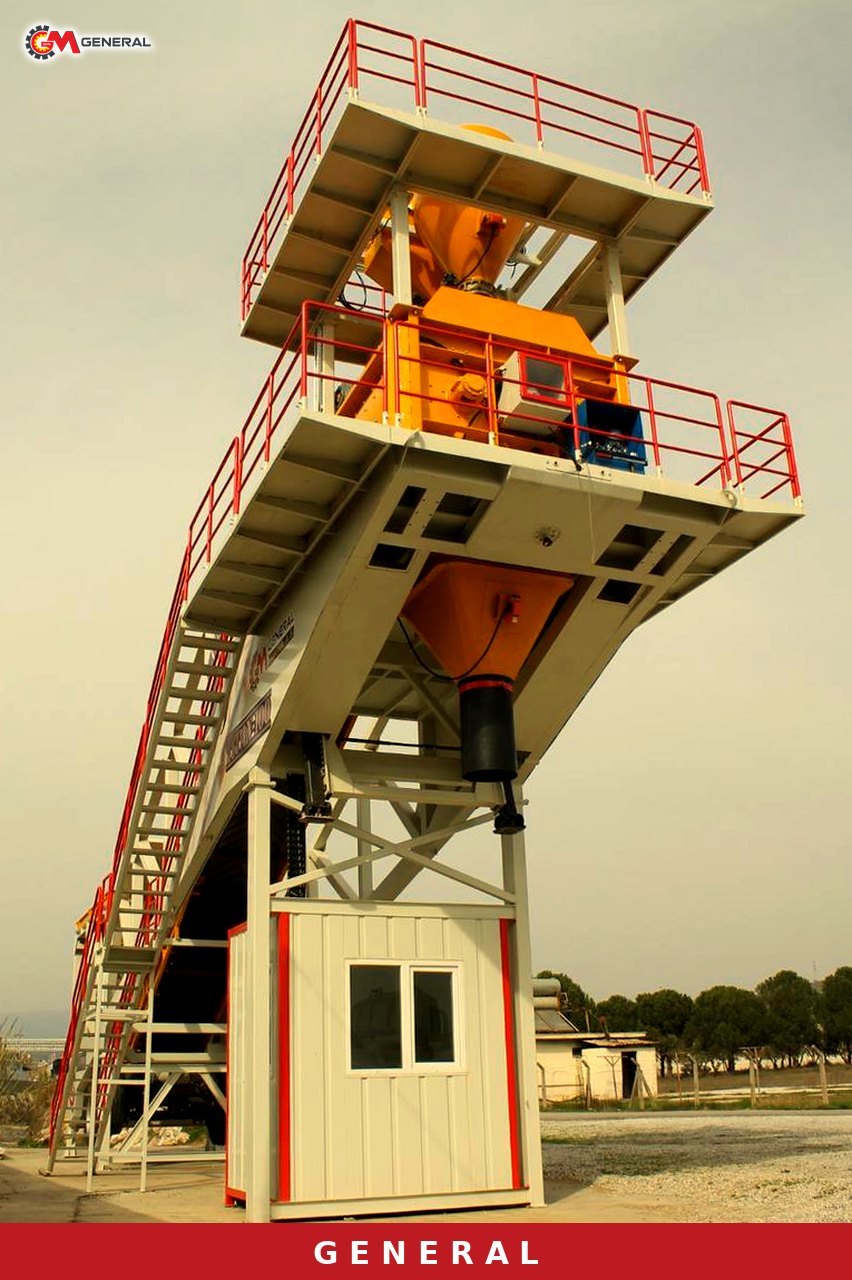
Buying the crushing line and the batching plant from one manufacturer makes it easier to plan product fractions around the plant bins and to source spare parts from a single supplier. If the batching plant is a second phase, reserve space for it in the stockpile layout from the first project.
Frequently asked questions
What is the smallest sensible capacity for a new quarry?
It depends on your sales target. Convert your annual figure into an hourly value with the formula above. For a need of 100-180 TPH, 120-180 t/h plants such as the General 944 or General 950 are considered; above 200 TPH, the GNR-MC110 or General 02.
How does the plant run if there is no power at the quarry?
Our mobile plants run on generators; for the models in the table, generator ratings range from 550 to 750 kVA. If a grid connection arrives later, the system can be adapted, so mention this at the order stage.
What determines the price?
The crusher arrangement, number of screen decks, generator, extra conveyors, additional units such as a sand maker, and the shipping method. To give a figure we need your rock data and product list; the quotation is prepared from that information.
What about warranty and certification?
Our machines carry a 1-year warranty, with wear parts excluded. Production is ISO 9001 and CE certified, and we have been manufacturing in Izmir since 1976.
When opening a quarry, the right plant is chosen from your rock test result, a realistic annual tonnage calculation and the list of products you will sell. Send us these three items and we will propose an arrangement that fits your rock and capacity target, with the technical reasoning behind it. For a quotation, reach us through our contact page or on WhatsApp.
Definitions of technical terms: Glossary