EN — English
 TR — Türkçe
 DE — Deutsch
 RU — Русский
 FR — Français
 ES — Español
 AR — العربية
 SR — Српски

Egypt Granite Quarry Stone Crushing Plant 120-180 TPH, Jaw + Cone
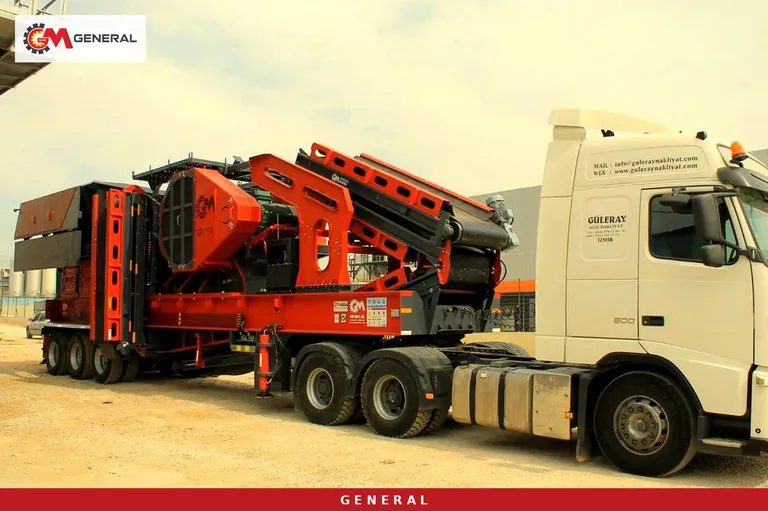
An Egyptian investor running a granite quarry usually puts the brief in one sentence: "I need around 150 tonnes of aggregate an hour, and I don't want to reline the crusher every couple of months." The answer starts with the rock, not the capacity chart. Granite is hard, rich in silica and abrasive; a line built around the wrong secondary crusher will hit its rated tonnage on paper while the wear-part bill eats into the quarry's margin. This article explains why a jaw primary and a cone secondary belong together on an Egyptian granite face aiming at 120-180 TPH, which real models cover that band, and what shipping, climate and site conditions in Egypt mean for the plant.
What Egyptian granite demands from a crusher
With the crystalline rock belts around Aswan and along the Eastern Desert, Egypt is one of the first countries that come to mind for granite. Alongside the dimension-stone quarries, these regions also host crushing quarries producing aggregate for construction and road work. Strength and abrasiveness, however, change from one vein to the next, so what follows is a general framework. Having your own rock tested in a laboratory for abrasiveness and crushability moves the crusher choice from guesswork to measurement.
Three properties of granite shape the line. First, large angular blocks need high crushing force at the primary stage, and a jaw crusher delivers it safely by compression. Second, free silica wears metal surfaces fast; a rotor-type secondary working by impact burns through hammers and blow bars in this rock. Third, when granite becomes concrete or asphalt aggregate, buyers expect cubical particles, because flaky and elongated grains fail specifications. The arrangement that answers all three at once is a cone secondary placed behind a jaw primary.
Configurations that fit 120-180 TPH
The range in the title is one that a single wheeled unit can cover. The table compares three models in or just above that band, using only the values published on their product pages. Values not given there are shown as "—".
| Feature | General 944 | General 950 | GNR-MC110 |
|---|---|---|---|
| Capacity | 120-180 t/h | 120-180 t/h | 200-300 t/h |
| Primary crusher | GPJ 90 jaw | GPJ 90 jaw | GPJ 110 jaw |
| Secondary crusher | GM430 cone | DMK01 impact | GS1215 / DMK03 impact |
| Max. feed size | 800 mm | 800 mm | 900 mm |
| Screen | 1600×5000 mm, 3 decks | 1600×5000 mm, 3 decks | 2000×6000 mm, 4 decks |
| Product fractions | 0-5 / 5-12 / 12-19 mm | 0-5 / 5-12 / 12-19 mm | 0-5 / 5-12 / 12-19 / 19-40 mm |
| Generator | 550 kVA | 600 kVA | 750 kVA |
| Weight | 70,000 kg | 70,000 kg | 2 × 55,000 kg (two chassis) |
| Cone liner life | — | — | — |
First candidate for granite: General 944
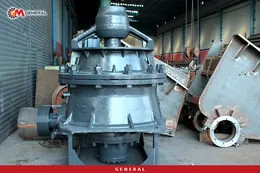
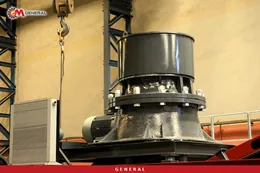
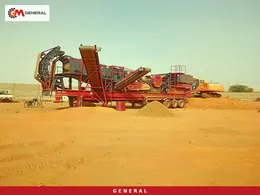
The General 944 carries a GPJ 90 jaw primary and a GM430 cone secondary on one wheeled chassis, takes blocks up to 800 mm and produces 120-180 t/h. The cone crushes rock between the concave and the mantle by squeezing it, so there is little sliding of stone across metal; that is why part life in abrasive granite is long compared with an impact secondary. The same compression principle supports a high share of cubical grains. Being a single chassis, the unit can be towed from one blasting face to another inside the quarry.
When the impact sibling makes sense
The General 950 has the same size, weight and capacity; the difference is the secondary. Its DMK01 impact crusher gives high reduction and cubical product, but wear rises sharply in high-silica granite. If your face is dominated by a softer, less abrasive rock, or if the granite is weathered near the surface, the 950 can enter the comparison. In fresh, sound granite the decision normally goes to the cone.
If the target climbs past 180 t/h
When the contract grows and you need more than 200 tonnes an hour, there are two routes: add a second 944, or move to the two-platform GNR-MC110. The MC110 has an impact secondary, so in granite the wear budget must be recalculated. If you will stay at the same quarry for many years, a stationary jaw and cone line should be on the table too. You can compare every wheeled option on the mobile crushing and screening plants page.
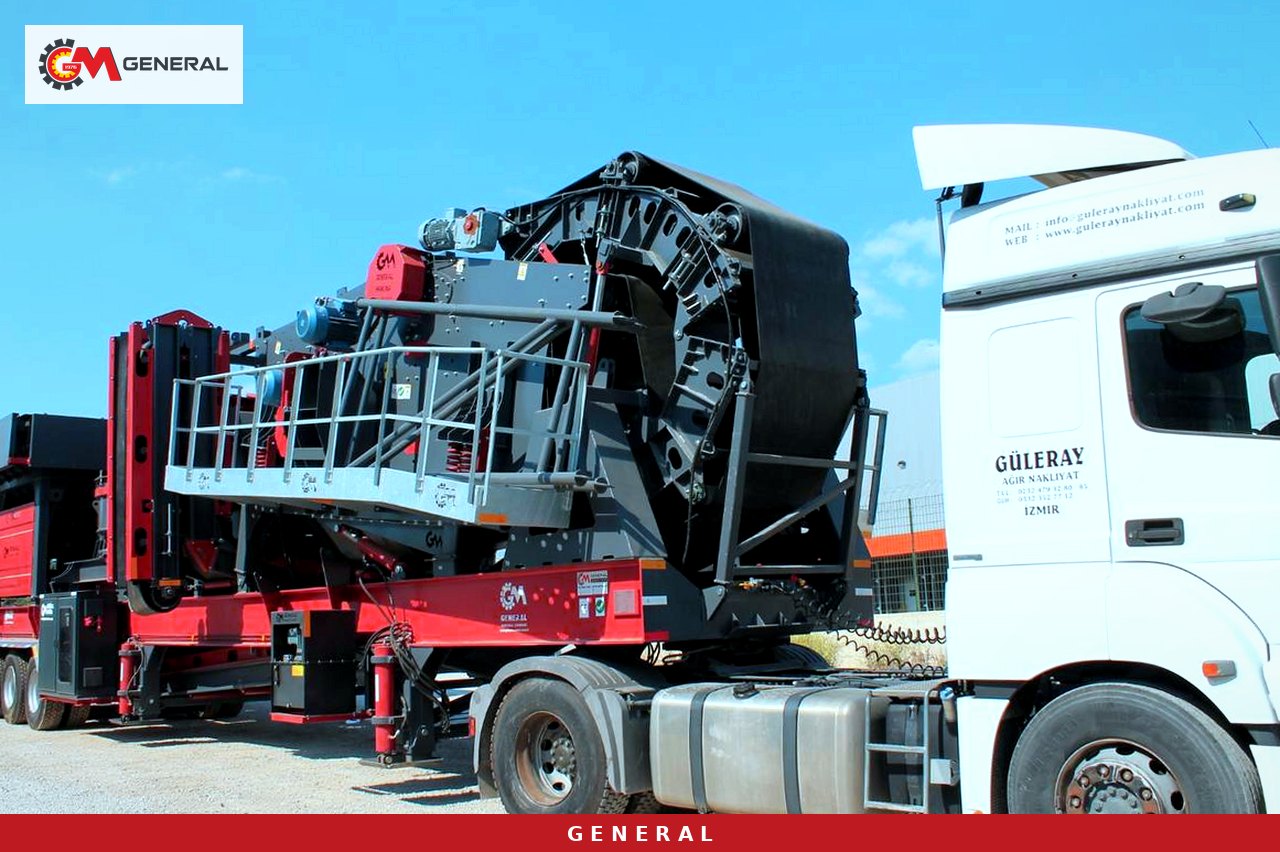
Three granite fractions: screen and closed-circuit settings
The 944's 1600×5000 mm three-deck horizontal screen splits the product into 0-5, 5-12 and 12-19 mm. For Egyptian buyers these classes match crushed sand and fine chippings for batching plants, medium chippings for asphalt binder courses, and coarse aggregate for concrete. Because the output setting runs from 0 to 100 mm, the cone's discharge can be opened to produce a single coarser grade when road base is needed.
Oversize retained on the screen returns to the cone on the recirculation belt. In this closed circuit, keeping the cone choke-fed is essential in granite, both for cubical product and for even liner wear. A half-empty cone flattens the grains and hollows the mantle in one zone. Since screen apertures are fixed per order to suit the rock, sharing a sieve analysis of a quarry sample at the quotation stage means the right mesh can be fitted from day one.
From port to quarry: shipping and site layout
A wheeled plant shipped from Izmir to Egypt reaches a Mediterranean or Gulf of Suez port by sea and is then towed to the quarry by road. The 944's transport dimensions are 4130×20350×4500 mm and its weight is 70,000 kg. On routes running from the Nile valley into the Eastern Desert, these figures may require permitted heavy haulage; check bridge, tunnel and checkpoint limits with the haulier in advance. Confirm current customs, import paperwork and heavy-load permit rules with the relevant Egyptian authorities.
The pad chosen for the plant should be level, compacted and close to the ramp where trucks will tip. The wheeled chassis is set down on its support legs; on loose sand, steel plates or a concrete slab under the legs keep the chassis stable under vibration. Plan stockpiles with the prevailing wind in mind and never place the fines stockpile upwind of the plant and generator.
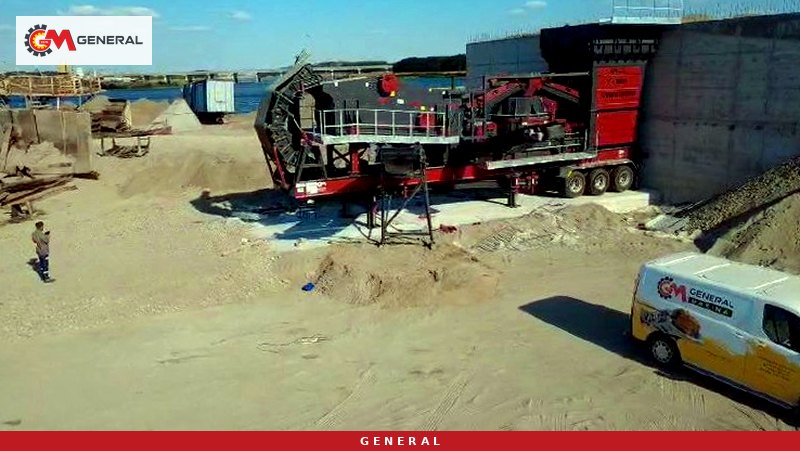
Dust, heat and wear on a desert quarry
Most granite quarries sit far from the grid in hot, dusty terrain. The 944 runs on its own 550 kVA generator, yet long life for the generator and hydraulics in the desert depends on operating discipline. Some of the measures below concern the machine itself; others are options chosen per project:
- Pre-cleaner air filtration for the generator and engine, checked often; in dusty air, follow the restriction gauge rather than a fixed calendar for filter changes.
- Water-spray dust suppression at crusher mouths, screen discharge points and belt transfers; where water is scarce, low-flow misting nozzles can be selected.
- Belt dust covers and rubber curtains at transfer chutes, added as project options.
- Agreeing the viscosity grade of hydraulic oil and grease for high ambient temperatures before delivery.
- Ordering manganese cast spares for jaw plates, mantle and concave with the first order, and scheduling changes by tonnage.
Wear parts drive the cost per tonne of a granite quarry. Alloy options for jaw plates and cone liners are covered on the crusher spare and wear parts page, and the cone's working principle and setting logic are explained under stone crushers.
Quarry data to collect before requesting a quote
A sound quotation requires the supplier to understand your quarry. The clearer the points below, the fewer surprises the proposed configuration brings:
- Laboratory results for the granite sample: compressive strength, abrasiveness and, if possible, crushability.
- Largest block size after blasting, with a grizzly or rock-breaker plan for blocks larger than 800 mm.
- Target products and monthly sales split: how much of each fraction you will sell.
- Daily operating hours and number of shifts, which turn hourly tonnage into annual output.
- Site altitude, water source and fuel supply arrangements.
- Quarry life: a contract of a few years or a long-term reserve? This steers the wheeled-versus-stationary choice.
For a comparable line, our site lists the GNR 944 mobile hard-stone crushing and screening plant project in Africa at 120-150 t/h. That project is not in Egypt, but it shows how the same model family is arranged for hard rock.
Frequently asked questions
Which products can the General 944 make from Egyptian granite?
With the standard screen arrangement it makes three fractions: 0-5, 5-12 and 12-19 mm. As the output setting adjusts within 0-100 mm, a single coarser grade is also possible; screen meshes are chosen per order to suit the rock.
Why does the impact secondary take second place in granite?
In high-silica granite the hammers and blow bars of an impact rotor wear quickly. A cone works by compression, so metal consumption is lower, which tips the wear cost per tonne in abrasive rock towards the cone.
Can the plant run without grid power?
Yes. The General 944 is specified with a 550 kVA generator, so it produces on its own power even where the quarry has no grid connection. Fuel logistics and generator servicing must be part of the operating plan.
How are price and delivery time determined?
Price depends on the chosen model, screen and conveyor equipment, extras such as dust suppression, the spare-parts package and the shipping method. Delivery time depends on the production schedule when the order is placed. For both, rely on a written quotation prepared from your quarry data.
Conclusion
For an Egyptian granite quarry targeting 120-180 TPH, the most balanced choice is the General 944, which pairs a jaw primary with a cone secondary on one chassis; for higher tonnage, a second unit or a stationary line is the next step. Send us your granite test results, target fractions and site details, and we will return a configuration and quotation built around your quarry. Reach us through our contact page.
Definitions of technical terms: Glossary