EN — English
 TR — Türkçe
 DE — Deutsch
 RU — Русский
 FR — Français
 ES — Español
 AR — العربية
 SR — Српски

Mozambique Coal & Graphite Heavy-Duty Stone Crushing Plant 250-450 TPH
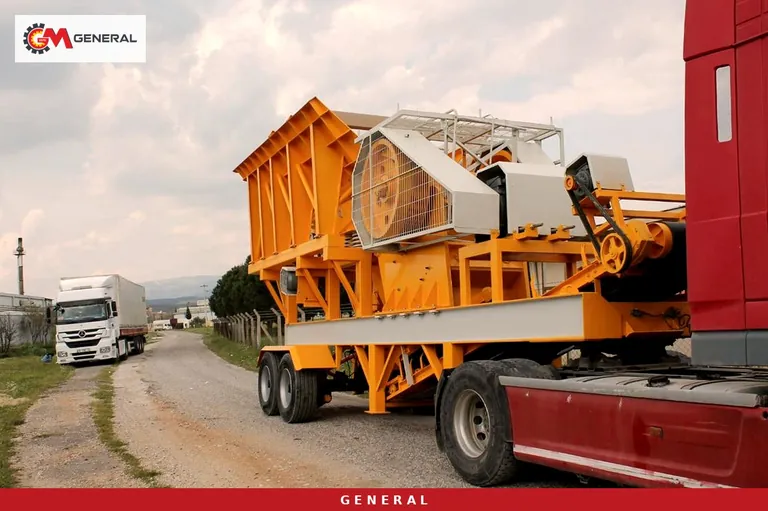
In Mozambique two mining belts ask the same equipment question from opposite directions. In the west, in the Tete basin of the Zambezi valley, coal seams are mined together with sandstone and shale partings; in the north, along the Balama–Montepuez line in Cabo Delgado and Niassa, graphite occurs as flakes inside weathered schist and gneiss. Both call for a crushing station that moves 250-450 tonnes per hour, yet the measure of success is the reverse in each case: in coal, fines hurt sales, while in graphite, broken flakes reduce the value of the ore. This article treats the two materials separately, shows which feeder-crusher arrangement suits which site using real catalogue models, and lists the data we need before quoting.
All technical values in this article come from our own product pages. We give no information about any mining licence, operator or tender in Tete or Cabo Delgado; please confirm your project specification with the relevant mining authority and with the operator's process documents.
Tete coal and Cabo Delgado graphite: same tonnage, two crushing logics
In coal the goal is to reduce lumps without making dust
Coal is friable and reacts less to which crusher is used than to how that crusher breaks it. An impact machine reduces coal easily, but it also creates a high share of fines and dust. Those fines mean losses at the wash plant, dust and fire risk on the stockpile and weight loss in transport. That is why coal circuits favour machines that break by compression: a jaw crusher at the primary stage and, for the fine stage, a roll crusher that squeezes material in a controlled way between two rolls.
In the Tete basin the coal never arrives alone. The excavator loads sandstone and shale bands together with the seam. This parting rock, far harder than the coal, is the real reason the crusher must be heavy-duty.
In graphite the goal is to liberate the flake without breaking it
The commercial value of flake graphite depends largely on flake size. If the crushing and grinding stages overload the ore, large flakes turn into fine powder. A graphite crushing line should therefore bring the ore down to the size required by the downstream grinding and flotation section in gradual, gentle steps. The weathered ore near surface is often clayey and wet; in the rainy season that clay is the first thing to blind fixed grizzly bars.
What heavy-duty means here: parting rock, clay and tramp metal
On these two types of site, "heavy-duty" is the sum of measures against three concrete hazards. The first is hard sandstone blocks arriving with the coal and unweathered gneiss lumps at the graphite site; they load the jaw plates and the crusher frame. The jaw plates of our jaw crushers are austenitic manganese steel (Mn13/Mn18), which work-hardens at the surface under impact, and the compression principle keeps metal consumption low in abrasive rock.
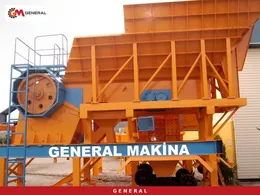
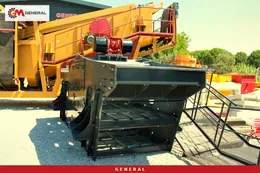
The second is clay. With wet, sticky feed the openings of a fixed grizzly feeder blind, fines pass into the crusher and throughput drops. The rotating shafts of a wobbler feeder clean themselves and remove this problem, separating clay and fines before they reach the crusher.
The third is tramp metal: bucket teeth, bolts and support steel. The hydro-pneumatic protection of the roll crusher protects the rolls when an iron piece passes. At the primary stage, adding a magnet or metal detector to the feed line is a measure that can be selected per project.
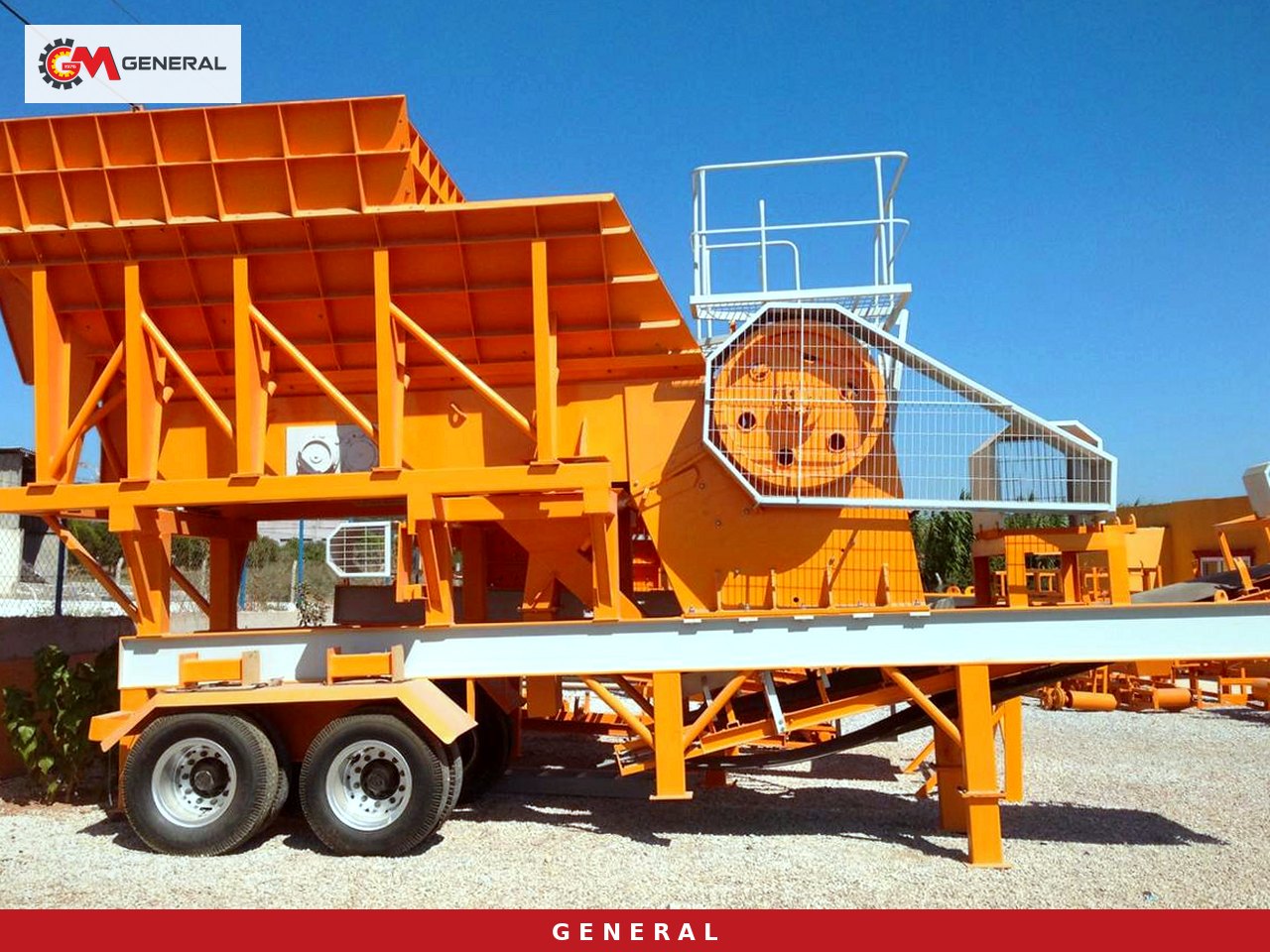
Candidate machines for the 250-450 t/h range
The table below brings together the catalogue values of the machines we consider for coal and graphite lines in Mozambique. A "—" cell is a value not published for that model and defined at order stage.
| Model | Duty | Capacity (t/h) | Feed / opening | Product | Motor (kW) | Weight (kg) |
|---|---|---|---|---|---|---|
| Mobile jaw unit with wobbler feeder | Primary + pre-screening | 250-450 | — | — | — | — |
| GNR 110 mobile primary jaw | Primary | 180-300 | 0-1100 mm | 0-250 mm | — | 55,000 |
| GNRK 110 jaw crusher | Stationary primary | 200-350 | 1100×850 mm | 150-225 mm | 110/132 | 33,000 |
| GNRK 130 jaw crusher | Stationary primary | 400-500 | 1300×1000 mm | 125-250 mm | 160 | 42,500 |
| Mobile roll crusher | Fine stage | 50-350 | 0-50 mm | 0-10 mm | — | — |
The first conclusion from the table: the primary solution that covers 250-450 t/h on a single chassis is the mobile jaw crushing unit with wobbler feeder. The classic grizzly-fed mobile primary jaw crusher GNR 110 reaches up to 300 t/h; for a 450 t/h target either a second unit or a stationary line is needed.
Three layouts matched to the site
Layout 1, Tete coal, 250-450 t/h: wobbler jaw + roll crusher
At the primary stage, the wobbler-fed jaw unit takes feed that turns muddy in the rainy season without blinding, and removes already small coal before it ever enters the crusher. That reduces both fines generation and jaw wear. If a fine product is required, the mobile roll crusher works as the last stage: it reduces 0-50 mm feed to 0-10 mm, and its rolls are chosen smooth or toothed according to feed size. Because the roll crusher is rated at 50-350 t/h, a 450 t/h line either sends only the screen oversize to the rolls or runs two units in parallel. An intermediate stage or screening is needed between the jaw discharge and the 0-50 mm feed limit of the rolls; it is sized after sample testing.
Layout 2, Balama–Montepuez graphite: clay-tolerant primary, gentle second stage
For graphite ore the primary choice is also the wobbler-fed jaw unit, which runs far more steadily than a grizzly feeder on weathered, clayey ore. At the second stage compression should be preferred to impact. The low-fines action of the roll crusher helps protect the flake, but the target size is set by the grinding-flotation designer, not by the crusher maker. On graphite projects we therefore define the discharge size of the crushing line according to your process engineer's report.
Layout 3-400-450 t/h permanent station: stationary line with GNRK 130
If the mine life is long and the pit head stays in place, a stationary crushing and screening plant on concrete foundations may make more sense. Within the GNRK series jaw crushers the GNRK 130 meets the 450 t/h target with a single crusher, thanks to its 1300×1000 mm opening and 400-500 t/h capacity. For 250-350 t/h the GNRK 110 is enough. In a stationary line the feeder, screens and conveyors are designed around the site layout.
Transport, power and climate on the Beira and Nacala routes
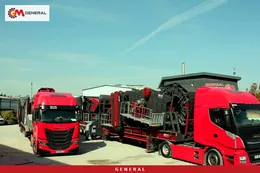
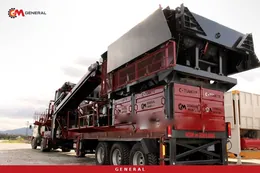
A plant leaving Izmir usually reaches Mozambique through the port of Beira or Nacala and continues by road to Tete and the northern graphite sites. Single-trailer mobile units have an advantage on this route: the GNR 110 mobile primary unit is pulled by one truck and set up without foundations on hydraulic legs. A stationary line, by contrast, needs concrete foundations, a civil crew on site and a longer erection period.
Most remote sites have no grid connection and the crushers run on generators. Generator power is calculated from the total of the selected crusher, feeder, screen and conveyor motors; we prepare that list together at quotation stage. In a climate where hot and rainy seasons follow each other, engine and generator cooling, air filter service intervals and protecting electrical panels from humidity are measures that can be selected per project. At a coal site, dust suppression at stockpiles and transfer points, together with covered conveyors, should also be considered.
What to send from site for the quotation file
The right model depends less on tonnage on paper than on how the feed really behaves. Sending the following for your coal or graphite project in Mozambique lets us define a clear configuration at the first meeting:
- Target hourly capacity and daily operating hours, separately for the rainy and dry seasons.
- Maximum block size and the type of truck or excavator that feeds the plant.
- Share of parting rock in coal; share of weathered versus fresh ore in graphite.
- A field observation or lab result on moisture and clay content.
- Required product size: the buyer's or wash plant's specification for coal, the process designer's target size for graphite.
- Power infrastructure: grid or generator.
- Site layout and whether the plant will be permanent or mobile, following the face.
- A representative sample taken from several points for laboratory testing.
The full list of mobile units is on the single-chassis mobile crusher units page.
Frequently asked questions
Why is an impact crusher not the first choice for coal?
An impact crusher reduces coal quickly but raises the share of fines and dust. A compression jaw primary followed by a roll crusher keeps more of the saleable coarse fraction.
Is one mobile unit enough for 450 t/h?
The mobile jaw unit with wobbler feeder works in the 250-450 t/h range. Actual capacity depends on hardness, moisture and the required discharge size, so we do not present the upper limit as a guarantee without sample data.
What should a crushing line do to protect graphite flake?
It needs staged compression instead of aggressive reduction in few steps, no unnecessary size reduction, and a target size set by the process design. The crushing line should be planned together with the grinding section.
What determines price and warranty coverage?
Price is built from the selected models, number of stages, feeder type, generator, conveyor lengths and shipping method. Our machines carry a 1-year warranty; wear parts are excluded.
Conclusion
When building a 250-450 t/h crushing station for coal and graphite in Mozambique, the common need is a primary that takes clayey, variable feed without blinding; the difference lies in the second stage. Compression crushing that limits fines in coal and flake loss in graphite is the right path. With machines made in Izmir since 1976 and certified to ISO 9001 and CE, we can prepare a layout for your site. Contact us with your sample data and we will prepare your quotation.
Definitions of technical terms: Glossary