EN — English
 TR — Türkçe
 DE — Deutsch
 RU — Русский
 FR — Français
 ES — Español
 AR — العربية
 SR — Српски

Botswana Coal Field Heavy-Duty Crushing and Screening Plant 250-450 TPH
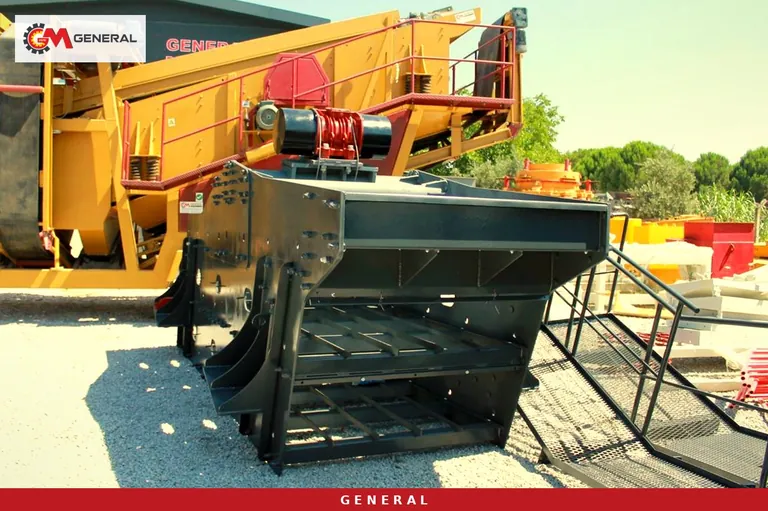
Botswana's coalfields lie in the east of the country, spread over a wide belt that runs from the Morupule area between Palapye and Serowe down to Mmamabula in the south. Anyone building a crushing and screening plant there deals with three things at once: sandstone and shale partings mined together with the coal, fine Kalahari sand from the surface, and a dry, dusty site where water is scarce. For a heavy-duty line handling 250-450 TPH, success therefore depends less on the crusher and more on how the feeder and the grizzly split the run-of-mine material before it gets there. This article builds the line from the intake onward, uses the real model values from our product pages at every stage and lists the site data a quotation needs.
We give no information on any specific mining licence, operator or tender. For target product size, coal quality and site rules, rely on the project's technical specification and the relevant mining authority in Botswana.
How Botswana coal arrives at the hopper
Eastern Botswana's coal sits within the Karoo-age sedimentary sequence. Whether it comes from an open pit or an underground section, the material reaching the plant is never uniform. The same truck body carries friable coal lumps, harder sandstone blocks, shale breaking off in slabs and clay fallen from the seam roof. Shallow digging adds fine sand from the overburden.
This mix creates two separate design problems. The coal itself is soft; crush it more than necessary and the share of fines and dust climbs, while a power station or boiler customer usually wants product below a given top size with as little dust as possible. The partings, on the other hand, are abrasive and they set the wear life of the primary crusher. Kalahari sand is mostly silica, and every tonne of it that enters the crusher produces wear without being broken. The design decision follows directly: keep sand, soil and coal that is already below target size out of the crusher altogether.
Every tonne the grizzly removes comes off the crusher's load
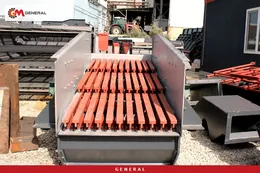
The first machine in the line is the vibrating grizzly feeder. The GNR vibrating rock feeder accepts lumps up to 1500 mm, works with a 15-100 m³ hopper, and the grizzly section at the end of the pan drops fines through before they reach the crusher mouth. For 250-300 TPH the GNR 110 (1100×4750 mm, 200~300 t/h, 2x7.5 kW) is the right size; for 400-450 TPH the GNR 140 (1400×5000 mm, 350~600 t/h, 2x9.2 kW).
On coal sites the feeder's own grizzly is often not enough. When the fines content is high, a separate grizzly screen between feeder and primary crusher cuts the tonnage going to the crusher noticeably. How much it removes is shown by a sieve analysis of the sample; we do not size equipment on guesswork.
G type: scalping ahead of the primary
In the grizzly screen range, the G type produces linear vibration with two vibrating motors and sits in front of the primary crusher. The ELKG-1230 (1200×3000 mm, 10.2 kW, 3500 kg) and ELKG-1930 (1200×3000 mm, 11.5 kW, 6500 kg) belong in this position. Because the bar spacing is adjustable, the top size of the bypassed coal can be set to the customer's product specification. The bypassed fraction goes straight to the screening stage.
M type: in front of the second stage
The M type uses an eccentric shaft with belt and pulley drive to produce circular motion, and keeps the fine fraction away from the second crusher after primary crushing. The ELKM-1640 (1600×4000 mm, 15 kW, 11000 kg) does this job on high-tonnage lines. On a coal line where the fine product must carry little dust, not re-crushing pieces that are already small protects product quality directly.
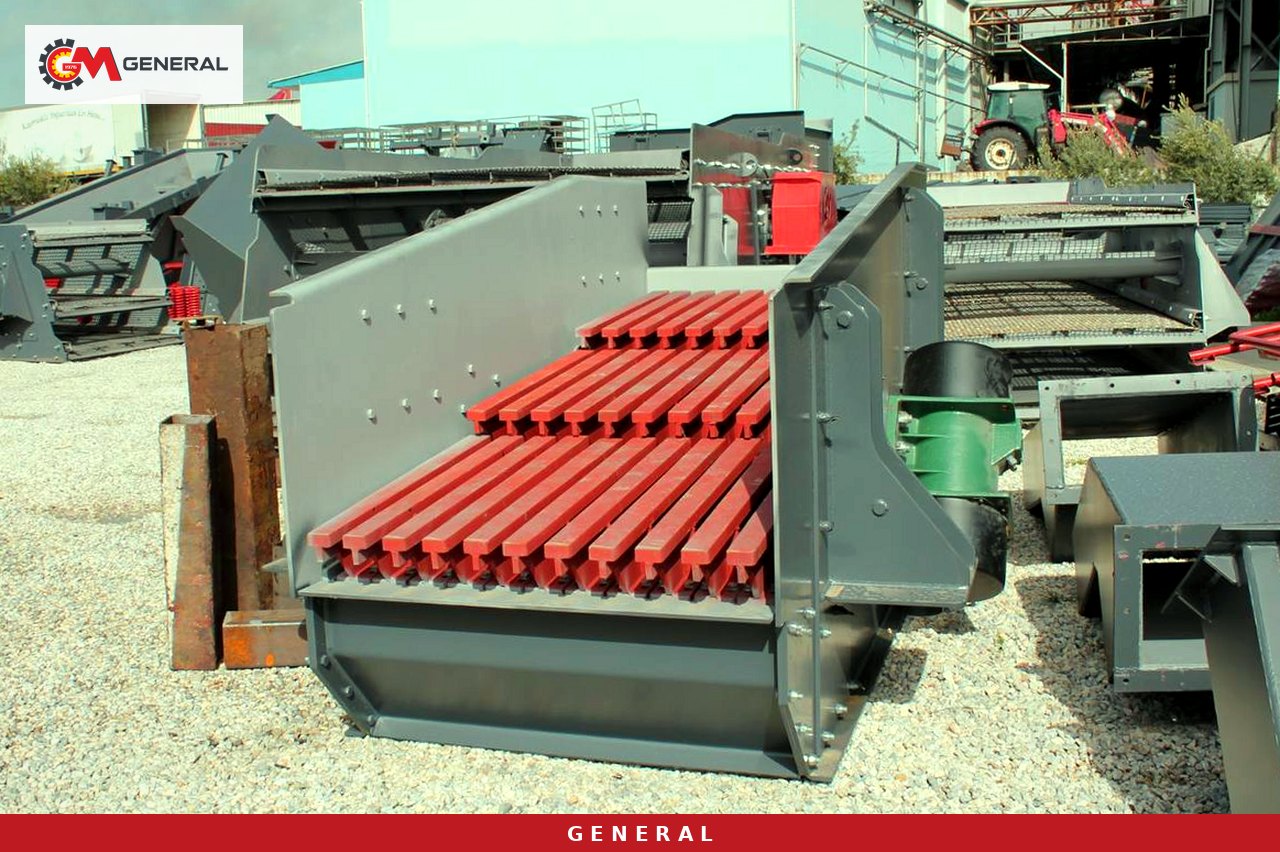
Grizzly screens have a capacity range of 100-400 t/h. At a 450 TPH target a single grizzly screen is at its limit, so the plan becomes either a G type working together with the feeder grizzly or two parallel lines.
Two line layouts for 250-450 TPH
The table below compares the two capacity bands stage by stage. Because of the hard partings in the coal, the primary is a compression machine, the GNRK jaw crusher. A jaw crusher crushes coal less aggressively and also keeps metal wear low.
| Stage | Layout A: 250-300 t/h | Layout B: 400-450 t/h |
|---|---|---|
| Feeder | GNR 110, 200~300 t/h, 2x7.5 kW | GNR 140, 350~600 t/h, 2x9.2 kW |
| Separate grizzly screen (G type) | ELKG-1230, 10.2 kW | ELKG-1930, 11.5 kW |
| Primary jaw crusher | GNRK 110, opening 1100×850 mm | GNRK 130, opening 1300×1000 mm |
| Primary capacity / motor | 200-350 t/h, 110/132 kW | 400-500 t/h, 160 kW |
| Primary output range | 150-225 mm | 125-250 mm |
| Main screen | ELKK-2565 banana screen, 2×15 kW, 3 decks | ELKK-2580 banana screen, 2×22 kW, 3 decks |
| Second-stage crusher | — | — |
| Fine product (if required) | Mobile roll crusher, 50-350 t/h | Mobile roll crusher, 50-350 t/h |
The second-stage cells are left empty on purpose. Without knowing the coal's product top size and the share and hardness of the partings, choosing between a cone crusher and a secondary jaw would be wrong. That row is filled in after the sample test.
Why a banana screen at the screening stage
In Layout B a flow above 400 tonnes per hour builds a thick bed on the screen deck. The top-driven banana screen thins that bed quickly at the steep rear section with its three different slopes and lengthens residence time at the front. The ELKK-2565 (2500×6500 mm, 30000 kg) and ELKK-2580 (2500×8000 mm, 34000 kg) have a capacity range of 100-400 t/h, so at full 450 TPH load the design counts on either a two-screen arrangement or the lower screen load left after grizzly scalping. Other options are on the vibrating screens page.
If a fine product is needed, for instance coal going to a fluidised-bed boiler, a mobile roll crusher is added as the last stage. It takes 0-50 mm feed, delivers 0-10 mm and produces little dust because it crushes by compression between two rolls. The rolls have hydropneumatic protection against tramp iron, which is useful against broken drill rods or bucket teeth coming from a coal pit.
What heavy duty means on a Kalahari site
We do not turn the words "heavy duty" in the title into a numbered service-life promise. What delivers it is part material, construction and setting. The grizzly bars are high-manganese austenitic steel castings whose surface work-hardens under impact, from about 200 HB up to 450-550 HB. Jaw plates come from the same material family, produced as Mn13/Mn18.
One field point matters here: manganese steel gains hardness through impact. On a grizzly that carries mostly soft coal, the bars may not receive enough impact, while sliding abrasion from the sand continues. In the first months, measure the bar spacing at regular intervals, correct the setting as the gaps open and check the share of fines going to the crusher. If the spacing widens, the top size of the bypassed coal grows and the product specification is lost.
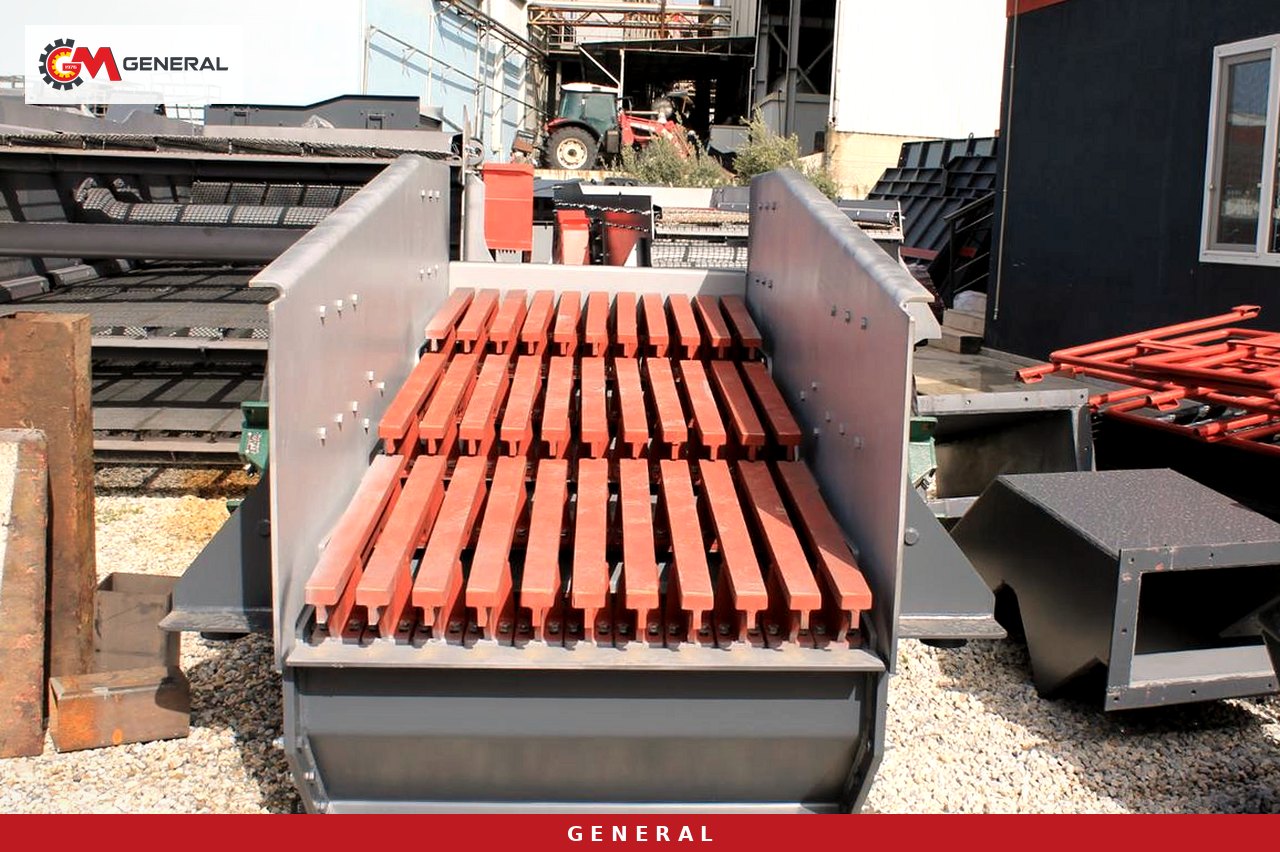
The bolted construction of the feeder, the grizzly screen and the screen bodies lets worn plates be replaced on site without welding. Planning a set of spare grizzly bars and jaw plates with the first shipment reduces waiting time at a remote site.
Dust, water, power and shipping inland
Eastern Botswana has a dry, hot climate. Dust matters on a coal line for two reasons: worker health and the ignition risk created when coal dust accumulates. Where water is limited, misting nozzles at transfer points, closed belt covers and dust hoods over the screens use less water than broad spraying. These measures are chosen per project; protecting electrical panels from dust and cleaning them regularly belong on the same list.
Coal stockpiles are known to self-heat. A product with a low fines content is easier to manage in the stockyard, and grizzly scalping plus a roll crusher help the operation in this respect too.
On power, sites close to the grid and remote sites are planned differently. At a remote site the generator is chosen according to the total power of the crusher and screen motors and their starting currents. Botswana is landlocked, so equipment arrives by ship at ports in neighbouring countries and reaches the site by road from there. Splitting modules to fit truck dimensions and using bolted connections make transport easier. Confirm route restrictions and customs procedures with your freight forwarder in advance. For fixed-line options see the stationary crushing plants page.
Site data the quotation file needs
- Largest lump size in the run-of-mine feed and whether it is fed by truck or loader.
- Sieve analysis: the share of coal already below target size (the basis for grizzly sizing).
- Approximate share of partings such as sandstone, shale and clay and, if possible, a laboratory abrasion test.
- The product fractions the customer wants and the permitted fines content.
- Moisture and clay during the rainy season (to judge whether a wobbler feeder is needed).
- Grid connection or generator, and the available water source.
- Load limits on the road to the site and the preferred port.
Frequently asked questions
Coal is soft, so why do you recommend a jaw primary?
The deciding factor is not the coal but the sandstone and shale arriving with it. A jaw crusher breaks those hard pieces by compression and crushes the coal less than impact machines would. The product carries less dust.
What if the grizzly clogs in the rainy season?
Clayey, wet material can block fixed grizzlies. Where that risk is high, the GWB1136 wobbler feeder (1100×3600 mm, 18.5 kW, 75-600 t/h), which cleans itself with rotating disc shafts, is considered. The choice depends on the clay and moisture in the sample.
What do the warranty and certificates cover?
Our machines carry ISO 9001 and CE certification. The warranty period is 1 year and wear parts are excluded. We have been manufacturing in Izmir since 1976.
What determines the price?
The capacity band, the second-stage crusher type, whether a separate grizzly screen is needed, dust measures, generator and freight scope all set the price. We prepare a project-specific quotation based on your site data.
Next step for a quotation
For a 250-450 TPH line on a Botswana coalfield, the right starting point is the sample's sieve analysis and the share of partings. Those two figures decide grizzly size, primary crusher and screen layout. Send your site data through our contact page and we will prepare a technical offer showing which of the two layouts fits your site and which extra stages it needs.
Definitions of technical terms: Glossary