EN — English
 TR — Türkçe
 DE — Deutsch
 RU — Русский
 FR — Français
 ES — Español
 AR — العربية
 SR — Српски

Mobile Crushing & Screening Plant 100-200 TPH Setup: From Site to First Ton
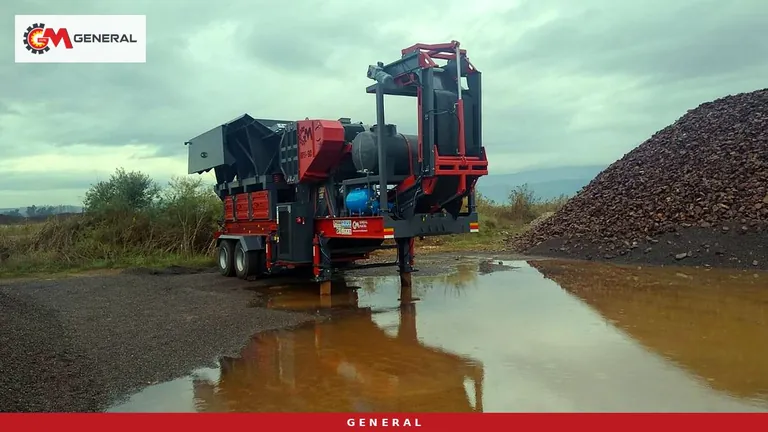
Setting up a mobile crushing and screening plant looks like a matter of backing the tractor in and lowering the legs. On site, most of what decides when the plant delivers its first ton happens before the machine arrives: ground bearing capacity, the loader's turning area, belt angles relative to the stockpiles, where the generator stands and how the cables are routed. This article follows a wheeled plant working in the 100-200 TPH band from the site survey to the first product pile, in the order the work is actually done. What follows is based on where we have seen installations lose time.
Site survey: questions to answer before the machine arrives
The first thing to look at is the rock. A representative sample from the quarry face decides the crusher type and therefore the model. On low-abrasion limestone a primary impact crusher is usually enough, while basalt and granite need a line that starts with a jaw crusher. Do not settle on a model until the sample has been tested for compressive strength, abrasiveness, moisture and clay content.
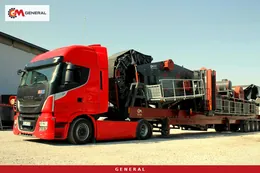
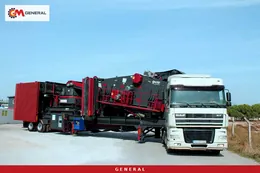
The second question is access. The plant arrives by road on a tractor and trailer. Bends on the quarry road, load limits on bridges and culverts, and the height of any overhead power lines are noted during the survey. Transport dimensions and weights are in the table below; these figures go straight to the haulier and into the road permit application.
The third is water and dust. Whether a water line will be laid for dust suppression or a tanker will be used affects the installation sequence. If water collects on site in the rainy season, drainage ditches are dug before the plant arrives; a support leg that sinks into mud throws the levelling out for days.
Ground preparation and layout plan
Wheeled plants do not need concrete foundations. That does not mean the ground can be left as it is. The points where the legs rest must be compacted, level and drained. On fill, steel plates or timber sleepers under the legs reduce settlement from vibration. If the ground under a leg shifts during operation, the screen angle changes, the product fractions drift, and the first sign is usually the look of the pile under the screen rather than a lab report.
Three flows are drawn together on the layout plan: the route of the trucks or loader bringing run-of-mine rock, the crushing and screening line itself, and the route of the loader taking finished product away. These routes should not cross. A ramp is built in front of the feed hopper so the loader can tip its bucket comfortably, with its height matched to the hopper mouth. Product piles are spaced so they do not mix, each with its own approach area.
Wind direction and generator position
The generator should not sit downwind of the line. An air filter that breathes crusher and screen dust starts shortening engine life in the first week. Placing the generator on the side the prevailing wind comes from, without making the cable run longer than needed, is the advice we give most often. The same applies to the electrical panel.
Model selection and transport data for 100-200 TPH
Three single-chassis models and one two-chassis line are considered in this band. Throughput varies with the rock; if you are aiming at the top of the range, choose from the next step up. All values in the table come from the technical data on the product pages.
| Model | Capacity | Max. feed | Crushers | Screen | Generator | Weight | Transport size (mm) |
|---|---|---|---|---|---|---|---|
| General 800 | 80-150 t/h | 600 mm | PDK 1280 primary impact | 1300×4000 mm, 3 decks | 450 kVA | 35,000 kg | 3600×15500×4500 |
| General 01 | 120-180 t/h | 700 mm | GPS 1210 impact (primary+secondary) | 1600×5000 mm, 4 decks | 550 kVA | 55,000 kg | 4300×18500×4500 |
| General 950 | 120-180 t/h | 800 mm | GPJ 90 jaw + DMK01 impact | 1600×5000 mm, 3 decks horizontal | 600 kVA | 70,000 kg | 4130×20350×4500 |
| GNR-MC110 (two chassis) | 200-300 t/h | 900 mm | GPJ 110 jaw + DMK03 impact | 2000×6000 mm, 4 decks | 750 kVA | 2 × 55,000 kg | 3000×13500 / 4200×18300 (width×length) |
For a quarry processing limestone at around 150 TPH, the General 800 is the lightest and shortest unit, which makes manoeuvring on narrow quarry roads easier. Where 120-180 TPH is needed on hard, abrasive rock, the General 950 carries jaw pre-crushing and an impact secondary on one chassis; according to the manufacturer's data it travels on a single truck and is designed to start producing within 30 minutes on site. That figure holds when the ground and layout are ready. For a target that must not drop below 200 TPH, the two-chassis GNR-MC110 comes into play. To compare all wheeled options, see the mobile crushing and screening plants page.
Arrival and placement day
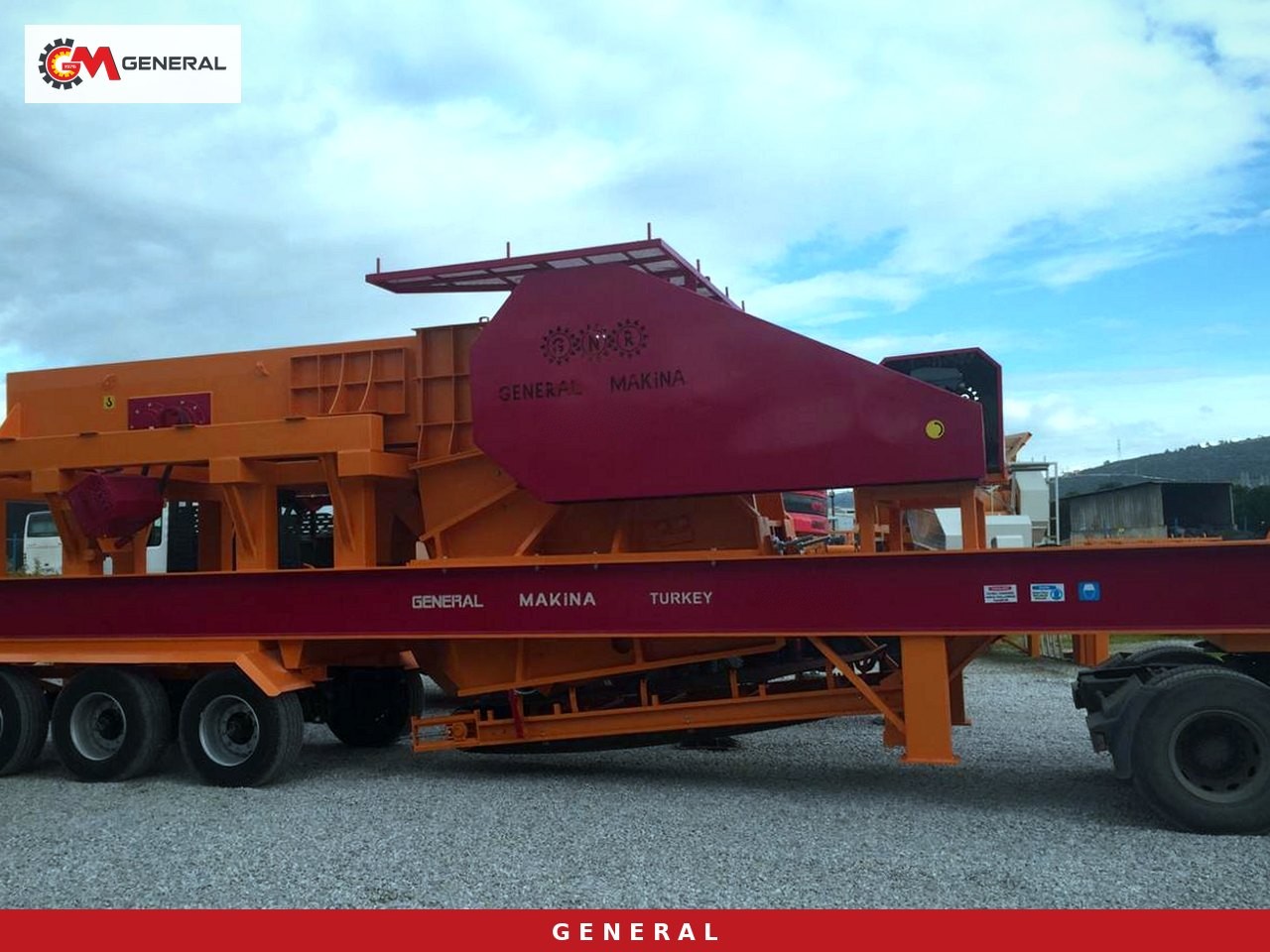
Before the plant enters the site, the ground points should be marked, the ramp finished and the generator spot fixed. The tractor reverses in so the feed end of the unit faces the ramp. If this order is wrong the unit has to be turned on site, and in tight quarries that is sometimes impossible.
Support legs and levelling
Once the hydraulic legs are down, the chassis is levelled lengthwise and crosswise. The wheels are taken off load; the plant should pass its vibration into the ground through the legs. On the two-chassis GNR-MC110 the primary chassis is placed first and the secondary chassis is aligned to its discharge conveyor. Because the primary group can run on its own, primary crushing can start if the secondary chassis is delayed, which is useful for building stock in the first weeks.
Belt angles and stockpiles
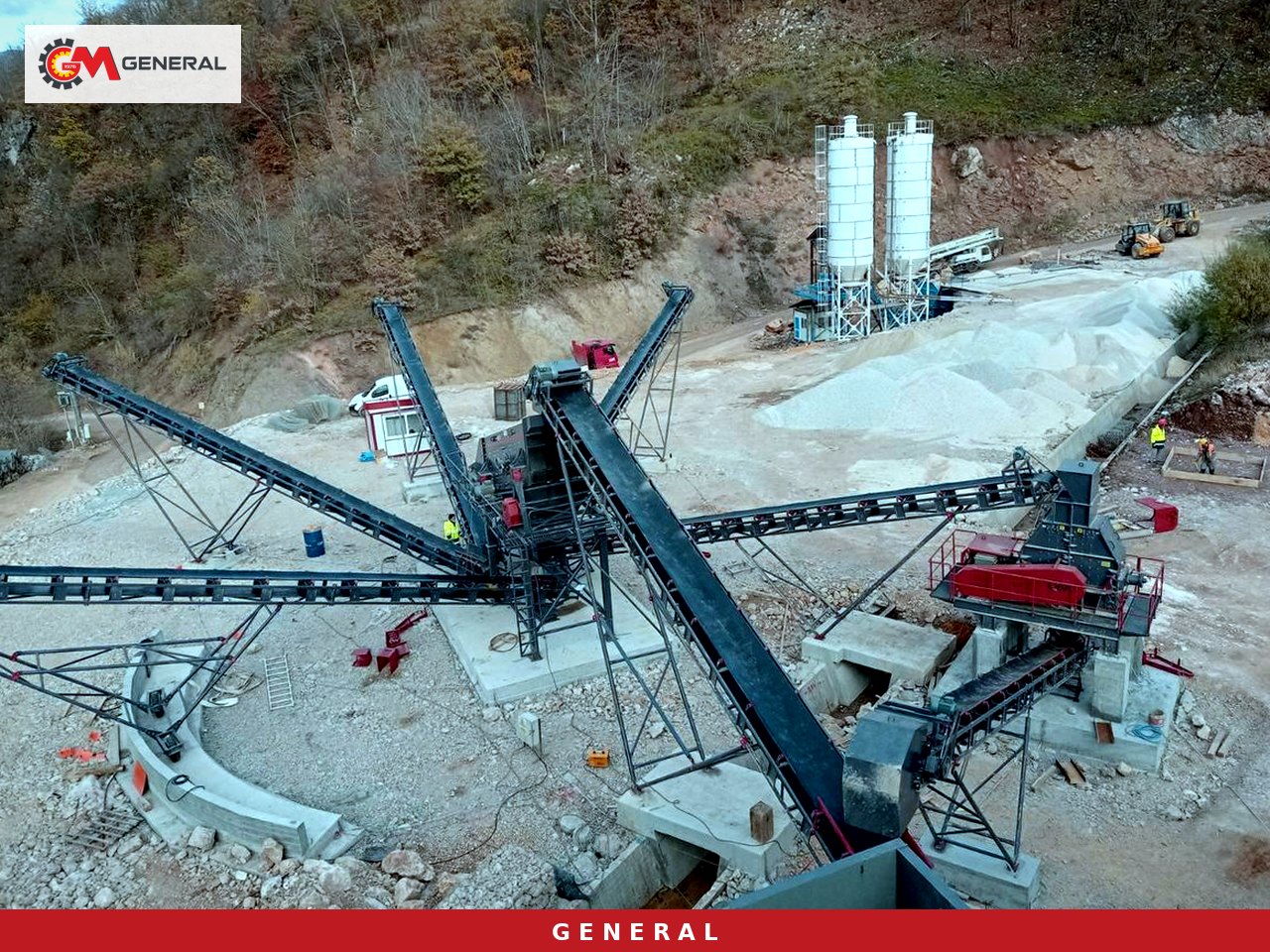
The folding hydraulic conveyors are opened and the end of each product belt is brought to its planned pile point. The steeper the belt, the less material it can carry; where a steep angle is needed, a chevron belt is used. If a separate stockpile conveyor is required, our belt conveyor systems are built in seven widths between 500 and 1200 mm and to any length. The belt under an impact crusher uses EP 125 four-ply rubber; EP 100 is enough on product belts.
Power, cabling and controls
Generator size follows the values in the table. If a grid connection is available, transformer capacity and cable cross-section are calculated by an electrical engineer from the total motor power and starting currents. Cables are laid so they do not cross the loader route, in ducts where necessary. A crushed cable is the most ordinary fault that stops a plant on its second day.
On the control side, the automation and control system starts the equipment in the reverse order of material flow, from the stockpile belt back to the feeder. When one machine stops, every stage before it stops automatically, so nothing starts under a loaded belt. As crusher current approaches its threshold the feeder slows down. Each of these interlocks should be tested one by one during installation, including the emergency stop buttons and the pull-wire switches along the belts.
Commissioning: from idle running to the first ton
Commissioning runs in three steps. First, each motor is run alone without load and its direction of rotation checked. Then the line is run empty with sequential start; belt tracking, rubbing noises and screen vibration are watched. Finally material is fed in gradually. The first feed should not be at full capacity: starting at a low rate and increasing it while watching crusher current and distribution across the screen protects both the bearings and the belt splices.
Complete this list with the crew before commissioning:
- All legs down, chassis level, wheels off load.
- Crusher setting (discharge gap) adjusted to the target product and recorded.
- Screen meshes in the correct aperture, tensioning bolts tightened.
- Belt tension and scrapers checked, V-belts aligned.
- Oil and grease levels filled according to the first-start instructions.
- Emergency stops, pull-wire switches and start-sequence interlocks tested.
- Dust suppression nozzles tested with water.
- Loader operator briefed on feed rate and hopper fill level.
When the first product pile forms, a sample is taken and a sieve analysis done. If the grading curve is off target, change the crusher setting first and the screen aperture second. Changing both at once leaves you not knowing which one fixed the result.
Checks during the first week
In the first running hours bolts bed in, V-belts stretch and belt splices take load. At the end of the first week all fasteners are re-tightened and belt tension and tracking checked again. For the full daily and periodic routine, share our mobile crushing plant maintenance instructions with your team.
Frequently asked questions
Does a wheeled plant need a concrete foundation?
No. The leg points need to be compacted, level and drained. On fill or loose ground, steel plates or sleepers under the legs reduce settlement.
How long does installation take?
It depends mostly on ground, ramp and power preparation. For the General 950 the manufacturer's data gives commissioning within 30 minutes, but that applies to a prepared site. We review how ready your site is together at the quotation stage.
Can the primary group of the two-chassis GNR-MC110 run alone?
Yes. The primary and secondary groups can run independently. The primary group can be installed first to build stock, and the secondary chassis brought in later.
What sets the price and delivery?
Model, crusher combination, number of screen decks, generator, extra conveyors and the transport route set the price. A firm figure and delivery plan come in a quotation prepared from your material and site data.
What to prepare before asking for a quotation
The way to keep installation short is to give complete site information at the quotation stage. Send us the test results of your rock sample, target product fractions, daily operating hours, the access route and the power source (grid or generator). With these we can firm up the model proposal, a draft layout and the transport dimensions together. The plants we have built in Izmir since 1976 carry CE and ISO 9001 certification and are delivered with a 1-year warranty, wear parts excluded. To request a quotation for your site, reach us through our contact page.
Definitions of technical terms: Glossary