EN — English
 TR — Türkçe
 DE — Deutsch
 RU — Русский
 FR — Français
 ES — Español
 AR — العربية
 SR — Српски

Dubai & Abu Dhabi Mobile Crushing & Screening Plant 200-300 TPH
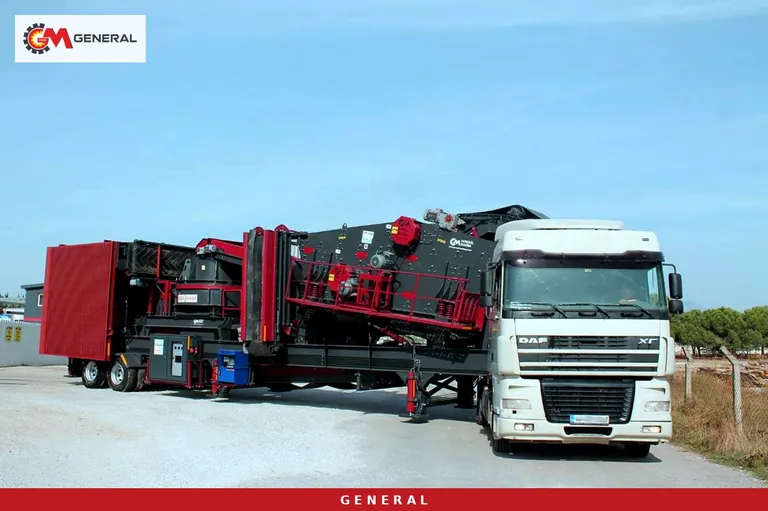
Between Dubai and Abu Dhabi, aggregate demand is never met from a single source. Crushed rock from quarries around the Hajar Mountains in the northeast, mixed sand, calcareous rock and gravel from foundation excavations, and demolition concrete from redeveloped buildings can all reach the same contractor on different days. That is why a mobile crushing and screening plant aimed at 200-300 TPH in the United Arab Emirates is first configured around the material it will process; the capacity figure is the outcome of that configuration. Below we match these three sources, the hot, dusty and sandy operating conditions of a Gulf site and the oversize-load route from port to job site with real model data from our product pages. The material specification, grading limits and environmental conditions of your project must be confirmed in writing with the authority concerned and the contract documents.
Three different feeds entering the crusher in the Emirates
The first question in any supply plan is this: will the plant work all year in one quarry, or move between job sites in the city? The answer changes both the crusher type and the screening requirement.
Quarry rock from the Hajar Mountains
Most of the country's crushed rock comes from the mountainous belt in the north. In this belt, dark igneous rocks such as gabbro and peridotite occur alongside limestone and dolomite. The igneous group is tough and comparatively abrasive; limestone is softer and breaks easily under impact. Even two quarries in the same area can behave very differently in a crusher. No crusher decision should therefore be made before the rock type, silica content and abrasion value of the quarry have been measured on samples in a laboratory.
Foundation excavation and surplus fill
On high-rise, infrastructure and coastal work in Dubai and Abu Dhabi, excavated material is often a mix of sand, calcareous rock fragments and gravel. A large share of it is already fine. Running all of it through a crusher wastes both energy and wear parts. Screening first and crushing only the oversize gives a far more sensible flow.
Demolition concrete and urban renewal
In districts where older buildings are being replaced, concrete and brick waste forms a separate feed. It has low abrasiveness but carries rebar. Pre-sorting, steel separation and the local authority's recycling rules on where the product may be used should be read in advance. Our concrete recycling plant page offers a starting point for the machine set and flow.
Impact or jaw: the rock makes the call
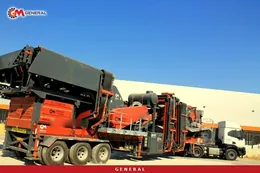
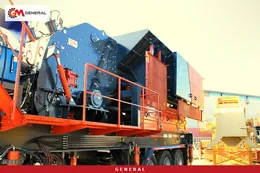
The wheeled plants in our range that fit the 200-300 TPH band rely on two different crushing principles. The General 02 and General 03 work with a primary impact crusher. The impact rotor gives high reduction and cubical particles in a single stage on low-abrasion material such as limestone, dolomite and demolition concrete. That cubical shape makes particle-shape control easier under concrete and asphalt aggregate specifications.
In hard, abrasive rock with a high silica content, however, the blow bars and plates of an impact crusher wear fast and part consumption becomes unpredictable. Here a jaw crusher at the primary stage is the safer start. The GNR-MC110 is the model offering the GPJ 110 jaw primary in this capacity band. If the abrasion value of a gabbro sample is unknown, basing the plan on the jaw layout and requesting quotes for both options is the way to avoid surprises later.
Real configurations for 200-300 TPH
The values in the table below are taken unchanged from the technical tables on our product pages; values not listed on the page are shown as "—".
| Model | Crusher / equipment | Capacity | Max. feed | Screen | Power | Weight / dimensions |
|---|---|---|---|---|---|---|
| General 02 | GPS 1413 primary impact | 250-300 t/h | 1000 mm | 2000×5000 mm, 4-deck | 660 kVA generator | 76,000 kg; 4340×20600×4500 mm |
| General 03 | GPS 1415 primary impact | 250-375 t/h | 900 mm | 2400×5000 mm, 4-deck | 750 kVA generator | ; 4-axle chassis |
| GNR-MC110 | GPJ 110 jaw + DMK03 impact, twin chassis | 200-300 t/h | 900 mm | 2000×6000 mm, 4-deck | 750 kVA generator | 55,000 kg + 55,000 kg |
| GNR ME2060 (screening) | 20 m³ hopper with 100 mm grizzly, no crusher | 200-350 t/h | 0-100 mm | 2000×6000 mm, 3-deck | Generator or grid | 15 × 4.10 × 4.50 m |
Limestone and demolition concrete jobs
If you will process quarried limestone or concrete waste, the General 02 accepts large blocks directly through its 1000 mm feed opening, runs in closed circuit and splits 0-5 / 5-12 / 12-19 / 19-40 mm fractions in one pass with its 4-deck screen. For a contractor who wants headroom at the top end, the General 03 offers 250-375 t/h, a 2400×5000 mm screen and a 4-axle chassis; with a 300 TPH target, that margin protects output when feed fluctuates.
Gabbro and hard igneous rock
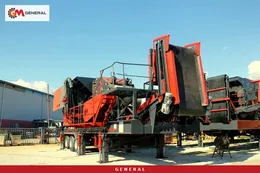
The GNR-MC110 splits the primary and secondary groups across two chassis: the primary chassis measures 3000 × 13500 mm, the secondary 4200 × 18300 mm. Because the primary group can run on its own, only the jaw needs to be in service while coarse fill is produced. Keep in mind that the secondary is an impactor; with a very abrasive sample, secondary wear-part consumption should also be discussed at quotation stage. As a lower-tonnage alternative, two General 944 jaw-and-cone units (120-180 t/h each) can be considered.
Screen before you crush: dry screening with the ME2060
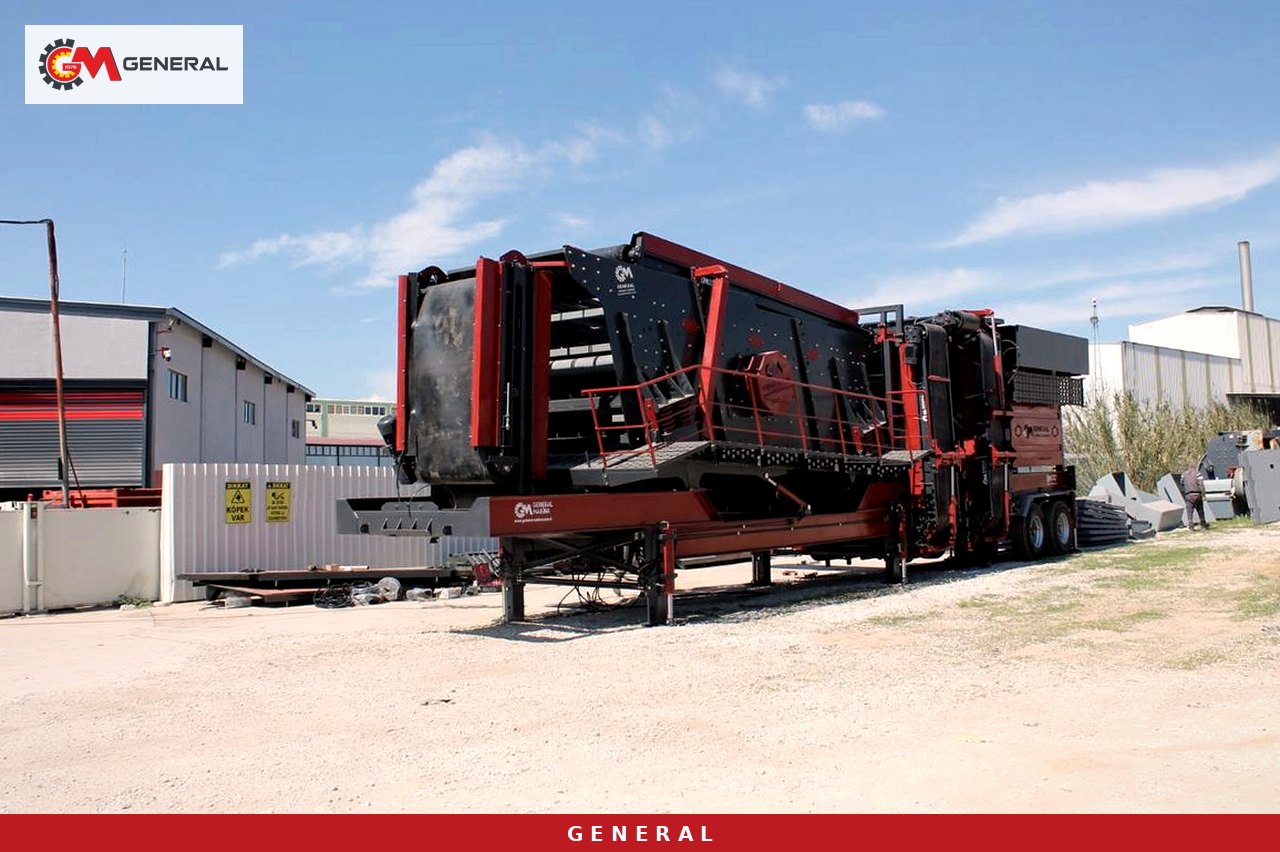
On urban job sites in the Emirates, the first machine in the line is often a screen rather than a crusher. The GNR ME2060 removes oversize rock at once with the 100 mm grizzly above its 20 m³ hopper, which is filled by truck or loader. An 800 mm main belt carries material to a 2000×6000 mm, 3-deck screen; the feed is split into four fractions and each product goes to its own pile on a 600 mm stockpile conveyor. Oversize goes on to the crusher, while fines that already meet the specification go straight to fill or stockpile.
This layout has two benefits. First, the crusher is fed only with material that needs crushing, so wear-part consumption stays proportional to the job. Second, because the screening plant can also run on its own, it can be sent alone to sand and gravel jobs where no crushing is needed. The ME2060 can be powered by a generator or from the grid; where a city site has a grid connection, this option cuts noise and fuel logistics. One point to note: the plant is for dry screening. If excavated material is clayey or wet, the screen meshes blind; in that case the washing models in our sand washing and dry screening plants group should be considered.
Heat, dust and windblown sand: running a Gulf site
In Dubai and Abu Dhabi, summer heat, humidity and fine sand carried by the wind stress the auxiliary systems more than the plant itself. For these conditions, knowing which measure belongs where is more useful than a measurable promise. On the ME2060, a fan-cooled electrical panel and remote control are standard. On other models and across the site, the following measures can be selected per project and should be defined separately at quotation stage:
- Air filters and pre-cleaners suited to fine sand on generators and engines, with filter change intervals shortened to suit the site.
- Shading for electrical panels and regular checks of door seals.
- Water-spray dust suppression at crusher discharge and conveyor transfer points; since water is precious in the Gulf, choose adjustable flow.
- Conveyor covers and watering of site roads; keep stockpiles low on the side facing neighbouring buildings.
- Place the 0-5 mm pile downwind or cover it so that windblown sand does not contaminate the fine product.
- Schedule maintenance and wear-part changes for the cooler hours of the day and provide a shaded rest area for operators.
Keeping a spare set of wear parts such as manganese jaw plates and blow bars on site shortens downtime at a remote quarry. How many sets of which part are needed is decided after sample testing, according to the abrasiveness of the rock.
From Jebel Ali and Khalifa Port to the site: oversize loads and setup
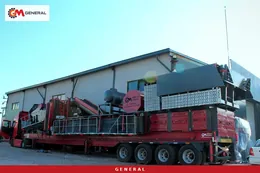
A mobile plant shipped from Izmir reaches the Emirates by sea; Jebel Ali on the Dubai side and Khalifa Port on the Abu Dhabi side are the obvious entry points. The wheeled chassis lets the plant be towed from port to site on its own axles. Because the dimensions in the table exceed normal load limits, however, an oversize and heavy load permit is required. Route, time-of-day restrictions and escort requirements should be confirmed in advance with the roads and traffic authority of the emirate concerned. For the GNR-MC110 this means two separate moves instead of one heavy load; the General 02 is towed in one piece at 76,000 kg.
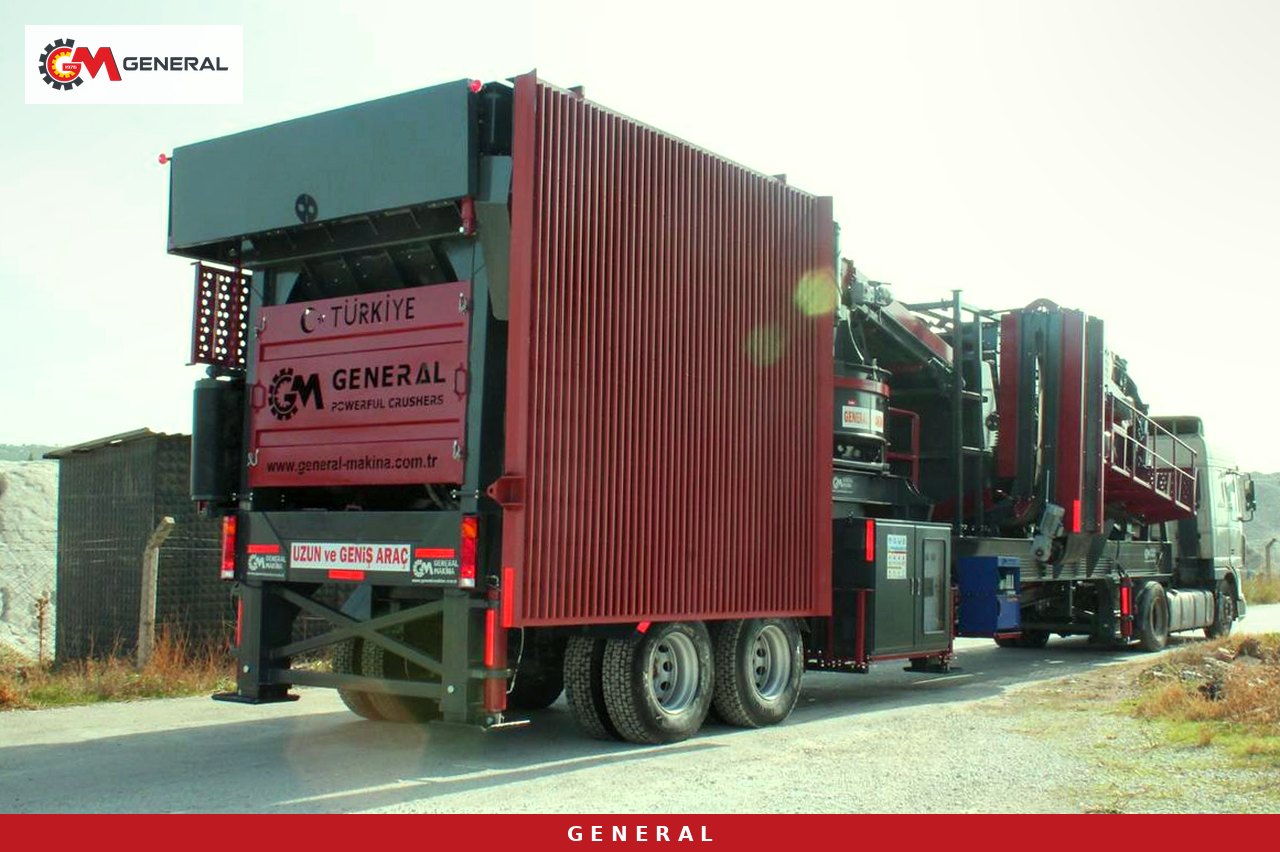
A compacted, level surface is enough for setup, but on sandy ground load-spreading plates are needed under the support legs. Truck entry and exit routes should be planned so they do not cross, and stockpiles placed according to the prevailing wind. Our plants are ISO 9001 and CE certified and carry a 1-year warranty excluding wear parts; General Makina has been manufacturing in Izmir since 1976, and the Middle East is one of our export regions.
Frequently asked questions
Can the same plant crush both quarry rock and demolition concrete?
The primary-impact General 02 and General 03 are efficient on limestone and concrete waste. If the same plant is moved to a hard gabbro quarry, however, wear cost rises quickly; there the jaw-primary GNR-MC110 is the more balanced choice. The decision should follow sample testing.
Can the ME2060 work on its own?
Yes. With 200-350 t/h capacity, the ME2060 runs independently with its own hopper, grizzly and stockpile conveyors. It is used alone on sand and gravel jobs where no crushing is needed, and as a pre-screen ahead of the crusher in a crushing line.
What changes on the plant for a hot climate?
The crushing principle stays the same; what changes is filtration, cooling, dust suppression and the maintenance routine. Which measures are standard and which are options is itemised in the quotation.
How do I get price and delivery information?
Both depend on the selected model, crusher combination, extra equipment and shipping method. Write to us with the information below and a project-specific technical quotation will be prepared.
Conclusion and what we need for a quote
In Dubai and Abu Dhabi, the right 200-300 TPH plant starts with the material: the primary-impact General 02 or General 03 for limestone and demolition concrete, the jaw-primary GNR-MC110 for hard igneous rock, and the ME2060 working up front on excavation surplus. Before requesting a quote, prepare the following:
- Material source and sample test results (rock type, silica content, abrasion value).
- Largest lump size and excavation method.
- Product list in the specification, grading and particle-shape requirement.
- Daily tonnage, shift pattern and how often the plant will relocate.
- Power source (generator or grid) and environmental conditions on site.
- Port of delivery and road route to the site.
For other capacities see our wheeled mobile crushing plants page, and send this file via our contact page so we can finalise the configuration together.
Definitions of technical terms: Glossary