EN — English
 TR — Türkçe
 DE — Deutsch
 RU — Русский
 FR — Français
 ES — Español
 AR — العربية
 SR — Српски

Addis Ababa Housing Mobile Crushing & Screening Plant 120-180 TPH
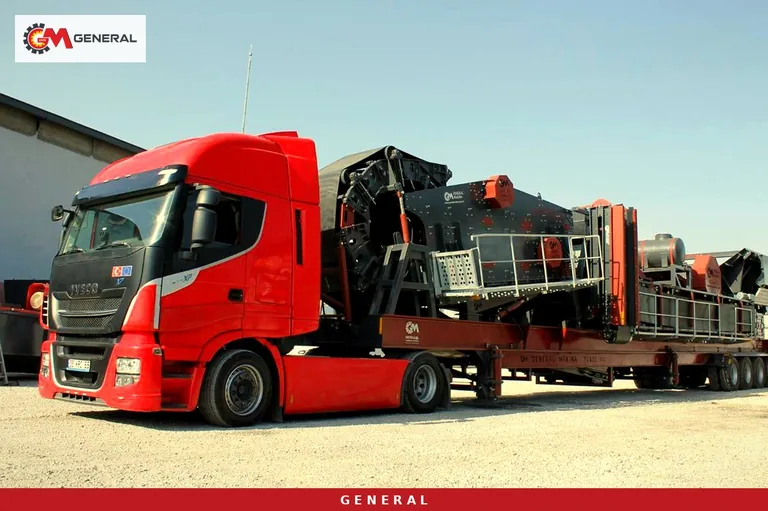
When the structural work on a housing estate in Addis Ababa gets under way, aggregate demand never comes as a single line item. The block yard at the edge of the site wants fine material, the ready-mix plant expects two different chip sizes, and internal roads and backfill consume coarse stone. Around the capital most of that rock is volcanic, and that fact shapes crusher selection directly. A 120-180 TPH band is a realistic range for feeding one housing programme, or several neighbouring sites, from a single quarry. Below we compare the real General models that fall into this band using their published figures, look at what high-plateau and rainy-season conditions change in day-to-day operation, trace the logistics from the port of Djibouti to the site, and list what should be settled before an order is placed.
One boundary first: specifications, grading limits and schedules for individual housing programmes in Addis Ababa belong to the relevant authority and contractor. This article is about machine selection; always confirm aggregate requirements against the technical specification issued by the authority or the main contractor.
The aggregate basket of a housing site in the capital
Housing construction in Addis Ababa combines a reinforced concrete frame with hollow concrete blocks. That pairing defines the product mix the crusher must deliver and shapes the screen configuration at the ordering stage. Splitting monthly demand as follows makes it clear which model should run with which setting:
- 0-5 mm crushed sand: the main input of the block press. Clean, angular grains give a smooth block face and clean release from the mould.
- 5-12 mm fine chippings: used in the block mix and in slab concrete.
- 12-19 mm chippings: the coarse aggregate for columns, beams and shear walls; a cubical grain shape keeps the mix workable.
- Coarse material and sub-base: for internal roads, parking bases and fill under foundations; usually taken from screen oversize or produced with a separate setting.
This split shows that tonnage alone is not enough: the plant must also produce enough of the fine fraction. The character of the secondary stage becomes decisive here.
Plateau rock: basalt, trachyte and scoria behave differently
Addis Ababa and its surroundings sit on a volcanic plateau, and quarries commonly work basalt, trachyte, ignimbrite and porous scoria. Although they occur in the same area, these rocks react very differently inside a crusher. Before deciding anything about a particular quarry, take samples from several points and have an independent laboratory run compressive strength, abrasiveness and Los Angeles abrasion tests.
Dense basalt and trachyte
Hard, dense basalt needs a strong jaw crusher at the primary stage. At the secondary stage there are two routes: an impact secondary gives high reduction and cubical grains, which favours block sand and concrete chippings; a cone secondary works by compression and therefore extends the life of metal parts in high-silica rock. If laboratory results put abrasiveness at a moderate level, the impact secondary comes forward; if they come out clearly high, the cone secondary does.
Porous scoria and tuff
Light, porous materials break easily but generate a lot of dust and do not always reach the strength required for structural concrete. This material is mostly used for fill and sub-base. Where basalt seams and scoria layers are interleaved in the quarry face, grizzly pre-screening that removes the fine, earthy portion before the crusher protects plant efficiency.
For more detail on model choice in hard basalt, see our article on the best mobile crushing plant for basalt and granite. There is also a delivered reference in Ethiopia: the 150 t/h basalt crushing and screening project in Jijiga is an example of the country's volcanic rock being processed in this capacity band.
Four routes to a 120-180 TPH target
The General options that meet this band are set side by side in the table below. All figures are the technical data from the product pages; settings not shown are defined at order stage according to the rock.
| Configuration | Capacity | Max. feed | Crushers | Screen | Generator | Weight |
|---|---|---|---|---|---|---|
| General 950 | 120-180 TPH | 800 mm | GPJ 90 jaw + DMK01 impact | 1600×5000 mm, 3-deck | 600 kVA | 70,000 kg |
| General 944 | 120-180 TPH | 800 mm | GPJ 90 jaw + GM430 cone | 1600×5000 mm, 3-deck | 550 kVA | 70,000 kg |
| General 01 | 120-180 TPH | 700 mm | GPS 1210 impact (primary + secondary) | 1600×5000 mm, 4-deck | 550 kVA | 55,000 kg |
| 2 × General 640 | 2 × 60-100 TPH | 500 mm | GPJ 60 jaw + GNR 50 impact (each) | 1200×4000 mm, 3-deck (each) | 300 kVA, optional (each) | 38,000 kg (each) |
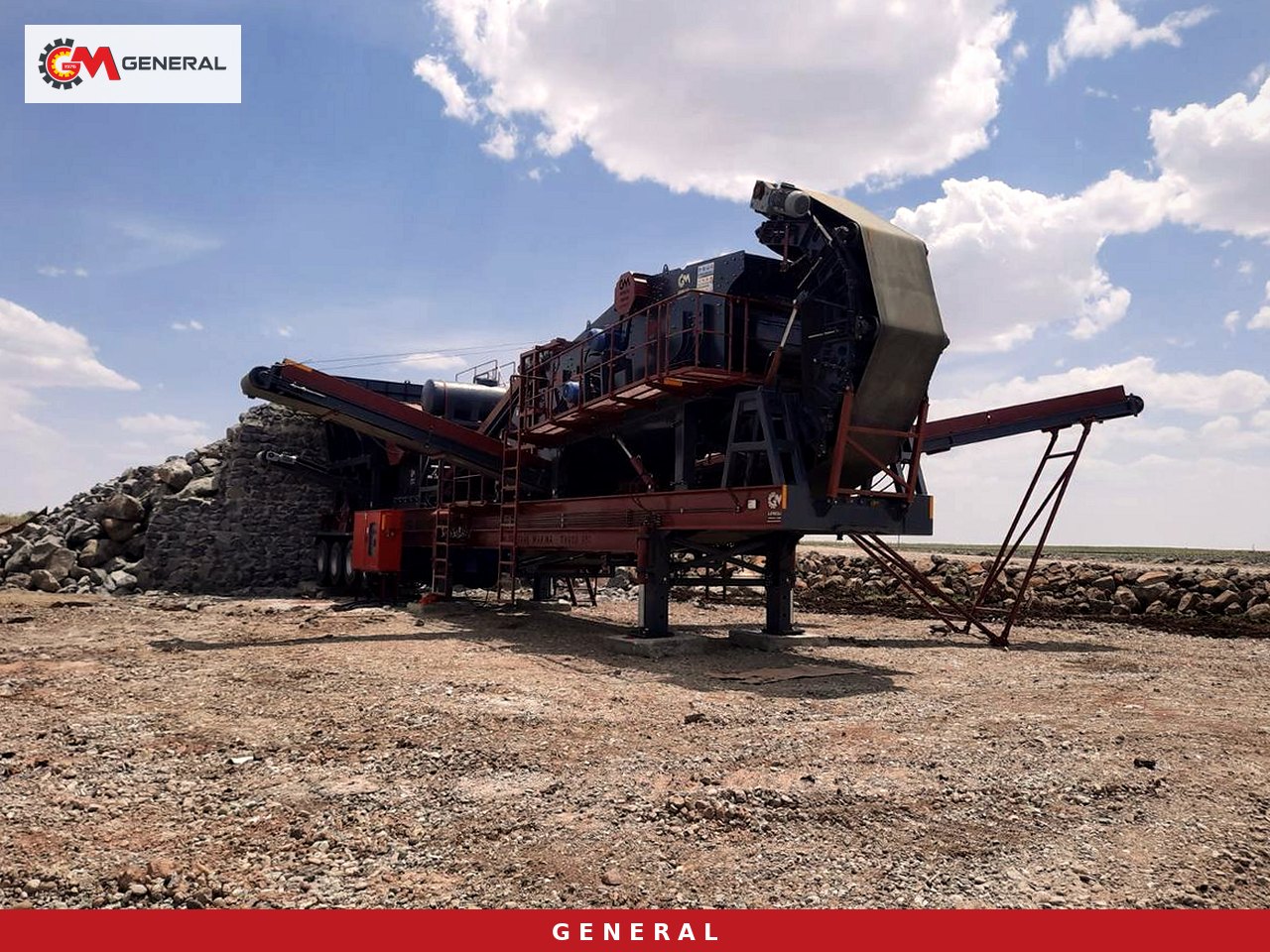
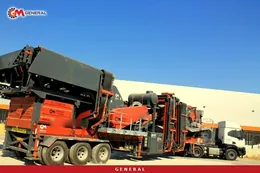
The General 950 is the most balanced candidate for housing aggregate: the GPJ 90 jaw accepts basalt blocks up to 800 mm, and the DMK01 impact secondary delivers the cubical shape wanted for block sand and concrete chippings. Its product fractions are defined as 0-5, 5-12 and 12-19 mm, which match the aggregate basket above one to one. Model details are on the General 950 product page.
The General 944 uses a cone secondary on the same chassis size and weight. If sample tests show high abrasiveness, the General 944 keeps wear-part consumption more predictable; cubical shape then needs closer attention to screen and recirculation settings.
The General 01 combines primary and secondary crushing in one body with its GPS 1210 impactor. Its 4-deck screen also separates a 19-40 mm fraction, useful where sub-base is needed as a separate product. Its lighter build eases transport, but because a single impact crusher performs best in low-abrasion rock, liner monitoring must be tight in dense basalt. See the General 01 page for details.
Two General 640 units make sense for two housing programmes running at the same time on different sides of the city. Each unit produces 60-100 TPH, so together they reach the target band, and one keeps producing while the other is in maintenance. The trade-off is two crews, two loaders and, because of the 500 mm feed opening, a smaller blast fragmentation at the quarry.
All wheeled options are grouped in the wheeled mobile crushing plants category. If only a secondary or sand stage is to be added to an existing line, single-chassis units are listed under single-chassis mobile crusher units.
Running a plant on the high plateau and through the rainy season
Altitude: have engine and generator power checked for the site
Addis Ababa is built well above sea level. In thin air, diesel engines and generators cannot deliver their sea-level nameplate output. On an off-grid quarry, the generator values in the table are therefore a starting point; the actual site altitude should be supplied so that power selection can be confirmed against the generator manufacturer's derating values. The same logic applies to cooling: radiator capacity and air-filter service intervals are planned more tightly at altitude.
Rainy season: wet and clayey feed
The Ethiopian plateau has a pronounced rainy season. During it the quarry floor turns to mud, clay mixes into the run-of-mine rock and screen meshes tend to blind. Removing the fine, clayey portion with grizzly pre-screening before the crusher, choosing screen wire openings suited to the season and preparing a drained stockpile area all reduce lost production. In the dry season the problem reverses: dust. Water-spray dust suppression at conveyor discharge points and covered belts are measures that can be selected per project for quarries close to residential areas.
From the port of Djibouti to an Addis Ababa site
Ethiopia is landlocked, so imported machines mostly enter the country by road from the port of Djibouti. A wheeled plant offers a clear advantage here: the General 950 is hitched to a tractor unit on a single chassis with transport dimensions of 4130 × 20350 × 4500 mm and does not need to be dismantled and reassembled. According to the product page it can start producing on site in about 30 minutes, but that time depends on a levelled site, load-bearing ground and a ready feed ramp.
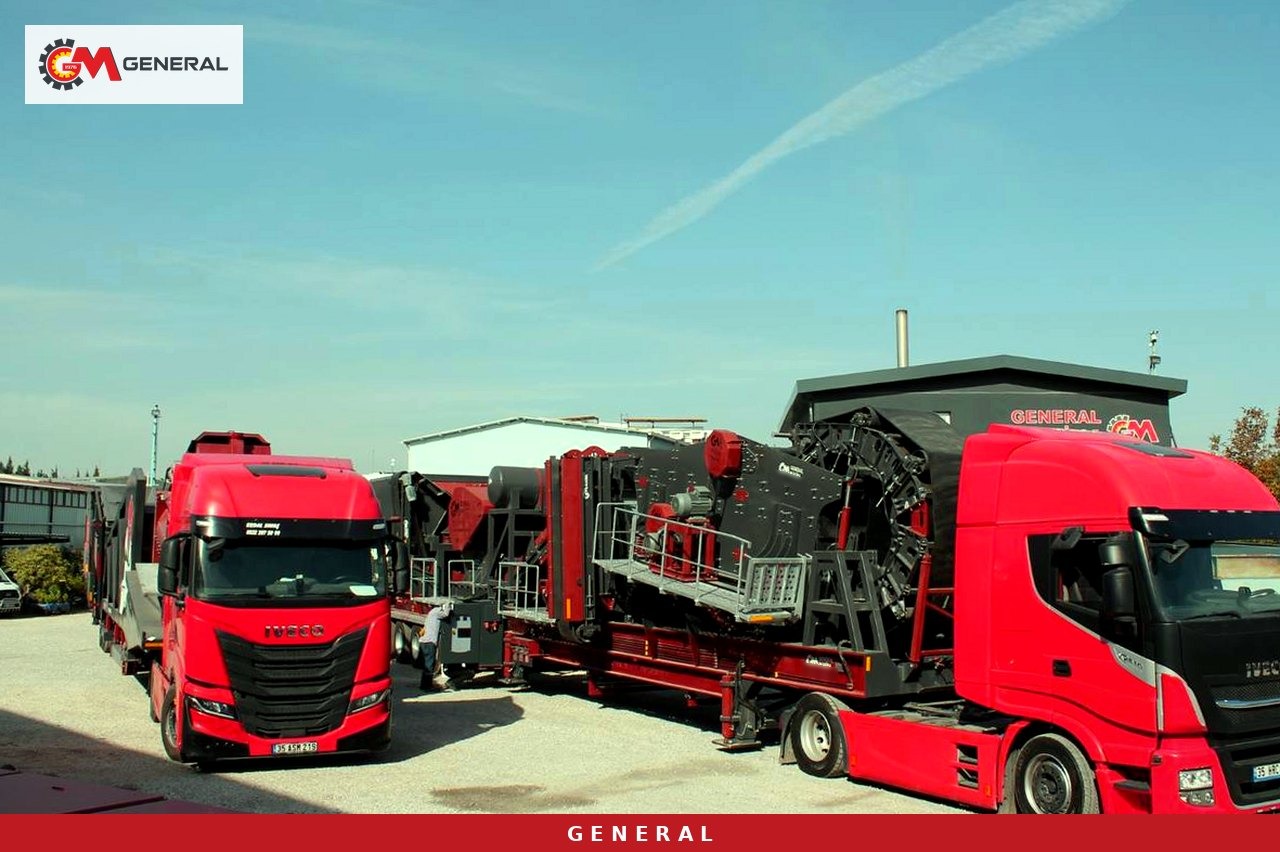
Because a long road route is involved, axle-load and height limits along the way, any special transport permits and customs documents should be verified with the importer or customs broker before shipment. Confirm current rules with the relevant Ethiopian authorities, and a route survey is advisable for narrow roads and bridges on the approach to sites around the city.
What to settle before reaching the order table
Preparing the enquiry properly keeps the wrong model from going to site. Gather the following before the discussion:
- Laboratory results from several quarry samples: compressive strength, abrasiveness, Los Angeles value.
- Monthly fraction demand: estimated shares of 0-5, 5-12, 12-19 mm and coarse material.
- Largest block size after blasting; this decides between the 800, 700 and 500 mm feed openings.
- Power source: is there a grid connection or will a generator be used, and what is the site altitude.
- Whether one quarry or two points close to separate sites are planned.
- If finer, more cubical block sand is wanted, whether a VSI sand stage will be added later.
- Aggregate grading limits and test requirements in the housing project's specification.
Frequently asked questions
Should a housing project in Addis Ababa choose the 950 or the 944?
It depends on the quarry rock. For moderately abrasive basalt and output weighted toward block sand, the General 950's impact secondary brings a cubical-product advantage. If the laboratory reports high abrasiveness, the General 944's cone secondary makes wear cost more predictable.
Will there be enough fine material for block production?
Impact secondaries produce more fines than a cone crusher. If block-yard demand is high, the 0-5 mm share can still be raised through screen settings and the return circuit; if more is needed, adding a VSI sand stage after the plant is considered.
Can it run at a quarry without grid power?
Yes. Generator values are defined as 600 kVA for the 950, 550 kVA for the 944 and 01, and an optional 300 kVA for the 640. Because of power loss at high altitude, have the final generator selection confirmed for the site's altitude.
What determines the price?
The chosen model or two-unit layout, whether a generator is included, screen and conveyor options, additional equipment such as dust suppression, and shipping terms all set the price. For a firm figure, request a quotation together with your requirements list.
Decision summary
For an investor producing housing aggregate in Addis Ababa, the first step is to understand the quarry's volcanic rock in the laboratory. For moderately abrasive basalt with an emphasis on block sand, the General 950 comes forward; for high abrasiveness, the General 944; for a site that also wants 19-40 mm sub-base and a lighter chassis, the General 01; and for two distant sites, a pair of General 640 units. General Makina has been manufacturing in Izmir since 1976, holds ISO 9001 and CE certification, and delivers its machines with a 1-year warranty excluding wear parts. Share your sample results and fraction requirements through our contact page and we will define the right configuration for your project together.
Definitions of technical terms: Glossary