EN — English
 TR — Türkçe
 DE — Deutsch
 RU — Русский
 FR — Français
 ES — Español
 AR — العربية
 SR — Српски

Mobile Crusher Plant Permits and Environmental Impact Assessment (EIA) Processes
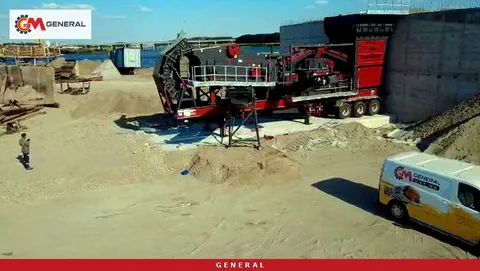
On the day a mobile crushing and screening plant is ordered, most operators are thinking about the start of production. Yet before the machine can crush its first tonne, the environmental assessment of the site has to be complete. A plant that has been delivered, set up and connected to power will still stand idle if the permit file is incomplete. This article explains, from a site engineer's point of view, how an environmental impact assessment (EIA) and the permits that follow it are prepared for a mobile crushing and screening plant: which questions the authority asks, where the machine data goes in the file, and which topics reopen when the plant moves. Legislation differs from country to country and even between regions; what follows is the general process, and every step should be confirmed with the relevant authority under local rules. Transport and road permits are a separate subject and are not covered here.
Permits are granted to an activity and a site, not to a machine
The first distinction: an environmental permit is not a machine certificate. The CE marking and the manufacturer's declaration of conformity show that the machine is designed and built safely; how much dust, noise and waste a site produces is a property of the activity. The same plant may be permitted without difficulty in one quarry and require additional measures or a more detailed assessment at another site close to housing. That is why a permit file always carries three pieces of information together: which machine, on which site, under which production pattern.
The second distinction concerns the source of raw material. If the material comes from a quarry, the licences and operating permits under mining legislation are needed separately; the crushing and screening plant may be treated as an activity added on top of that licence. If construction and demolition waste or concrete rubble is crushed, waste management legislation applies. On a road or dam project, the project's own environmental assessment may already cover crushing and screening; if it does not, an additional application is required. Asking the authority which case applies at the first meeting saves months of work on the wrong file.
The general flow: from the threshold question to the operating phase
Countries use different names, but the process usually follows the same logic. First it is decided whether the project is subject to assessment and at what level; then the project is described, other agencies give their opinions, a decision is issued and the operating permits follow.
- Preliminary meeting and scoping: Site location, type of activity and production volume are presented. Many regulations define thresholds by capacity, area or annual output; only the competent authority can state the exact threshold.
- Project description file: Site, machine list, process flow, energy source, water use, waste and mitigation measures are put in writing. In many countries an accredited consultancy prepares the file.
- Agency opinions: Water, forestry, agriculture, cultural heritage, highways and municipal departments state the constraints within their remit.
- Decision: The authority states either that no further assessment is needed or that a full report is required. The decision is usually tied to a defined project and site.
- Operating permits: Air emission, wastewater, business and operating licences are obtained after this decision.
- Operating phase: Implementation of the committed measures is inspected; monitoring and record-keeping obligations continue.
The most common mistake in this flow is to run the machine order and the file preparation one after the other. They run in parallel: the file needs the machine's technical data, and the choice of machine affects the measures committed to in the file.
The technical core of the file: machine data and layout
The machine section of a project description file is not a place to write a capacity figure and move on. From capacity the authority reads annual output; from feed size, the need for blasting and pre-crushing; from generator rating, fuel-related emissions; from plant dimensions, the layout. The table below shows the specification data published on the product pages of four models from the mobile crushing plants range and where that data is used in the file.
| Model | Capacity | Max. feed | Generator | Dimensions (mm) |
|---|---|---|---|---|
| General 640 | 60-100 t/h | 500 mm | 300 kVA (optional) | 3500×17000×4500 |
| General 800 | 80-150 t/h | 600 mm | 450 kVA | 3600×15500×4500 |
| General 944 | 120-180 t/h | 800 mm | 550 kVA | 4130×20350×4500 |
| General 02 | 250-300 t/h | 1000 mm | 660 kVA | 4340×20600×4500 |
| Where it is used in the file | Annual output, threshold check | Quarry plan, pre-crushing need | Energy source, fuel and emissions | Site plan, area required |
A word of caution on capacity ranges: the declared output is multiplied by operating hours and days to give an annual quantity. Declaring the upper end of the range and working below it causes no problem; the reverse, declaring low and producing more, may count as unpermitted activity. On the energy side, if there is a grid connection the generator can be shown as standby only; if not, the fuel tank, filling area and spill protection must be described separately. With single-chassis solutions such as the General 944 mobile crushing and screening plant with a primary jaw and secondary cone crusher, the machine list stays short; in lines combining several units, each unit should be listed on its own row.
Site layout plan: half the measures are solved here
The site plan is the document the authority examines most closely, because distance and direction decide who the dust and noise will reach. The plan marks the nearest homes, schools, farmland, water sources and main roads, and shows the plant's position relative to them together with the prevailing wind direction. Keeping the primary feed point and the screen out of the downwind side of sensitive receptors is more effective than expensive measures added later.
The plan should also show stockpile locations and approximate heights, truck entry and exit routes, fuel and oil storage, the workshop and container positions, and where rainwater runs. Stockpiles can serve as a natural wind screen; but a stockpile in the wrong place lengthens the loader's travel and increases road dust.
Dust control: measures source by source
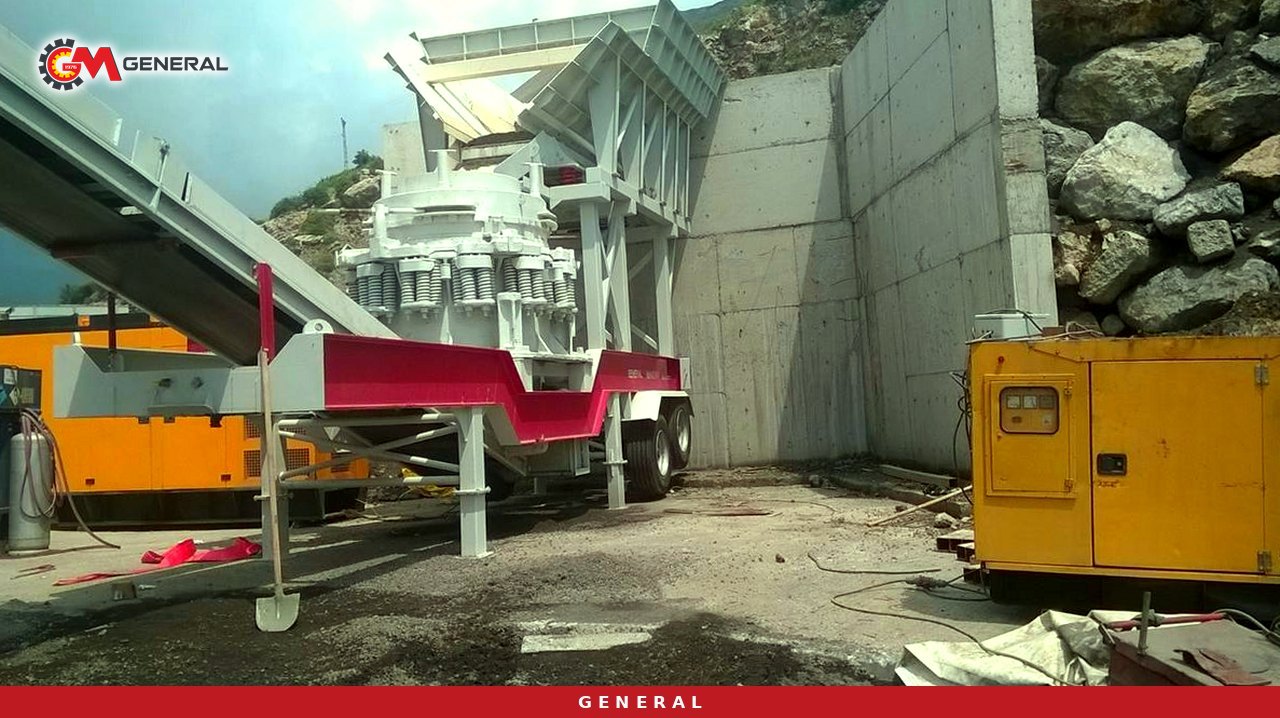
In crushing and screening, most dust comes not from the crusher itself but from points where material falls and changes direction. Writing "water will be sprayed" in the file is not enough; it must say at which point and by what method. Authorities usually ask about these sources one by one:
- Feed hopper: Drop height when trucks tip; a spray bar along the hopper edge and a lower tipping height.
- Crusher discharge and belt transfers: Chute covers, belt covers and wetting at transfer points.
- Screen: Enclosing the screen box or spraying from above; a curtain at the discharge of the fines belt.
- Stockpile conveyor: An adjustable head to cut drop height; discharge close to the top of the pile.
- Stockpile area: Surface wetting on windy days and, where needed, covers or walled bays for fine product.
- Internal roads: Regular watering, a speed limit and wheel washing at the exit.
Where water is scarce, mist sprays and dust suppression cannons cover the same area with less water. If the material itself is dusty and clayey, washing reduces dust at source; washing and screening plants are then worth considering, but water supply and settling pond sections are added to the file.
Noise, water and waste
Noise and vibration
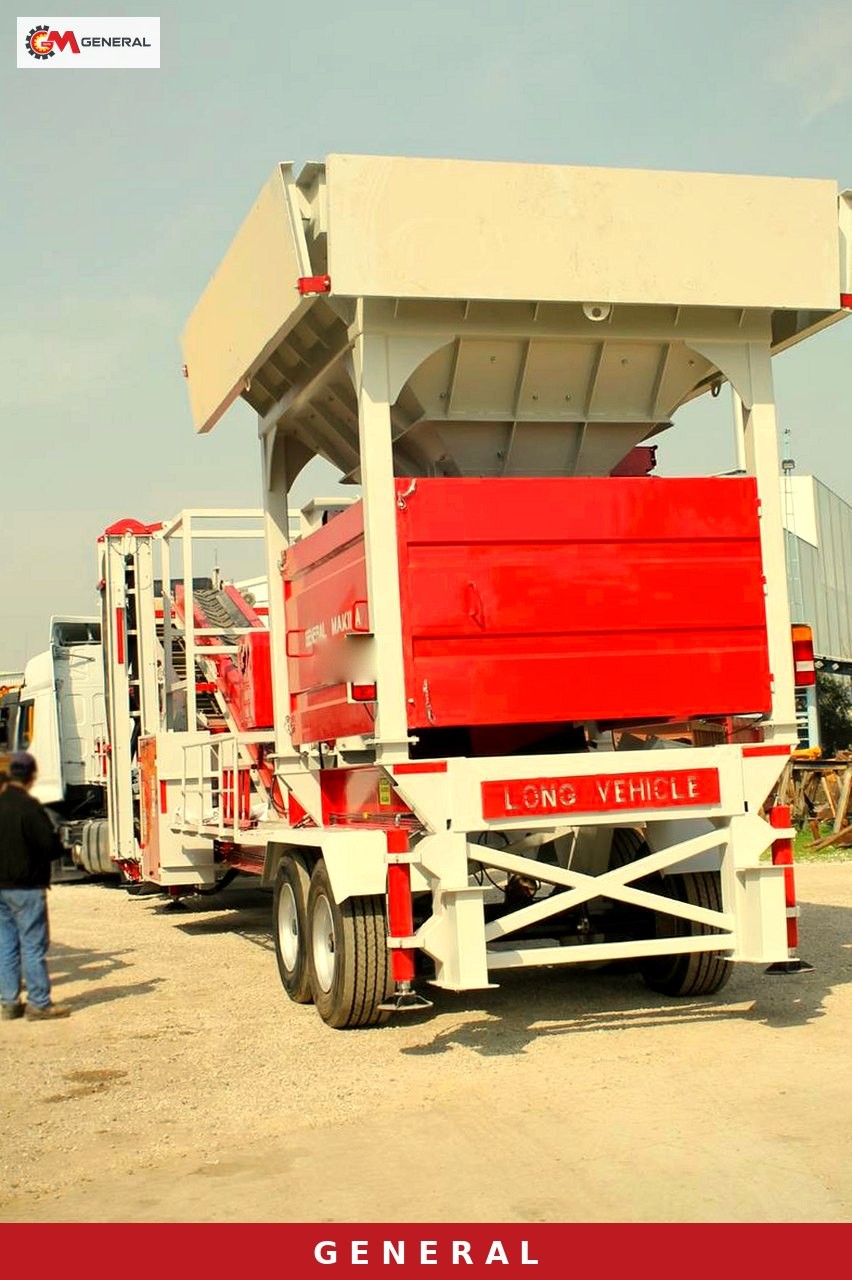
For the noise assessment the authority asks for source levels and the distance to the nearest receptor. The source list covers the crusher, screen, generator, loader and truck traffic. Stating working hours clearly in the file matters; if night work is planned, it may need a separate assessment. Using a sound-insulated generator canopy, placing stockpiles as a barrier towards receptors and setting the crusher and screen supports on firm ground are the most common measures on site.
Water use and drainage
The source of water for dust suppression or washing (well, mains, tanker) and the approximate amount are stated. If washing takes place, the file shows that muddy water settles in ponds and is reused, with no uncontrolled discharge from the site. Ditches and collection sumps are planned so that rainwater does not reach a stream after crossing stockpile and fuel areas.
Waste
A crushing and screening plant produces little waste, but it must be defined: used oil and filters, worn metal parts such as jaw plates and blow bars, old belts and screen media, and domestic waste. For each, a temporary storage point and a licensed disposal or recovery route are written into the file.
What happens when the plant moves?
The advantage of a mobile plant is that it can relocate; for permitting, each new site raises a new assessment question. In most legislation the decision is tied to specific coordinates and a specific project, so even with the same machine the process may start again when the site changes. Some countries offer a different or simplified route for short-term construction activities; confirm with the relevant authority whether it exists and on what conditions.
A practical approach is to build the first file in modules: the machine list, process flow, mitigation package and waste management sections are written independently of the site, while the site sections, such as layout plan, sensitive receptors, water source and raw material licence, are prepared anew each time. On the second and third sites the work then focuses on the site survey and agency opinions. An automation and control system that logs production makes it easier to compare declared and actual output; the operating hours and tonnage records requested during inspections can be drawn from it. The emissions side of the energy source choice is covered in our article on energy-saving technologies for mobile crushing and screening plants.
Frequently asked questions
Does a mobile crushing plant always need a full EIA report?
No. It depends on the type and capacity of the project, the site location and the country's legislation. Some projects require a full report, some end with a screening decision, and some may fall within an existing quarry or construction permit. Only the competent authority decides which applies.
How long does the process take?
Giving a fixed duration would be misleading; completeness of the file, the number of agencies consulted and the sensitivity of the site determine it. The practical advice is to start the file at the same time as the machine order and build the delivery plan around the permit schedule.
Which documents does the manufacturer provide for the permit file?
The manufacturer provides the model's technical table (capacity, feed size, motor and generator ratings, dimensions), the layout drawing and CE conformity documents. General Makina's plants carry ISO 9001 and CE certification. Site studies such as noise measurement and air quality modelling are carried out by accredited bodies.
What changes if I want to work with the same plant in another country?
The machine's technical data and certificates stay the same; the assessment process, required documents and language requirements are set by that country's legislation. Before the project starts, get information from the competent authority and a local consultant there.
Conclusion
For a mobile crushing and screening plant, permitting is faster when it is handled at the same table as machine selection: a file with a realistic capacity declaration, a site plan built around wind and receptors, and dust measures described point by point draws fewer questions back from the authority. Renewing the site sections while keeping the machine section fixed preserves the flexibility of a mobile plant on the permit side too. For advice on model selection and the technical data your file will need, contact us and we will prepare a quotation based on your material and capacity requirement.
Definitions of technical terms: Glossary