EN — English
 TR — Türkçe
 DE — Deutsch
 RU — Русский
 FR — Français
 ES — Español
 AR — العربية
 SR — Српски

Mauritania Gold Mine Mobile Crushing & Screening Plant 100-200 TPH
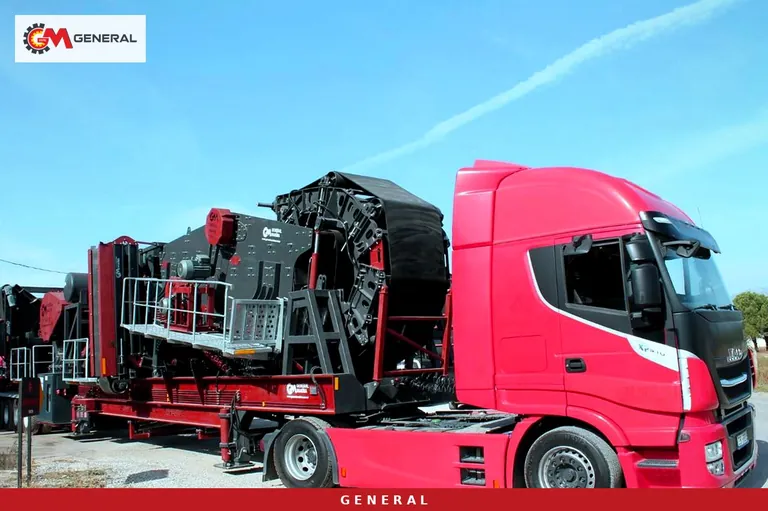
For a team running a gold mine in Mauritania, or preparing a new licence area for production, the crushing and screening plant is the first link in the ore preparation chain and the one that wears fastest. Blasted run-of-mine blocks have to be brought down to a size the next process step can accept, and the machine has to do it while coping with abrasive quartz-bearing ore, Saharan heat and sand, and a site far from any grid. This article sets out the catalogue figures of three real models for a gold site targeting 100-200 TPH, explains which one suits which ore type and lists the questions to settle before you place an order.
Gold ore does not behave like quarry stone
In an aggregate quarry the goal is a saleable grading with good cubical shape. At a gold site nothing coming out of the crushing circuit is sold; it becomes feed for heap leaching, grinding or another beneficiation step. Particle shape therefore matters less; the real job is reaching the size the process demands, consistently and without interruption.
The second difference is that ore changes over the life of the pit. In the gold districts of northern and central Mauritania the near-surface material is often a weathered oxide zone, clayey in places and relatively soft. As the pit deepens it gives way to fresh, hard host rock cut by quartz veins. Ore that crushed easily in year one can load the crusher far more heavily in year three. Model selection should therefore follow both zones in the mine plan, not just today's ore. We recommend testing samples from your own deposit for compressive strength, abrasion index and clay content; regional geology on its own is not enough.
The circuit's job: correctly sized feed for the process
At a gold mine the target size is set by the process engineer. Heap leaching calls for a fine product in a narrow band; mill feed is governed by the top size the mill accepts. On our mobile plants the screen apertures and output grading are fixed at ordering to suit the material, so the catalogue fractions are only a starting point.
Oversize retained on the screen is returned to the crusher in closed circuit. At a gold operation skipping this loop is expensive: particles above target size that slip into the process lengthen leach times or add load to the mill. Closed-circuit operation holds the product size steady instead of leaving it to the operator's attention.
Models and combinations for the 100-200 TPH range
No single model covers this range end to end. The table below places the wheeled options that sit in different parts of the band side by side, using catalogue figures. All values come from the product pages; where a value is not published we have entered “—”.
| Item | General 944 | General 950 | GNR-MC110 |
|---|---|---|---|
| Capacity | 120-180 t/h | 120-180 t/h | 200-300 t/h |
| Feed size | 800 mm | 800 mm | 900 mm |
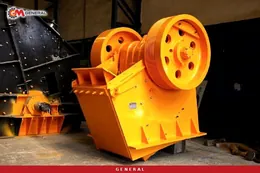
| Primary crusher | GPJ 90 jaw | GPJ 90 jaw | GPJ 110 jaw |
| Secondary crusher | GM430 cone | DMK01 impact | DMK03 impact |
| Screen | 1600×5000 mm, 3-deck | 1600×5000 mm, 3-deck | 2000×6000 mm, 4-deck |
| Generator | 550 kVA | 600 kVA | 750 kVA |
| Weight | 70,000 kg | 70,000 kg | 2 × 55,000 kg |
| Chassis | Single | Single | Two separate chassis |
| Set-up time | — | 30 minutes | — |
Fresh ore with quartz veins: General 944
The General 944 places a GM430 cone secondary behind the GPJ 90 primary jaw. Because a cone crushes by compression, metal life in high-silica, abrasive rock is clearly longer than with an impactor. If the mine plan rests mainly on quartz-rich host rock, this is the first model to look at. Cone liners are usually manganese steel; where silica is very high a high-chrome alternative is worth evaluating.
Oxide zone and high reduction: General 950
The General 950 uses the same GPJ 90 jaw but carries a DMK01 impact crusher as its secondary. The impact secondary gives a high reduction ratio and works efficiently on weathered, less abrasive oxide ore. As the ore becomes more siliceous, blow-bar wear accelerates, so the 950 makes most sense where the oxide zone will last for years or the ore is low in silica. The 944 and 950 share the same dimensions and weight; the choice comes down entirely to the character of the secondary crusher.
The 200 TPH ceiling: GNR-MC110 or a two-stage layout
When the target approaches 200 TPH, the two single-chassis models are not enough. The GNR-MC110 splits a GPJ 110 primary jaw and a DMK03 impact secondary across two chassis and works in the 200-300 t/h range. Since the primary group can run on its own, you can open the site with the primary and add the secondary as production rises. If the ore is highly abrasive, a cone-based secondary line in place of the impactor can be engineered per project. The remaining wheeled options are grouped on the wheeled mobile crushing plants page.
Saharan conditions: generator, dust and wear-part stock
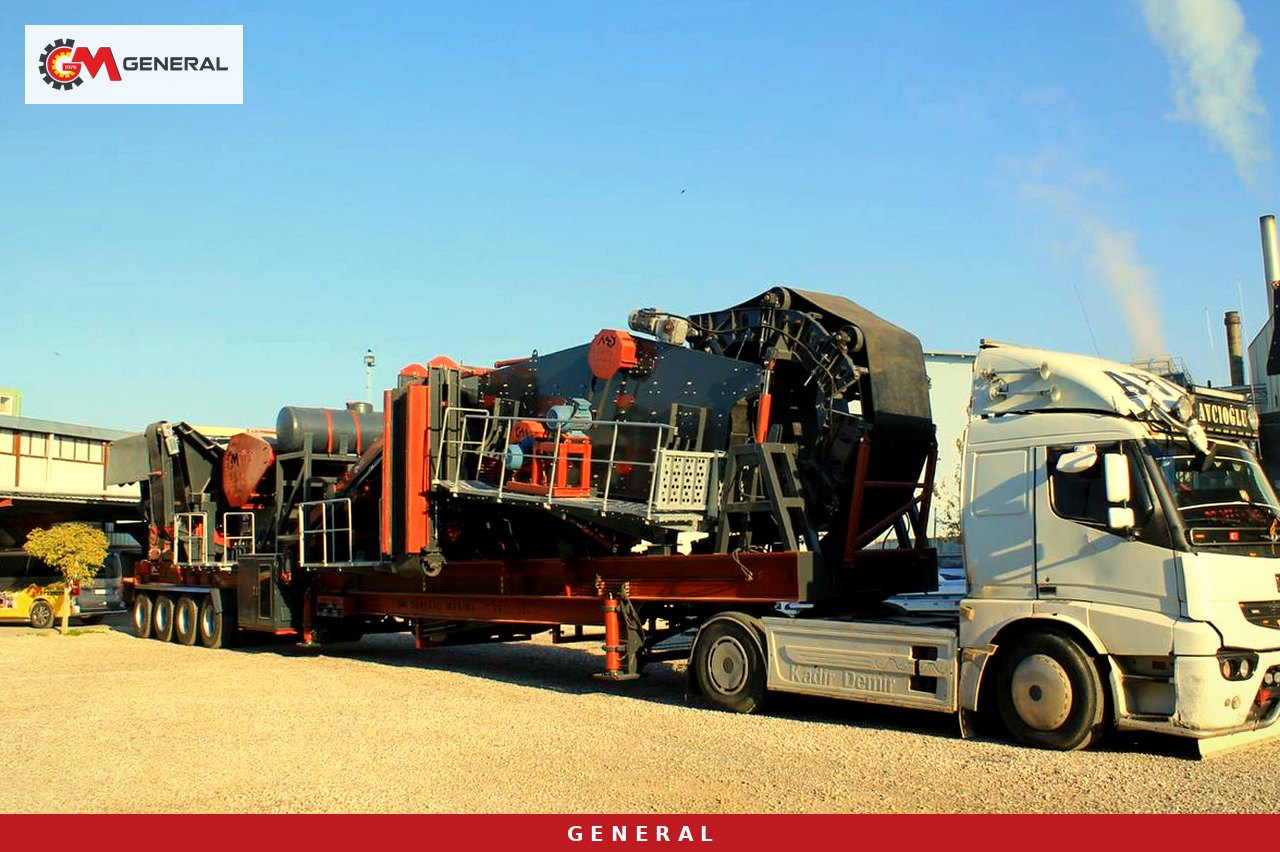
Most Mauritanian gold sites are far from the grid, and the plant generates its own power. The catalogue generator ratings are 550 kVA for the General 944, 600 kVA for the General 950 and 750 kVA for the GNR-MC110. Alongside these figures, the generator discussion should cover fuel resupply and standby capacity. At a remote mine, a long stoppage can cost more than the crusher fault that caused it.
Hot, sand-laden air stresses cooling and filtration before it stresses the machine itself. Fine dust carried by the Harmattan targets the generator air filter, the electrical panel and the bearing seals. Measures that can be selected per project include:
- Water-spray dust suppression at the crusher discharge and conveyor transfer points; where water is scarce, focus it on the dustiest points only.
- Covered or enclosed conveyors and dust curtains on transfer chutes.
- Pre-filtered air intakes for the generator and panel, with dust-tight panel doors.
- A magnet over the belt against drill bits and bucket teeth left from blasting; high-chrome blow bars in an impact secondary are brittle against such tramp metal.
At a remote site the biggest time-waster is wear parts. Jaw plates are made of Mn13/Mn18 manganese steel; cone liners and blow bars are selected according to quartz content. Shipping a set of wear and spare parts with the first consignment reduces the risk of waiting on port and customs procedures.
From Nouakchott and Nouadhibou ports to the mine site
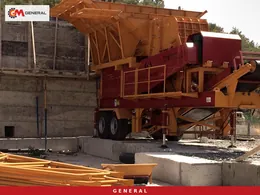
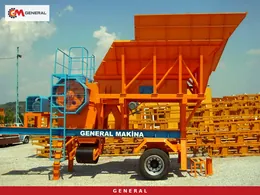
For a plant shipped by sea from Izmir, the likely arrival points are the ports of Nouakchott and Nouadhibou, from where the machine is towed to site by road. Which port suits you depends on the location of the site and the route. This last leg is where a wheeled plant shows its advantage. The General 944 and 950 travel as a single chassis with transport dimensions of 4130 × 20350 × 4500 mm and a weight of 70,000 kg. On the GNR-MC110 the load is divided across two 55,000 kg chassis, which gives a more flexible plan for heavy-load permits and poor roads.
Bridges, sand crossings and soft-ground sections on the route to site should be checked in advance. A level, compacted pad protected from rainwater lets the hydraulic legs seat firmly. As an example prepared for hard rock in West Africa, see the General 950 project for Niger.
Information to prepare before requesting a quote
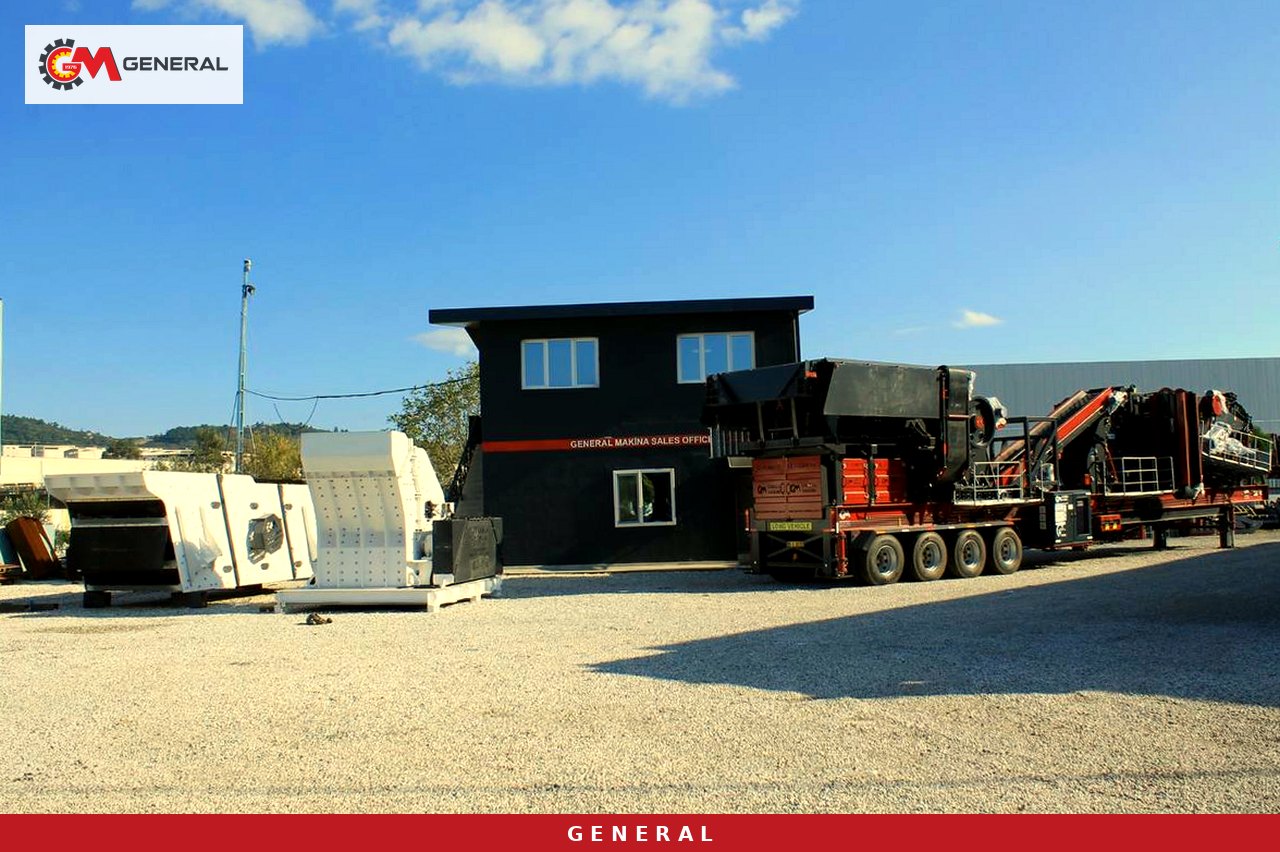
The right model and the right price depend on how clear the enquiry is. For a gold site in Mauritania, sharing the following in your first message removes several rounds of questions:
- Target capacity (TPH) and daily operating hours; growth over the years of the mine plan.
- Proportions of oxide and fresh ore, with sample test results for both zones (compressive strength, abrasion index, clay and moisture).
- Largest block size after blasting; an estimate of the share above 800 or 900 mm.
- Product size the process needs: leaching, milling or another step.
- Power source: generator or site power station; available capacity.
- Available water and environmental obligations on dust; confirm these with the relevant authority.
- Port of arrival and the road route to site.
Frequently asked questions
Should I choose a cone or an impact secondary for gold ore?
If the ore is quartz-rich and abrasive, the cone-secondary General 944 is usually the better choice on operating cost. If the ore is weathered and low in silica, the impact secondary of the General 950 gives higher reduction. The decision should follow sample testing.
Can a single plant deliver 200 TPH?
The catalogue capacity of the General 944 and 950 is 120-180 t/h. For 200 TPH and above, the GNR-MC110 (200-300 t/h) or a two-stage combination is recommended.
What warranty and certificates apply?
Our machines carry a 1-year warranty; wear parts are excluded. Production holds ISO 9001 and CE certification. We have been manufacturing in Izmir since 1976.
What determines the price?
The model, secondary crusher type, generator rating, screen apertures, dust measures, initial spare-parts package and transport method all set the price. Sending the information listed above is enough for a site-specific quotation.
Conclusion
For a 100-200 TPH gold site in Mauritania, the General 944 is the right starting point for quartz-rich ore, the General 950 for oxide-dominated, low-silica ore, and the GNR-MC110 for 200 TPH and above. Let us make the selection together based on ore testing, process size and site power. For a deeper comparison of models on hard rock, read the best mobile crushing plant for basalt and granite. Send your site data through our contact page to request a quotation.
Definitions of technical terms: Glossary