EN — English
 TR — Türkçe
 DE — Deutsch
 RU — Русский
 FR — Français
 ES — Español
 AR — العربية
 SR — Српски

Madagascar Road & Mining Mobile Stone Crusher Plant 100-200 TPH
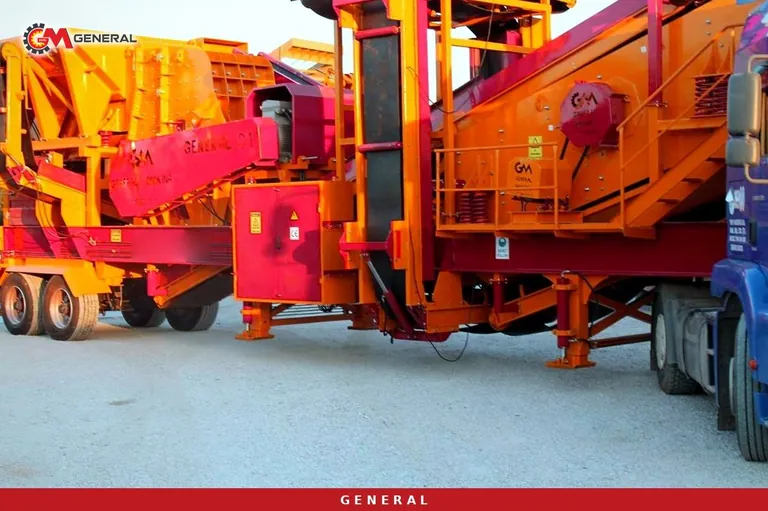
A contractor asking for a crushing plant quote in Madagascar rarely has just one job on the table. On one side there are national road alignments that need sub-base and surfacing chippings; on the other there are ore sites where rock must be crushed and sized, and haul roads and stockyards that need hard fill. A throughput of 100-200 TPH suits both kinds of work. The real question is which crusher arrangement stays economical for years when rock and climate change from the central highlands to the coastal plains. This article makes that choice using the published data of real models.
The scope, volume and schedule of any particular road section or mining concession are not discussed here. For the required grading, product classes and environmental conditions, the technical specification of the road authority, the employer or the mine operator is the reference.
From the coast to the highlands: what Madagascar sites ask of a crusher
Geologically, Madagascar is far from uniform. The same contractor may spend one year in hard basement rock on the plateau and the next year in softer sedimentary stone on the west coast. Machine selection should therefore follow the range of rock the plant may meet over its working life, rather than today's quarry alone.
Central highlands: granite, gneiss and migmatite
Between Antananarivo and Fianarantsoa the plateau belt is dominated by old crystalline basement rocks. Granite, gneiss and migmatite are hard, often high in silica and abrasive. The banded structure of gneiss raises the share of flaky particles when the wrong stage is chosen. In these rocks a jaw primary followed by a compression-type cone stage is the safest route for wear part life.
Western and south-western basins: limestone and sandstone
Towards Mahajanga and Toliara, sedimentary basins host more limestone and sandstone quarries. These stones suit impact crushing: a high reduction ratio and cubical shape come at a low wear cost. In sandstone with a weak binder the fines share can climb, so the number of screen decks and the mesh openings should be fixed on the basis of a sample.
Laterite cover and red soil
Over much of the island a thick red laterite layer lies on top of sound rock. If it reaches the crusher without being stripped or separated, it loads the liners for nothing and contaminates the chippings. The by-pass section of a vibrating grizzly feeder diverts soily fines around the crusher. In the rainy season sticky material can blind the grizzly, which must also be planned for. Because rock properties vary from pit to pit, an abrasion and crushability test on a representative sample is needed before ordering.
Road chippings versus ore: two different demands on one machine
Road work aims at a well-interlocking blend that fits the specification curve; asphalt and surface dressing need cubical, narrowly sized chippings. On the ore side it is often more important to limit fines and bring lumps down to a top size without over-crushing. One plant balances the two as follows:
- Crusher character: a cone secondary keeps fines under tighter control and extends metal life in abrasive rock; an impact secondary gives high reduction and cubical shape.
- Screen layout: a 3-deck screen separates three products; a 4-deck screen adds a class such as 19-40 mm for road work in the same pass.
- Discharge setting: adjustable within 0-100 mm on all models reviewed here; a more open setting for an ore campaign, a closer one for chippings.
- Closed circuit: oversize returns to the crusher until it reaches target size, which keeps road fractions consistent.
Matching models to the 100-200 TPH band
The table below contains product page data only. Actual output settles at a point within each range depending on rock hardness, moisture and the required product split.
| Model | Capacity | Crusher arrangement | Max. feed | Screen | Generator | Weight |
|---|---|---|---|---|---|---|
| General 800 | 80-150 t/h | PDK 1280 primary impact | 600 mm | 1300×4000 mm, 3-deck | 450 kVA | 35,000 kg |
| General 01 | 120-180 t/h | GPS 1210 impact (primary+secondary) | 700 mm | 1600×5000 mm, 4-deck | 550 kVA | 55,000 kg |
| General 944 | 120-180 t/h | GPJ 90 jaw + GM430 cone | 800 mm | 1600×5000 mm, 3-deck | 550 kVA | 70,000 kg |
| General 950 | 120-180 t/h | GPJ 90 jaw + DMK01 impact | 800 mm | 1600×5000 mm, 3-deck | 600 kVA | 70,000 kg |
| GNR-MC110 | 200-300 t/h | GPJ 110 jaw + DMK03 impact (twin chassis) | 900 mm | 2000×6000 mm, 4-deck | 750 kVA | 2 × 55,000 kg |
Highland granite and gneiss: jaw-primary lines
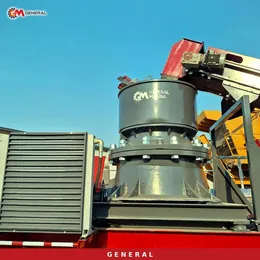
In hard, siliceous rock the first choice is the General 944. Its GPJ 90 jaw crusher accepts blocks up to 800 mm, and the GM430 cone secondary works by compression, keeping metal consumption low in abrasive rock. For a contractor running ore and road jobs together, the cone stage's ability to limit fines is a further advantage. If more cubical chippings and higher reduction are wanted, the twin model General 950 uses a DMK01 impact secondary on the same chassis size; blow bar wear should then be monitored against the silica content of the rock.
Sedimentary stone and mixed feed: single-chassis impact
For limestone or low-abrasion sandstone the General 01 combines primary and secondary duty in a GPS 1210 triple-pendulum rotor. Its 4-deck screen splits the 0-5, 5-12, 12-19 and 19-40 mm classes a road site asks for in one pass. For lower tonnage and lighter sites the General 800, at 35,000 kg with 600 mm feed, is an economical start.
Jobs pushing towards 200 TPH
If the target sits permanently at the top of the band, or if coarse run-of-mine arrives at an ore site, consider the GNR-MC110. With primary and secondary on separate chassis, the primary unit can be bought first and the secondary added later; the primary also runs on its own. Another option is to split a jaw-primary line and a separate impact unit between two sites. All options are compared on the wheeled mobile crushing and screening plants page.
From Toamasina port inland: shipping and the role of the wheeled chassis
Most seaborne equipment enters through Toamasina on the east coast; for western and southern sites, ports such as Mahajanga or Toliara can also be considered. Routes climbing from the port to the plateau are winding and steep, and in the rainy season some secondary roads become hard going for heavy vehicles. A plant's transport dimensions and axle layout therefore matter as much as the model itself.
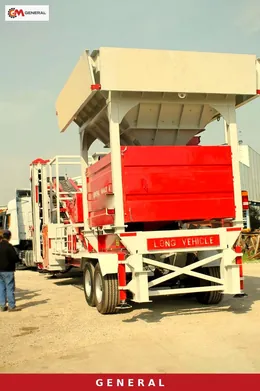
The General 01 travels at 4300×18500×4500 mm, the General 944 and 950 at 4130×20350×4500 mm; the General 950 moves on a single truck and is quickly brought into production on site. On the GNR-MC110 the load is split over two chassis: the primary chassis is 3000×13500 mm, the secondary 4200×18300 mm. Checking bridge, bend and pass restrictions along the route with the haulier is the first step of any shipping plan for a long vehicle.
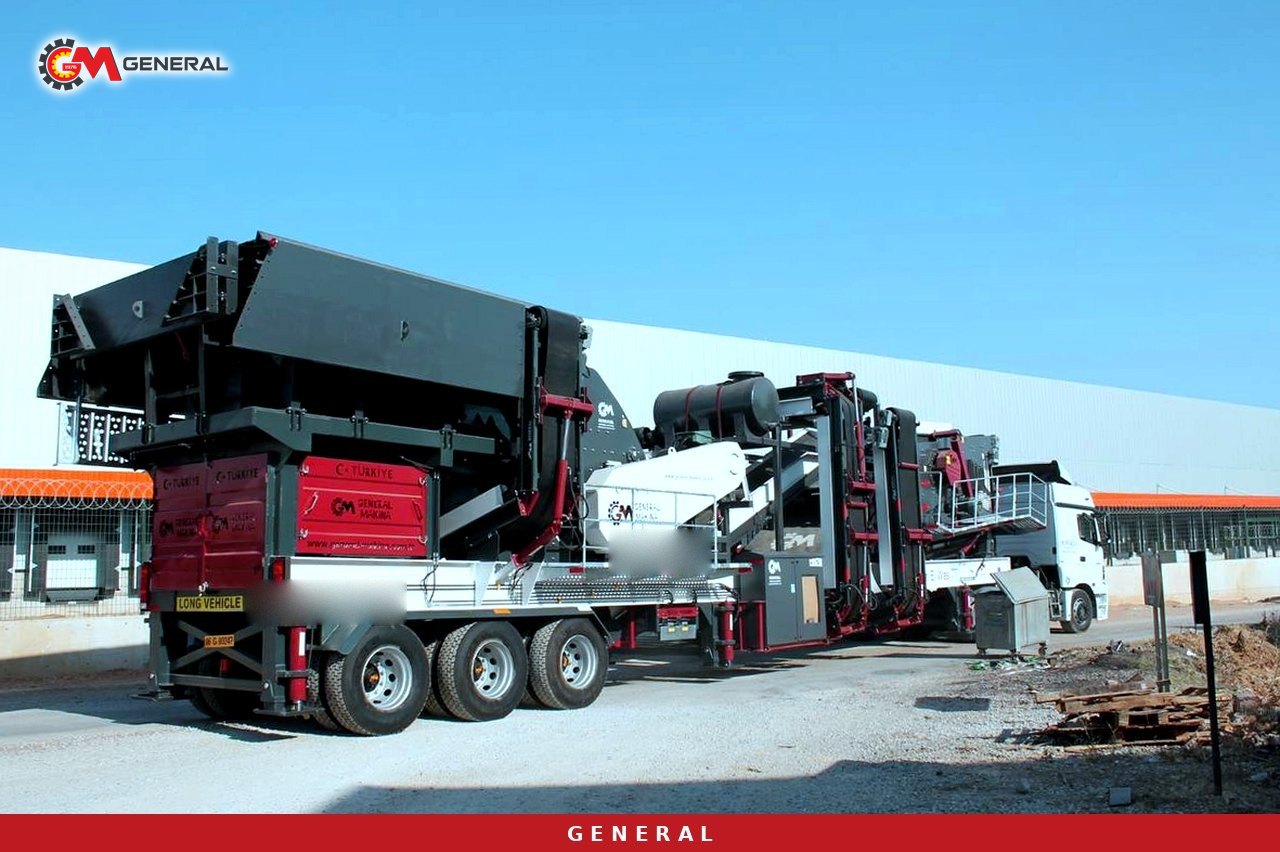
The real gain of a wheeled chassis in Madagascar is that the plant can be moved along the alignment as road construction advances. Shorter haul distances for chippings mean less truck traffic and less load on the new road surface. Hydraulic legs remove the need for a concrete foundation; at each new point, levelling the ground and preparing a feed ramp is enough.
Cyclone season, rainfall and generator operation on remote sites
The east coast is humid and rainy all year, with cyclone risk in the summer months, while the south-west is drier and dustier. These two extremes shape the operating plan directly. In wet areas, attention goes to belt slippage, screen mesh blinding by sticky material and moisture protection of electrical panels. In dry areas, dust suppression and regular air filter cleaning come first. Such measures are selected per project and should be discussed at the quotation stage.
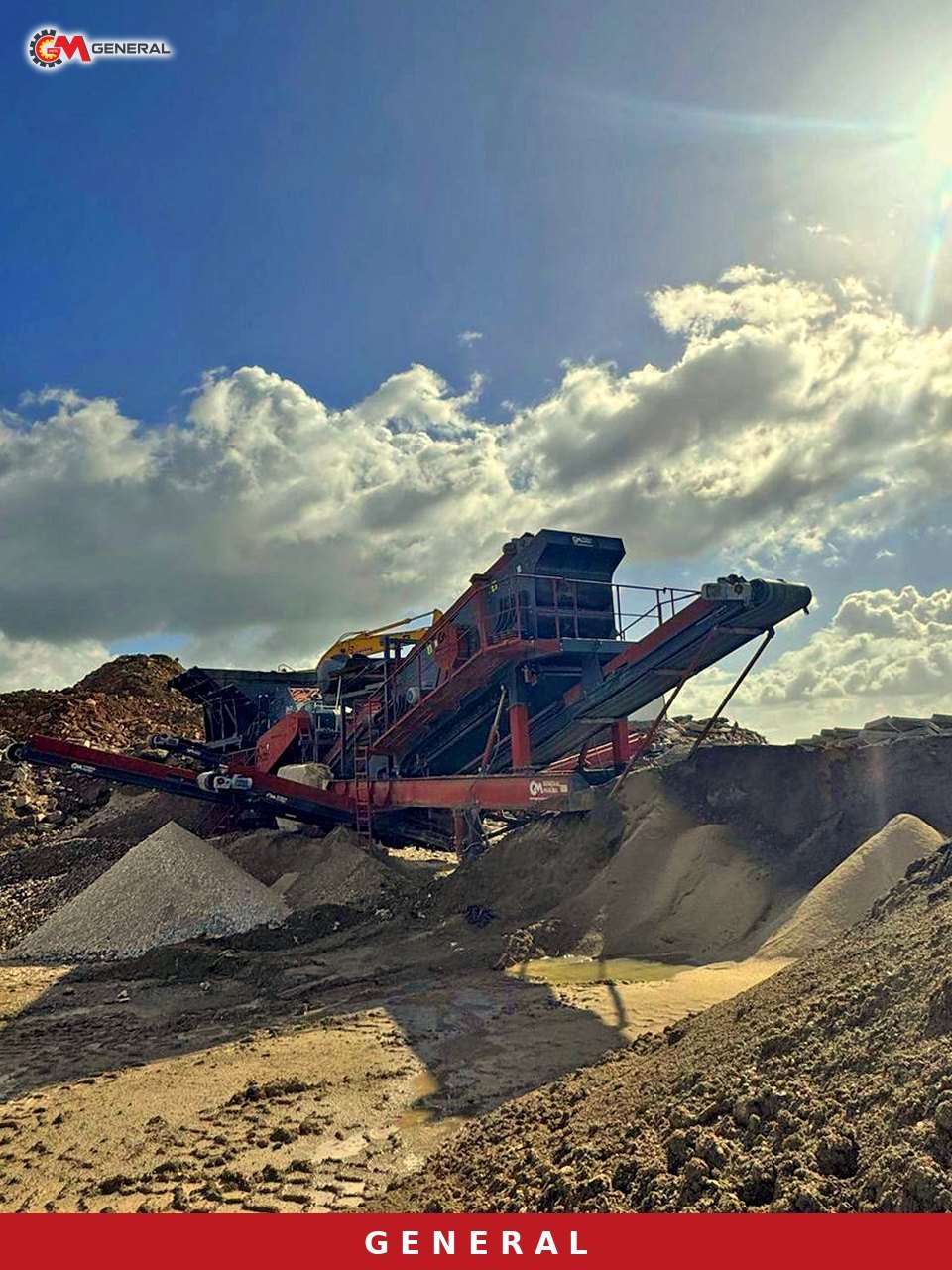
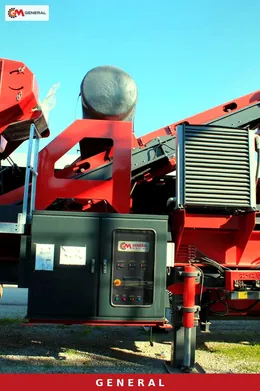
At off-grid ore sites and road camps, power comes from a generator. The generator ratings in the table belong to each model: 450 kVA for the General 800, 550 kVA for the General 01 and 944, 600 kVA for the General 950 and 750 kVA for the GNR-MC110. Fuel logistics, spare filters and oil stock belong in the site plan from day one. The same logic applies to wear parts: jaw plates, blow bars and cone liners should be planned for the rock being crushed, using the options on the spare and wear parts page.
The site file to prepare before asking for a quote
A quotation is only as accurate as the data behind it. The clearer the following points, the more accurate the model and configuration proposal:
- Rock type and, if possible, lab results: abrasiveness, crushability, moisture and clay content.
- Largest run-of-mine lump size and thickness of the laterite cover.
- Required product classes and daily demand per class; the grading curve in the road specification.
- Hourly target tonnage and daily working hours.
- Site location, route from the port and known transport restrictions.
- Power source: grid or generator.
- How many times the plant will relocate and the expected working period at each point.
For layer-by-layer material selection in road building, the article on mobile crushing plant configuration for road base material offers an extra checklist.
Frequently asked questions
Is a single-chassis impact plant enough for granite on the Madagascar plateau?
It can work on short jobs, but in high-silica granite and gneiss the impact elements wear fast. For long-term production, a jaw-and-cone line such as the General 944 is the safer choice in terms of wear cost.
Can the same plant produce both ore and road chippings?
Yes, in campaigns. By changing the discharge setting and screen meshes, ore can be processed first and chippings afterwards. Screen mesh and wear part stock should be ready for the changeover.
Which certificates and warranty apply?
The plants carry ISO 9001 and CE certification and a 1-year warranty excluding wear parts. The company has been manufacturing in Izmir since 1976.
What determines the price?
The crusher arrangement, number of screen decks, generator, options such as dust suppression, the spare parts package and the shipping method. A firm figure is prepared for your project once the site file has been reviewed.
Final assessment
For a contractor running road and mining work together at 100-200 TPH in Madagascar, rock type is the deciding factor: the General 944 or 950 for highland granite and gneiss, the General 01 or 800 for sedimentary stone, and the GNR-MC110 above the band. Share your sample, product list and the site's position relative to the port, and we will settle the right configuration together. For a quotation, reach us through our contact page.
Definitions of technical terms: Glossary