EN — English
 TR — Türkçe
 DE — Deutsch
 RU — Русский
 FR — Français
 ES — Español
 AR — العربية
 SR — Српски

Libya Mobile Crushing & Screening Plant 250-300 TPH for Reconstruction Projects
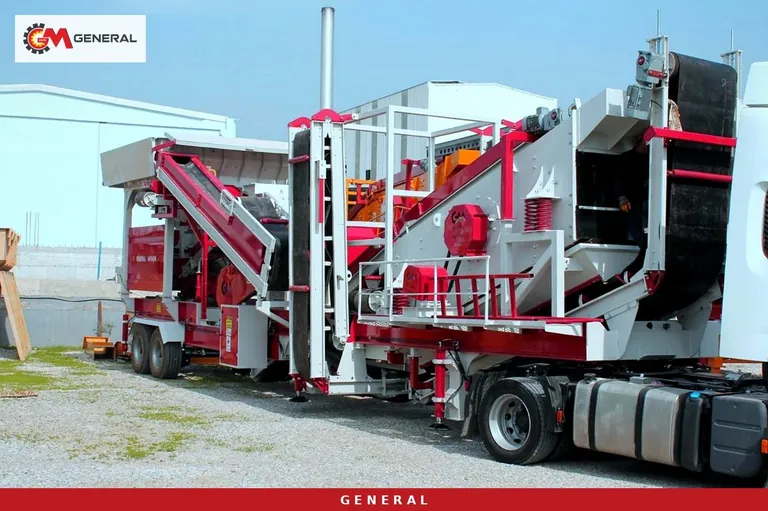
Reconstruction work in Libya asks two things of a crushing plant at the same time: turn the rubble from damaged buildings into reusable fill and sub-base material, and produce clean aggregate from quarry stone for new roads, housing and concrete works. A mobile unit running in the 250 TPH band earns its keep to the extent that it can handle both jobs on one chassis. This article walks through the real models that meet the target range, with their figures and with the site conditions specific to Libya, and states plainly when one unit, two units or a fixed line is the better answer.
What feeds a Libyan reconstruction site: rubble and quarry rock
Plant selection starts with the material, not the machine. Feed on Libyan rebuilding sites usually comes from two very different sources, and they behave nothing alike inside a crusher.
Demolition concrete, brick and mixed debris
Concrete blocks pulled from damaged buildings carry rebar, brick, plaster, timber and soil. An impact crusher is good at freeing aggregate from the cement matrix, but steel has to be picked off the belt and timber and plastic removed by hand or by pre-screening. An overband magnet and a hand-picking platform should be planned as project options matched to the debris, not assumed as standard equipment on the General 02. The machine line-up dedicated to rubble recycling is described separately on our concrete recycling plant page.
Quarry stone: coastal limestone and harder rock inland
Limestone quarries are common along the Libyan coastal belt, while basaltic and more abrasive rock can turn up further inland. Limestone suits an impactor perfectly: high reduction and a cubical grain. On basalt or quartz-rich stone, however, the wear parts of an impact rotor go quickly. We recommend taking samples from your quarry and having the hardness and abrasiveness tested in a laboratory; we then firm up the model recommendation on that result.
Configurations that reach 250-300 TPH
The range in the title is a target, and the options below reach it by different routes. Every figure in the table comes from our product pages; unknown cells are left as a dash.
| Option | Crusher layout | Capacity | Max. feed | Screen | Generator |
|---|---|---|---|---|---|
| General 02 (single unit) | GPS 1413 primary impactor | 250-300 TPH | 1000 mm | 2000×5000 mm, four-deck | 660 kVA |
| General 03 (single unit) | GPS 1415 primary impactor | 250-375 TPH | 900 mm | 2400×5000 mm, four-deck | 750 kVA |
| 2 × General 950 | GPJ 90 jaw + DMK01 impactor (on each unit) | 120-180 TPH per unit, combined nominal 240-360 TPH | 800 mm | 1600×5000 mm, three-deck (each) | 600 kVA (each) |
| Fixed line | Engineered per project | — | — | — | — |
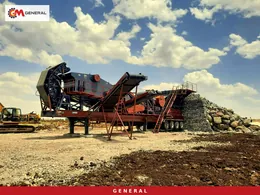
The General 02 sits right in the middle of the target for rebuilding sites where rubble and limestone are processed together: its 1000 mm inlet offers a generous opening for broken slab sections and large blocks. If output will regularly climb above 300 TPH, or a larger screen area is wanted, look at the General 03 and factor its four-axle chassis into the transport plan. Where the rock is hard, two General 950 units, each with jaw primary and impact secondary, running in parallel make more sense: one keeps producing while the other is down for service, and the pair can also be split between two sites. For jobs that will stay at one quarry for years, fixed crushing plants can deliver a lower operating burden per tonne.
A common mistake is to turn the catalogue figure straight into daily output. For realistic planning use this formula: daily output = nominal hourly capacity × actual operating hours × availability × material correction factor. Availability covers refuelling, screen-mesh changes and wear-part stops; the material factor reflects moisture, clay and foreign matter in the rubble. In the first months, when rubble dominates the feed, this factor comes out noticeably lower than on quarry stone, so it is safer to build the reconstruction schedule on the lower end of the plant's range rather than the upper one.
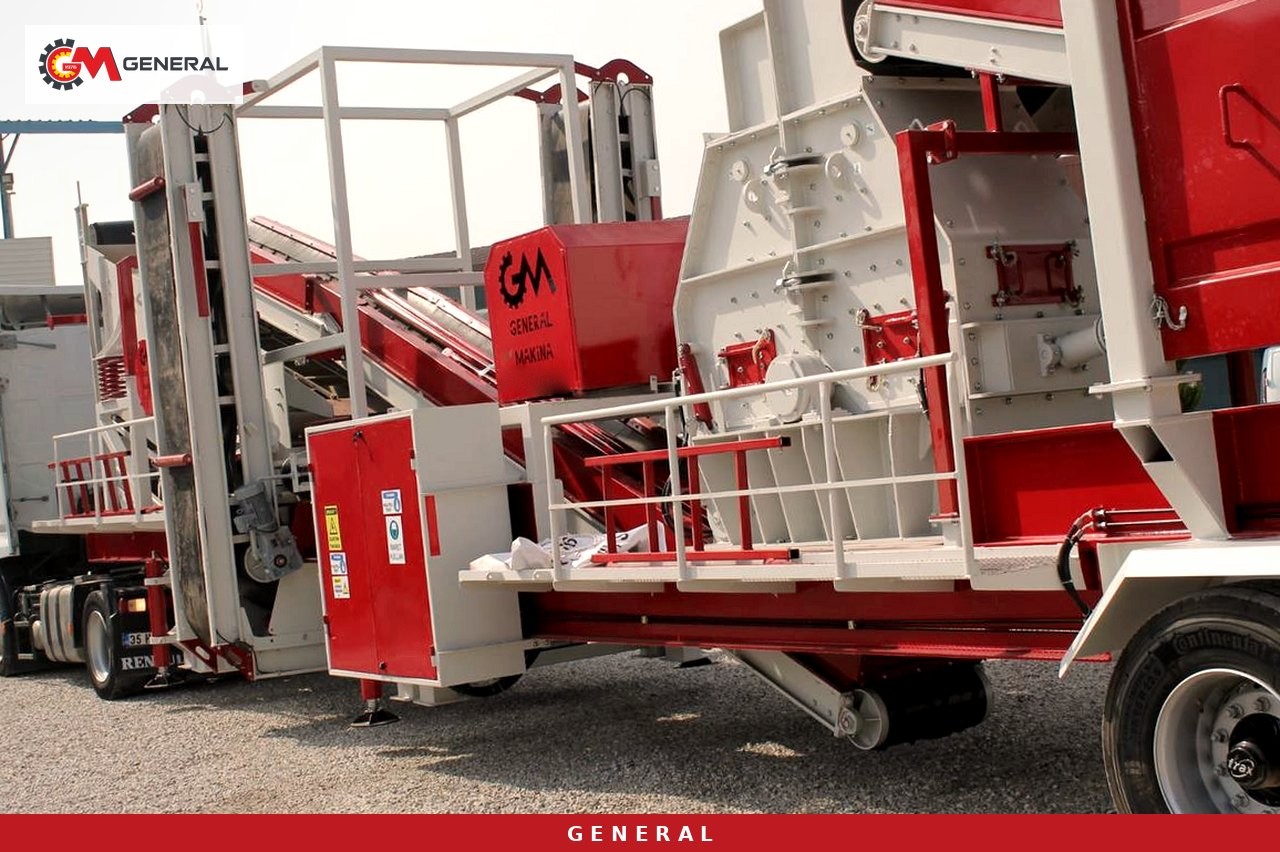
Running a General 02 on a rebuilding site
The General 02 works in closed circuit: anything left above the target size on the screen returns to the rotor, so a single plant puts out several products. On a reconstruction job the typical flow is set up in this order:
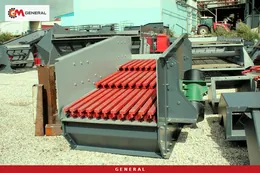
- Feeding: trucks or a loader tip material into the hopper and vibrating feeder. When rubble is fed, rough sorting with an excavator beforehand clearly cuts the amount of timber and plastic entering the hopper.
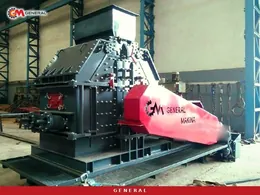
- Primary impact crushing: the GPS 1413 (GNR PDK02) rotor reduces blocks up to 1000 mm; the output setting can be adjusted within 0-100 mm.
- Four-deck screening: the 2000×5000 mm screen splits the flow into four fractions: 0-5, 5-12, 12-19 and 19-40 mm.
- Return and stockpiling: oversize goes back to the rotor, finished fractions go to separate stockpiles.
These four fractions cover most rebuilding needs: 0-5 mm as plaster and concrete sand, 5-12 and 12-19 mm as concrete and asphalt aggregate, and 19-40 mm for sub-base and drainage. Which structural element may use rubble-derived product depends on the client's specification; confirm with the relevant authority whether recycled aggregate is allowed in structural concrete. Screen openings and the output curve are defined per order to suit the material.
Port, road haulage and site layout
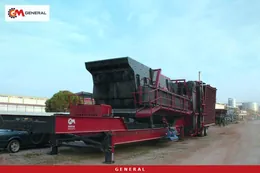
The General 02 travels on a single two-axle chassis. Its transport dimensions are 4340×20600×4500 mm and it weighs 76,000 kg. Those figures mean the route from a coastal port such as Tripoli, Misrata or Benghazi to an inland site has to be planned under abnormal-load rules. Get current information from the relevant traffic authority on bridge clearances, escort requirements and permits. Cranes, ramps and escort vehicles for transport day should be booked in advance.
On site, set aside firm, level ground for the plant, a feed ramp where trucks can turn, and room for at least four stockpiles. When working in a damaged urban district, picking a spot close to where rubble is collected but where dust will not drift into housing improves both throughput and relations with the neighbours.
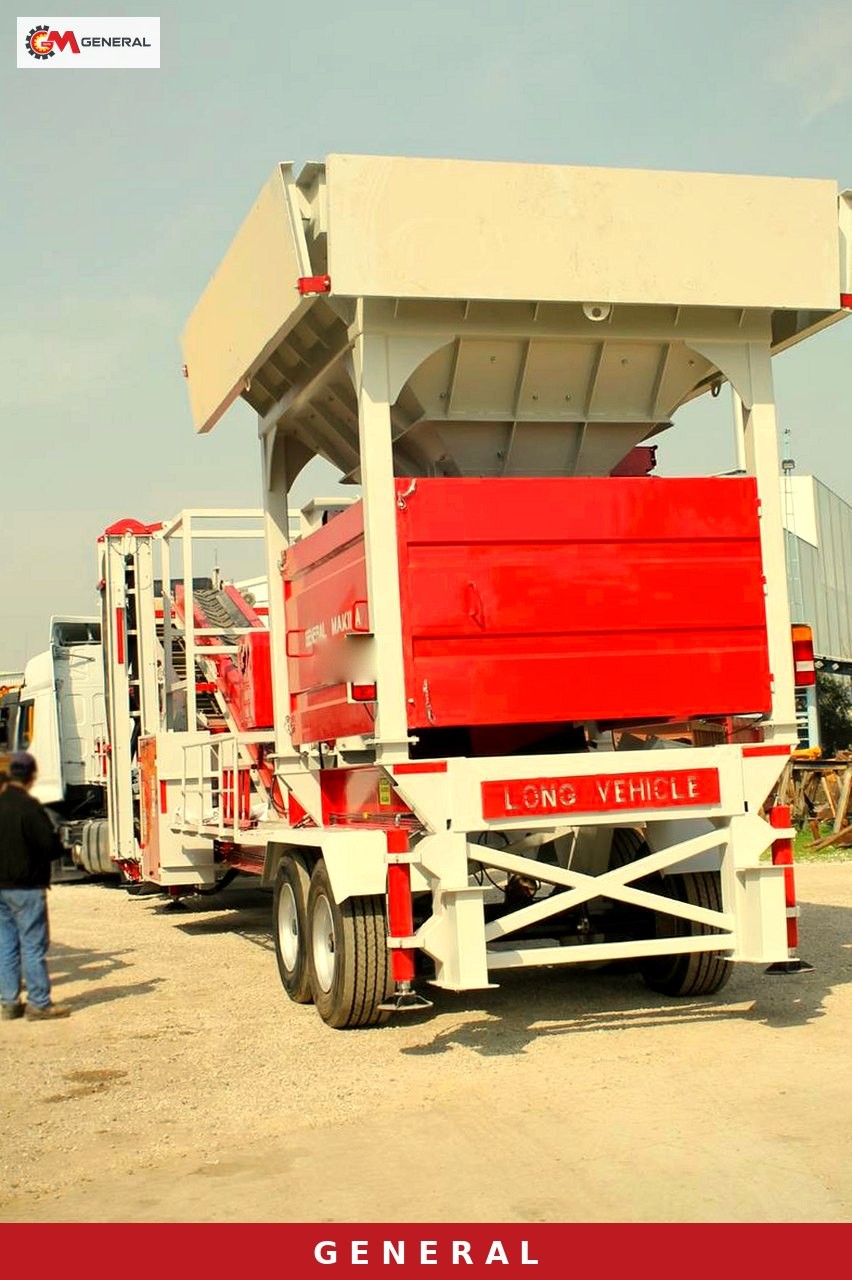
Hot, dusty, off-grid operation
On most Libyan sites, summer heat, wind-blown fine dust and weak grid access are three separate engineering issues. The General 02 comes with a 660 kVA power unit and control panel as standard, which means the plant can run independently of the grid. Refuelling, the generator air filter and radiator cleaning belong on the daily checklist on a dusty site.
Dust-control measures that can be selected per project include water-spray suppression at the crusher discharge and belt transfer points, belt covers, and filtered ventilation for the control cabinet. If fine plaster and soil in the rubble are removed by pre-screening before they reach the crusher, both dust and wear drop.
On the wear side, the blow bars and liners of an impactor give reasonable life on limestone and concrete; as steel and hard aggregate content rises, replacement intervals shorten. Sending a set of spare wear parts with the first shipment avoids waiting on a remote site. The warranty is one year and does not cover wear parts.
What to settle before asking for a quote
For us to propose the right model and equipment quickly, it is enough to prepare the following:
- Material type and proportions: rubble, limestone, basalt or a mix; a lab report if possible.
- Largest feed size and how feeding will be done (truck, loader, excavator).
- Required fractions and the daily demand for each.
- Target hourly output and daily operating hours.
- Power source: generator or grid connection?
- Port of arrival and the road route to site.
- Need for steel removal, hand picking and dust suppression on rubble.
- Project duration and how many times the plant will relocate.
We have previously delivered GNR series mobile crushing plants to Libya; that project page shows our earlier deliveries in the country. To see all the other wheeled models, browse the wheeled mobile crushing plants category.
Frequently asked questions
Can one General 02 handle concrete rubble and limestone on the same day?
Yes, but in separate batches rather than mixed together. Cleaning the screen between materials and keeping stockpiles apart stops recycled product from contaminating clean aggregate.
Is the General 02 still suitable if the rock turns out to be basalt?
A primary impactor will work on basalt, but wear cost rises. Where abrasive rock dominates, a two-unit layout with the jaw-primary General 950 or the cone-secondary General 944 is more economical.
What power does the plant run on in Libya?
The General 02 has a 660 kVA power unit as standard. On sites with a reliable grid, a different power arrangement can be discussed at project stage.
How are price and delivery time determined?
Price depends on the model, added equipment (magnet, dust suppression, extra conveyors), the spare-parts package and the shipping method. Once we have this information we prepare a written, project-specific quotation.
Conclusion
If you need a mobile crushing and screening plant in the 250 TPH band for reconstruction in Libya, the General 02 answers directly on sites processing rubble and limestone together; higher tonnage points to the General 03, hard rock to a two-unit jaw layout. Share your material data and route, and we will prepare the right configuration and quotation: reach us through our contact page.
Definitions of technical terms: Glossary