EN — English
 TR — Türkçe
 DE — Deutsch
 RU — Русский
 FR — Français
 ES — Español
 AR — العربية
 SR — Српски

Middle East C&D Waste Mobile Crushing & Screening Plant 100-200 TPH
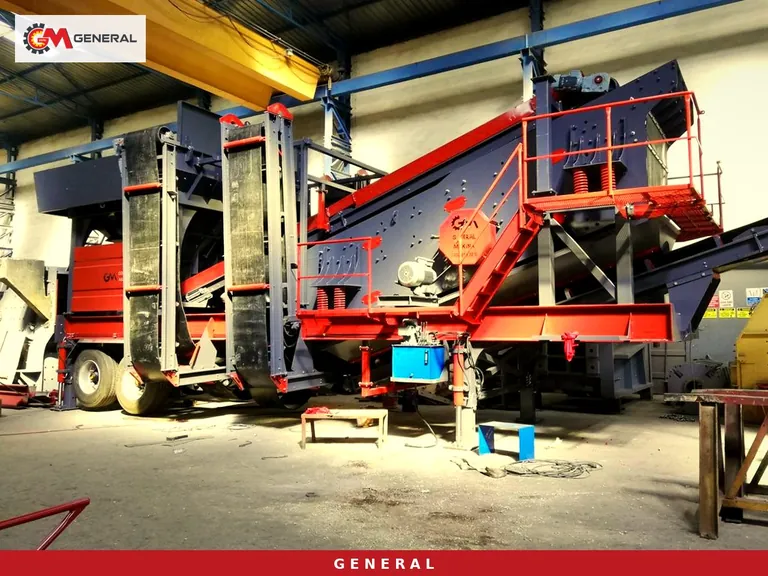
When a contractor knocks down an old apartment block in Riyadh, Dubai, Doha, Kuwait City or Baghdad, the pile left behind is the raw material for the fill and sub-base that another firm needs for a new foundation dig across town. The link between the two is a mobile crushing and screening plant set up near the demolition site and processing 100-200 tonnes per hour. This article looks at what construction and demolition (C&D) waste from Middle Eastern cities actually consists of, which products can be made from it, and which models in our range genuinely cover that tonnage band, with the figures from their product pages.
Where recycled aggregate may be used, which tests it must pass and how waste-acceptance permits are granted are decided in each country by the municipality or the relevant ministry. Before you build an investment plan, confirm the current specification for your target city with the competent authority.
What does demolition waste from Gulf and Iraqi cities contain?
Most of the region's building stock is a reinforced-concrete frame with concrete block infill walls. The bulk of a demolition pile is therefore column, beam and slab concrete plus pieces of hollow block. Alongside them come plaster, ceramic and marble cladding, insulation boards, aluminium window offcuts, cable and rebar. Asphalt millings from road renewal can arrive as a separate stream; kept in its own stockpile, it can later be sold as a product in its own right.
Concrete- and block-heavy piles
Frame concrete is among the materials an impact crusher handles best: the blows strip concrete from the rebar and give a cubical grain. Block and plaster are softer and break into a lot of fines. The same machine will make noticeably more 0-5 mm on a block-rich pile, so you need a rough idea of the concrete-to-block ratio to plan the product balance.
Excavation sand and saline ground
In coastal cities, material from foundation digs is often sand-dominated, and in some areas it contains saline sabkha soil. None of it needs to pass through the crusher; if it is not removed first, it wastes capacity and wears the blow bars. Concrete from older seafront buildings may also carry chlorides, and gypsum plaster may add sulphates. If the recycled aggregate is destined for concrete or structural fill, a sample should be lab-tested for chloride and sulphate; the machine does not change this chemistry, it only sets grain size and shape.
Where is recycled aggregate sold?
Plant design starts with the product you intend to sell. On urban projects in the Middle East, the commonest outlets for demolition-derived material are road sub-base, trench and pipe bedding, backfill around buildings, landscaping and car-park levelling. Each needs a different grading: continuously graded 0-40 or 0-50 mm for sub-base, a narrower and cleaner fraction for pipe bedding, a more tolerant mix for backfill. That distinction decides whether a single-product crusher is enough or a multi-deck screened line is required.
A plant with a multi-deck screen splits the flow into fractions such as 0-5 / 5-12 / 12-19 / 19-40 mm; for a recycling yard that wants to sell different products to several buyers, that flexibility is direct revenue. A contractor producing sub-base only for its own site can live with a simpler, single-product set-up. A model chosen before the product list is written tends to come back later as a line whose screen is too small, or one that is bigger than the job needs.
Four set-ups that cover 100-200 TPH
The 100-200 TPH in the title is a target band; our range has single-body solutions inside it as well as two-unit lines. Every value in the table comes from the technical data on the relevant product page; cells marked "—" are not stated there. Real throughput varies with the concrete-to-block ratio, moisture and the feeding arrangement. For an overview of a complete line, see also the concrete recycling plant machine set page.
| Set-up | Capacity (t/h) | Max. feed (mm) | Crusher / motor | Screen | Power unit | Weight (kg) |
|---|---|---|---|---|---|---|
| A: GM 100 tracked impactor | 100-180 | 600 | GNR-01, 160 kW | 1500×5500 mm, triple-deck | 450 kVA | 42,000 |
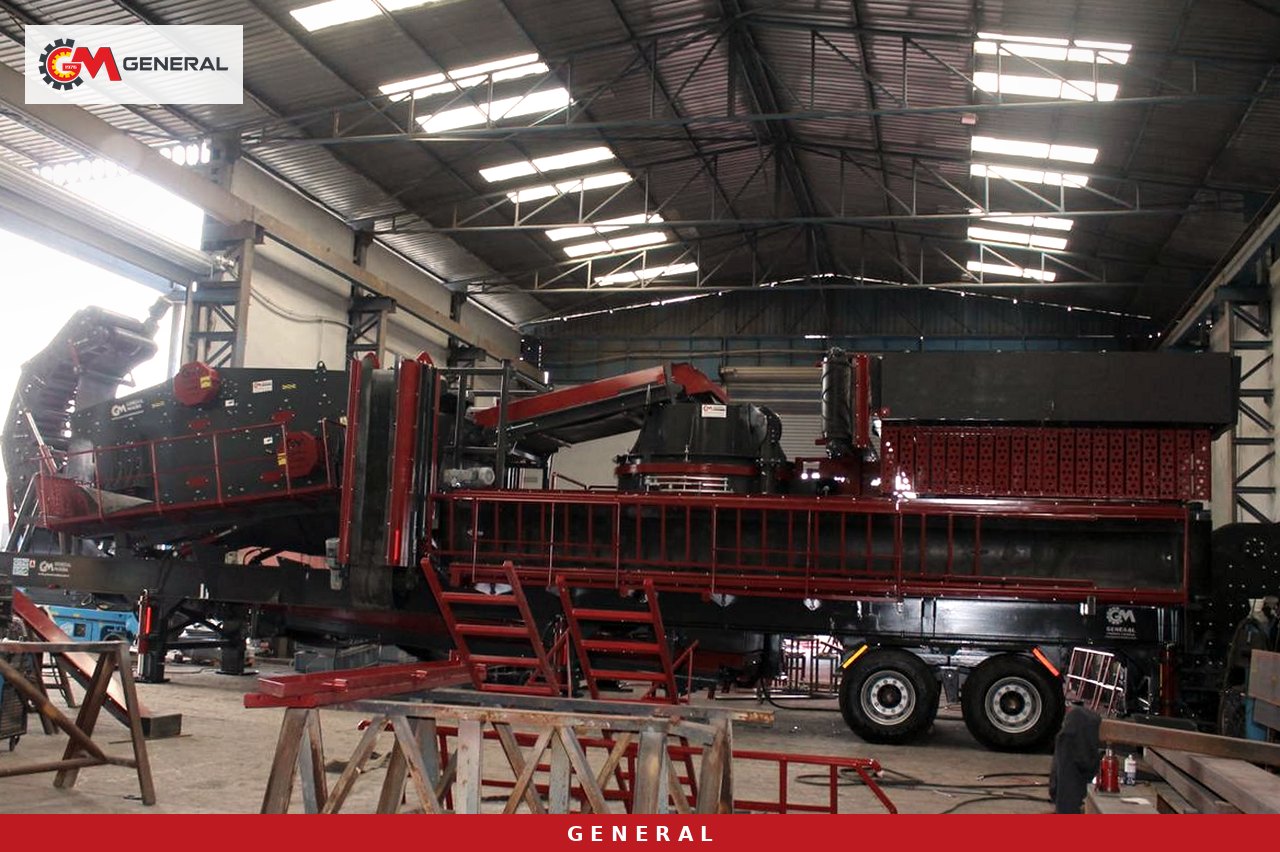
| B: General 01 wheeled plant | 120-180 | 700 | GPS 1210 (primary + secondary) | 1600×5000 mm, four-deck | 550 kVA | 55,000 |
| C: M-PDK02 + GNR ME2060 | 200-300 / 200-350 | 1200 / 100 | M-PDK02, 250 kW | 2000×6000 mm, triple-deck | — | 45,000 / |
| D: M-DMK 02 + separate screen | 150-250 | 350 | M-DMK 02, 200 kW | By-pass screen feeder + separate screen | — | 38,000 |
A and B: crushing and screening in one unit
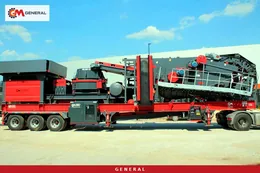
On tight urban plots, or on demolition jobs that move often, the GM 100 stands out: on its tracks it drives itself and needs no ground works; with a 3.6 m³ hopper, a 1000×1500 mm grizzly pre-screen and an on-board triple-deck screen it runs in closed circuit. Its product page lists concrete and asphalt recycling among its applications. The General 01 is a wheeled plant that accepts 700 mm feed; a single GPS 1210 impactor does the primary and secondary work together, and its four-deck screen delivers four fractions. It suits an operator who will stay on one recycling yard for a long time and sell several products.
C: reaching 200 TPH without pushing the limit
At the top of the band, if the solution must also take large slab pieces, the M-PDK02 primary impact unit (0-1200 mm feed, 0-70 mm product, 200-300 t/h) is paired with the GNR ME2060 mobile screening plant (200-350 t/h, 20 m³ hopper, 100 mm grizzly, 2000×6000 mm triple-deck screen). Because both units are rated above 200 t/h, the line runs with headroom rather than at its ceiling. That margin lets fines pass the screen without blinding on days when the block and plaster share rises.
D: a secondary unit for pre-reduced concrete
If the demolition crew can break concrete below 350 mm with a hydraulic hammer and shears, the M-DMK 02 (150-250 t/h, 1200×3750 mm feeder, 200 kW) is an economical alternative towed by a single truck. The screen and by-pass conveyor in its feeder pan send soil-laden fines to stock before the crusher, and the unit delivers 0-50 mm product. If a full grading is needed, a separate screen is added behind it.
What should reach the crusher: pre-screening and contaminants
In demolition waste, the main causes of lost capacity and wear are materials sent through the crusher that never needed crushing. When excavation sand, plaster dust and soil are removed on the grizzly or the by-pass screen, the crusher deals with concrete only. On a sand-rich pile, separating excavation material below 100 mm ahead of the crusher with a 120-180 t/h dry screening unit such as the GNR ME1650 cuts the tonnage the crusher handles for nothing.
Rebar, timber and plastic
The impact crusher frees the steel inside the concrete; it drops onto the discharge belt and must be collected there. An overband magnet and a hand-picking cabin are not defined as standard equipment on the catalogue models; they should be discussed at quotation stage as options added to the project according to the pile's content. Timber frames, plastic pipe and insulation board should come out before the crusher, during rough sorting with an excavator; otherwise they float on the screen and contaminate the product.
Blow bar alloy
With mixed feed containing metal, high-chrome blow bars are risky because they are brittle. The product pages are clear: for C&D recycling, tough manganese or martensitic steel bars are preferred, and high chrome is kept for clean feed with no metal risk, such as limestone. Planning the spare-bar stock around that choice shortens stoppages on site.
Running a hot, dusty yard on the edge of a busy city
In the Middle East, recycling yards usually sit on the urban fringe, close to housing and industrial zones. Dust and noise therefore matter as much for the permit process as for machine choice. Dust forms less in the crusher than at the feed point, belt transfers and stockpiles; where water is scarce, spray nozzles are concentrated at those points, belts are covered and stockpile height is set against the prevailing wind. These measures are not standard on the catalogue models; they are extras chosen for the site.
Off-grid, the size of the power unit becomes important: the product pages state 450 kVA for the GM 100 and 550 kVA for the General 01. In hot, dusty weather the generator's air filter and radiator should be checked every shift. On the GNR ME2060 a fan-cooled electrical panel and remote control are standard; in summer this detail helps against heat build-up inside the panel. If frequent moves within the city are expected, the tracked GM 100 saves time in transport and set-up; for a line that will stay on one yard for years, a wheeled chassis makes more sense.
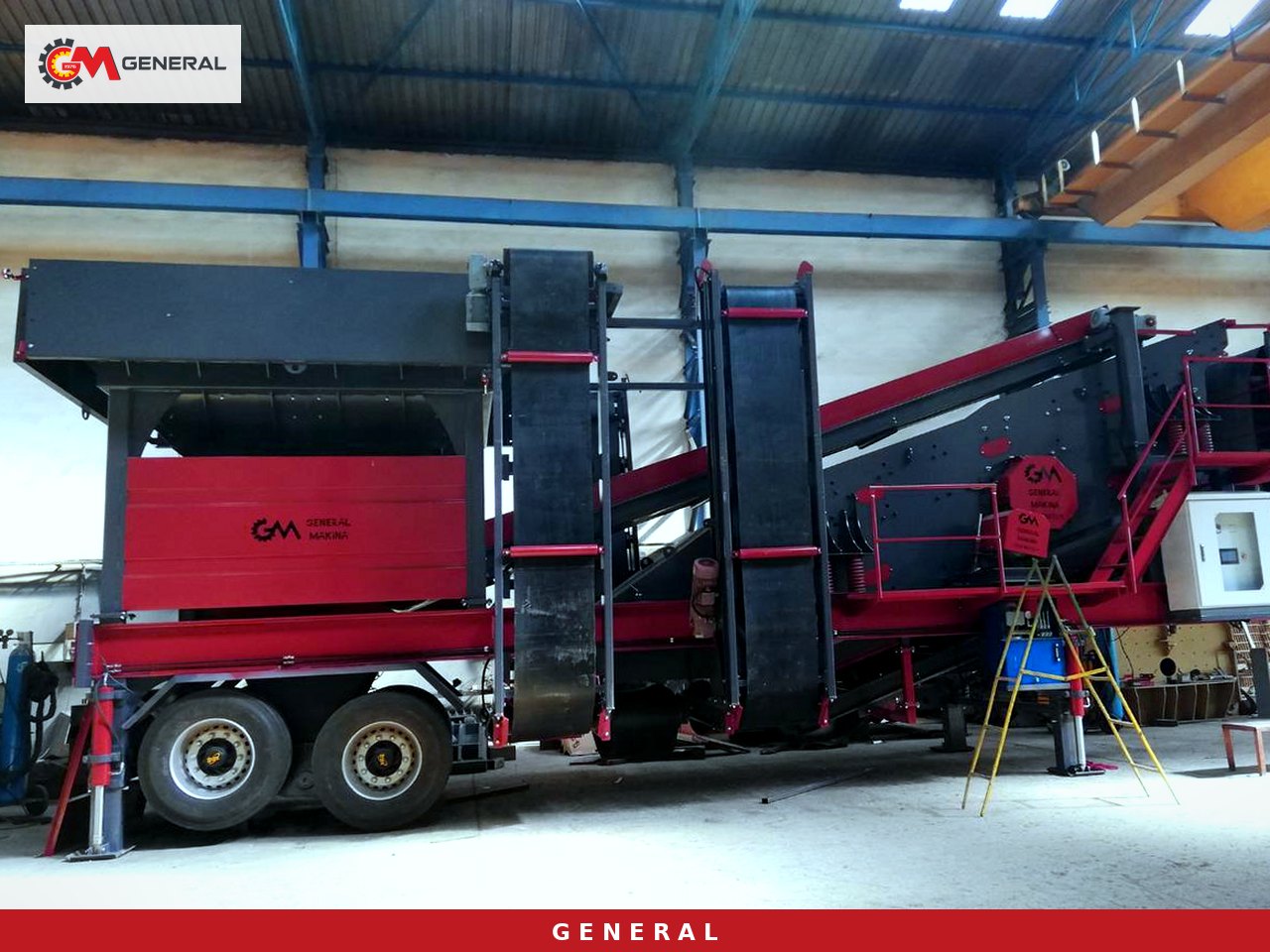
Machines travel by sea from Izmir to Gulf and Iraqi ports and then by road to site. As an example of working in the region's climate, see the 250 t/h GNR PDK 02 stationary crusher operating in desert conditions that we delivered to Saudi Arabia; that plant crushes limestone, not demolition waste.
Information to gather before asking for a quote
- Estimated daily tonnage and shift pattern; whether the hourly target is 100 or 200 TPH
- Rough shares of concrete, block/plaster, asphalt and excavation sand in the pile, plus a few photos
- Largest lump size and the crew's ability to pre-reduce it (hydraulic hammer, shears)
- Products to be sold and target gradings: sub-base, pipe bedding, backfill
- Laboratory chloride and sulphate results, if available
- Whether grid power is available on site; if not, generator preference
- How often the site will change and the plot dimensions
- Dust and noise measures required by the local authority
A quote built on this information covers feeding, sorting and stockpile layout as well as the machine. All mobile options are listed in the mobile crushing plants and single-chassis mobile crushers categories.
Frequently asked questions
Can demolition concrete and excavation sand go through the same line?
Yes, but as separate streams. Sand should be removed before the crusher on the grizzly, the by-pass screen or a separate dry screening unit; otherwise capacity falls and wear rises.
Which set-up reliably delivers 200 TPH?
The single-unit GM 100 and General 01 top out at 180 t/h. To cover 200 t/h with headroom, a two-unit line of M-PDK02 plus GNR ME2060 is recommended. On concrete pre-reduced below 350 mm, the M-DMK 02 also reaches this tonnage with its 150-250 t/h range; a screen behind it is needed for a full grading.
Can recycled aggregate be used in concrete?
That decision belongs to the local specification and laboratory tests. The machine sets grain size and shape; properties such as chloride, sulphate and water absorption depend on where the material came from.
What warranty and certificates apply?
Our machines carry ISO 9001 and CE certification, with a 1-year warranty excluding wear parts. We have been manufacturing in Izmir since 1976.
Conclusion
The success of a 100-200 TPH C&D recycling line in the Middle East depends less on the crusher model than on sorting the pile and pinning down the product to be sold. The GM 100 for urban jobs that move often, the General 01 for permanent multi-product yards, the M-PDK02 with GNR ME2060 for 200 t/h with headroom, and the M-DMK 02 for pre-reduced concrete are sensible starting points. Send photos of your pile and your target product list through our contact page and we will prepare the right set-up and a quote.
Definitions of technical terms: Glossary