EN — English
 TR — Türkçe
 DE — Deutsch
 RU — Русский
 FR — Français
 ES — Español
 AR — العربية
 SR — Српски

Kuwait Desert Sand vs Crushed Sand: Stone Crushing Plant 100-200 TPH
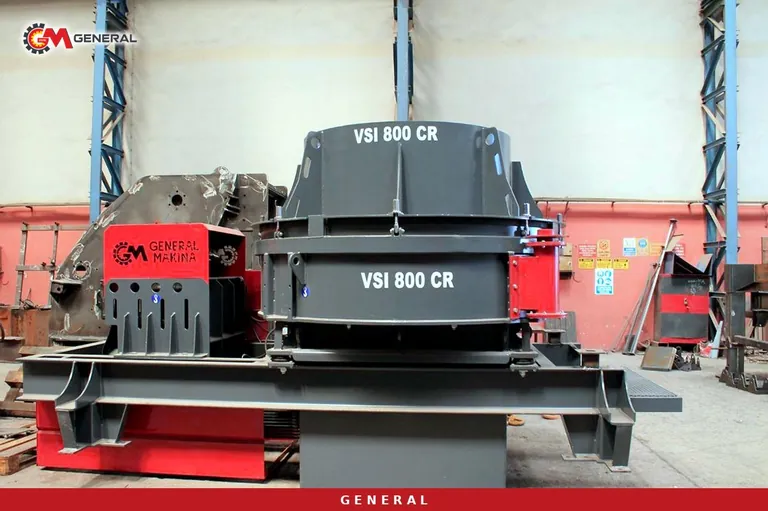
For anyone producing concrete in Kuwait, sand looks like the cheapest raw material on the job, since most of the country is covered in it. The picture changes once the samples reach the batching plant laboratory. Desert sand, carried and rounded by wind over long periods, is very fine, its grains are close to one size and the coarse sand fraction is almost missing. Used on its own in concrete it pushes up water demand, makes the mix prone to segregation and rarely fits inside the grading envelope of the specification. This article explains when desert sand can go into concrete, how the missing part is made up with crushed sand, and how a line producing 100-200 TPH of manufactured sand is built from real model data.
What desert sand shows in the laboratory
Sand does three jobs in concrete: it fills the voids between coarse aggregate particles, it limits the volume of cement paste and it carries the workability of fresh concrete. All three need a balanced particle size distribution. In dune sand most grains sit in a narrow size band; the 1-4 mm coarse sand is either scarce or absent in most samples. The result is a low fineness modulus. Because fine grains have a large total surface area, the same slump needs more water and the same strength needs more cement.
The second issue is grain surface. Wind-worn desert sand is rounded and polished. Roundness helps pumping, but the smooth surface weakens the bond with cement paste. Combined with a single-size distribution it leads to bleeding and segregation, and that is where complaints about cracking and dusting on slab surfaces start.
The third issue is chemistry. Sand taken near the Gulf coast or from salt flats known as sabkha can contain chlorides and sulfates. Chlorides speed up reinforcement corrosion; sulfates react with the cement paste. In Kuwait the service life of a reinforced concrete structure depends directly on these two values. Send the sand sample for water-soluble chloride and sulfate tests as well as a sieve analysis. Acceptance limits are written in the project specification and the applicable standard (such as ASTM C33 or EN 12620); confirm them with the authority or the consultant.
Crushed sand fills the gap left by desert sand
In practice the answer is seldom to drop desert sand altogether. Crushed sand brings the coarse fraction that dune sand lacks, together with an angular or, with the right machine, cubical grain; desert sand supplies the fine end. Blended, the two sands bring the grading curve closer to the specification envelope, water demand falls and the rough grain surface improves bond strength. The economics are clear too: desert sand is plentiful on site, while crushed sand is the controlled, costed part. If the crushed sand share is set correctly, the hourly load on the crusher is sized realistically as well.
The laboratory sets the blend ratio
The ratio is not chosen at a desk. The batching plant laboratory prepares trial mixes at different ratios and decides on the basis of slump, air content, bleeding and 7- and 28-day compressive strength. The ratio from these trials directly sets the target capacity of the crushed sand line. Hypothetical example: if the plant consumes X tonnes of sand per hour and Y percent of the blend will be crushed sand, the crushed sand requirement is X × Y / 100 t/h. Crusher and screen are chosen for that figure, not for the size of the desert sand stockpile.
Rock dust in crushed sand is handled separately
The weak point of crushed sand is rock dust below 0.063 mm. This dust is not clay, but if its share rises it adds to the already high fineness of desert sand and raises the water demand of the blend again. When designing a line that will blend in Kuwait, the way dust is removed therefore deserves as much attention as the crusher choice. We return to this under washing below.
Which rock crushed sand is made from in Kuwait
Hard rock quarries are limited in Kuwait. Part of the aggregate comes from local gravel deposits and a significant share from crushed stone brought in from neighbouring countries. The feed of a crushed sand line comes from one of these sources: coarse gravel from local deposits, the hard-to-sell fraction of imported coarse aggregate, or material piling up as screen oversize at an existing plant. Each has a different abrasiveness. High-silica gravel and hard rock such as gabbro suit a VSI; low-abrasion limestone suits a tertiary impact crusher. Before deciding on a model, take a sample of the feed and have abrasiveness and compressive strength tested.
Feed size must also be fixed early. GNR series VSI crushers accept 25-55 mm feed depending on the model; the upper limit for GNR tertiary crushers is 150 mm. If your material is already 0-40 mm, no extra crusher may be needed. If coarse gravel is involved, a jaw crusher and, where needed, a cone crusher go at the head of the line. You can compare the whole family on the crushers page.
Matching models to 100-200 TPH of crushed sand
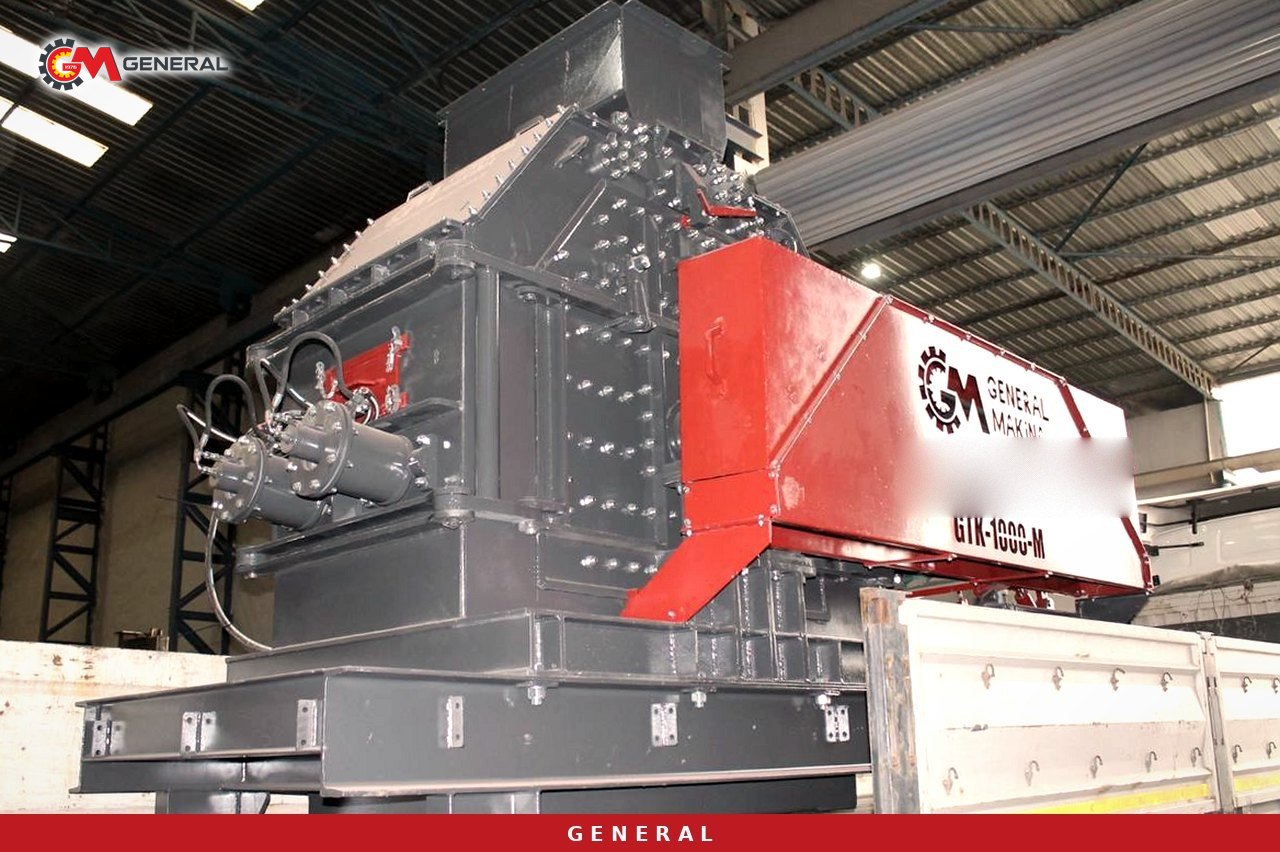
| Model | Type | Max. feed (mm) | Capacity (t/h) | Power |
|---|---|---|---|---|
| GNR 700 | VSI | 25-35 | 45-135 | 90-132 kW |
| GNR 800 | VSI | 40-50 | 55-160 | 132-160 kW |
| GNR 900 | VSI | 50-55 | 80-210 | 2×200 kW |
| GNR-MVSI 900 | Wheeled VSI plant | 50 | 90-180 | 850 kVA generator |
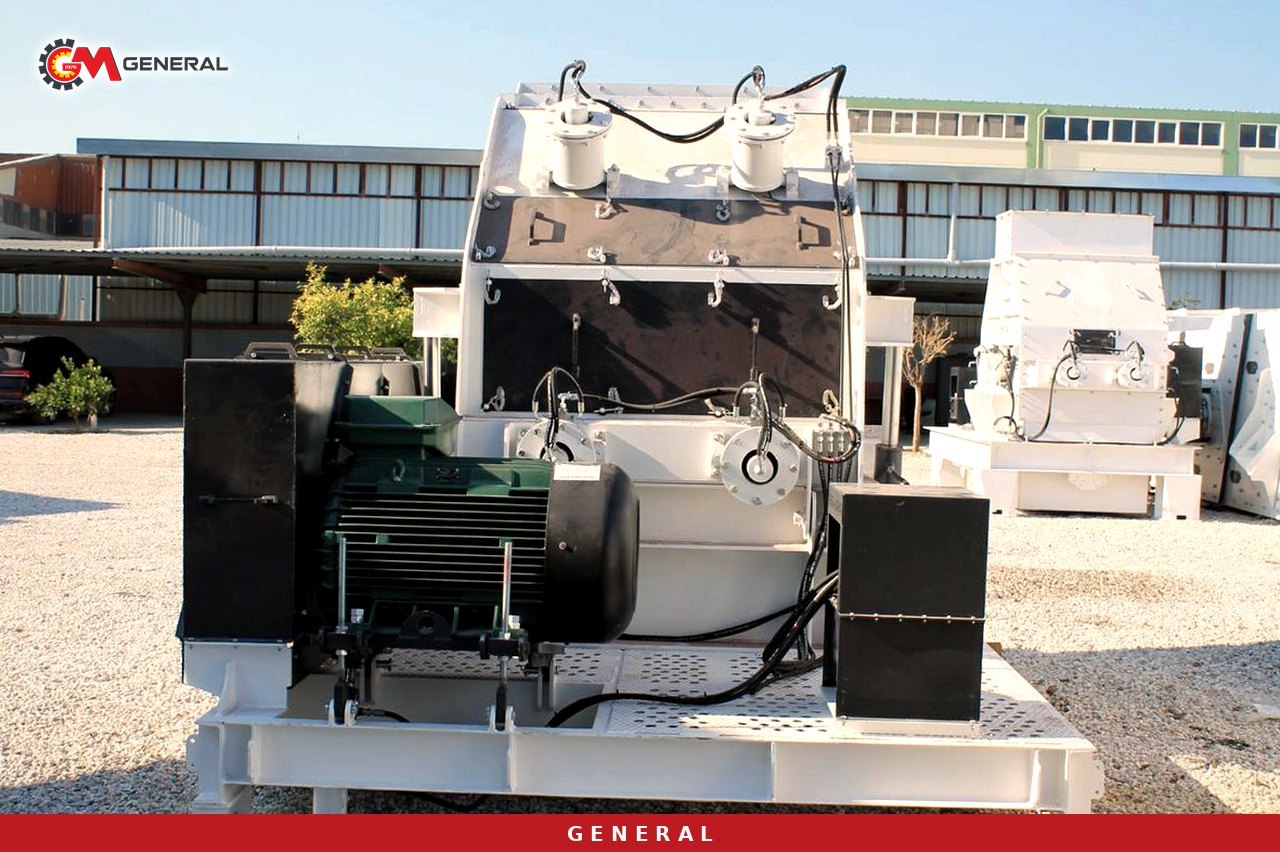
| GNR 100 | Tertiary impactor | 150 | 90-160 | 160 kW |
| GNR 130 | Tertiary impactor | 150 | 130-200 | 200 kW |
The capacities in the table are throughput through the crusher, not saleable 0-4 mm sand. A VSI discharges sand, fine chippings and oversize together; the oversize returns to the crusher in closed circuit. A project wanting 150 t/h of crushed sand sizes the crusher for a feed clearly above that figure. Sand yield depends on rock type and rotor setting; no firm number should be given before a trial crushing.
Stationary line: GNR 900 VSI
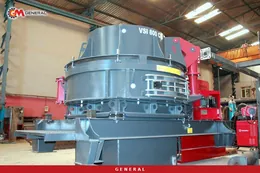
For a batching plant or aggregate yard with grid power that will run at the same point for years, the simplest answer is a stationary GNR 900 vertical shaft impactor. Its 80-210 t/h range covers the whole target with one machine. Run in rock-on-rock mode on abrasive gravel, it reduces wear on rotor tips and plates. A buffer bin and, if needed, a cone crusher go ahead of it, with a multi-deck screen behind.
Wheeled option: GNR-MVSI 900
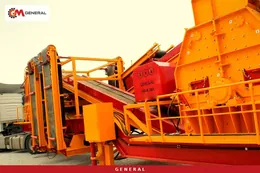
For operators serving several batching sites, or with uncertain land tenure, the GNR-MVSI 900 fits. It carries 90-180 t/h capacity, 50 mm feed, a 1600×5000 mm triple-deck screen and 0-3, 3-5 and 5-12 mm fractions on one chassis. It weighs 42,000 kg and its generator is 850 kVA. If the target is at the top of the 200 TPH range, one unit is not enough; a second VSI or a combination with a stationary line is considered.
Limestone feed: GNR 130 tertiary crusher
If the feed is low-abrasion limestone, the GNR 130 tertiary crusher fits the target range at 130-200 t/h. Because it accepts feed up to 150 mm, it simplifies the crushing stage ahead of it. On siliceous gravel a VSI should be chosen instead, because the hammers and plates of an impactor wear out quickly in abrasive sand.
Dust removal in Kuwait: dry or washed
Where water is expensive, as in Kuwait, the first choice is usually dry production. In a dry line the dust content is managed through VSI rotor speed, screen apertures and separate stockpiling of the 0-3 mm fraction. Since desert sand supplies the fine end of the blend, keeping dust low in the crushed sand matters even more here. Screen options are on the vibrating screens page.
If the laboratory shows too much dust, or the feed gravel carries clay, washing is added. Where water saving comes first, the bucket wheel sand washer stands out: it takes 0-50 mm feed with a 50-250 t/h working range, and because the buckets lift sand out of the water it uses less water and energy than a screw washer. For a drier product a dewatering screen is added and moisture is brought into the 8-20% band. Returning wash water to the circuit through settling ponds or recovery equipment should be planned at the start of the project.
Checklist for a Kuwait site before requesting a quote
- Sieve analysis, fineness modulus and water-soluble chloride and sulfate results of the desert sand
- Feed material type (gravel, limestone, gabbro), maximum particle size and abrasiveness test
- Hourly sand consumption of the batching plant and the blend ratio proposed by the laboratory
- Required fractions (for example 0-3, 0-4 and 3-5 mm) and the dust limit in the specification
- Power source: grid or generator; for a generator, a derating allowance for summer heat
- Water availability and whether wash water will be recovered
- Site layout: stockpile areas, prevailing wind direction, need for covered conveyors and dust suppression
- Shipping route: via Shuwaikh or Shuaiba port, or by road
Dust suppression sprays, conveyor covers and filtered panel ventilation are measures that can be selected per project. On a hot, dusty site, panels and motors should be placed so that their cooling air is drawn from the clean, upwind side. Machines are delivered with a 1-year warranty (wear parts excluded) and ISO 9001 and CE certification.
Frequently asked questions
Can desert sand never be used in concrete?
It can, but in most cases not on its own. If chloride and sulfate results are acceptable, desert sand goes into concrete as the fine fraction blended with crushed sand. Trial mixes determine the ratio.
Should a crushed sand line use a VSI or a tertiary crusher?
A VSI if the feed is siliceous gravel or hard rock, a tertiary impact crusher if it is low-abrasion limestone. The decision rests on the abrasiveness test of the sample.
Can the whole line come from one supplier?
Yes. Crusher, screen, feeder, conveyors, washing unit and automation are designed together in one project; a concrete batching plant can be added to the same package.
What determines the price?
Target sand tonnage, feed material, stationary or wheeled installation, whether washing is included and the power source. A quote prepared from this information is project-specific.
Conclusion
In Kuwait, desert sand can cover the fine end of concrete; crushed sand brings the coarse sand share and grain shape. The right line is sized backwards from the blend ratio found by the laboratory and the abrasiveness of the feed rock. Write to us with your sand test results and feed sample details, and we will prepare a project-specific quote for a stationary or wheeled crushing and screening plant in the 100-200 TPH range.
Definitions of technical terms: Glossary