EN — English
 TR — Türkçe
 DE — Deutsch
 RU — Русский
 FR — Français
 ES — Español
 AR — العربية
 SR — Српски

Kenya Crushed Sand Instead of River Sand: Stone Crushing Plant 100-200 TPH
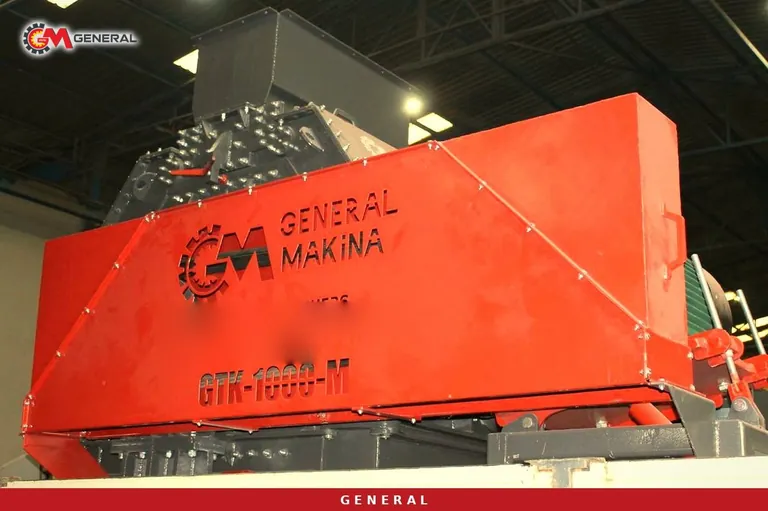
For years, ready-mix plants, block makers and road contractors in Kenya bought their sand from the same place: the beds of seasonal streams and rivers. That source now faces environmental debate and, in several counties, restrictions imposed by local authorities, while sand trucked hundreds of kilometres varies in quality from load to load. Yet much of the country sits on rock that crushes very well, and quarries producing ballast every day often leave the fine fraction sitting in a stockpile as a by-product. This article explains, with real model data, which crusher, for which rock and with which washing or classification step, a Kenyan operation should choose when it targets 100-200 TPH of crushed sand.
Switching from river sand: the real question is the rock
Treating crushed sand as "quarry dust" is the most common mistake. Crushed sand is a product made deliberately through crusher and screen settings, with controlled particle shape and grading. River sand consists of smooth grains rounded by water; crushed sand grains are angular or, with the right machine, cubical, and their surfaces are rougher. In concrete this has two consequences: cubical, rough grains bond better with the cement paste, but the mix design must be redone to reach the same workability. Dropping crushed sand one-for-one into a recipe tuned for river sand ends in higher water demand and slump complaints at the batching plant.
Kenya's rock map changes clearly by region. Along the Rift Valley and around Nairobi, volcanic rocks such as basalt, phonolite and trachyte are common. Towards Machakos and Kitui, metamorphic basement rocks, meaning gneiss and other hard granitic rock, dominate. On the coastal strip between Mombasa and Kilifi you find coral limestone and sandstone. The crusher choice depends entirely on which of these three groups you work in; even on a single site, no model decision should be made before abrasion and compressive strength tests on samples taken from the quarry face.
Matching the sand crusher to the rock group
Volcanic and metamorphic rock: VSI crusher
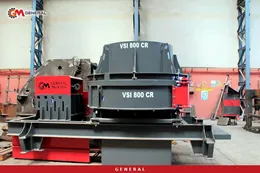
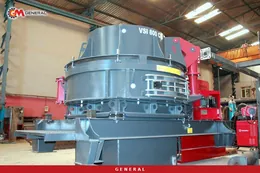
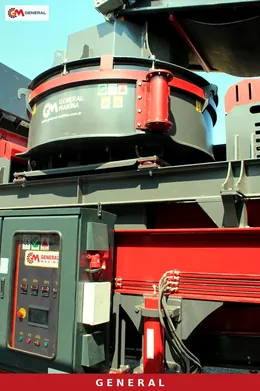
Basalt, phonolite, gneiss and granite are high-silica, abrasive materials. In these rocks the blow bars and plates of a tertiary impact crusher wear quickly and wear cost per tonne climbs. The right machine here is the GNR series VSI crusher. Its vertical rotor accelerates the material to around 80 m/s and throws it against its own rock bed (rock-on-rock). Metal wear drops to a minimum and the product is markedly cubical. A VSI is a shaping machine rather than a size reducer: on the GNR 900, feed is limited to 50-55 mm. It therefore always needs a primary jaw crusher ahead of it and, in most cases, a cone crusher as well.
A typical flow in quarries around Nairobi looks like this: the shot rock is reduced in a GNRK jaw crusher brought below 40-50 mm in a cone crusher, turned into sand and fine chips in the VSI and split into fractions on the screen. Model-specific capacity data for the cone crusher is provided per project; this stage is sized after the rock tests.
Coastal limestone: GNR tertiary impact crusher
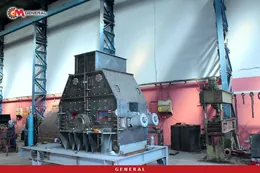
The limestone along the Mombasa-Kilifi belt is of low to medium abrasiveness. In this material the GNR series tertiary crusher is the more economical choice: it accepts feed up to 150 mm, performs fine crushing at high rotor speed and delivers 0-5 mm crushed sand plus fine chips in a single stage. Because it can sit right behind the primary, the line can be one stage shorter than a VSI line. Moisture is the point to watch: wet, clayey coral limestone blocks a tertiary crusher, so washing or grizzly scalping is needed upstream. If the limestone contains hard siliceous bands, wear parts move to high-chrome castings.
Real model combinations for 100-200 TPH
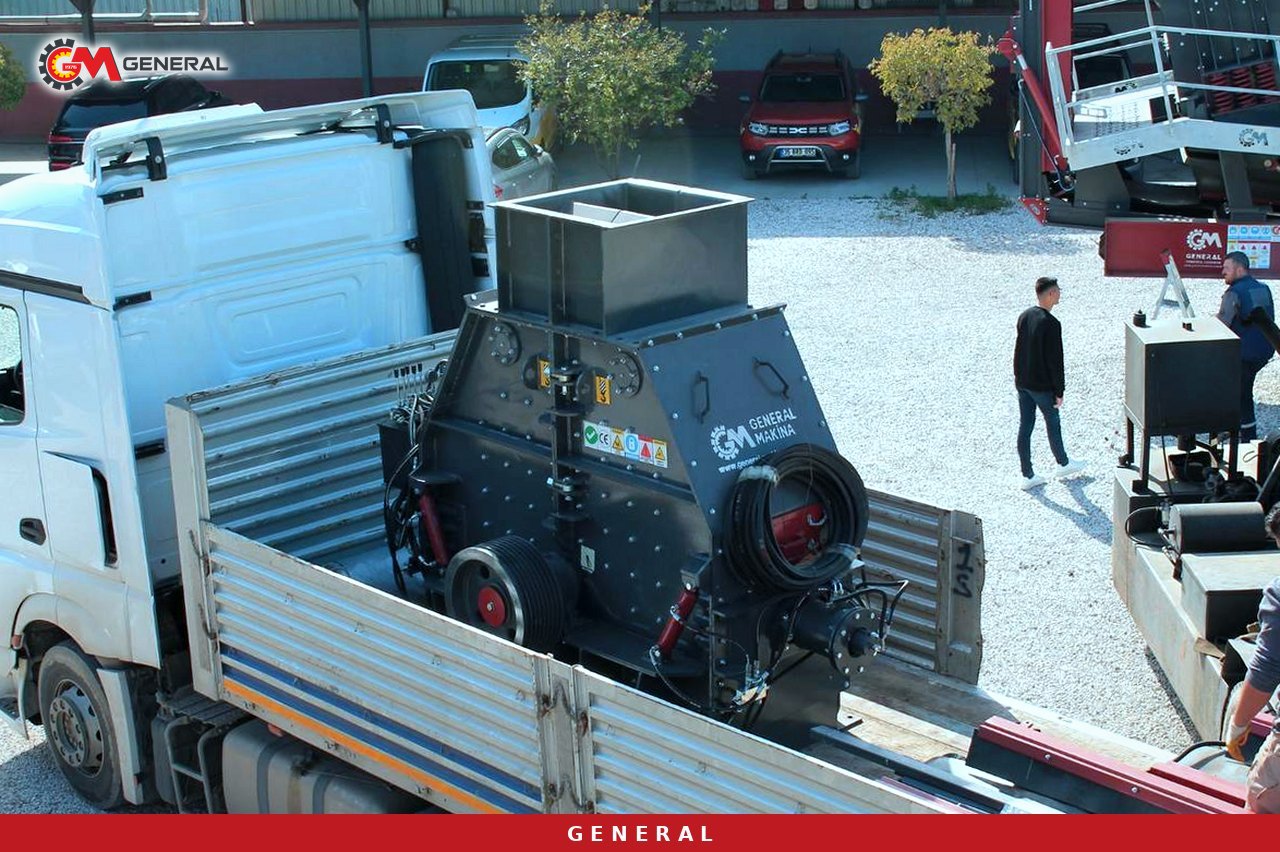
When talking about target capacity, two figures must not be confused: material entering the crusher and saleable sand going to stockpile. Not everything leaving a VSI or tertiary crusher is sand; part is separated as fine chips and part returns from the screen to the crusher. A plant that wants "150 TPH of sand" should therefore select crusher capacity above that figure. The table below brings together the manufacturer data of machines suited to this band.
| Duty | Model | Capacity (t/h) | Feed | Power | Suitable rock |
|---|---|---|---|---|---|
| Primary crushing | GNRK 90 jaw | 60–225 | 900×650 mm inlet | 75/90 kW | All hard rock |
| Sand + shaping | GNR 800 VSI | 55–160 | 40–50 mm | 132–160 kW | Basalt, phonolite, gneiss |
| Sand + shaping | GNR 900 VSI | 80–210 | 50–55 mm | 2×200 kW | Basalt, phonolite, gneiss |
| Sand + fine chips | GNR 100 tertiary | 90–160 | 150 mm | 160 kW | Coastal limestone |
| Sand + fine chips | GNR 130 tertiary | 130–200 | 150 mm | 200 kW | Coastal limestone |
| Wheeled sand unit | GNR-MVSI 900 | 90–180 | 50 mm | 850 kVA generator | Sites with existing pre-crushing |
| Sand washing | Screw washer | 50–250 | 0–50 mm | — | Dusty, clayey sand |
For a new stationary basalt line inland, the sensible backbone is GNRK 90 + cone crusher + GNR 900 VSI. The 80-210 TPH range of the GNR 900 covers the whole target band with one machine. If the saleable sand target stays around 100 TPH, the GNR 800 VSI may suffice with lower installed power. At a coastal quarry processing limestone, a GNR 130 tertiary crusher behind the GNRK 90 covers the upper half of the band at 130-200 TPH; if the target is in the lower half, the GNR 100 is enough.
For quarries that already run a primary-secondary line and want to add the sand stage later, the GNR-MVSI 900 wheeled VSI sand plant is a separate option. It carries the VSI 900 crusher, a 1600×5000 mm three-deck screen and an 850 kVA generator on one chassis and splits product into 0-3, 3-5 and 5-12 mm. With a weight of 42,000 kg and its own power supply, it lets quarries with weak or no grid connection start sand production without waiting for foundation works.
Fines content: washed or dry?
Whether crushed sand can replace river sand is usually decided not by the crusher but by the material below 75 microns. Crushing basalt creates rock flour; above a certain level this fine fraction raises the water demand of concrete and the cracking risk in plaster and mortar. There are two routes. The first is washing: a screw sand washer scrubs 0-50 mm feed at 50-250 TPH and removes clay and rock flour over the overflow weir. Sand leaving the screw typically has 15-30% moisture; adding a dewatering screen brings it to 8-20% so the sand can be stockpiled sooner. Water demand is in the order of about 190 L/min per t/h of silt; in drier counties such as Machakos and Kitui, where dry-season water is limited, this figure becomes the first constraint of the project and settling ponds with water recirculation must be planned.
The second is the dry route: if the rock is clean and free of clay bands, sand can be sold unwashed, with grading corrected only through screen apertures and VSI settings. Coastal limestone from a soil-covered face may need washing; at a clean basalt quarry, dry production is often enough. Which route suits you is decided by the laboratory from your sand's Methylene Blue (MBV) or Sand Equivalent (SE) value. All washing options are on the sand washing screws and mining washers page.
Kenya-specific checklist before ordering
- Take samples from at least three points on the quarry face and have abrasion, compressive strength and clay content tests done.
- Write your target as "saleable sand t/h" and size crusher capacity above it.
- Define your buyers: ready-mix, blocks, plaster and road works expect different gradings; confirm the applicable specification with the relevant authority and the buyer.
- Check the capacity and reliability of grid power; if it is inadequate, plan a generator-based or wheeled solution from the start.
- If washing is planned, measure dry-season water availability and reserve space for settling ponds.
- Machines usually travel inland by road via the port of Mombasa; check bridge, bend and height restrictions on the access route in advance.
- Add dust suppression measures such as spraying, covered conveyors and filters according to the distance to settlements.
Frequently asked questions
Can crushed sand fully replace river sand in concrete?
Yes, when particle shape and fines are controlled; many producers use crushed sand on its own, others blend it with fine river sand. The decision comes from laboratory trial mixes; never use it in a river sand recipe without adjusting the design.
Can a tertiary impact crusher be used on basalt?
It can, but it is not economical; impact wear parts wear quickly in high-silica rock. For basalt, phonolite and granite, a VSI in rock-on-rock mode gives a more cubical product with lower wear part consumption.
Can the whole line come from one supplier?
Yes. From the primary jaw crusher to the VSI, from screens to the screw washer, all equipment is part of General Makina's stone crushers and washing product groups, so capacity matching between stages is handled by one party.
What are the warranty and certificates?
The machines have been built in Izmir since 1976 with ISO 9001 and CE certification; the warranty is 1 year, excluding wear parts. Pricing is set in the quotation according to rock type, number of stages, washing needs and shipping method.
Conclusion
Success in moving from river sand to crushed sand in Kenya starts with the quarry rock, not the machine catalogue. A VSI is the right base on volcanic and metamorphic rock, a GNR tertiary crusher on coastal limestone; fines are managed by washing or dry classification and the mix design is rebuilt in the laboratory. Send us your sample results, your saleable sand target and the power situation on site, and we will work out the right 100-200 TPH configuration together: contact and quotation request.
Definitions of technical terms: Glossary