EN — English
 TR — Türkçe
 DE — Deutsch
 RU — Русский
 FR — Français
 ES — Español
 AR — العربية
 SR — Српски

Iraq Baghdad & Basra Roads Crushing and Screening Plant 200-300 TPH
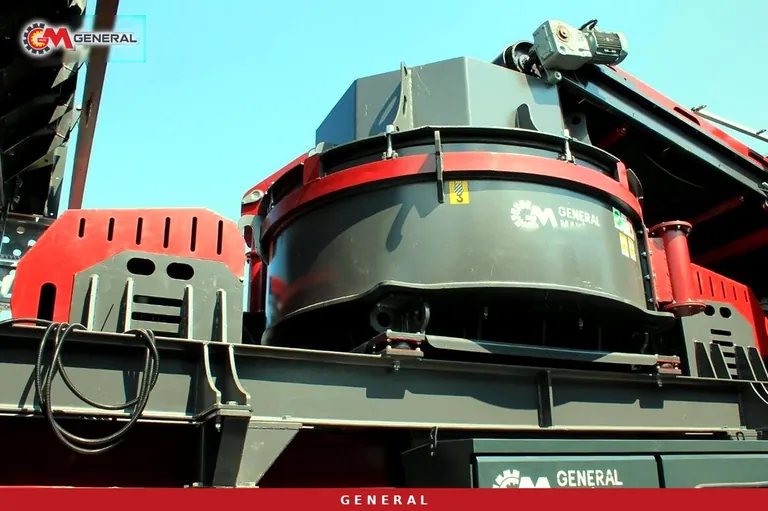
On road work between Baghdad and Basra, aggregate planning rarely starts with "which crusher?". It starts with "where will the stone come from?". Both cities sit on the Mesopotamian alluvial plain built up by the Tigris and the Euphrates; solid rock quarries are scarce nearby, while river gravel and sand are plentiful. That is why a 200-300 TPH crushing and screening plant in Iraq is usually designed to turn rounded gravel into crushed stone, close the sand gap and blend road base on the same site. Below we match these three jobs to real models from our product pages. Cross-sections, gradations and quality classes for any specific project must always be confirmed in the specification of the road authority concerned; this article covers equipment selection only.
Raw material map along the Baghdad–Basra corridor
A contractor working on the plain typically has two sources: a gravel-sand mix taken from river beds and terraces, and limestone or harder rock trucked in from the western desert or the northern regions. The two sources ask different things of the crusher.
Gravel from the Tigris and Euphrates terraces
River gravel usually arrives at a size the crusher can accept, but its surface is smooth and rounded. The angular, cubical particle demanded for asphalt and concrete only comes from crushing it. If the silica content of the gravel is high, impact crusher hammers and plates wear faster than expected. In the lower plain, closer to Basra, the deposits may contain fine silt, salt and gypsum. Because these constituents can cause strength problems in concrete and asphalt, abrasion, sulphate and chloride tests on samples should be ordered at the very start.
Limestone from the western desert and the north
Limestone hauled in from outside the plain is less abrasive and gives high reduction and a cubical product in an impact crusher. Harder rock types also occur further north. The true behaviour of this stone must likewise be established on a sample taken from the quarry. Long truck haulage makes it attractive to reduce the large blocks at the quarry as far as possible, and that affects the decision on where the plant is positioned.
Each layer of the road section means a separate product list
A highway section is never built from a single material. Matching each layer to a product and a machine before plant design begins removes the risk of a needless crusher or a missing screen deck:
- Embankment and subbase: wide-graded material with generous tolerance; screened gravel or a single-stage crushed product is often enough.
- Granular base and pugmill mix: fractions blended within a defined grading band; products from a 4-deck screen can be mixed with cement or binder in a pugmill plant.
- Asphalt chippings: crushed-face ratio and particle shape requirements are tight; a second crushing stage and a closed circuit are decisive here.
- Concrete sand and fine aggregate: if natural sand is too fine or dirty, a manufactured sand gap appears; a VSI tertiary stage closes it.
- Bridge, culvert and structural concrete: requires clean aggregate and a batching plant close to site.
Placing this list beside the layer names in the specification is the basis both for the capacity calculation and for the equipment list that determines the price.
Real equipment that meets the 200-300 TPH target
Our range includes three crushing models that reach the headline tonnage as a single plant; auxiliary units for dry pre-screening, sand making and road-base mixing can be added. All values below are taken from the technical tables on our product pages; unknown cells are marked "—".
| Unit | Role in the line | Capacity | Max. feed | Main equipment | Screen | Power | Weight |
|---|---|---|---|---|---|---|---|
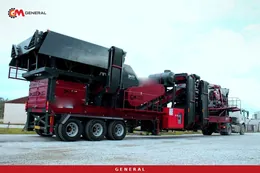
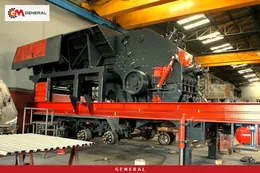
| GNR-MC110 | Jaw primary + impact secondary, twin chassis | 200-300 t/h | 900 mm | GPJ 110 + DMK03 | 2000×6000 mm, 4-deck | 750 kVA generator | 55,000 kg + 55,000 kg |
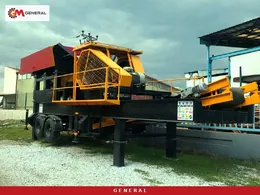
| General 02 | Primary impact, single chassis | 250-300 t/h | 1000 mm | GPS 1413 | 2000×5000 mm, 4-deck | 660 kVA generator | 76,000 kg |
| General 03 | Primary impact, 4-axle chassis | 250-375 t/h | 900 mm | GPS 1415 | 2400×5000 mm, 4-deck | 750 kVA generator | — |
| GNR ME2060 | Dry pre-screening | 200-350 t/h | 0-100 mm | 20 m³ hopper, 100 mm grizzly | 2000×6000 mm, 3-deck | Generator or grid | — |
| Mobile VSI tertiary | Manufactured sand (0-10 mm) | 60-250 t/h | 0-200 mm | Vertical shaft, rock-on-rock | — | — | — |
| Mobile pugmill plant | Plant-mix road base | 200-600 t/h | — | Twin-shaft mixer 2×22 kW | — | 79-155 kW total | — |
Choosing the crusher for gravel feed
In river gravel with high silica, a jaw primary working on the compression principle gives more predictable wear. GNR-MC110 stands out here: the GPJ 110 jaw crusher accepts blocks up to 900 mm, and the DMK03 impact secondary breaks the rounded particle to give it angular faces. Because the primary and secondary chassis can run independently, the contractor can produce with the primary group alone during the embankment phase and bring the secondary online when asphalt work begins. With limestone-dominated feed, General 02 produces 250-300 TPH on one chassis with its 1000 mm feed opening and closed circuit; if demand may exceed 300 TPH, the 250-375 t/h range and 2400×5000 mm screen of General 03 are the next step up.
The tertiary stage that closes the sand gap
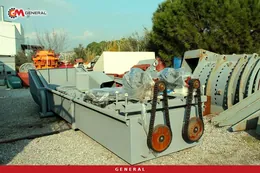
Natural sand is usually available on the plain, but it may be too fine, silty or salty for concrete and asphalt. In that case the oversize fraction left over from the 4-deck screen is routed to the mobile VSI tertiary crusher. The unit accepts 0-200 mm feed and, on the rock-on-rock principle, produces 0-10 mm manufactured sand at 60-250 t/h. The autogenous bed formed from its own material limits metal wear in abrasive gravel. If washed sand is required, a washing and dewatering unit is added to the line; the options are described on the sand washing and dry screening plants page.
Part of the mixed material from river terraces is already at a size that needs no crushing. GNR ME2060 separates that share before it reaches the crusher: the 100 mm grizzly over the 20 m³ hopper bypasses oversize, and the 3-deck screen splits the rest into fractions. The crusher therefore only sees stone that genuinely needs breaking.
Adding a pugmill and a batching plant behind the crushing line
On a road contract along the Baghdad–Basra axis, aggregate is not a stand-alone deliverable; it becomes plant-mix in the base layer and concrete in the structures. A mobile pugmill plant set up on the same site as the crushing line turns screened fractions directly into road base, with 200-600 t/h capacity, 3-5 cold bins, a 4×20 m³ aggregate hopper and a 25 m³ truck loading hopper. Its product is not ready-mix concrete but stabilised granular base that is laid and compacted; this distinction matters for matching tender items correctly.
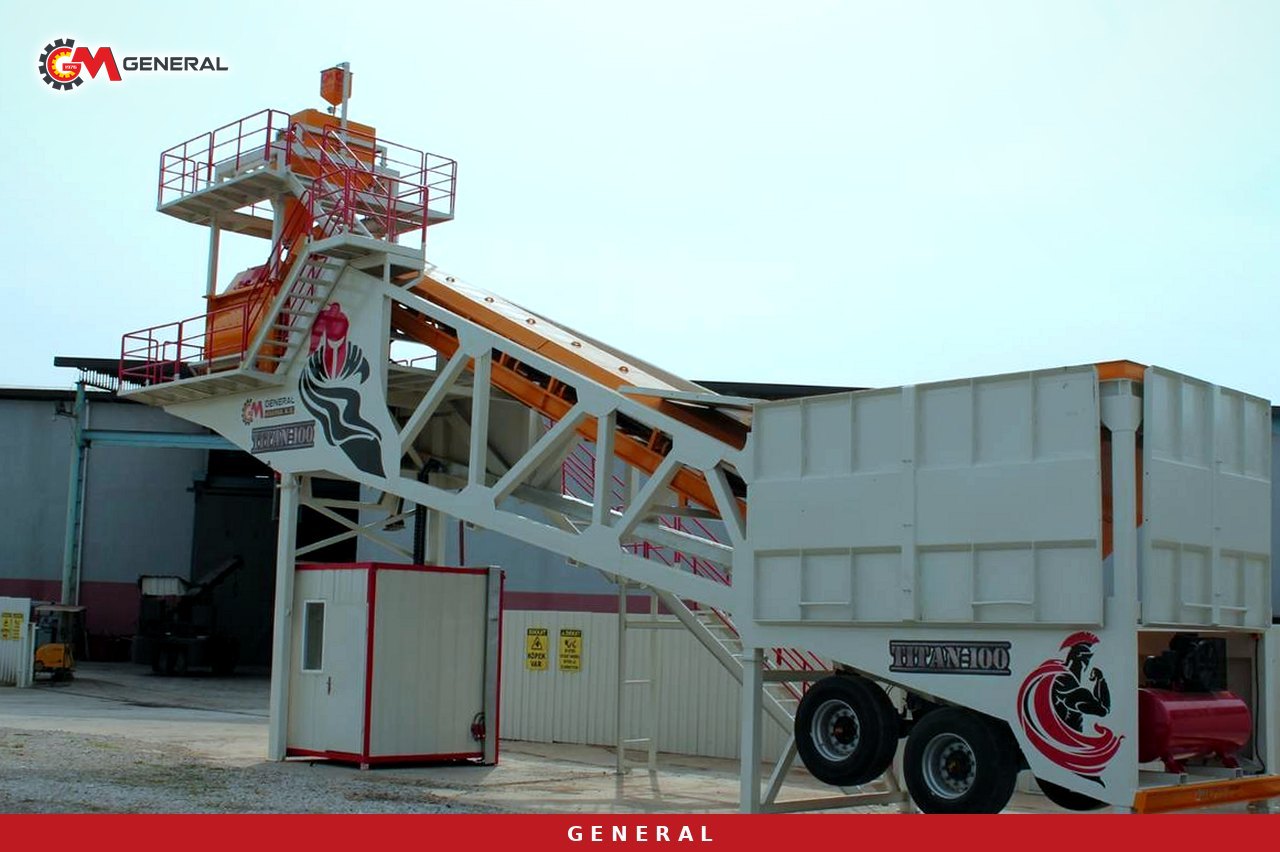
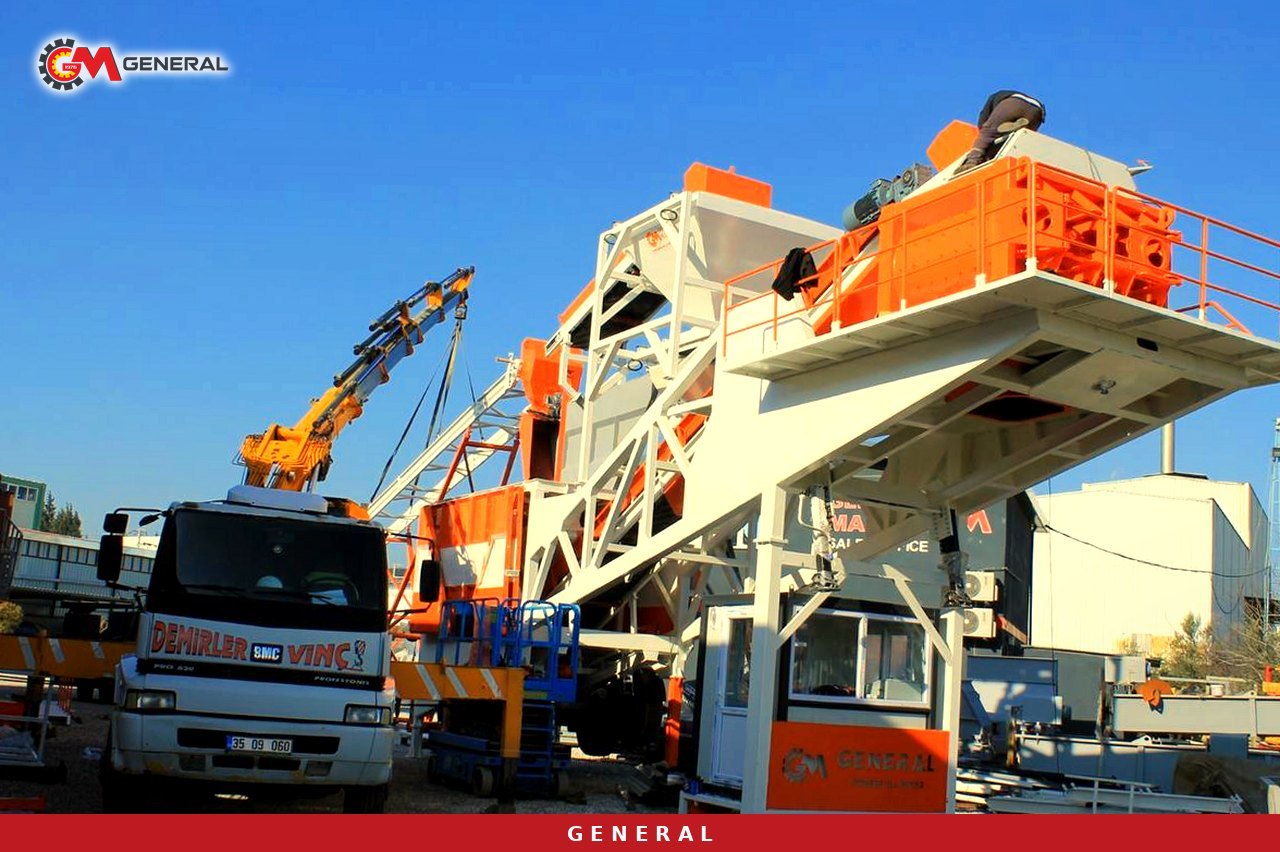
For bridge piers, culverts and retaining walls, a mobile concrete batching plant comes into play. The M-Titan 100, for example, arrives on a trailer chassis with 100 m³/h capacity, a 2×45 kW twin-shaft mixer and a 4×15 m³ aggregate hopper. Sourcing crushing, screening, pugmill and batching plant from one manufacturer means screen openings and batching-plant bin compartments are planned to match from the outset.
Basra heat, dust and saline ground: operating measures
Summers in southern Iraq are very hot, and the shamal wind from the northwest frequently carries dust. Both factors strain the most sensitive parts of a plant: the generator, the electrical panel and the bearings. Measures that can be selected per project include frequently replaced air filters on generators and panels, shading for the control cabin, water-spray dust suppression at crusher discharge and conveyor transfer points, and belt covers. On the ME2060, a fan-cooled panel is already on the equipment list; extra cooling for other units should be specified separately at quotation stage.
At high ambient temperatures, diesel generators may not deliver their rated output. When choosing a 750 kVA or 660 kVA power unit, ask the generator manufacturer for its temperature derating and, if necessary, consider the next power class. In areas around Basra where groundwater can be shallow and saline, prepare compacted crushed stone beneath the support legs, and check corrosion on the chassis and connection points during periodic maintenance. The salinity of the water used for dust suppression should also be reviewed with regard to concrete and electrical components.
From Umm Qasr port or by road to the site
A plant leaving Izmir can reach Iraq by two routes: by sea to the port of Umm Qasr in the Gulf, or by road through Türkiye. For work around Basra the port is generally shorter, while for Baghdad and the north the overland route usually is; the final choice should be made with the freight forwarder and customs broker. The advantage of a wheeled chassis is the same either way: the plant is towed on its own axles. Height and axle-load limits at bridges, overpasses and checkpoints along the route should be checked in advance against the dimensions in the table. GNR-MC110 travels as two separate chassis, the primary at 3000 × 13500 mm and the secondary at 4200 × 18300 mm, while General 02 moves as one piece measuring 4340 × 20600 × 4500 mm.
Collecting the following information in one file before requesting a technical offer clarifies both model choice and cost items:
- Source type (river gravel, limestone, hard rock) and sample test results: abrasion, silica, sulphate and chloride.
- Largest particle or block size and the silt-clay content at the source.
- Layer list, grading bands and crushed-face requirement from the specification.
- Daily tonnage for each product and the phases of the work programme.
- Pugmill and concrete demand; whether batching and pugmill plants will share the site with the crushing line.
- Power source, water source and water quality.
- Delivery point: Umm Qasr port or the land border, and the route to site.
The factors that set the price also emerge from this file: crusher combination, number of screen decks, additional units such as VSI and pugmill, generator rating, dust suppression equipment, spare wear parts package and shipping method. We have been manufacturing in Izmir since 1976; our equipment carries ISO 9001 and CE certification, and the warranty is 1 year excluding wear parts.
Frequently asked questions
Should I choose an impact or a jaw crusher for river gravel?
The decision depends on the silica content of the gravel. In high-silica gravel, the jaw-primary GNR-MC110 makes wear cost more predictable; with limestone-dominated feed, the primary impact crusher of General 02 or General 03 delivers higher reduction and a cubical product. A sample test is the foundation of this decision.
Is a VSI needed when natural sand is available?
If the natural sand meets the fineness modulus, silt and salt limits in the specification, it may not be. If not, the mobile VSI tertiary unit that turns screen oversize into 0-10 mm manufactured sand both closes the sand gap and prevents a coarse stockpile from building up.
Must the pugmill match the crushing line's capacity?
The mobile pugmill plant is rated at 200-600 t/h and comfortably absorbs the output of a 200-300 t/h crushing line. What really matters is the laying rate of the base course and a steady flow of fractions into the pugmill bins; the stockpile area should be planned around that balance.
How can I find out delivery time and price?
Both vary with the chosen configuration and optional equipment. When you write to us with the list above, a technical and commercial offer specific to your project is prepared.
Conclusion
For Baghdad and Basra road projects, the right 200-300 TPH line combines a crushing stage that turns rounded gravel into angular aggregate, a VSI that closes the sand gap, dry pre-screening where needed, and a pugmill and batching plant on the same site. GNR-MC110 is the starting point for siliceous gravel, General 02 or General 03 for limestone; measures against heat, dust and saline ground belong in the operating plan from day one. For other tonnage options, see the wheeled mobile crushing plants page, and send your sample results and layer list through our contact page so we can finalise the configuration together.
Definitions of technical terms: Glossary